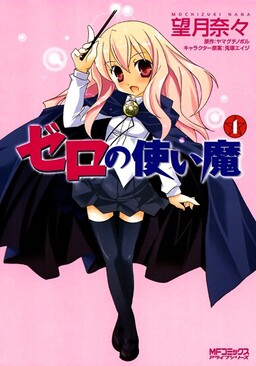
The Familiar of Zero Review: A Magical Failure Summons a Japanese High School Boy as Her Familiar
by Noboru Yamaguchi / Nana Mochizuki
Read the first volume. If it doesn't hook you, put it down. It'll hook you.
Buy The Familiar of Zero on Amazon →*Affiliate link — I earn a small commission at no extra cost to you.
Quick Take
- The original isekai-romance-at-magic-school formula — Familiar of Zero established many tropes that later isekai series would use and refine
- Louise's tsundere characterization is iconic within the genre; her relationship with Saito is the series' core
- 11 volumes complete; the manga adapts the light novel ending faithfully
Who Is This Manga For?
- Readers interested in the origin of many isekai and magic school tropes
- Fans of tsundere romance who want a classic example
- Anyone who watched the anime and wants the manga version
- Readers who want a complete fantasy romance
Content Warnings & Age Rating
Age Rating: T (Teen) Content Warnings: Fanservice; tsundere dynamics including physical comedy punishment; harem elements in later volumes; magic school fantasy violence
Consistent with the genre's conventions.
Yu's Rating
| Category | Score |
|---|---|
| Story Depth | ★★★☆☆ |
| Art Style | ★★★★☆ |
| Character Development | ★★★☆☆ |
| Accessibility for Non-Japanese Readers | ★★★★☆ |
| Reread Value | ★★★☆☆ |
Story Overview
At the Tristain Academy of Magic, students perform familiar summoning — a rite that bonds each mage to their magical partner. Louise, who has failed every spell attempted, summons Saito Hiraga, a Japanese high schooler who was grabbed from his Tokyo street and transported to the magical world.
Their initial relationship — Louise as the noble mage, Saito as the unwilling familiar bound to serve her — shifts gradually as Saito's abilities are revealed. He has the power of Gandalfr, one of the legendary void familiars, which makes him an extraordinary fighter when holding any weapon.
The series develops through magic school politics, Saito's attempts to understand this world and return home (then choosing not to), and the relationship between Louise and Saito as they move from antagonism to something genuine.
Characters
Louise Françoise — Her tsundere characterization is immediate and total — pride, insecurity about her magic, and genuine feelings for Saito that she expresses through violence and denial. Her actual power as a void mage, revealed gradually, reframes her school failure as something else.
Saito Hiraga — His isekai protagonist competence comes from Gandalfr rather than inexplicable personal excellence — the external power source grounds his abilities in the world's mythology.
Siesta — The maid whose affection for Saito represents the series' harem element and one of the longest-running romantic rivalries in the genre.
Art Style
Mochizuki's manga art captures the character designs with attention to Louise's distinctive pink hair and the costume designs of the magic school setting. The action sequences involving Saito's Gandalfr ability are clear and kinetically effective.
Cultural Context
The Familiar of Zero light novels (by Noboru Yamaguchi) were published from 2004 and established many tropes that defined the isekai-romance genre. The manga adaptation is faithful to the light novels' structure. Yamaguchi's death before completing the light novels meant the ending was written based on his notes.
What I Love About It
The moment when Louise's void magic manifests properly for the first time — what it actually does and what it means for who she has been all along transforms the "Louise the Zero" nickname into something the series had been building toward.
What English-Speaking Fans Say
Western readers describe Familiar of Zero as essential context for understanding where many later isekai and magic school tropes originated. Louise's tsundere characterization is both the series' most loved and most debated element — readers who find her sympathetic and those who find her treatment of Saito unacceptable have been arguing since the anime aired.
Memorable Scene ⚠️ Spoiler Warning
Saito's choice to remain in the magical world when return becomes possible — the specific reasoning and the specific moment that makes this decision feel earned rather than obligatory is the series' romantic climax.
Similar Manga
- Zero no Tsukaima — Same series (this is the manga adaptation)
- The Asterisk War — Magic school, combat tournament, similar genre conventions
- Infinite Stratos — Isekai-adjacent, harem, combat school
- Sword Art Online — Virtual world, romance, similar isekai energy
Reading Order / Where to Start
Volume 1 — the familiar summoning establishes everything within the first chapter.
Official English Translation Status
Yen Press published the complete 11-volume manga adaptation. All volumes available.
Pros & Cons
Pros
- A foundational text for understanding magic school isekai romance conventions
- Louise's character is iconic within the genre
- Complete with the full story including the post-Yamaguchi ending
- Clean, complete narrative resolution
Cons
- The tsundere dynamics require reader tolerance for the genre's conventions
- Louise's treatment of Saito is genuinely harsh by contemporary standards
- Genre-defining means it can feel derivative to readers who encountered derivatives first
Format Comparison
| Format | Notes |
|---|---|
| Individual Volumes | Yen Press; standard |
| Digital | Available |
Where to Buy
Read the first volume. If it doesn't hook you, put it down. It'll hook you.
This post contains affiliate links. If you purchase through these links, I may earn a small commission at no extra cost to you. As an Amazon Associate, I earn from qualifying purchases.
*Affiliate link — I earn a small commission at no extra cost to you.
More Manga You Might Like

Romance / Fantasy
Maou no Ore ga Dorei Elf wo Yome ni Shitanda ga, Dou Medatte mo Rabukome ni Natteshimau
Yu's review of Maou no Ore ga Dorei Elf — the Demon Lord Zagan acquires the elf Nephy through a slave auction not because he wants a slave but because he cannot stand to watch someone beautiful be mistreated; the series is genuinely a love comedy about two socially incompetent people figuring out their feelings across 9 volumes.
Fantasy / Romance
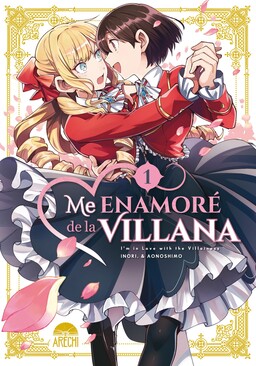
I'm in Love with the Villainess
Yu's review of I'm in Love with the Villainess — Rei Taylor, an office worker who played an otome game obsessively, reincarnates as the game's protagonist Rae Taylor; rather than pursuing the game's capture targets (the princes), she has always wanted the villainess Claire François — and Claire François is the first person she meets.
Fantasy / Romance
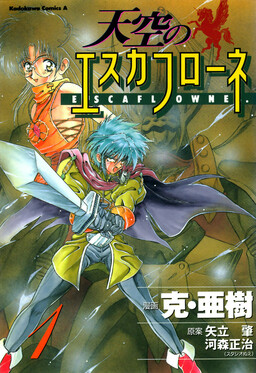
The Vision of Escaflowne
Yu's review of The Vision of Escaflowne — Hitomi Kanzaki is transported to the world of Gaea, where she becomes connected to a prophecy involving Van Fanel and his giant armor Escaflowne; the manga adaptation of the 1996 anime differs significantly from the source, emphasizing the romance more heavily while keeping the fantasy-mecha elements.
Fantasy / Romance
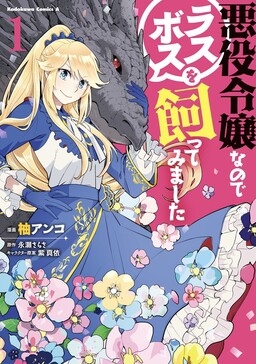
I'm the Villainess, So I'm Taming the Final Boss
Yu's review of I'm the Villainess, So I'm Taming the Final Boss — Aileen reincarnates as the villainess of an otome game; instead of trying to avoid the bad ending passively, she decides the best strategy is to capture the demon lord Claude — the game's final boss — and make him her ally.
Fantasy / Romance
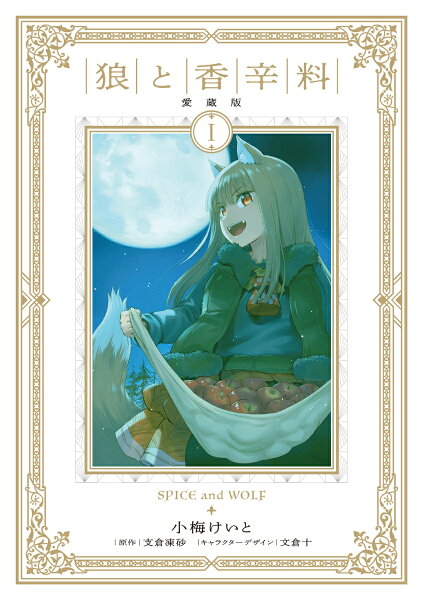
Spice and Wolf
Yu's review of Spice and Wolf — a traveling merchant forms an unlikely partnership with Holo, an ancient wolf harvest deity, as they journey together through medieval trade routes toward her distant homeland.
Fantasy / Romance
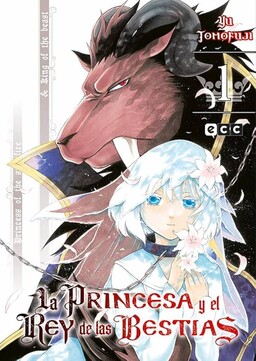
Sacrificial Princess and the King of Beasts
Yu's review of Sacrificial Princess and the King of Beasts — Sariphi is a human girl offered as a sacrifice to the Beast King Leonhart, who is expected to devour her; instead of pleading for her life, she asks to spend the remaining time as his companion; Leonhart, bewildered by her response, agrees.
Written by
Yu
Manga Enthusiast from Japan
I grew up in Japan and manga literally saved me during a tough time in elementary school. My English isn't perfect, but my love for manga is real — and I want to share it with you.
Disclosure: This post contains affiliate links. As an Amazon Associate, I earn from qualifying purchases at no extra cost to you.