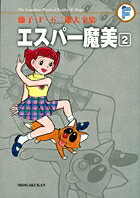
Esper Mami Review: The Psychic Who Used Her Powers to Not Be Noticed
by Fujiko F. Fujio
Read the first volume. If it doesn't hook you, put it down. It'll hook you.
Buy Esper Mami on Amazon →*Affiliate link — I earn a small commission at no extra cost to you.
What if you got every psychic power ever imagined — and mostly used them to avoid awkward situations?
Quick Take
- Fujiko F. Fujio's psychic manga — warmer and more romantic than his robot/gadget works
- Mami's powers are extraordinary; her goals are modest; the combination produces consistent comedy and genuine feeling
- 4 volumes with more emotional substance per page than the volume count suggests
Who Is This Manga For?
- Fans of Doraemon who want Fujiko F. Fujio's emotional warmth applied to a teenage protagonist
- Readers interested in psychic ability manga before the genre developed its modern conventions
- Anyone who finds the gap between extraordinary powers and ordinary goals charming
- Readers who want a romance subplot that is handled with actual delicacy
Content Warnings & Age Rating
Age Rating: T (Teen) Content Warnings: Psychic powers themes. Mild romantic themes. Original serialization includes occasional nudity typical of its era — nothing graphic, but worth noting.
Suitable for teen readers.
Yu's Rating
| Category | Score |
|---|---|
| Story Depth | ★★★★☆ |
| Art Style | ★★★★☆ |
| Character Development | ★★★★☆ |
| Accessibility for Non-Japanese Readers | ★★★★☆ |
| Reread Value | ★★★★☆ |
Story Overview
Mami Sakura develops multiple psychic abilities suddenly and without explanation — telekinesis, ESP, teleportation, and several others. Her response is not to seek training, fight evil, or become a superhero. Her response is to figure out how to keep this from disrupting her life.
Her father is an artist who paints her as a model — leading to the series' recurring visual motif and its gentle humor about the relationship between art and ordinary family life. Her feelings for a classmate named Takahata are the series' emotional center — handled by Fujiko with a lightness that makes them more affecting than more dramatic treatments would be.
The manga uses the psychic powers primarily as a lens: they reveal what Mami actually values by showing what she uses them for. She doesn't use them to become powerful or important. She uses them to help people she cares about, to solve small problems that matter to her, and occasionally to retrieve things from hard-to-reach places.
Characters
Mami: One of Fujiko's most emotionally complete protagonists — a girl whose warmth and practicality make even extraordinary abilities feel grounded.
Takahata: The romantic interest who is handled with Fujiko's characteristic restraint — present, important, never melodramatic.
Mami's father: An artist who knows about his daughter's powers and whose response — to paint her — is both funny and touching.
Art Style
Fujiko F. Fujio's art here has the warmth of his mature style — the faces are expressive and psychologically revealing, and the psychic effects are depicted with visual simplicity that keeps the focus on the characters rather than the spectacle.
Cultural Context
Esper Mami ran in Weekly Shonen Sunday from 1977 to 1981. It appeared during Fujiko F. Fujio's productive middle period, after Doraemon had established his reputation and before his final major works. The anime adaptation from 1987 to 1989 reached a different and larger audience.
What I Love About It
I love the father's response to his daughter's powers.
He finds out. He thinks about it. He asks if he can paint her using the powers as subject matter. This is such a specifically artist response to an extraordinary situation — to want to make something with it rather than to manage it, fear it, or exploit it — that it illuminates the whole family in a single moment.
What English-Speaking Fans Say
Not known in English-speaking markets. Among Fujiko F. Fujio readers, Esper Mami is considered one of his warmer and more emotionally resonant works — not as long or as famous as Doraemon, but more emotionally sophisticated in some ways.
Memorable Scene ⚠️ Spoiler Warning
A scene where Mami uses her teleportation to be in two places that matter simultaneously — a practical use of an extraordinary power to solve an emotional problem — and the solution reveals more about what she values than any explanation could.
Similar Manga
| Title | Its Approach | How Esper Mami Differs |
|---|---|---|
| Doraemon | Extraordinary gadgets for ordinary problems | Extraordinary powers for emotional and romantic navigation |
| Himitsu no Akko-chan | Transformation mirror for perspective-taking | Multiple psychic powers used with similar restraint |
| Sailor Moon | Psychic/magical powers for combat | Psychic powers used for daily life and emotional problems |
Reading Order / Where to Start
Volume 1. The series develops chronologically and builds its emotional core progressively.
Official English Translation Status
Esper Mami has no official English translation.
Pros & Cons
Pros
- Emotionally warmer than Doraemon in some dimensions
- The romance subplot is handled with genuine delicacy
- Short — 4 volumes that don't outstay their welcome
- Fujiko F. Fujio at full maturity as a storyteller
Cons
- No English translation
- Very short — leaves some threads underdeveloped
- Original art has period elements that may not suit all readers
- The emotional register is quiet — readers wanting drama may miss it
Is Esper Mami Worth Reading?
For Fujiko F. Fujio readers, yes — this is him at his most emotionally direct, and it's worth reading for that alone. For general fantasy readers, the warmth is real even if the powers aren't particularly spectacular. A quiet gem that rewards the attention.
Format Comparison
| Format | Notes |
|---|---|
| Physical | Japanese editions available |
| Digital | Available in Japanese |
| Omnibus | Complete in collected editions |
Where to Buy
No English release yet. That just means you find it before everyone else does.
*Affiliate link — I earn a small commission at no extra cost to you.
More Manga You Might Like
Fantasy / Slice of Life
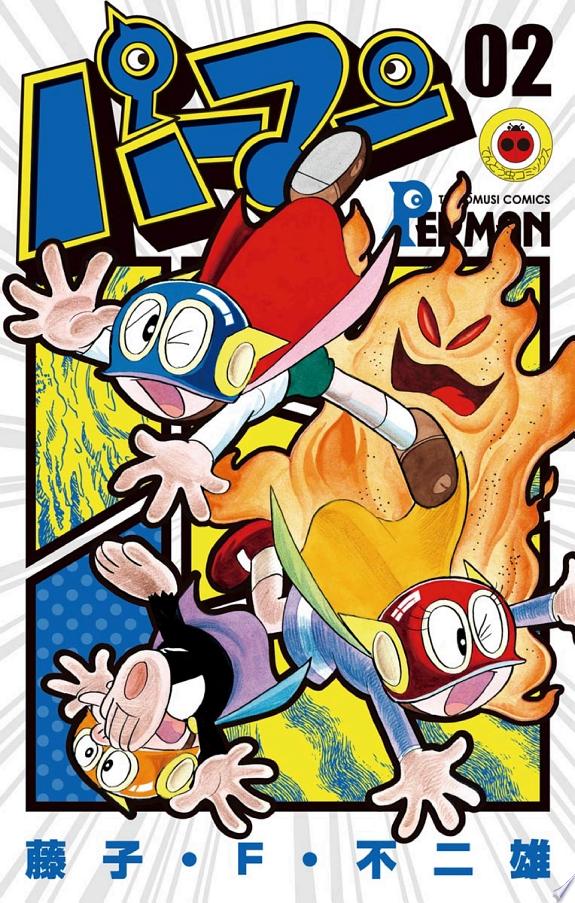
Perman
Perman follows Mitsuo Suwa, an ordinary boy who is given a superhero costume and the ability to fly by a visiting alien — not because he is special, but because Superman was unavailable — and who struggles to balance being a superhero with being an unremarkable student.

Fantasy / Comedy
Kaibutsu-kun
Kaibutsu-kun follows the prince of the Monster World who comes to the human world accompanied by his three monster retainers — Dracula, Frankenstein's monster, and a werewolf — and proceeds to cause chaos while trying to understand humans, who are funnier and stranger than any monster.
Fantasy / Slice of Life
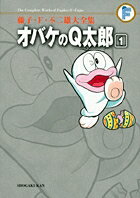
Obake no Q-taro
Obake no Q-taro is the story of a round, clumsy ghost who is adopted by a Japanese family — not through any supernatural event but because the children found him and decided to keep him — and who causes gentle chaos while eating as many rice crackers as possible.

Fantasy / Romance
Oh My Goddess!
Yu's review of Oh My Goddess! — Keiichi Morisato misdials a goddess helpline and Belldandy appears in his dorm room; she grants him one wish and he wishes for her to stay with him; she does, and the series follows their life together as other goddesses and demons complicate their quiet romance.

Fantasy / Comedy
Kannagi: Crazy Shrine Maidens
Yu's review of Kannagi — Mikuriya Jin carves a wooden figure from a sacred tree and it comes to life as Nagi, the local land god in the form of a shrine maiden; Nagi has lost much of her power and must rely on Jin while fighting 'impurity' creatures that have appeared in the area.

Fantasy / Romance
Kaiju Girl Caramelise
Yu's review of Kaiju Girl Caramelise — Kuroe Akaishi has always been alone because strong emotions cause her to transform into a giant kaiju; when a popular boy notices her, the transformations start happening at school; a comedy-romance about a girl whose heart is literally too big to contain.
Written by
Yu
Manga Enthusiast from Japan
I grew up in Japan and manga literally saved me during a tough time in elementary school. My English isn't perfect, but my love for manga is real — and I want to share it with you.