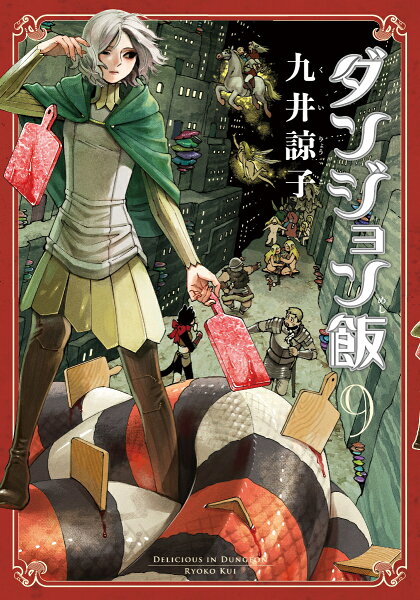
Dungeon Meshi Review: What If You Had to Cook and Eat the Monsters You Fight?
by Ryoko Kui
Read the first volume. If it doesn't hook you, put it down. It'll hook you.
Buy Dungeon Meshi on Amazon →*Affiliate link — I earn a small commission at no extra cost to you.
Quick Take
- A fantasy adventure where the party has to cook and eat the monsters they kill to survive — and it's one of the best manga of its decade
- The world-building is so rich it feels like you're reading something that actually happened
- The ending is one of the most complete and satisfying in recent manga history
Who Is This Manga For?
Dungeon Meshi is for you if:
- You love world-building that feels complete — every detail of this world has been thought through
- You want a fantasy manga that's funny, warm, and then becomes something much deeper
- You're interested in food and cooking as a storytelling lens
- You want a complete series (14 volumes) with a perfect ending
Content Warnings & Age Rating
Age Rating: T (Teen) Content Warnings: Fantasy violence; the concept of eating monsters includes some visually unusual imagery; later volumes deal with themes of death, resurrection, and identity with some body horror elements
The series starts light and becomes significantly darker and more complex in its second half.
Yu's Rating
| Category | Score |
|---|---|
| Story Depth | ★★★★★ |
| Art Style | ★★★★★ |
| Character Development | ★★★★★ |
| Accessibility for Non-Japanese Readers | ★★★★★ |
| Reread Value | ★★★★★ |
Story Overview
Laios Touden's party has just been wiped out by a dragon in the deepest level of the dungeon. His sister Falin used the last of her power to teleport the survivors out — but stayed behind, partially consumed.
They need to go back. Immediately. The dungeon's resurrection magic only works within a certain time limit.
The problem: they have no money, no supplies, and no time to surface and restock.
Laios's solution: eat the dungeon.
Monsters in this world are edible — organic creatures with nutrition, if you know how to prepare them. Laios, who has always been fascinated by monsters to an unusual degree, proposes they hunt and cook their way back down to the dragon.
They are joined by a dwarf named Senshi who has been living in the dungeon for decades and has developed an extraordinary cuisine out of its inhabitants.
What follows is a fantasy adventure structured as a cooking manga — each chapter features a new monster, a recipe, and a meal. But the cooking is the surface. What Dungeon Meshi is actually about is family, obsession, the ethics of eating, and what it means to love something so much that it becomes dangerous.
Characters
Laios Touden — The leader and the series' unusual center. He loves monsters the way most people love art — obsessively, aesthetically, with a depth of feeling that others find strange. His fascination is both his greatest asset and the series' central risk.
Marcille Donato — The elf mage whose discomfort with eating monsters provides most of the early comedy and whose emotional investment in the mission is the series' moral anchor. Her backstory, when revealed, changes the entire series' context.
Chilchuck Tims — The halfling lockpick whose competence is absolute and whose emotional distance is a defense mechanism. His arc is quiet and affecting.
Senshi — The dwarf cook whose knowledge of dungeon ecology is encyclopedic and whose philosophy about eating — about the relationship between the eater and the eaten — gives the series its ethical spine.
Falin Touden — The sister at the center of the mission, present mostly through memory and urgency until the story's complications change that.
Art Style
Kui's art is meticulous and expressive in equal measure. The monster designs are inventive and feel zoologically real — you believe these creatures have ecologies, not just character designs. The food, when prepared, looks genuinely appetizing even when its ingredients are fantastical.
The character expressions carry enormous range. The comedy is delivered visually as much as through dialogue. In the serious later arcs, the same visual expressiveness enables moments of genuine weight.
The dungeon architecture itself is detailed in ways that make it feel inhabited — real geography, consistent spatial logic, environmental storytelling.
Cultural Context
Food and culture — In Japan, food is deeply tied to cultural identity and seasonal rhythm. The framing of dungeon-exploration as a cooking adventure is a distinctly Japanese genre hybrid — the cooking manga (shokugeki) is a significant category in itself. Kui brings the meticulous attention to ingredient and technique typical of cooking manga into a fantasy adventure setting.
Ecosystem thinking — Dungeon Meshi treats the dungeon as a genuine ecosystem — with food chains, environmental pressures, and ecological relationships. This reflects growing Japanese cultural emphasis on environmental systems and the interconnectedness of natural life.
Elven longevity and grief — Marcille's backstory involves the specific grief of being a long-lived species among shorter-lived ones — watching the humans around you age and die while you remain. This theme, common in fantasy, is handled with particular emotional intelligence here.
What I Love About It
There is a chapter where the party sits down to eat a meal they have cooked from monsters they have fought, and Senshi explains why he cooks the way he does.
He believes that food should honor what was eaten — that you prepare a meal properly not just for your own sake but because of what the ingredient was. That eating poorly is a kind of disrespect to the life that was taken.
This is a completely fantastical context — he is talking about slime and walking mushrooms — and it is also one of the most genuine statements of food philosophy I have encountered in any medium.
Dungeon Meshi keeps doing this: using its absurd premise to say true things.
What English-Speaking Fans Say
Dungeon Meshi gained enormous Western readership through the 2024 Netflix anime adaptation, which drove many readers back to the manga. The manga is widely considered superior — richer in detail, more complex in its later arcs, and with an ending that the anime had not yet reached.
Common praise: The world-building, Senshi's philosophy, the character development across all four main party members, the final arc.
The consensus: one of the best completed manga of the decade. Essential.
Memorable Scene ⚠️ Spoiler Warning
The meal at the end.
After everything the party has been through — the dungeon's full horror made visible, the cost of what they attempted — they sit down and eat together.
The meal itself is described with Kui's characteristic detail. The context makes it something entirely different from a meal.
What the meal represents — what sharing food means after everything they've shared — is the series' thesis made visible. Dungeon Meshi is about what it means to keep nourishing each other through difficulty. The ending earns that completely.
Similar Manga
If you liked Dungeon Meshi, try:
- Frieren: Beyond Journey's End — Similar post-adventure fantasy with enormous emotional depth
- Made in Abyss — Fantasy adventure with similar richness of world-building, darker
- Spy x Family — Similar warmth and ensemble comedy, different genre
- Sweetness and Lightning — Cooking as emotional connection, slice-of-life setting
Reading Order / Where to Start
Start from Volume 1. The series is continuous and the world-building builds across all 14 volumes.
Official English Translation Status
Status: Complete English Volumes: 14 (all volumes available) Translator: Yen Press Translation Quality: Excellent
Pros & Cons
Pros
- The most complete, satisfying world-building in recent fantasy manga
- All four main characters are fully realized with complete arcs
- The ending is perfect
- 14 volumes — substantial but completable
Cons
- The tonal shift in the second half surprises readers who came for cooking comedy
- Some of the monster cooking concepts are visually unusual
- Nothing significant — this is one of the best complete manga available
Format Comparison
| Format | Volumes | Price per vol. (approx.) | Best for |
|---|---|---|---|
| Paperback (individual) | 14 vols | ~$14–16 | Collecting |
| Kindle | 14 vols | ~$8–10 | Quick read |
Where to Buy
Read the first volume. If it doesn't hook you, put it down. It'll hook you.
This post contains affiliate links. If you purchase through these links, I may earn a small commission at no extra cost to you. As an Amazon Associate, I earn from qualifying purchases.
*Affiliate link — I earn a small commission at no extra cost to you.
More Manga You Might Like
Fantasy / Comedy
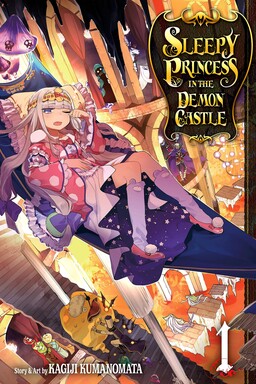
Sleepy Princess in the Demon Castle
Yu's review of Sleepy Princess in the Demon Castle — Princess Syalis has been kidnapped by Demon King Twilight and held in the demon castle while the hero prepares to rescue her; she does not care about rescue; she only wants to get a good night's sleep, and will destroy anything in her way.
Fantasy / Adventure
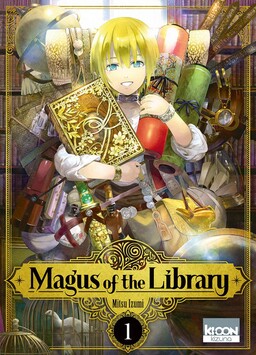
Magus of the Library
Yu's review of Magus of the Library — Theo is a boy of mixed race in a world where the Great Library of the Central Archive controls all knowledge; he loves books but is barred from reading in his village's library because of his half-elf heritage; when a Kafna named Sedona arrives, she sees in him a potential that could change his path.
Fantasy / Adventure
Magi: The Labyrinth of Magic
A review of Shinobu Ohtaka's Magi — the 37-volume Weekly Shōnen Sunday adventure (2009–2017) that starts as an Arabian Nights riff and ends as one of the most politically serious long-form shōnen of its decade. Complete in English from VIZ.

Fantasy / Comedy
KonoSuba: God's Blessing on This Wonderful World!
Yu's review of KonoSuba — the isekai parody where every party member is disastrously incompetent at something crucial. A useless goddess, an explosion-obsessed mage, a masochistic crusader, and a pathetic protagonist who somehow keeps surviving. The funniest isekai ever made.
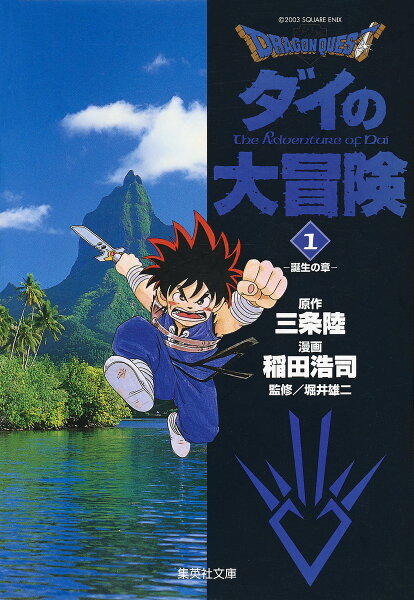
Fantasy / Adventure
Dragon Quest: The Adventure of Dai
Yu's review of Dragon Quest: The Adventure of Dai — a boy raised on a monster island who always dreamed of being a hero discovers he may be the descendant of a legendary warrior, and sets out to defeat the demon lord threatening the world.
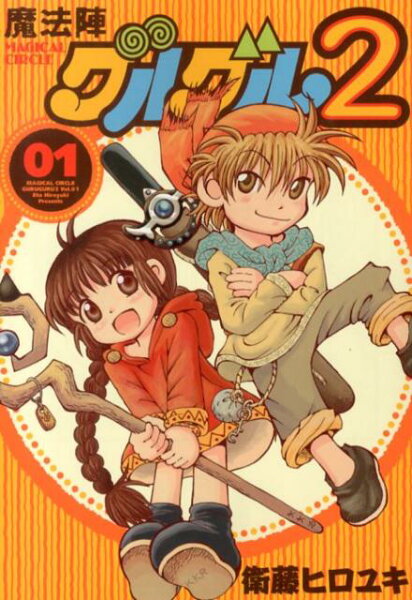
Fantasy / Comedy
Magical Circle Guruguru
Nike is an ordinary village boy drafted into the Hero's Journey. Kukuri is the last practitioner of Guruguru magic, a long-abandoned school that does impressive things for completely unpredictable reasons. Together they will save the world, mostly by accident.
Written by
Yu
Manga Enthusiast from Japan
I grew up in Japan and manga literally saved me during a tough time in elementary school. My English isn't perfect, but my love for manga is real — and I want to share it with you.
Disclosure: This post contains affiliate links. As an Amazon Associate, I earn from qualifying purchases at no extra cost to you.