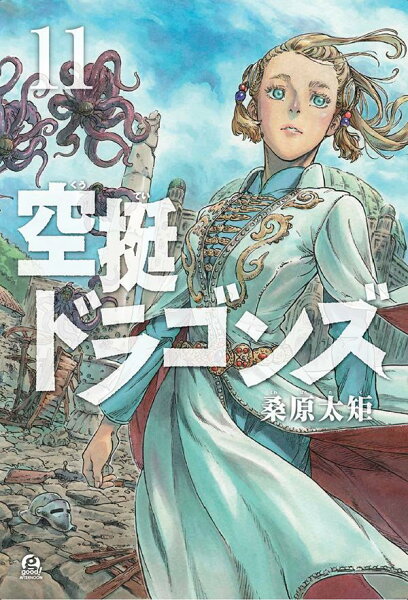
Drifting Dragons Review: Dragon Hunting Is Just Cooking if You Think About It
by Taku Kuwabara
Read the first volume. If it doesn't hook you, put it down. It'll hook you.
Buy Drifting Dragons on Amazon →*Affiliate link — I earn a small commission at no extra cost to you.
Quick Take
- Airship crew hunts dragons and then enthusiastically cooks and eats them
- The food chapters are as detailed and loving as the hunting sequences
- If Delicious in Dungeon gave you an appetite for fantasy cooking manga, start here
Who Is This Manga For?
- Readers who loved Delicious in Dungeon and want more fantasy food content
- Anyone who enjoys slow, atmospheric stories with a strong sense of place
- Fans of ghibli-style fantasy with a more grounded tone
- Readers who like ensemble casts with distinct personalities
Content Warnings & Age Rating
Age Rating: T (Teen) Content Warnings: Hunting and butchering of dragon creatures, mild violence
The hunting scenes are not gratuitous but they do show dragons being killed and prepared as food. If that bothers you, this may not be your manga.
Yu's Rating
| Category | Score |
|---|---|
| Story Depth | ★★★☆☆ |
| Art Style | ★★★★★ |
| Character Development | ★★★☆☆ |
| Accessibility for Non-Japanese Readers | ★★★★★ |
| Reread Value | ★★★★☆ |
Story Overview
In a world where the sky is filled with clouds and dragons, there are people called "drakers" who hunt dragons from airships. It is dangerous work, requiring skilled pilots, hunters, and cooks who can make use of the entire animal.
The Quin Zaza is one such airship, crewed by a small team whose motivations for this lifestyle vary. But the one constant is Mika — a hunter with an almost mystical ability to find dragons, and an obsessive dedication to eating them.
Each chapter typically follows the Quin Zaza crew tracking a particular type of dragon, hunting it, and then cooking and eating it. The dragon types are inventive and distinctive. The cooking is shown in loving detail. The world is expanded gradually through the work.
There is not a grand plot driving the series. It is about a way of life, a type of work, and the people who choose it.
Characters
Mika is the defining personality of the crew. He is so focused on eating dragons that it reads almost like a calling rather than an appetite. His technical skill as a hunter is excellent. His capacity for wonder at new flavors is genuinely infectious.
Takita is a new crew member in the early chapters — our audience surrogate for the draker life. She is earnest and adapts quickly. Her relationship with Mika is the warm center of the ensemble.
Vannie is the airship's captain: calm, experienced, the one who holds the crew together when things get difficult.
Gibbs is older and steadier — the experienced hand who has seen everything but still shows up.
The crew functions as a genuine unit, and Kuwabara gives everyone enough time to feel like a real person rather than a type.
Art Style
The art in Drifting Dragons is exceptional. The airships and the sky are rendered with real care — the clouds, the altitude, the sense of open space above the world. Dragon designs are inventive and distinctive, each species looking plausible as an animal in this world's ecology.
The food pages deserve special mention. The cooking process is drawn with the same attention to detail you find in dedicated cooking manga, and the finished dishes look genuinely appealing despite being made from creatures that a moment ago were trying to kill the crew.
Cultural Context
Japan has a rich tradition of both hunting-based stories and cooking manga. Drifting Dragons sits at the intersection, combining the physical and technical challenge of hunting with the domestic satisfaction of preparing a meal.
The airship setting draws from a long tradition of Western-influenced steampunk fantasy in manga, but Kuwabara uses it lightly — more interested in the lived reality of this work than in genre spectacle.
The detailed food preparation echoes a Japanese cultural value: if you take a life for food, you honor it completely by wasting nothing and preparing it with skill.
What I Love About It
I want to be honest. When I first saw this manga described, I was not interested. "Fantasy dragon hunting with cooking." That sounded like a quirky premise that would wear out fast.
It did not. By chapter three I was completely inside the world.
What Kuwabara does is make the work feel real. Draking is dangerous and unglamorous and physically demanding. The crew gets tired and sometimes scared and sometimes makes mistakes. But they also get to eat some extraordinary meals in extraordinary places.
There is a particular chapter where the Quin Zaza hunts a very large, very old dragon over deep clouds, and the scale of the thing — the creature and the hunt and the sky — was genuinely beautiful. I kept rereading those pages.
What English-Speaking Fans Say
Western readers often compare this favorably to Delicious in Dungeon as another series that takes fantasy food seriously. Those who go in expecting plot-heavy adventure sometimes find it slow, but readers looking for atmosphere and craft consistently love it.
The visual quality of the manga translation gets high marks. Kodansha's English editions are well-produced.
Memorable Scene ⚠️ Spoiler Warning
Early in the series, the crew brings down a particularly large specimen and Mika works alone through the night to prepare it properly. The chapter that follows — the crew eating together at dawn, high above the cloud layer — is the moment where the manga's tone is established perfectly.
It is about the pleasure of shared work, shared food, and the kind of beauty that is only available to people willing to go to difficult places.
Similar Manga
- Delicious in Dungeon — the obvious comparison; fantasy cooking with more character development and worldbuilding
- Golden Kamuy — hunting manga with extremely detailed food preparation; more violent and plot-driven
- Dungeon Meshi — another name for Delicious in Dungeon; directly comparable
- Flying Witch — softer fantasy with the same sense of quiet wonder about a non-ordinary life
Reading Order / Where to Start
Start from Volume 1. The series is complete at 15 volumes. Each volume is relatively self-contained with an overarching sense of development, so it reads well in single-volume doses.
Official English Translation Status
Kodansha Comics has published the complete series in English. All 15 volumes are available. The translation is faithful and the volumes look good in physical format.
Pros & Cons
Pros
- Exceptional art, especially the sky and food sequences
- Complete series with a satisfying sense of journey
- Deeply pleasant to read — relaxing without being boring
- Genuinely creative dragon designs and ecology
Cons
- Minimal overarching plot — this is about atmosphere over story
- Not for readers who need a central conflict or escalating stakes
- The hunting/butchering content may not suit everyone
Format Comparison
| Format | Notes |
|---|---|
| Physical | Strongly recommended — the art is best appreciated at full size |
| Digital | Available; convenient but you lose some of the visual impact |
| Omnibus | Not available in English; standard volumes at 15 volumes are manageable |
Where to Buy
Read the first volume. If it doesn't hook you, put it down. It'll hook you.
*Affiliate link — I earn a small commission at no extra cost to you.
More Manga You Might Like

Fantasy / Comedy
Saint Young Men
Yu's review of Saint Young Men — Jesus Christ and Gautama Buddha share an apartment in Tokyo's Tachikawa neighborhood while on vacation, trying to experience ordinary human life while accidentally performing miracles.

Fantasy / Slice of Life
Frieren: Beyond Journey's End
Yu's review of Frieren: Beyond Journey's End — an elf mage who helped defeat the Demon King but barely knew her companions because she outlives everyone. A manga about what it means to look back and finally understand what you had.

Fantasy / Adventure
Faraway Paladin
Yu's review of Faraway Paladin — Will was raised in a ruined city by three undead: a skeletal warrior, a mummified sorcerer, and a ghost priestess; having learned everything from them, he must eventually leave to find his own purpose in a world that doesn't know he exists.

Fantasy / Comedy
Jashin-chan Dropkick
A review of Jashin-chan Dropkick, the comedy manga about a demon girl from hell who wants to kill her summoner — but can't — and is furious about it every day.
Fantasy / Slice of Life
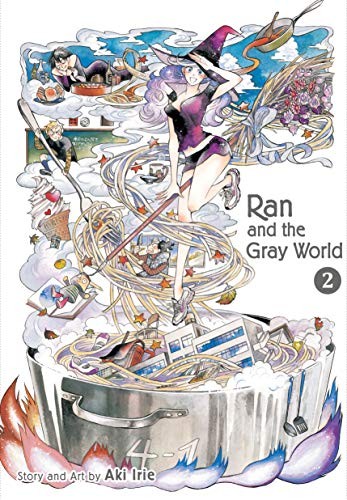
Ran and the Gray World
A review of Ran and the Gray World, the magical fantasy manga about a little girl who can transform into an adult using her late mother's shoes — and the world she discovers.

Fantasy / Supernatural
xxxHOLiC
Yu's review of xxxHOLiC — a high school student cursed with the ability to see spirits finds a mysterious shop run by the dimension witch Yūko, who agrees to remove his power in exchange for becoming her shop worker.
Written by
Yu
Manga Enthusiast from Japan
I grew up in Japan and manga literally saved me during a tough time in elementary school. My English isn't perfect, but my love for manga is real — and I want to share it with you.
Disclosure: This post contains affiliate links. As an Amazon Associate, I earn from qualifying purchases at no extra cost to you.