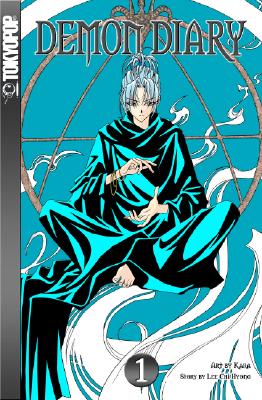
Demon Diary Review: The Accidental Demon Lord and the Tutor Who Didn't Sign Up for This
by Kara (story), Lee Yun Hee (art)
Read the first volume. If it doesn't hook you, put it down. It'll hook you.
Buy Demon Diary on Amazon →*Affiliate link — I earn a small commission at no extra cost to you.
He inherited the role of Demon Lord. He keeps accidentally making friends with the villagers he's supposed to terrorize.
Quick Take
- A Korean manhwa fantasy comedy about an accidental Demon Lord and his long-suffering demon tutor
- The humor comes from the protagonist's complete unsuitability for evil
- 7 complete volumes; a light, enjoyable read from the early manhwa era in the US
Who Is This Manga For?
- Fantasy comedy readers who want something gentle and low-stakes
- Fans of the "fish out of water in a fantasy role" premise
- Readers interested in early manhwa localization history
- Anyone who enjoyed similar "wrong person for the role" fantasy comedy
Content Warnings & Age Rating
Age Rating: T (Teen) Content Warnings: Fantasy violence, mild shounen-ai undertones between Eclipse and Raenef
Light content overall. The violence is comedic and the romantic undertones are subtle.
Yu's Rating
| Category | Score |
|---|---|
| Story Depth | ★★★☆☆ |
| Art Style | ★★★★☆ |
| Character Development | ★★★☆☆ |
| Accessibility for Non-Japanese Readers | ★★★★★ |
| Reread Value | ★★★☆☆ |
Story Overview
Raenef is a young man who, by a chain of cosmic administrative error and prophecy, inherits the role of Demon Lord. He is sweet, clumsy, afraid of the dark, and fundamentally incapable of the cruelty the position requires.
Eclipse is an ancient, powerful demon who has served four Demon Lords. He is not pleased with his fifth assignment. He is very good at his job, very patient in the specific way that involves suppressing tremendous irritation, and gradually, against his better judgment, invested in Raenef's development.
The story follows their interactions as Eclipse attempts to teach Raenef how to behave like a Demon Lord while Raenef continues to befriend humans who were supposed to be adversaries, apologize to people he's accidentally intimidated, and approach every situation with a sincere gentleness that confounds everyone around him.
The underlying narrative involves a genuine threat — a cleric from the opposing faction, prophecies about Raenef's destiny — that gives the comedy somewhere to go without overwhelming the tone.
Characters
Raenef — The comedy protagonist who also works as a genuine protagonist: his goodness isn't stupidity, and his growth across the series is real even if it's paced gently.
Eclipse — The long-suffering tutor who is more emotionally invested than he intends to be. His arc from "this is a professional obligation" to something warmer is the series' primary emotional throughline.
Chris — The cleric who starts as an antagonist and whose relationship with the Demon Lord's side evolves in ways the genre handles well.
Art Style
Lee Yun Hee's art is clean, attractive manhwa with epressive character work. The fantasy setting is rendered with detail — castles, demon aesthetics, holy knight designs — that makes the world feel inhabited. Character designs are distinctive and appealing. The art has aged well for its era.
Cultural Contet
Demon Diary was published during the early wave of Korean manhwa reaching Western audiences through Tokyopop — before the distinction between Japanese manga and Korean manhwa was widely understood by Western readers. Many readers encountered it as simply "manga" and appreciated it on those terms.
The "demon lord who is actually gentle" premise has become more common since Demon Diary was published, but the manhwa was an early eample of a premise that works because it genuinely likes its protagonist rather than using the comedic contrast as the point.
What I Love About It
Eclipse's restraint. Throughout the series, he has the power to resolve most problems immediately and chooses not to — because what Raenef needs isn't to be saved, it's to develop. Watching a character with overwhelming power epress care through patience rather than action is unusual enough to be genuinely touching.
What English-Speaking Fans Say
Fondly remembered by readers from the early 2s manhwa wave. The Eclipse-Raenef dynamic is the consistent praise point. Frequently cited as one of the better entries from the Tokyopop manhwa catalog. The shounen-ai subtet is noted without being considered the primary appeal or a problem.
Memorable Scene ⚠️ Spoiler Warning
The scene where Eclipse's actual feelings for Raenef surface — not in dialogue, but in what he does when Raenef is genuinely in danger — is the moment the series reveals what it was actually about underneath the comedy. The restraint that comes before it is why the moment lands.
Similar Manga
| Title | Its Approach | How Demon Diary Differs |
|---|---|---|
| The Demon Prince of Momochi House | Supernatural romance with a similar dynamic | Momochi is more romantic-focused; Demon Diary is more comedy-focused |
| Hataraku Maou-sama! | Demon lord in mundane situations | Maou-sama is more satirical; Demon Diary is gentler and more romantic |
| Black Butler | Demon serving a young master | Black Butler is darker and more sophisticated; Demon Diary is lighter |
Reading Order / Where to Start
Volume 1, straight through. The series is designed to build the relationship over seven volumes.
Official English Translation Status
Tokyopop published all 7 volumes in English. Complete and available.
Pros & Cons
Pros
- Eclipse-Raenef dynamic is genuinely warm
- Light enough to read quickly and pleasurably
- Complete 7-volume story with satisfying resolution
- The comedy holds up
Cons
- The stakes are never very high — if you need tension, this isn't the book
- Character development is gentle and cumulative rather than dramatic
- Some volumes out of print
- The premise has been done more elaborately since
Is Demon Diary Worth Reading?
For fantasy comedy fans and early manhwa history enthusiasts — yes. It's warm, light, and complete.
Format Comparison
| Format | Pros | Cons |
|---|---|---|
| Physical | Complete 7-volume set | Some volumes out of print |
| Digital | More accessible | — |
| Omnibus | No omnibus available | — |
Where to Buy
Read the first volume. If it doesn't hook you, put it down. It'll hook you.
This post contains affiliate links. If you purchase through these links, I may earn a small commission at no etra cost to you. As an Amazon Associate, I earn from qualifying purchases.
*Affiliate link — I earn a small commission at no extra cost to you.
More Manga You Might Like
Fantasy
Return of the Mount Hua Sect
A review of Return of the Mount Hua Sect — the Korean murim manhwa about the reincarnation of the greatest Mount Hua Sect swordsman who returns to a sect in decline and must restore its former glory.
Fantasy
The Villainess Lives Twice
A review of The Villainess Lives Twice — the Korean historical fantasy manhwa about an empress who is reincarnated back into her own past as the story's villainess and must navigate court politics knowing how everything ends.
Fantasy
Nano Machine
A review of Nano Machine — the Korean manhwa about a bullied murim student who receives a nano machine injection from a future descendant and becomes an unstoppable martial arts prodigy.
Fantasy
Second Life Ranker
A review of Second Life Ranker — the Korean fantasy manhwa about a man who receives his murdered twin brother's watch and must conquer the same deadly tower his brother died in.
Fantasy
Chronicles of the Heavenly Demon
A review of Chronicles of the Heavenly Demon (천마신교 도총관) — the Korean murim manhwa where a framed spear master is killed by the Orthodox Sect and reborn as Trainee Number 900 inside the Heavenly Demon Cult, living a double life for one goal: vengeance.
Fantasy
Legend of the Northern Blade
A review of Legend of the Northern Blade — the Korean murim manhwa about the son of the Northern Heavenly Sect's leader who must revive his father's legacy and face the Silent Night that destroyed everything.
Written by
Yu
Manga Enthusiast from Japan
I grew up in Japan and manga literally saved me during a tough time in elementary school. My English isn't perfect, but my love for manga is real — and I want to share it with you.
Disclosure: This post contains affiliate links. As an Amazon Associate, I earn from qualifying purchases at no extra cost to you.