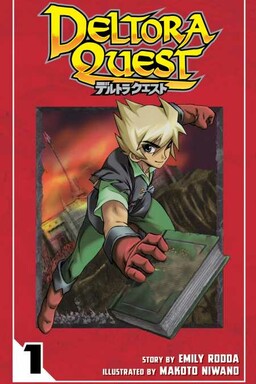
Deltora Quest Review: The Battle-Manga Take on Australia's Most Beloved Fantasy Quest
by Makoto Niwano / Emily Rodda
Read the first volume. If it doesn't hook you, put it down. It'll hook you.
Buy Deltora Quest on Amazon →*Affiliate link — I earn a small commission at no extra cost to you.
I came to Deltora Quest backwards. I read Emily Rodda's novels as a kid in Japan — they were everywhere here in the early 2000s, with those little gem icons on the spines — long before I understood they were Australian books that had become a phenomenon in Japan first. So when I picked up Makoto Niwano's manga, I already knew the shape of the story: a boy, a belt, seven gems, seven monsters. What I didn't expect was how different it would feel. Niwano is a battle-manga guy — he drew kickboxing and martial-arts series before this — and you can feel his instincts pulling Rodda's gentle children's fantasy toward the rhythm of a Shonen fight. Sometimes that works. Sometimes it strips the quiet out of a story that needed some quiet.
I have complicated feelings about this one, and I want to be honest about them.
Quick Take
- Makoto Niwano's manga adaptation of Emily Rodda's Australian Deltora Quest novels — the seven-gem structure gives each volume a clean, self-contained monster-of-the-region adventure
- Niwano reads Rodda's quest through a battle-manga lens; the fights get bigger and more dramatic than the books, which is either a feature or a betrayal depending on what you came for
- Complete in 10 volumes, all published in English by Kodansha Comics; ageRating: T (Teen) for fantasy violence and dark themes
Story Overview
The kingdom of Deltora is protected by a single object: the Belt of Deltora, a magical belt set with seven great gems — topaz, ruby, opal, lapis lazuli, emerald, amethyst, and diamond. As long as the rightful heir wears the complete belt, its banishing magic holds the Shadow Lord at bay. But the gems are stolen and scattered to the kingdom's most dangerous corners, the belt's power fails, and the Shadow Lord's Grey Guards occupy Deltora.
Lief is a blacksmith's son in the city of Del. On his sixteenth birthday his parents send him out with a hand-drawn map, a sword his father forged, and a cloak his mother sewed — and the quest he inherited without asking for it. He travels with Barda, a gruff former palace guard who has been hiding in the city disguised as a beggar. In the very first region, the Forests of Silence, they meet Jasmine, a wild girl who has survived alone in the trees since the Grey Guards took her parents, with a raven named Kree and a small furry creature named Filli for company.
From there the story is a march through seven regions, each holding one gem behind one guardian: the Forests of Silence, the Lake of Tears, the City of the Rats, the Shifting Sands, Dread Mountain, the Maze of the Beast, and the Valley of the Lost. The hook that makes the quest more than a checklist is what waits at the end of it — the question of who the true heir of Deltora actually is, and why Lief specifically was given this burden. The answer reframes the whole journey, and the manga carries it through to the coronation in the final volumes.
Characters
Lief — He starts as a cocky, slightly reckless city kid who treats the quest like an adventure rather than a death sentence. The arc Rodda built, and that Niwano mostly preserves, is the slow erosion of that swagger: every region costs him something, every guardian teaches him that courage alone doesn't open these locks. By the end he's grown into the weight of a crown he didn't know was coming.
Jasmine — The most interesting member of the party. She's feral when they find her in the Forests of Silence — no patience for cities, no trust in strangers, fluent in the language of birds and animals. Her parents were taken by Grey Guards when she was seven, and her whole arc is about whether someone who learned to need no one can choose to belong to a group. Kree the raven and Filli the furry creature aren't pets; they're the family she built in the woods.
Barda — The veteran. He spent years disguised as a beggar in Del, watching, and he knows the kingdom's geography and dangers in a way Lief can't. He's the one who keeps the party alive in the early regions, and the friction between his caution and Lief's impulsiveness is the engine of a lot of the early volumes.
The Shadow Lord — More an oppressive force than a character for most of the run. He works through the gems' guardians and the Grey Guards rather than appearing himself, which keeps the dread distant and constant until the belt is finally whole again and his banishing comes due.
What I Love About It
The first region is still the best argument for the manga. In the Forests of Silence, the topaz gem isn't sitting in a treasure chest — it's the pommel-stone of a sword carried by Gorl, a knight in golden armor who has spent a small eternity guarding the Lilies of Life, flowers whose nectar promises eternal life. Gorl is mad with single-minded obsession, frozen in place by his own desire, and the gem the heroes need is literally embedded in the weapon of the thing they have to get past. I love that as a piece of design. The guardian and the prize are the same object. You can't sneak around it.
Niwano draws this confrontation like a Shonen boss fight, and here his instincts pay off — the golden knight looming out of the dark, the lilies, the desperate scramble to grab the topaz, is genuinely tense on the page in a way the prose version, written for younger kids, kept gentler. This is the moment where I stopped resenting the battle-manga treatment and started seeing what it was for. When the source material gives Niwano a real monster, he delivers.
Memorable Scene ⚠️ Spoiler Warning
The payoff I keep coming back to isn't a fight — it's the reveal of what the Belt of Deltora actually requires. It was never just about collecting seven shiny stones. The belt only works when the true heir of King Adin wears it, with the gems set in the correct order and the vow of the seven tribes renewed. When all of that finally aligns and the completed belt is worn by the rightful heir, its banishing magic wakes and drives the Shadow Lord back to the Shadowlands — and the boy holding it turns out to be the king Deltora has been waiting for the whole time. Lief is crowned, and he reinstates the old law that the heir must wear the belt at all times. Reading the whole grind of seven regions in light of that ending changes it. The quest wasn't a scavenger hunt. It was the kingdom finding out who it belonged to.
Pros & Cons
Pros
- Seven-region structure delivers clean, self-contained adventures with steady momentum
- Niwano's battle-manga style shines whenever a region offers a real monster (Gorl is the standout)
- Faithful enough to Rodda's plot that novel fans get the story they remember
- Complete in 10 volumes — no abandoned adaptation, all the way to the coronation
Cons
- The action-manga framing flattens some of the books' quieter, more atmospheric moments
- Character interiority is lighter than in the novels; this is plot-forward adventure, not literary fantasy
- Episodic by design — if monster-of-the-region structure tires you, ten volumes of it is a lot
This is a children's quest novel redrawn as a shonen action manga. Whether that's an upgrade or a loss depends entirely on which version of Deltora you fell in love with first.
Is Deltora Quest Worth Reading?
If you grew up with Rodda's novels, the manga is worth it for the visual jolt of seeing Gorl, the Lake of Tears, and the City of the Rats drawn as Shonen set-pieces. If you're new to Deltora, it's a clean, complete, all-ages-adjacent fantasy adventure with a satisfying structure and a real ending. Just go in knowing it trades the books' quiet for a louder, more combat-driven energy.
Who Is This Manga For?
- Fans of Emily Rodda's Deltora Quest novels who want to see the world drawn in motion
- Readers who like episodic quest fantasy with a monster behind every door
- Anyone wanting a complete, finished fantasy manga with a defined beginning, middle, and end
- Younger or all-ages readers looking for adventure without mature content
Cultural Context
Deltora Quest is one of the strangest cultural round-trips in fantasy. Emily Rodda's novels were Australian, but they became a runaway phenomenon in Japan — translated, then adapted into this manga, then into a long-running anime — on a scale they never quite reached at home until later. So this manga is a Japanese reading of Australian children's fantasy, drawn by a creator whose background was in fighting manga. That layered translation is part of what makes it interesting, and part of why it can feel tonally different from the books.
Similar Manga
| Title | Its Approach | How Deltora Quest Differs |
|---|---|---|
| Magi: The Labyrinth of Magic | Quest fantasy built around descending into deadly dungeons for treasure | Deltora's "dungeons" are open regions, each with a single guardian and a single gem |
| Record of Lodoss War | Classic Western-style high fantasy party adventure | Deltora is aimed younger and built on a fixed seven-step collection structure |
| Made in Abyss | A descent into an increasingly hostile, layered world | Made in Abyss goes far darker; Deltora keeps its peril at an all-ages level |
Official English Translation Status
Kodansha Comics published all 10 volumes of the manga in English, so the complete series is available and finished. This is a fully licensed English release.
Where to Buy
Read the first volume. If it doesn't hook you, put it down. It'll hook you.
This post contains affiliate links. If you purchase through these links, I may earn a small commission at no extra cost to you. As an Amazon Associate, I earn from qualifying purchases.
*Affiliate link — I earn a small commission at no extra cost to you.
More Manga You Might Like
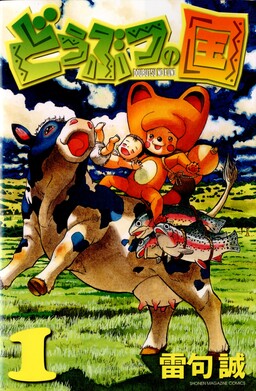
Fantasy
Animal Land
Yu's review of Animal Land — in a world where humans are extinct and animals communicate only within their own species, a tanuki named Monoko finds a human baby she cannot understand but raises anyway; as Taroza grows, he discovers he can speak to all animals, and begins to challenge the world's fundamental law that predators must eat prey.
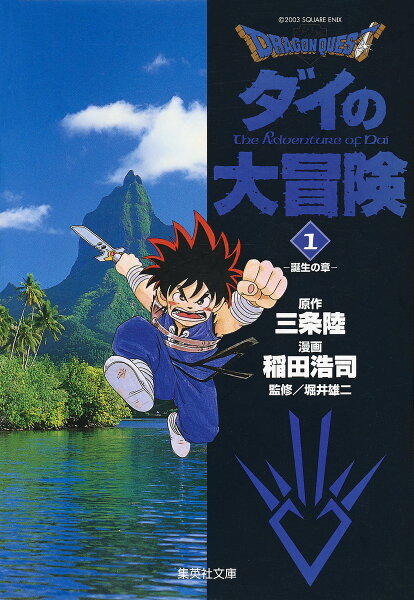
Fantasy / Adventure
Dragon Quest: The Adventure of Dai
Yu's review of Dragon Quest: The Adventure of Dai — a boy raised on a monster island who always dreamed of being a hero discovers he may be the descendant of a legendary warrior, and sets out to defeat the demon lord threatening the world.

Fantasy
Kamichama Karin Chu
Yu's review of Kamichama Karin Chu — the sequel to Kamichama Karin; Karin and Kazune's story continues with a mysterious boy from the future who claims to be their son, new divine power developments, and escalating conflict with forces who want to control what gods can do.

Fantasy
Unico
Unico is a small unicorn with the power to make anyone who meets him happy — which is why the gods condemn him to be carried across time by the West Wind, stripped of all memories and relationships, forbidden to stay anywhere long enough to be loved.
Fantasy / Slice of Life
The Star of Cottonland
The Star of Cottonland follows Chi, a small stray kitten who believes with complete sincerity that she is a human child temporarily in cat form — Yumiko Oshima's beloved shojo classic about identity, belonging, and the particular consciousness of cats.
Fantasy / Romance
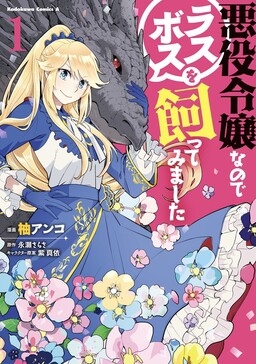
I'm the Villainess, So I'm Taming the Final Boss
Yu's review of I'm the Villainess, So I'm Taming the Final Boss — Aileen reincarnates as the villainess of an otome game; instead of trying to avoid the bad ending passively, she decides the best strategy is to capture the demon lord Claude — the game's final boss — and make him her ally.
Written by
Yu
Manga Enthusiast from Japan
I grew up in Japan and manga literally saved me during a tough time in elementary school. My English isn't perfect, but my love for manga is real — and I want to share it with you.
Disclosure: This post contains affiliate links. As an Amazon Associate, I earn from qualifying purchases at no extra cost to you.