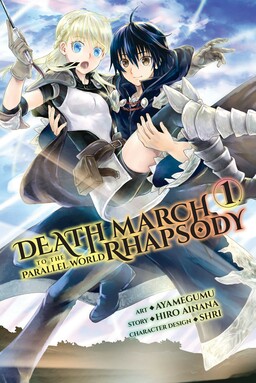
Death March to the Parallel World Rhapsody Review: The Isekai Where Being Overpowered Is Beside the Point
by Hiro Ainana (Story) / Ayamegumi (Art)
Read the first volume. If it doesn't hook you, put it down. It'll hook you.
Buy Death March to the Parallel World Rhapsody on Amazon →*Affiliate link — I earn a small commission at no extra cost to you.
I have done a death march. Not a fantasy one — a real one, the kind where you sleep under your desk because driving home and driving back costs more hours than you have. I was twenty-six, the deadline was immovable, and I remember the specific feeling of looking at my own code at 4 a.m. and not being able to tell if it was working or if I had simply stopped being able to read. So when I opened the first volume of Death March to the Parallel World Rhapsody and the very first thing that happens is a programmer named Suzuki falling asleep at his keyboard during crunch, I laughed out loud. I knew exactly where this was coming from.
What surprised me is that the manga doesn't really care about the death march. It uses it as a launchpad and then never looks back. Suzuki wakes up as a fifteen-year-old in the fantasy RPG he was building, panics, becomes the strongest being alive by accident, and then — instead of going on a heroic rampage — decides to go sightseeing. I came in expecting a power-trip. What I got was the most relaxed isekai I have ever read, and I mean that as a compliment and a warning at the same time.
Quick Take
- A burned-out game programmer becomes invincible in the first chapter, then spends the rest of the series eating good food, seeing new cities, and quietly adopting orphans — the "overpowered" part is the setup, not the payoff.
- Ayamegumi's manga adaptation is comfortable, low-tension isekai built on world-tourism rather than combat; if you want a demon lord to fight, this isn't it.
- Rated T (Teen): fantasy violence is rare, but the harem dynamic and the in-world slavery system mean it's best read with eyes open. (See Content Warnings below.)
Story Overview
Ichiro Suzuki is a twenty-nine-year-old game programmer grinding through a brutal crunch — fixing bugs in two RPGs at once. He dozes off and wakes in a fantasy world that looks unsettlingly like the games he was working on, now in the body of a fifteen-year-old he names Satou (a generic alias he used as a tester).
The turning point arrives almost immediately. A swarm of lizardmen attacks, and in a panic Satou fires off three "Meteor Rain" spells — debug items he'd loaded for testing, each meant to one-shot anything. They incinerate the entire army and, in the process, kill a god who was hiding among them. The experience payout is so enormous it rockets Satou from level 1 to level 310 in a single moment. He is, from that point, effectively unkillable and absurdly rich in skills and resources.
Here's where the series defines itself: Satou does not become a conqueror. Unable to return home and unwilling to flaunt his power (drawing attention is dangerous), he decides to explore. He registers as a traveling merchant, samples local cooking, learns crafts, and treats the world as a place to experience rather than dominate. The emotional spine that grows out of this is a found family — a party of rescued children and outcasts he gathers city by city. The plot, such as it is, is the slow accumulation of these people and places.
Characters
Satou (Suzuki) — The defining trait of his arc is restraint. He has the power to flatten kingdoms and instead spends it hiding his level, helping people quietly, and chasing good meals. His adult, programmer's-eye view of the world — reading it as a system, noticing the "mechanics" — makes him a calmer, less reactive lead than most isekai protagonists. His real growth is learning to be a guardian to the kids he keeps taking in.
Pochi & Tama — A dog-girl and a cat-girl, demi-human child slaves Satou frees from a dungeon in Seiryuu City. Pochi fights with a short sword and buckler; Tama wields twin knives. Their arc is the move from terrified, disposable property to genuinely loved family members — they cling to Satou not as an owner but as the first person who treated them as people.
Liza — An eighteen-year-old orange-scaled lizardkin, freed alongside Pochi and Tama, whom she had been protecting. A disciplined spear-fighter, she becomes the party's steady older-sister figure and most reliable combatant.
Arisa & Lulu — Half-sisters Satou buys from a slave trader. Arisa is an eleven-year-old who is secretly a reincarnated Japanese woman — when Satou realizes she's speaking Japanese, it reframes their whole dynamic. Lulu, fourteen and descended from Japanese ancestry, becomes the party's cook and develops feelings for Satou. Arisa's previous life informs the harem comedy that builds across the series.
Zena Marienteil — A seventeen-year-old soldier-mage, Satou's first real friend in this world. Their meeting (a wyvern threatening her city's airship patrol) is his first proper "hero moment," handled with deliberate understatement.
Mia & Nana — An elf and a homunculus, both rescued from a rogue sorcerer's collapsing dungeon, who round out the ensemble. The party is large, and the warmth comes from how Satou folds each new stray into it.
What I Love About It
The thing I keep coming back to is how the manga treats Satou's first big rescue — Pochi, Tama, and Liza in the Seiryuu City dungeon. In a lot of isekai, freeing slaves is a flex: the hero buys or saves them, gets loyal followers, moves on. Ayamegumi slows it down. These are starving, beaten kids who have learned to expect nothing, and the panels of them realizing food is just... being given to them, no strings, hit harder than any fight scene in the book. Satou's competence in that sequence isn't about combat — it's about being the first adult in their lives who isn't a threat.
What makes it work for me is the restraint in the art and pacing. There's no swelling triumphant moment, no big speech. Satou notices the cocooned captives in the spider's den, frees them, feeds the kids, and the manga lets their slow thaw carry the weight. After my own years of grinding work where nothing felt warm, a fantasy whose central fantasy is gentleness — being powerful enough that you never have to be cruel, and choosing kindness with that power — genuinely got to me. The invincibility isn't wish-fulfillment about winning. It's wish-fulfillment about safety.
Memorable Scene ⚠️ Spoiler Warning
The Meteor Rain moment in the first volume is the scene that defines everything. Satou, newly arrived and still half-convinced he's dreaming, is swarmed by an army of lizardmen. In raw panic he triggers three Meteor Rain spells he'd loaded as debug tools — and the page erupts. The entire enemy force is annihilated in one apocalyptic strike, and unknown to Satou, a god lurking among them dies too.
What makes it stick isn't the spectacle; it's the aftermath. His level jumps from 1 to 310, and the manga frames it almost as an embarrassment — Satou standing in a crater he made by accident, instantly the strongest thing in the world, with no idea what to do next. Most isekai would treat this as the hero's ascension. Death March treats it as the moment the protagonist becomes overpowered enough that the rest of the story can stop being about power at all. It's the inciting incident and the thesis statement in one panel: now that nothing can hurt you, what kind of person do you choose to be?
Pros & Cons
Pros
- The "explore, don't conquer" premise is a real palate-cleanser in a genre drowning in demon-lord battles
- Satou is an unusually mature, low-ego lead — competent without being smug
- The found-family core, especially the rescued kids, carries genuine warmth
- Ayamegumi's clean linework and loving food and scenery art suit the tourism premise
Cons
- Satou is invincible from chapter one, so there is essentially zero combat tension
- It's ongoing with no ending in sight, and the episodic structure can wander
- The harem dynamic and the casual in-world slavery framing will be a hard pass for some readers — that's not a flaw to argue away, it's a genuine fork in the road, and you'll know within a volume which side of it you're on
Is Death March to the Parallel World Rhapsody Worth Reading?
If you want a comfortable, low-stakes isekai about a kind, overpowered guy sightseeing and building a found family, yes — it's one of the most relaxing entries in the genre. If you need conflict, tension, or a protagonist who can actually lose, look elsewhere. And if the harem-plus-slavery setup is a dealbreaker for you, trust that instinct; this won't work for everyone, by design.
Content Warnings & Age Rating
Age Rating: T (Teen) Content Warnings: Occasional fantasy violence (mostly bloodless, given Satou's power gap); a harem dynamic that builds as the party grows; slavery exists as a setting element — Satou legally "owns" several party members but frees or protects them and treats them as family, which the story foregrounds rather than ignores.
The T rating is fair, but parents and slavery-averse readers should go in informed.
Similar Manga
| Title | Its Approach | How Death March Differs |
|---|---|---|
| That Time I Got Reincarnated as a Slime | Isekai power fantasy focused on nation-building and escalating threats | Death March drops the empire-building and external stakes entirely in favor of small-scale travel and care |
| Reincarnated as a Sword | Overpowered isekai with a guardian bond at its center (a sword and a young girl) | Death March widens that single bond into a whole ensemble of rescued kids |
| Restaurant to Another World | Low-conflict fantasy built around food and gentle encounters | Death March shares the food-and-comfort DNA but follows one traveling party rather than a rotating cast of diners |
Where to Buy
Read the first volume. If it doesn't hook you, put it down. It'll hook you.
This post contains affiliate links. If you purchase through these links, I may earn a small commission at no extra cost to you. As an Amazon Associate, I earn from qualifying purchases.
*Affiliate link — I earn a small commission at no extra cost to you.
More Manga You Might Like
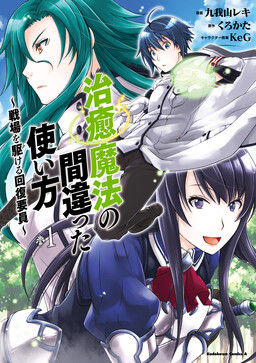
Fantasy / Action
The Wrong Way to Use Healing Magic
Yu's review of The Wrong Way to Use Healing Magic — Usato is accidentally summoned to another world along with two heroes; the kingdom's healer Rose assigns herself to train him personally, using methods that include physical conditioning so extreme it would hospitalize a normal person.
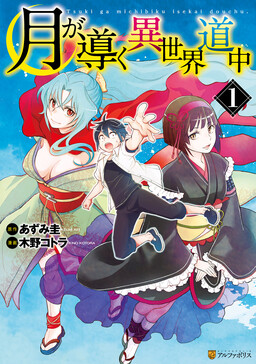
Fantasy / Isekai
Tsukimichi: Moonlit Fantasy
Yu's review of Tsukimichi: Moonlit Fantasy — Makoto Misumi is transported to another world, but the goddess who was supposed to guide him finds him unattractive and banishes him to the wasteland at the world's edge; he then proceeds to build his own civilization there, befriending monsters and demi-humans while becoming absurdly powerful in ways even the gods didn't expect.
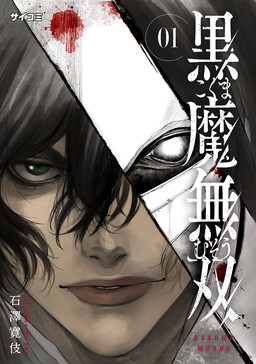
Fantasy
Knights & Magic
Yu's review of Knights & Magic — a Japanese engineer and mecha otaku dies and is reincarnated into a fantasy world where giant robots called Silhouette Knights exist; his engineering knowledge and intense passion for mecha design drive him to redesign these machines from first principles.
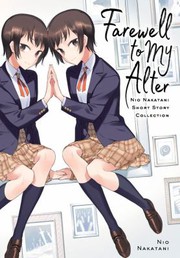
Fantasy / Adventure
Faraway Paladin
Yu's review of Faraway Paladin — Will was raised in a ruined city by three undead: a skeletal warrior, a mummified sorcerer, and a ghost priestess; having learned everything from them, he must eventually leave to find his own purpose in a world that doesn't know he exists.
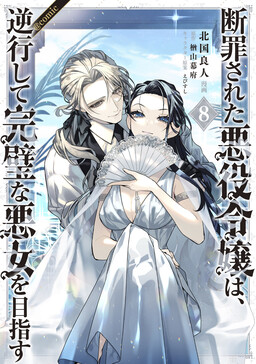
Fantasy
Otome Game's Heroine Aims to Be a Villainess
Yu's review of Otome Game's Heroine Aims to Be a Villainess — a girl reincarnates as the heroine of an otome game but, having no memory of the game's romantic routes and only the villainess's memorable scenes, she decides to become the villainess instead; the reverse of the usual villainess-isekai premise.
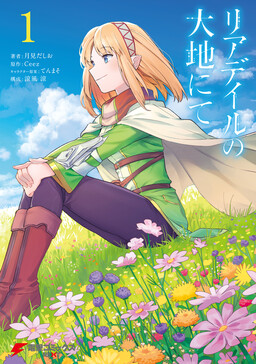
Fantasy / Slice of Life
In the Land of Leadale
Yu's review of In the Land of Leadale — Cayna, bedridden in reality due to illness and connected to a VR game as her only escape, wakes up inside Leadale 200 years after the game's timeline; her game-created children have grown into full people, and she must navigate a world that has changed around her in-game self.
Written by
Yu
Manga Enthusiast from Japan
I grew up in Japan and manga literally saved me during a tough time in elementary school. My English isn't perfect, but my love for manga is real — and I want to share it with you.
Disclosure: This post contains affiliate links. As an Amazon Associate, I earn from qualifying purchases at no extra cost to you.