Dead Mount Death Play Review: The Reverse Isekai Where a Necromancer Just Wants a Quiet Life in Shinjuku
by Ryohgo Narita / Shinta Fujimoto
Read the first volume. If it doesn't hook you, put it down. It'll hook you.
Buy Dead Mount Death Play on Amazon →*Affiliate link — I earn a small commission at no extra cost to you.
The first manga that ever made me feel like an outsider in my own city was Durarara!!. I grew up reading Narita's Ikebukuro — a Tokyo where the convenience store you walk past every day is run by someone in a war between gangs, dullahans, and information brokers. So when I learned the same author had written an isekai, I braced myself for disappointment. Isekai, to me, had become the most predictable genre on the shelf. I was wrong. Dead Mount Death Play is not Narita softening into a trend. It is Narita taking the most overused premise in modern manga and bending it back into the kind of layered Shinjuku crime story I fell in love with as a teenager.
What hooked me is the inversion. This is not a kid pulled into a fantasy world. It is a fantasy god pulled into ours — into the same neon-soaked underworld Narita has been writing his whole career.
Quick Take
- Ryohgo Narita (Baccano!, Durarara!!) writes the story, Shinta Fujimoto draws it — a reverse isekai where a fantasy necromancer reincarnates into modern Shinjuku, not the other way around
- It functions as a genuine crime thriller: assassins, mediators, freelance agencies, and police all circling one boy who is not the boy they think he is
- Ongoing at 17 Japanese volumes (15+ available in English from Yen Press); rated T (Teen), though it is darker and more fan-service-heavy than that rating suggests
Story Overview
In a fantasy world, the most feared being alive is the Corpse God — a necromancer so powerful that the world's hero, Sir Shagrua Edith Lugrid, the "Calamity Crusher," is sent to end him. The opening pages are this duel: two wielders of the Evil Eye, one of them about to die. As Shagrua lands the killing blow, the Corpse God casts a final reincarnation spell.
He wakes up in modern-day Shinjuku — inside the body of a sixteen-year-old named Polka Shinoyama, whose throat has just been slit on a crowded street in broad daylight. The assassin who killed Polka, Misaki Sakimiya, watches in disbelief as her dead target stands back up. Their fight escalates fast: the Corpse God summons a massive skeleton that strikes Misaki down and kills her. Realizing too late that this world has no resurrection magic like his own, he makes a choice that defines the whole series — he revives her as a zombie.
From there the premise clicks into place. The Corpse God does not want to conquer anything. After centuries of death and loss, what he wants is a quiet, peaceful life. But Polka's body came attached to enemies, debts, and an entire criminal ecosystem, and the rest of the story is this ancient being trying to disappear into a city that will not let him. Meanwhile, the fantasy world keeps running in parallel: Shagrua and others must deal with the political aftermath of a hero who killed a god — and the dawning question of where that god actually went.
Characters
The Corpse God (in Polka's body) — Not evil, not heroic. He is ancient, practical, and carries deep trauma: his adopted family of children was once slaughtered by a group claiming to offer "salvation," which is what pushed him toward necromancy in the first place. That backstory reframes him entirely — his protective rage flares hardest when children or his companions are threatened. His arc is the slow shift from pure survival mode toward actually building a life and a found family in Shinjuku.
Misaki Sakimiya — She begins as Polka's killer. Her own parents were assassinated when she was a child, which drove her into the freelance assassination world chasing revenge. After the Corpse God kills and then revives her as a zombie, she becomes his devoted bodyguard and assistant — combat-hungry, eccentric, and quietly carrying the guilt of having murdered the boy whose body now houses her master. She later evolves further into a vampire-class undead.
Clarissa / Lisa Kuraki — A mediator and bartender who runs Youtoukorou, a legal bar that doubles as an illegal freelance agency in Shinjuku. She is the human gateway into the underworld for the Corpse God, eccentric and psychologically sharp, the kind of operator who offers forgiveness instead of anger. He joins her agency partly because his depleted magic needs to be refueled through expensive gemstones, and that costs money.
Shagrua Edith Lugrid — The hero who killed the Corpse God. He does not vanish after the prologue; his thread in the fantasy world keeps the dual-world structure alive and sets up his eventual collision with the truth of where his enemy went.
What I Love About It
The single best running idea in this manga is watching a centuries-old necromancer apply medieval-fantasy logic to modern Shinjuku — and the series mining both its sharpest comedy and its most genuine warmth from that gap. The Corpse God's grounded, ancient sensibility constantly misreads contemporary life, but it also lets Narita do what he does best: treat a convenience store, a freelance agency, and a bar as nodes in a vast hidden network where everyone has a complete inner life.
But what actually moved me is how that comedy sits on top of real grief. The revelation that the Corpse God turned to necromancy because his adopted children were massacred recolors every "alien" reaction he has. He is not a quirky overpowered protagonist; he is a person who has already lost everything once and is terrified, in his quiet way, of doing it again. When he extends that protectiveness to Misaki — the very assassin who killed the body he now wears — the series earns an emotional weight most isekai never reaches for. That tension, a found family built out of murderer and victim, is the heart of why I keep reading.
Memorable Scene ⚠️ Spoiler Warning
The scene I can't shake is the one that defines him. Misaki has just slit Polka's throat; the Corpse God revives, summons a towering skeleton, and the skeleton strikes her down — he kills the assassin almost reflexively. And then comes the choice. In his old world he could have simply healed her. Here, there is no healing magic. So, with the pragmatic calm of someone who has handled death his entire existence, he decides to bring her back the only way he can: as a zombie.
On the page it reads as a throwaway tactical decision — restore the body, no rot, no real damage, problem solved. But it's the whole thesis of the manga in one beat. This is a being for whom death is just a state to be managed, making a quiet, almost gentle decision that ends up binding the two of them together for the entire series. The killer becomes the bodyguard. The victim's body becomes the home of the god she failed to kill. Narita stages it without melodrama, and that restraint is exactly why it lands.
What English-Speaking Fans Say
Western readers who came to this through Narita's earlier work tend to call it his most interesting recent project — the reverse-isekai framing lets his ensemble, "everyone is a protagonist" instinct breathe in a way his single-protagonist isekai peers can't. Anime News Network's reviewers praised the artwork, the plot, and the characters while criticizing the fan service, and that's the most common consensus I see: strong premise and execution, undercut for some readers by gratuitous bath-scene-style fan service that pauses the plot. Reviewers also consistently note that the series rewards patience, since the large Shinjuku cast takes time to reveal its connections.
Pros & Cons
Pros
- A reverse-isekai premise that's genuinely fresh, executed by an author who actually knows how to write Tokyo's underworld
- The Corpse God is one of the most original protagonists in the genre — ancient, traumatized, practical, quietly kind
- Works as a real crime thriller, with a layered cast of assassins, mediators, and factions
- Fujimoto's art keeps the fantasy and modern settings visually distinct while serving one story
Cons
- The fan service is frequent enough that several reviewers flag it as intrusive
- The large ensemble demands patience — early volumes can feel like a lot of moving parts at once
- It's ongoing with no ending in sight yet, so newcomers are signing up for a long, open-ended read — that's either a commitment or a turn-off depending on you
Is Dead Mount Death Play Worth Reading?
Yes — especially if you like isekai in theory but feel burned out by its formula, or if you already love Narita's tangled Tokyo ensembles. It takes the genre's most tired setup and runs it backwards into a crime thriller with a genuinely original lead. The fan service and the slow-burn ensemble are the main reasons it won't be for everyone.
Similar Manga
| Title | Its Approach | How Dead Mount Death Play Differs |
|---|---|---|
| Durarara!! | Narita's interlocking Ikebukuro ensemble, no single hero | Adds an overpowered fantasy necromancer and a literal other world to the underworld formula |
| Overlord | An undead protagonist dominating a fantasy world | Reverses the flow — the undead lord lands in our world and just wants quiet |
| Moriarty the Patriot | Crime-adjacent action with literary ambition | Trades period London for modern Shinjuku and a reincarnated-god lens |
Where to Buy
Read the first volume. If it doesn't hook you, put it down. It'll hook you.
This post contains affiliate links. If you purchase through these links, I may earn a small commission at no extra cost to you. As an Amazon Associate, I earn from qualifying purchases.
*Affiliate link — I earn a small commission at no extra cost to you.
More Manga You Might Like
Fantasy / Isekai
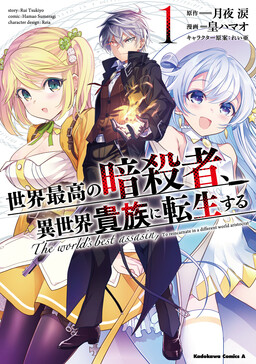
The World's Finest Assassin Gets Reincarnated in Another World as an Aristocrat
Yu's review of The World's Finest Assassin Gets Reincarnated — the world's greatest assassin is betrayed and killed by his organization; given a second chance by a goddess, he reincarnates as Lugh Tuatha Dé, a young nobleman in a fantasy world; he is assigned to assassinate the Hero who will destroy the world; he applies his assassin skills to this new life.
Fantasy / Action
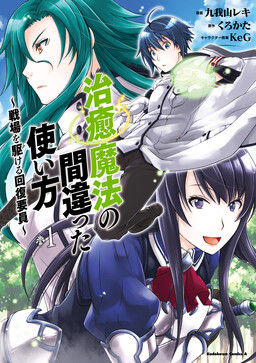
The Wrong Way to Use Healing Magic
Yu's review of The Wrong Way to Use Healing Magic — Usato is accidentally summoned to another world along with two heroes; the kingdom's healer Rose assigns herself to train him personally, using methods that include physical conditioning so extreme it would hospitalize a normal person.
Fantasy / Isekai
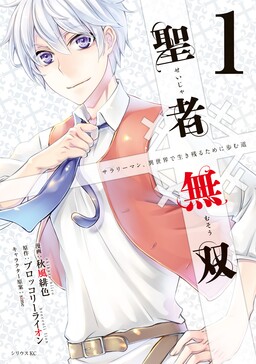
The Great Cleric
Yu's review of The Great Cleric — Luciel reincarnates into a fantasy world and chooses to be a healer despite the class being considered weak and poorly regarded; he trains obsessively, drinks terrible-tasting potions for stat gains, and works to become the greatest cleric in the world through sheer stubbornness.
Fantasy / Isekai
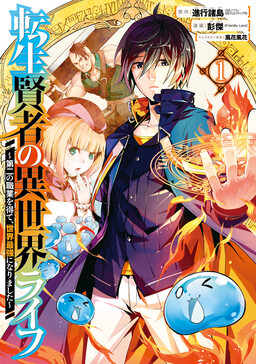
My Isekai Life: I Gained a Second Character Class and Became the Strongest Sage in the World!
Yu's review of My Isekai Life — Yuji Sano was transported to another world while working from home and assigned the job class Tamer; by exploiting a game mechanic he leveled multiple slimes rapidly and gained a second hidden class, Sage; he is now the most powerful person in the world and wants to go home to Japan.
Fantasy / Action
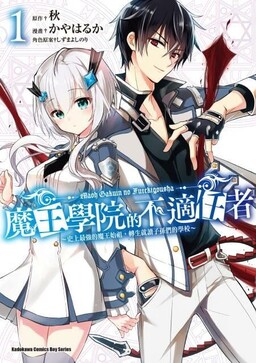
The Misfit of Demon King Academy
Yu's review of The Misfit of Demon King Academy — Anos Voldigoad is the legendary Demon King reincarnated, who attends the academy for demons to find his descendants; the academy, however, has misidentified his history and tells him his power scores are too low to be the real Demon King.
Fantasy / Mystery
In/Spectre
Yu's review of In/Spectre — Kotoko Iwanaga gave an eye and a leg to the youkai of her village when she was a child; in exchange, she became their Goddess of Wisdom, mediating disputes and solving the problems of the spirit world; she enlists the help of Kurou Sakuragawa, a man with a strange relationship to death, and together they maintain peace between humans and spirits.
Written by
Yu
Manga Enthusiast from Japan
I grew up in Japan and manga literally saved me during a tough time in elementary school. My English isn't perfect, but my love for manga is real — and I want to share it with you.
Disclosure: This post contains affiliate links. As an Amazon Associate, I earn from qualifying purchases at no extra cost to you.