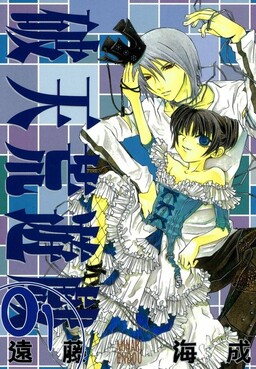
Dazzle Review: The Funniest Road-Trip Fantasy That Slowly Turns Out to Be About Killing God
by Minari Endoh
Read the first volume. If it doesn't hook you, put it down. It'll hook you.
Buy Dazzle on Amazon →*Affiliate link — I earn a small commission at no extra cost to you.
When I was a kid hiding from the world, the manga I loved most were the ones that lied to me at first. They'd open loud and silly, make me laugh, lower my guard — and then somewhere around volume four they'd quietly tell me the heroine had done something terrible before the story even started. Dazzle is one of those. I picked it up because the cover looked like a fun fantasy comedy, three pretty people on a road trip, and for a while that's exactly what it is. Then it starts handing you the real story one cruel detail at a time, and you realize the loud girl in the middle has been carrying the heaviest thing in the cast the whole time.
I read it in Tokyopop's English release, the one that stops at volume 10 and never came back. That's both the joy and the heartbreak of this manga, and I'll get to the heartbreak.
Quick Take
- A travel fantasy that disguises itself as a screwball comedy and slowly reveals a story about clones, an immortal scientist, and a girl who killed her own mother in self-defense
- Minari Endoh's three leads — Rahzel, Alzeid, Baroqueheat — have some of the best comedic chemistry I've read, and the tonal whiplash between funny and grim is the whole point
- T (Teen): fantasy violence, child death in some arcs, a heavy matricide backstory — funny on the surface, genuinely morbid underneath
Story Overview
Rahzel Anadis is fifteen when her foster father throws her out the front door and tells her to go see the world. So she does — loudly, with a terrible sense of direction and an enormous appetite. Almost immediately she runs into Alzeid, an albino loner hunting the person who murdered his father. After she helps him recover his stolen gun, she decides she's coming with him and promises to make his life "more interesting and fun" whether he wants it or not. He very much does not want it. She comes anyway.
The third leg of the trio is Baroqueheat, a shameless womanizer and an acquaintance of Alzeid's, who tags along and spends most of his time flirting with Rahzel and needling Alzeid. The early volumes run as episodic adventures — the trio rolls into a town, finds something supernatural and wrong, and Rahzel bulldozes through it. The comedy is the engine: Rahzel praises Alzeid for the exact stoic behavior she scolds Baroqueheat for, the two men snipe at each other, and Rahzel eats everyone out of house and home.
The turn is gradual, which is what makes it land. The "monster of the week" stops being random. The threads start connecting to a single backstory: an immortal scientist called Second, a centuries-long cloning project, and the question of where Alzeid actually came from. The series quietly stops being a comedy about a road trip and becomes a story about whether you can end something that refuses to die.
Characters
Rahzel (full name Rahzenshia Rose) — The loud, bossy, dangerously capable heart of the series. The comedy frames her as a fiery Lina-Inverse type, but her backstory is the darkest thing in the book: her birth mother could see the future, tried to kill Rahzel on her ninth birthday, and Rahzel killed her in self-defense as a child. Her biological father abandoned her after that; she was found by Kiara and handed to her foster father, taking the Anadis name. She carries all of this under the jokes, and her arc is learning what to do with the people who chose her.
Alzeid — The albino gunman with the revenge quest, cold and quiet, hunting a woman with black hair and blue eyes who killed his father. He's the straight man to Rahzel's chaos, and the slow thaw of his obvious-but-unspoken care for her is one of the series' best long games. His deepest secret is that he and his older brother are clones of Second — which puts his entire identity and his revenge on a fault line.
Baroqueheat — Non-human, far older than the twenty-eight he looks. He plays the charming pervert and romantic rival, but his real wound is Natsume — the woman who created him, and the love Second lost long ago. That grief is bound up with Second, which is why he refuses to even say Alzeid's name: Alzeid is Second's clone. His comedy and his bitterness come from the same place.
Second & Kiara — Second is an Earth scientist stranded on another world who, after losing Natsume, spent centuries trying to resurrect her through cloning; both Alzeids are his work, and the endgame turns on him. Kiara, Baroqueheat's brother, is the one who found the abandoned Rahzel and quietly arranges events around all three leads for reasons of his own.
What I Love About It
The bait-and-switch on tone. Endoh sets up a comedy so confidently that you stop bracing yourself, and then she tells you, almost casually, that the heroine committed matricide before page one. What I love is that the manga doesn't treat that as a contradiction to the comedy — it treats it as the reason the comedy exists. Rahzel is loud because she has to be. The road trip is fun because the alternative is sitting still with what she's carrying. Once you understand that, the jokes stop being just jokes; the laughter is armor, and Endoh lets you see the seams without ever stopping to lecture you about it.
The other thing I love is the trio's specific comedic logic. The running bit where Rahzel praises Alzeid for stoic behavior and scolds Baroqueheat for the identical thing isn't just a gag — it's character. It tells you exactly how she's already sorted these two men in her head before she'd ever admit it out loud. Endoh builds the whole emotional triangle out of double standards, and it's funnier and more honest than most romance manga manage with a hundred more pages of monologue.
Memorable Scene ⚠️ Spoiler Warning
The backstory reveal is the moment that recontextualizes everything: that nine-year-old Rahzel, on her own birthday, killed her mother because her precognitive mother tried to kill her first — and that her father abandoned her for it. It's delivered without melodrama, which is exactly why it stuck with me. This loud, food-obsessed girl you've been laughing with for volumes has been a child-killer-in-self-defense the entire time, abandoned by blood and adopted by strangers, and she never once asked you to feel sorry for her.
And then there's the endgame the Japanese run builds toward (which Tokyopop's ten volumes never reached in English): Rahzel killing Second to break the immortal cycle and stop the younger Alzeid from being sacrificed to it. The girl who began the series killing the parent who tried to kill her ends it killing the "father" of the man she loves — closing the loop on her own past by refusing to let his repeat. That symmetry is the kind of thing I only noticed after the fact, and it's why the comedy framing never felt cheap to me.
Pros & Cons
Pros
- Genuinely funny, with three leads whose chemistry carries the episodic stretches
- The slow reveal from comedy to dark fantasy is expertly paced
- Rahzel is a capable, complicated heroine, not a damsel
- The Second / cloning backstory gives the whole thing real stakes
Cons
- The English release stops at volume 10 of 24 and Tokyopop is defunct — you cannot legally finish it in English
- The early episodic structure can feel aimless before the main plot surfaces
- The tonal whiplash between slapstick and child-death horror won't work for everyone
Is Dazzle Worth Reading?
Yes — if you go in knowing what you're getting and what you're not. It's a sharp, funny, surprisingly dark fantasy with one of the best loud-heroine-and-stoic-loner duos I've read. The catch is hard: Tokyopop only ever published ten of the twenty-four volumes before going under, so the English edition leaves you stranded before the real ending. If "a brilliant story you can't finish in English" sounds unbearable, wait or read around it. If a strong incomplete run is still worth your time, this one absolutely is.
Official English Translation Status
Tokyopop released the first 10 volumes in English (the first dropped January 2006, the tenth in January 2009) and then stopped. The Japanese series ran to 24 volumes, so the English release covers well under half the story and was never completed. Tokyopop is defunct, so the existing volumes are out of print and usually only available secondhand.
Similar Manga
| Title | Its Approach | How Dazzle Differs |
|---|---|---|
| Slayers | Loud, capable sorceress headlines a comedic fantasy adventure | Dazzle hides a far darker backstory under the comedy and turns episodic into a single tragic plot |
| Chrono Crusade | Balances comedy with a doomed, melancholy underlying arc | Dazzle's darkness is rooted in family and identity (clones, abandonment) rather than apocalypse |
| Pandora Hearts | Cute cast slowly revealed to sit on top of a cruel hidden history | Dazzle leans harder on road-trip comedy before the trapdoor opens |
Where to Buy
The English run only reaches volume 10 and Tokyopop is gone, so this is a secondhand hunt — but the first volume tells you within pages whether the trio's chemistry is for you.
This post contains affiliate links. If you purchase through these links, I may earn a small commission at no extra cost to you. As an Amazon Associate, I earn from qualifying purchases.
*Affiliate link — I earn a small commission at no extra cost to you.
More Manga You Might Like
Fantasy / Comedy
Vampire Game
Yu's review of Vampire Game — Duzell, the Vampire King, was killed a century ago by the Holy King Phelios; reincarnated as a small cat, he finds Princess Ishtar, descendant of Phelios, and bonds with her intending to eventually use her to reincarnate fully and achieve revenge; Ishtar, who is oblivious and strong-willed, adopts him as a pet.
Fantasy / Comedy
Uncle from Another World
Yu's review of Uncle from Another World — Takafumi's uncle Yosuke wakes from a 17-year coma having been an isekai hero in another world; Takafumi discovers his uncle has magical powers but also deeply embarrassing stories about how he was treated in the other world.
Fantasy / Comedy
Welcome to Demon School! Iruma-kun
Yu's review of Welcome to Demon School! Iruma-kun — Iruma Suzuki is sold to a demon by his neglectful parents and becomes the grandson of the great demon Sullivan; enrolled in a demon school where humans are supposedly food, Iruma must hide his human nature while navigating the competitive and colorful demon school environment.

Fantasy / Isekai
Tsukimichi: Moonlit Fantasy
Yu's review of Tsukimichi: Moonlit Fantasy — Makoto Misumi is transported to another world, but the goddess who was supposed to guide him finds him unattractive and banishes him to the wasteland at the world's edge; he then proceeds to build his own civilization there, befriending monsters and demi-humans while becoming absurdly powerful in ways even the gods didn't expect.
Fantasy / Comedy
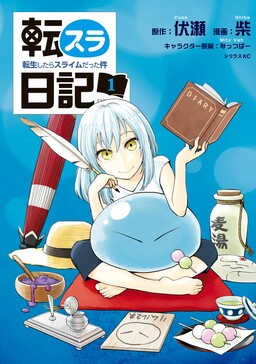
That Time I Got Reincarnated as a Slime: Slime Diaries
Yu's review of Slime Diaries — a spinoff from That Time I Got Reincarnated as a Slime following Rimuru and the people of Tempest through daily life; farming festivals, cooking competitions, seasonal celebrations, and the small situations that don't make it into the main series.
Fantasy / Comedy
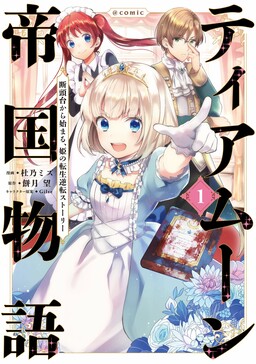
Tearmoon Empire
Yu's review of Tearmoon Empire — Princess Mia was guillotined by revolutionaries for her selfish, incompetent rule; she wakes up at age twelve with her diary showing her future death and the determination to avoid it; the comedy comes from her self-serving attempts to be 'better' creating a reputation for saintly wisdom she does not actually possess.
Written by
Yu
Manga Enthusiast from Japan
I grew up in Japan and manga literally saved me during a tough time in elementary school. My English isn't perfect, but my love for manga is real — and I want to share it with you.
Disclosure: This post contains affiliate links. As an Amazon Associate, I earn from qualifying purchases at no extra cost to you.