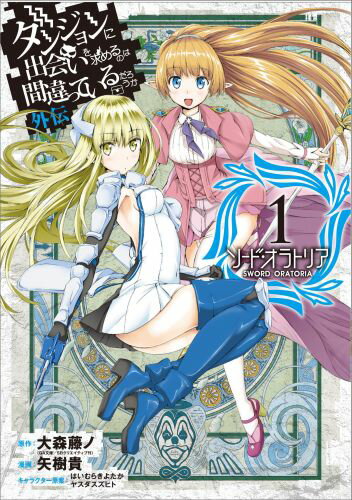
Is It Wrong to Try to Pick Up Girls in a Dungeon? Review: The Hero Is the Boy Who Refuses to Be Rescued Twice
by Fujino Omori (story) / Kunieda (art)
Read the first volume. If it doesn't hook you, put it down. It'll hook you.
Buy Is It Wrong to Try to Pick Up Girls in a Dungeon? on Amazon →*Affiliate link — I earn a small commission at no extra cost to you.
When I was small, the kids who picked on me were stronger than me, and I understood early that strength was just something some people were born with and some weren't. I wasn't. So I read manga about people who were. Naruto. Luffy. The lucky ones the story chose.
DanMachi got under my skin because Bell Cranel isn't chosen. He's the weakest adventurer in the weakest household in the whole city, and his one talent is that he wants something so badly it physically changes what he's capable of. The first time I read the scene where he picks up a sword instead of running, I felt something I didn't expect from a manga with "pick up girls in a dungeon" in the title. I felt seen. That's the version of "strong" I always wanted to believe in.
This review is for the manga adaptation drawn by Kunieda — not the light novels, not the anime. If you've only watched the show, the manga gives you the same beats with a different rhythm.
Quick Take
- A rookie adventurer in a dungeon city chases the swordswoman who saved him, and grows at an impossible rate because of a skill that scales with how desperately he wants something
- A dungeon-crawl fantasy that quietly takes the word "hero" seriously underneath the adventure trappings
- 16+ volumes in Japan, ongoing; rated T (Teen) — fantasy violence and some early fanservice, nothing graphic
Story Overview
Orario is a city built on top of a single enormous dungeon. Gods and goddesses have come down from heaven, given up most of their power, and formed familias — households of mortal adventurers who descend into the dungeon, kill monsters, harvest the magic stones inside them, and bring back the wealth that keeps the whole city running.
Bell Cranel belongs to the Hestia Familia, which at the start has exactly one member: Bell. The goddess Hestia is small, broke, and so low on the city's social ladder that nobody else will join her. On his first real trip into the dungeon, Bell gets cornered by a monster far above his level and is saved at the last second by Ais Wallenstein — the city's most admired swordswoman, the "Sword Princess." He falls for her instantly, and that feeling triggers a hidden skill: Liaris Freese, which accelerates his growth in proportion to the intensity of his longing. He gets stronger because he wants to catch up to her.
The early arc is about Bell stopping being a one-person familia. A would-be con artist named Liliruca tries to rob him, and instead of punishing her he reaches her; a stubborn blacksmith named Welf joins as his weapon-smith. The midpoint turn is the War Game — when the god Apollo decides he wants Bell and declares a sanctioned war against the tiny Hestia Familia. Five members against a hundred. That arc is where the story stops being "cute rookie levels up" and becomes "this household will fight the entire city for each other."
Characters
Bell Cranel — Earnest to the point of being easy to embarrass, and that transparency is the whole point. His arc is the slow conversion of admiration into capability: he starts wanting to be near Ais and ends up wanting to become something worthy of standing beside her. The Liaris Freese skill means his growth is literally a measure of his heart, which makes every fight a character beat, not just a stat check.
Hestia — The goddess of the hearth, and the emotional center of the household. She's small and dramatic and openly jealous of Ais, but the version of her that matters is the one who, during the War Game, out-strategizes a far larger and richer god to protect a boy and a household that the rest of the city wrote off. Her devotion is the engine of the early plot.
Ais Wallenstein — The swordswoman whose rescue starts everything. To Bell she's an ideal; on her own she's a quieter, more closed-off person carrying her own loss (explored in depth in the Sword Oratoria spin-off). The genius of how she's used is that she becomes the mirror Bell measures himself against — and the person who, at the key moment, chooses to step back and let him fight.
Liliruca (Lili) — Introduced as a thief who shapeshifts and tries to steal Bell's gear, weighed down by a brutal past with another familia. Bell refusing to write her off — choosing compassion over revenge — is what turns her from antagonist into the household's most loyal supporter.
Welf Crozzo — A blacksmith who can forge magic weapons because of his bloodline and deliberately refuses to, because he wants to be valued for his own craft, not his inheritance. His pride is the quiet counterweight to Bell's hunger.
What I Love About It
The growth mechanic, and exactly how the manga pays it off. Liaris Freese could have been a lazy "main character is secretly OP" cheat. Instead the manga ties it to a single emotion — wanting — and then builds the whole hero arc on top of it. Bell isn't strong because a god picked him or because a master trained him. He's strong because there is something he refuses to give up on, and the world bends around that refusal.
What makes it land for me is that the story keeps Bell small even as he gets strong. He stays the boy who gets flustered, who apologizes, who is terrified. The strength doesn't replace the kid — it grows out of him. That's the opposite of the wish-fulfillment I expected from the title, and it's why a manga I almost skipped over the name became one I genuinely care about. When you've spent your childhood being the weak one, a story that says "your weakness plus your wanting can become strength" is not a small thing.
Memorable Scene ⚠️ Spoiler Warning
The Minotaur rematch.
Early on, a Minotaur is the monster that nearly kills Bell — the thing Ais has to rescue him from, the source of his deepest shame. Later, deep in the dungeon, he meets one again. And this time, when Ais and the rest of the Loki Familia arrive and could end the fight in a single stroke, Bell refuses the rescue. He doesn't want to be the boy who gets saved twice. He wants to be the hero.
What makes the scene work in the manga is the watchers. Bete sneers, then goes quiet as he realizes the boy is actually trading blows with the thing on level terms. Tiona and Tione stare. Ais holds back — chooses to hold back — and lets him have it. It's a battle drawn so that the most important characters in it are the ones standing still, deciding not to intervene. Bell covered in his own blood, picking the sword up again, with the person he's chasing finally watching him not as someone to protect but as someone worth watching — that's the page that justifies the whole series for me.
What English-Speaking Fans Say
Most Western readers came to DanMachi through the anime first, and the manga is generally seen as a solid, faithful telling of the early adventure arcs rather than a radical reinterpretation. Bell is consistently praised as a protagonist whose earnestness reads as genuine instead of hollow, and Hestia became a fixture of Western anime fandom basically the moment the show aired. The common note is that the light novels go deeper on interiority — which is true — but that the manga is the most accessible on-ramp.
Pros & Cons
Pros
- Bell's motivation is specific and personal, not abstract chosen-one filler
- The power system (Liaris Freese) is a clever mechanic and a thematic statement
- Large, well-differentiated cast of gods and adventurers
- The Minotaur rematch and the War Game are genuinely strong payoffs
Cons
- The light novels carry more internal depth than the adaptation
- Some early-volume fanservice may put readers off before the story finds its footing
- The dungeon-fantasy formula will feel familiar if you've read a lot of the genre
- The art shifts hands later in the run, which not every reader loves — your mileage will vary on that.
Is Is It Wrong to Try to Pick Up Girls in a Dungeon? Worth Reading?
Yes, if you want a dungeon-crawl fantasy that's genuinely fun on the surface and quietly serious about what it means to become a hero underneath. Skip it if early fanservice is a dealbreaker or if you've burned out on game-mechanic fantasy — but if the idea of "strong because he wants it too badly to stay weak" speaks to you, this one's worth your time.
Similar Manga
| Title | Its Approach | How DanMachi Differs |
|---|---|---|
| Sword Art Online | Game-logic world, protagonist who's already the strongest | Bell starts at the bottom; strength is earned through wanting, not given |
| Goblin Slayer | Grim, tactical dungeon-fantasy with adventurer guilds | DanMachi is warmer and more hopeful in tone despite the danger |
| Rising of the Shield Hero | Isekai with stats and a more bitter, vengeful hero | Bell stays earnest and outward-facing rather than hardened by betrayal |
Official English Translation Status
Yen Press publishes the manga in English, with roughly 15 volumes available so far against the ongoing Japanese release. The English edition is solid and widely available in print and digital.
Where to Buy
Read the first volume. If it doesn't hook you, put it down. It'll hook you.
This post contains affiliate links. If you purchase through these links, I may earn a small commission at no extra cost to you. As an Amazon Associate, I earn from qualifying purchases.
*Affiliate link — I earn a small commission at no extra cost to you.
More Manga You Might Like

Fantasy / Adventure
Yona of the Dawn
Yu's review of Yona of the Dawn — a sheltered princess witnesses her father's murder, flees the palace with her bodyguard, and begins the journey to reclaim her kingdom and herself.
Fantasy / Adventure
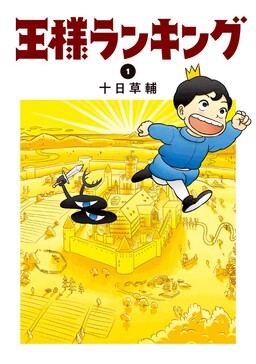
Ranking of Kings
Yu's review of Ranking of Kings — Prince Bojji cannot speak, cannot hear, and is considered the weakest person in the kingdom; when he makes an unlikely friend named Kage, a shadow assassin, he begins a journey to become the greatest king in the world despite everything working against him.
Fantasy / Slice of Life
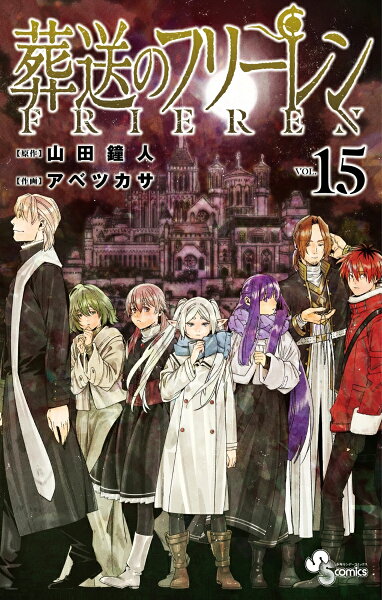
Frieren: Beyond Journey's End
Yu's review of Frieren: Beyond Journey's End — an elf mage who helped defeat the Demon King but barely knew her companions because she outlives everyone. A manga about what it means to look back and finally understand what you had.
Fantasy / Adventure
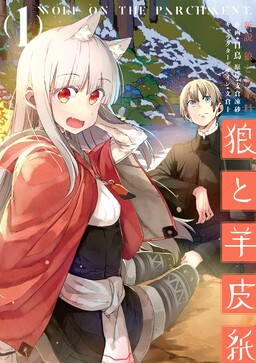
Wolf & Parchment: New Theory Spice & Wolf
Yu's review of Wolf & Parchment — Col is a young man who wants to spread a new interpretation of scripture across the world; he is accompanied by Myuri, the daughter of Holo and Lawrence from Spice & Wolf, a wolf deity who has inherited her mother's spirit and her father's love of adventure.
Fantasy
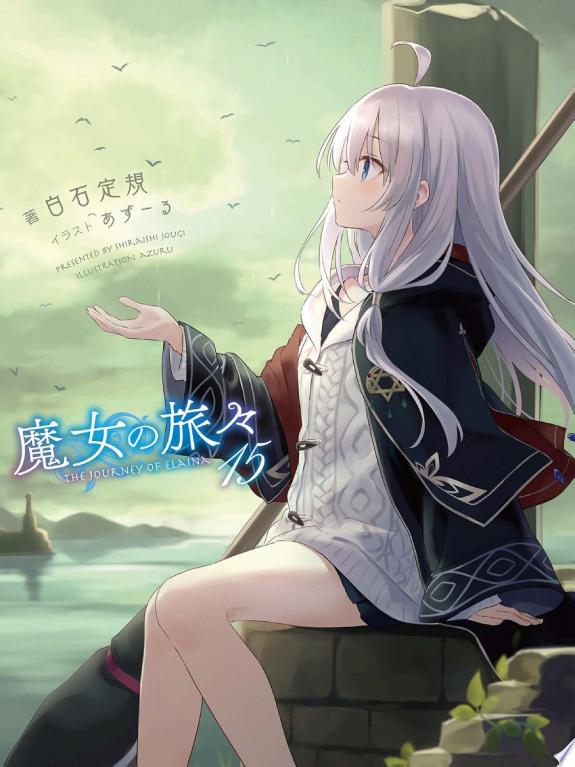
Wandering Witch: The Journey of Elaina
Yu's review of Wandering Witch: The Journey of Elaina — a young witch named Elaina travels from country to country, collecting experiences as a traveler, witnessing the beautiful and the terrible in equal measure.

Fantasy / Comedy
Tearmoon Empire
Yu's review of Tearmoon Empire — Princess Mia was guillotined by revolutionaries for her selfish, incompetent rule; she wakes up at age twelve with her diary showing her future death and the determination to avoid it; the comedy comes from her self-serving attempts to be 'better' creating a reputation for saintly wisdom she does not actually possess.
Written by
Yu
Manga Enthusiast from Japan
I grew up in Japan and manga literally saved me during a tough time in elementary school. My English isn't perfect, but my love for manga is real — and I want to share it with you.
Disclosure: This post contains affiliate links. As an Amazon Associate, I earn from qualifying purchases at no extra cost to you.