Crescent Moon Review: A Girl Who Gives Away All Her Luck, and the Tengu Who Won't Forgive Humans for Existing
by Haruko Iida
Read the first volume. If it doesn't hook you, put it down. It'll hook you.
Buy Crescent Moon on Amazon →*Affiliate link — I earn a small commission at no extra cost to you.
When I was a kid, I had this quiet theory that I had a fixed amount of luck and that I'd already spent it all making other people's lives easier. I'd help a classmate find something they lost, and then lose my own train pass the same afternoon. It sounds like self-pity, and maybe it was, but it also felt like a rule of the universe I'd stumbled onto. So when I picked up Crescent Moon and read the heroine say almost exactly that — that the reason she's so unlucky is that she gives all her luck away to everyone else — I sat up. That one line did more to make me care about Mahiru than the whole supernatural plot around her.
Crescent Moon (Japanese title 未完の月, Mikan no Tsuki, "The Incomplete Moon") is a six-volume shojo fantasy drawn by Haruko Iida in collaboration with the studio Red Company. It ran in Kadokawa's Monthly Asuka around 1999–2001 and was published in full in English by Tokyopop. It is not a perfect manga. But it has a premise and a male lead that stuck with me longer than a lot of slicker series did.
Quick Take
- A six-volume shojo fantasy about Mahiru, a girl who can grant luck to others but never herself, and the "Moonlight Bandits" — a dying race of supernatural beings she turns out to be bound to
- The draw is the ensemble: a vampire, a werewolf, a fox spirit, and a hostile tengu, all hunting gems called the Teardrops of the Moon to keep their kind alive
- T (Teen) — fantasy violence and supernatural themes, nothing graphic
Story Overview
Mahiru Shiraishi is a high schooler with one strange gift: by touching someone, she can grant them good fortune. The catch is that she keeps none of it for herself, which leaves her chronically unlucky and half-convinced she's poured all her own luck into other people.
Then she starts dreaming of a demon, and the dreams pull her into the world of the Lunar Race — folklore creatures whose powers wax and wane with the phases of the moon, strongest at the full moon and weakest at the new. Four of them operate as a band of thieves who call themselves the Moonlight Bandits: they steal gems known as the Teardrops of the Moon, which their kind can burn as a power source. The Lunar Race is dying out, and the Teardrops are their attempt to survive.
The turn is that Mahiru isn't a bystander. She learns she's the descendant of the Lunar Race's princess, and that her power is exactly what the Bandits need to recover the Teardrops and save their people. So a girl who thought her ability was a private curse discovers it's the one thing keeping an entire race from vanishing — and that her luck, finally, can go somewhere that matters. The back half of the series is the hunt for the final Teardrop, the slow thaw between Mahiru and the most hostile of the Bandits, and the question of whether humans and the Lunar Race can stop being enemies. The ending lands on hope rather than triumph: Mahiru choosing to keep working toward peace between the two worlds rather than declaring it won.
Characters
Mahiru Shiraishi — Orphaned young (her parents died in a car accident when she was small) and raised by an aunt, Mahiru starts the series treating her power as a sad joke about herself. Her arc is the reframe: the gift she resented because it never helped her turns out to be the literal salvation of a dying race. She moves from "why am I like this" to choosing to spend herself on people — non-human people — she's grown to love.
Mitsuru Suou — The reason the series works. Mitsuru is a tengu with aqua-colored hair who controls wind and lightning, and he is openly hostile, especially toward humans. The reason is earned, not decorative: unlike the others, Mitsuru was raised by humans, and when they betrayed him he wandered Japan for years swearing he'd one day wipe out the entire human race, only joining the Bandits at sixteen. So his coldness toward Mahiru, a human, isn't a personality quirk — it's a wound. Watching that distrust slowly lose to actually caring about her is the spine of the romance.
Misoka Asagi — A fox spirit (kitsune) and the unspoken leader of the group: level-headed, a quick thinker, and the strategist, with hypnosis and shapeshifting as his main tools. He's also quietly touchy about being extremely short, which the series mines for some of its lighter beats.
Nozomu Moegi — A vampire, charming and flirtatious, who takes a shine to Mahiru and uses bats to scout and communicate. He's the warmth-and-flattery counterweight to Mitsuru's hostility.
Akira Yamabuki — At sixteen, the youngest Bandit, a happy-go-lucky werewolf with super speed, strength, and sharp senses, who develops a crush on one of Mahiru's classmates. He's the puppyish heart of the group.
Art Style
Iida's art is solid late-'90s shojo fantasy: clean, expressive character work and genuinely strong supernatural and background design. Each Bandit gets a distinct visual identity that fits his folklore type, and the moon-soaked atmosphere of the night scenes is where the book looks best. It's frequently cited as one of the better-looking entries in Tokyopop's old fantasy catalog, and I'd agree — the look is more memorable than the plotting.
Cultural Context
The Lunar Race is built straight out of Japanese and broader folklore — tengu (mountain spirits), kitsune (fox spirits), plus vampires and werewolves — all tied to the moon, which in Japanese tradition carries strong associations with mystery and otherworldly power. The Japanese title, Mikan no Tsuki ("The Incomplete Moon"), points at the core idea more directly than the English one: a race fading like a moon that never finishes filling, kept alive by gems called the Teardrops of the Moon.
What I Love About It
The thing I keep coming back to is Mahiru's power, because it's a genuinely good metaphor dressed up as a fantasy mechanic. A girl who can only ever give luck away, never keep it, and who has quietly concluded that's why her own life is so unlucky — that's a sharp, lonely image, and Iida lets her say it out loud early on. It's the rare shojo power that doubles as a character thesis.
What makes it land is the reversal the story builds on top of it. For most of Mahiru's life that gift has been a one-way drain with no payoff. Then she meets the Moonlight Bandits and learns the exact same ability — the one that made her feel cursed and overlooked — is the one thing that can save an entire dying race. Her uselessness was never uselessness; it was just aimed at people who couldn't tell her what it was worth. For anyone who's ever felt like the person who gives and gives and gets nothing back, that turn hits in a very specific spot. It's the emotional core the romance leans on, and it's why I forgive the series its rougher patches.
Memorable Scene ⚠️ Spoiler Warning
The moment that stays with me isn't a kiss — it's the slow realization of why Mitsuru is the way he is. For a while his hostility toward Mahiru reads as standard prickly-love-interest stuff. Then the series fills in that he was raised by humans, betrayed by them, and spent years wandering with a vow to destroy the entire human race before the Bandits ever found him. Suddenly his coldness toward Mahiru — a human who keeps trying to help him — stops being attitude and becomes a person flinching from the one thing that hurt him most.
It reframes everything that came before. Every sharp line he threw at her rereads as someone defending a very old injury, and the gradual thaw — him choosing, against his own vow, to let a human matter to him — becomes the real love story under the Teardrop hunt. I'll be honest: the romance is paced too gently to fully pay this off, which is the series' biggest weakness. But the idea of it — a boy who swore to kill all humans learning to trust exactly one — is strong enough that I remember it years later.
What English-Speaking Fans Say
Among Tokyopop-era shojo readers, Crescent Moon is remembered fondly more than passionately. The supernatural ensemble and the art draw consistent praise; Mitsuru's backstory is the most-cited element. The most common knock, echoed across reviews, is that both the plot and especially the romance feel underdeveloped for six volumes — readers tend to say they can see who likes whom but wish the series showed it more. A representative reader score sits around 7/10: original premise, good backgrounds, undercooked feelings.
Pros & Cons
Pros
- Mahiru's "gives away all her luck" power is a genuinely good, character-defining hook
- Mitsuru's betrayed-by-humans backstory gives the male lead real weight
- A complete, self-contained six-volume story with a hopeful ending
- Strong art and folklore-grounded supernatural design
Cons
- The romance is underdeveloped — the feelings are stated more than dramatized
- The plot can feel thin stretched across six volumes
- Tokyopop's closure means availability is spotty and some volumes are out of print
- It's familiar shojo-supernatural territory and won't convert anyone cold on the genre — that softness is either a dealbreaker or a cozy comfort depending on you
Is Crescent Moon Worth Reading?
For shojo fantasy readers, yes — with a caveat. The premise (a girl whose only power is giving luck to others) and Mitsuru's wounded backstory are better than the book's gently-paced execution of them. Come for the ensemble and the ideas, not for a knockout romance.
Similar Manga
| Title | Its Approach | How Crescent Moon Differs |
|---|---|---|
| Kamisama Kiss | Girl pulled into a supernatural world, falls for a fox spirit | Kamisama Kiss is longer and far more comedic; Crescent Moon is shorter and built around an ensemble of folklore beings |
| The Demon Prince of Momochi House | Human girl bound to spirit-world guardians | Momochi House is more atmospheric and episodic; Crescent Moon is driven by the Teardrop quest and a dying-race stake |
| Black Bird | Human girl, supernatural male lead, fated-bloodline romance | Black Bird is more intense and romance-forward; Crescent Moon keeps the romance gentle and shares focus with its group |
Official English Translation Status
Tokyopop published all six volumes in English. The series is complete in translation, though because Tokyopop's shojo catalog has gone out of print, availability now varies and some volumes are easier to find used.
Where to Buy
Read the first volume. If it doesn't hook you, put it down. It'll hook you.
This post contains affiliate links. If you purchase through these links, I may earn a small commission at no extra cost to you. As an Amazon Associate, I earn from qualifying purchases.
*Affiliate link — I earn a small commission at no extra cost to you.
More Manga You Might Like
Fantasy / Romance
Sakura Hime: The Legend of Princess Sakura
A review of Sakura Hime: The Legend of Princess Sakura — Arina Tanemura's twelve-volume historical fantasy shojo following a princess who discovers she is descended from the moon and carries a sword that can destroy yokai — and everything she cares about.
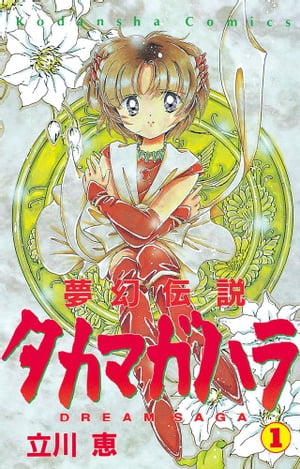
Fantasy / Adventure
Dream Saga
A review of Dream Saga — Megumi Tachikawa's five-volume fantasy manga about an ordinary girl who discovers she can travel to Takamagahara, the realm of Japanese gods, by sleeping with a special acorn.
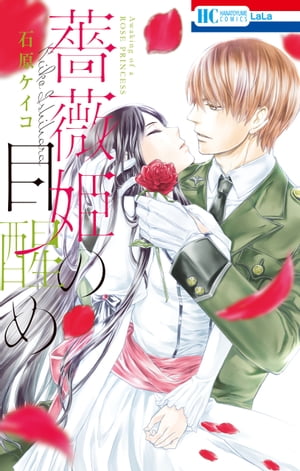
Fantasy / Romance
Kiss of the Rose Princess
A review of Kiss of the Rose Princess — Aya Shouoto's nine-volume shojo fantasy about Anise Yamamoto, who receives four magical knight cards and must kiss each knight to summon their power to fight supernatural threats.
Fantasy / Romance
Mugen Spiral
A review of Mugen Spiral — Mizuho Kusanagi's two-volume shojo fantasy about a girl with spiritual powers who accidentally transforms a demon prince into a cat, then has to deal with the consequences of keeping him in her house.
Fantasy / Supernatural
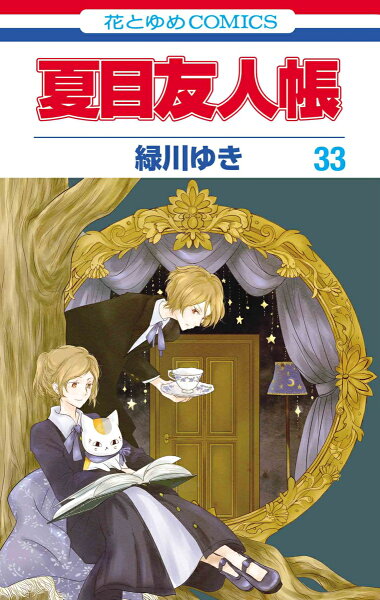
Natsume's Book of Friends
Yu's review of Natsume's Book of Friends — a teenager who can see spirits inherits a book from his deceased grandmother containing the names of spirits she had bound to her, and must return those names while navigating a world of supernatural beings and the human world he never quite fit into.
Fantasy / Romance
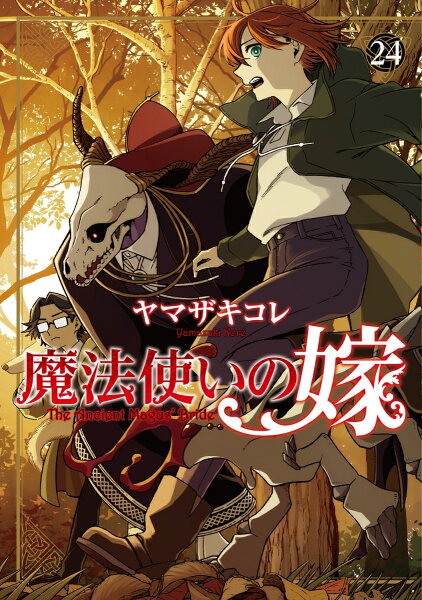
The Ancient Magus' Bride
Yu's review of The Ancient Magus' Bride — a manga about a girl who sells herself at auction, is purchased by a skull-faced sorcerer, and slowly learns what it means to have a home. One of fantasy manga's most carefully crafted ongoing series.
Written by
Yu
Manga Enthusiast from Japan
I grew up in Japan and manga literally saved me during a tough time in elementary school. My English isn't perfect, but my love for manga is real — and I want to share it with you.
Disclosure: This post contains affiliate links. As an Amazon Associate, I earn from qualifying purchases at no extra cost to you.