
Cautious Hero Review: The Overpowered Hero Who Trains for Days Before Fighting a Goblin — and the Reason That Stopped Me Laughing
by Light Tuchihi (story) / Koyuki (art) / Saori Toyota (original character design)
Read the first volume. If it doesn't hook you, put it down. It'll hook you.
Buy The Hero Is Overpowered but Overly Cautious on Amazon →*Affiliate link — I earn a small commission at no extra cost to you.
I am the most cautious person I know. As a kid who got bullied and had zero friends, I learned to expect the worst before it arrived — to over-prepare, to double-check, to never walk into a room without scanning the exits first. People thought I was being paranoid. I thought I was just surviving.
So when I picked up The Hero Is Overpowered but Overly Cautious expecting a dumb gag manga — and it absolutely is one, for most of its length — I did not expect it to eventually describe me. Seiya Ryuuguuin is a hero so overpowered he could win almost any fight in seconds, and he still trains for days, buys every weapon in the shop, and doesn't trust a single thing he hasn't tested twice. The whole world finds him insufferable. I found him familiar.
This review is about the manga adaptation drawn by Koyuki, the six-volume run from Monthly Dragon Age. The light novel by Light Tuchihi is longer and ongoing, but the manga tells one complete, self-contained loop — and it lands its one big surprise cleanly.
Quick Take
- An isekai comedy that takes the "overpowered hero" trope and asks: what if the hero who could win instantly refused to do anything without maximum preparation — and was right to?
- The whole engine is the goddess Ristarte's exasperation, watching Seiya spend days preparing for fights he could end in one move
- Complete at 6 manga volumes from Yen Press; rated T (Teen) — comedy violence and mild fanservice, nothing graphic
Who Is This Manga For?
- Readers who want isekai comedy built on one sharp premise executed consistently
- Fans of genre-aware fantasy that pokes at the "summoned overpowered hero" cliché
- Anyone who likes a comedy that hides a genuine emotional turn under the jokes
- Readers who want a completed series with a clear ending rather than an endless light-novel adaptation
Story Overview
Ristarte is a novice goddess, and she's been handed the worst possible assignment: save Gaeabrande, a world ranked S-class for difficulty, from its Demon Lord. To do it, she gets to summon one human hero from Earth.
She finds Seiya Ryuuguuin — and his stats are absurd. By every number she can read, he's the strongest hero she's ever seen. She thinks she's gotten lucky. Then she reads his personality.
Seiya refuses to engage with anything unprepared. Before fighting the weakest goblin, he trains. Before entering a town, he treats every villager as a potential threat. His catchphrase is "Ready... Perfectly" — he won't move until everything is, in his judgment, perfectly arranged. He buys multiples of every item "just in case." He attacks corpses to make sure they're actually dead. Ristarte spends most of the series wanting to strangle him.
The structure is comedy-of-frustration: her perspective, his caution, the gap between how fast a fight could go and how long Seiya makes it go. But Gaeabrande is genuinely an S-class world. The threats keep turning out to be worse than they looked — ambushes, fake corpses, enemies pretending to be allies, dragonkin who aren't what they seem. Over and over, Seiya's paranoia turns out to be the only thing that was correct. The turning point of the whole story comes near the end, when — right before the final battle with the Demon Lord — Seiya simply vanishes, and Ristarte has to confront why a hero this powerful would ever need to be this afraid.
Characters
Seiya Ryuuguuin — The cautious hero himself. Played dead straight: he's not anxious in a fidgety way, he's coldly, methodically over-prepared, and he treats his own overwhelming power as something never to be trusted. The manga's final volume reveals that this isn't his original personality at all. The reason is the spine of this whole review, so I'll keep it in the spoiler section — but it reframes every gag that came before it.
Ristarte — The point-of-view character and the real emotional core. A rookie goddess in over her head, she narrates the series through her own exasperation, and somewhere along the way her irritation with Seiya turns into something she doesn't want to admit she feels. She's a far more developed protagonist than a one-joke comedy needs, and she's the reason the formula never goes stale — we're not watching Seiya prepare, we're watching her watch him prepare.
Mash and Elulu — Two young dragonkin who join the party as Seiya's apprentices and companions. They're the warmth of the group, the ones who admire Seiya even when Ristarte is fuming, and they tie directly into the Gaeabrande revelations — the truth about the dragonkin is one of the world's buried twists.
What I Love About It
The single comedic premise is built like a good engine: it should run out of fuel, and it never quite does. The reason is that the joke isn't really "Seiya is cautious." The joke is the gap — between his power level and his behavior, between what Ristarte expects and what she gets. Koyuki's art lives in that gap. Seiya's expression almost never changes; he wears the same flat, unbothered calm while buying his tenth healing potion or setting a corpse on fire to be sure. Ristarte's face, meanwhile, does all the work — the goddess melting down panel by panel while the hero stays perfectly serene. That contrast is the most reliable visual joke in the book, and it's why a premise this simple sustains six volumes.
But what actually made me love it is that the manga eventually takes its own gag seriously. For most of its length, Seiya's caution is funny because it's excessive — he's over-preparing for trivial threats. And then the story quietly asks the question I'd been too busy laughing to ask: why is he like this? A person doesn't become this guarded for no reason. The manga withholds that answer until the very end, and when it arrives, it doesn't undo the comedy — it explains it. That's the part that got me. I know what it's like to be the person who can't relax, who prepares for disasters that probably won't come, because once, the disaster did.
Memorable Scene ⚠️ Spoiler Warning
The moment that stayed with me is the final-volume reveal of why Seiya is so pathologically cautious — and the fact that he wasn't always.
In the story's backstory, Seiya's original self was the opposite of who we've been laughing at. He was reckless, hot-blooded, the kind of hero who charged in on instinct, whose go-to phrase was basically "it'll work out somehow." And it didn't. In a previous summoning, that recklessness got his entire party wiped out, killed the person he loved most, and ended with the world he was supposed to save being destroyed. "Ready... Perfectly" is what's left of the man who used to say "it'll work out."
The manga sets this up right where it hurts most: just before the Demon Lord battle, Seiya disappears, and Ristarte — who's spent the whole series exasperated with him — has to learn the truth about him while he's gone. Suddenly every absurd precaution is recolored. The man attacking corpses to be sure they're dead isn't being silly. He's a survivor who watched what happens when you assume the worst is over and you're wrong. The comedy and the grief arrive in the same beat, and the series earns it precisely because it never tipped its hand early. I stopped laughing, and then I understood, and that's a rare thing for a gag manga to pull off.
Pros & Cons
Pros
- Six volumes, complete — a clean, finished story rather than an open-ended adaptation
- One comedic premise executed consistently without wearing out, thanks to Ristarte's perspective
- The final-arc reveal gives the whole comedy a real emotional foundation
- Koyuki's expressive art makes the central running joke land every time
Cons
- It is, for long stretches, the same joke — your tolerance depends entirely on finding Seiya's caution funny
- Genuinely light on plot until things tighten in the back half
- The manga is an adaptation; the light novel by Light Tuchihi is more detailed and goes further
- If you want a comedy that stays a comedy, the late tonal shift might catch you off guard — that's either the best part or a swerve you didn't sign up for, depending on you
Is The Hero Is Overpowered but Overly Cautious Worth Reading?
Yes, if you want an isekai comedy that knows exactly what its one joke is and rides it to a real ending. It's six complete volumes of a goddess losing her mind over a hero who won't stop preparing — and a final twist that quietly explains why that hero is the way he is. If you need constant plot, this isn't it. If you can enjoy a single premise done well and then deepened, it's worth your time.
Similar Manga
| Title | Its Approach | How The Hero Is Overpowered but Overly Cautious Differs |
|---|---|---|
| KonoSuba | Fantasy comedy driven by a dysfunctional party and a fed-up everyman | Cautious Hero runs on one hyper-specific character trait and pays it off with a serious backstory |
| The Devil Is a Part-Timer! | Comedy isekai that finds unexpected heart in a low-stakes setup | Cautious Hero keeps the high-stakes save-the-world frame and uses it to justify its joke |
| Overlord | An overpowered protagonist in a fantasy world, played in a dark, dramatic register | Cautious Hero plays overpowered-ness for laughs first, and only turns serious at the very end |
Official English Translation Status
Yen Press licensed the manga in North America and released all six volumes in English between 2020 and 2023 under the title The Hero Is Overpowered but Overly Cautious. The original light novel by Light Tuchihi is also available in English from Yen Press and runs longer than the manga.
Where to Buy
Read the first volume. If it doesn't hook you, put it down. It'll hook you.
This post contains affiliate links. If you purchase through these links, I may earn a small commission at no extra cost to you. As an Amazon Associate, I earn from qualifying purchases.
*Affiliate link — I earn a small commission at no extra cost to you.
More Manga You Might Like
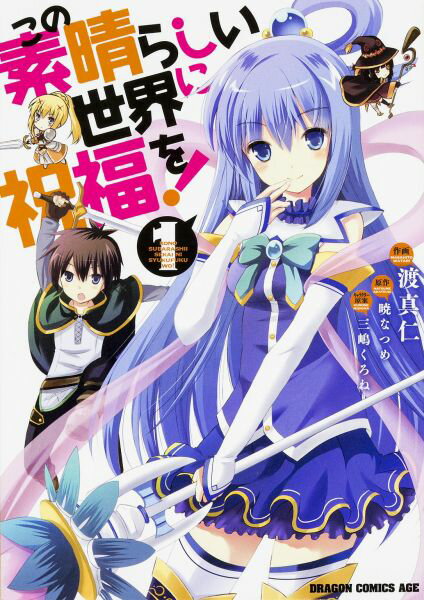
Fantasy / Comedy
KonoSuba: God's Blessing on This Wonderful World!
Yu's review of KonoSuba — the isekai parody where every party member is disastrously incompetent at something crucial. A useless goddess, an explosion-obsessed mage, a masochistic crusader, and a pathetic protagonist who somehow keeps surviving. The funniest isekai ever made.
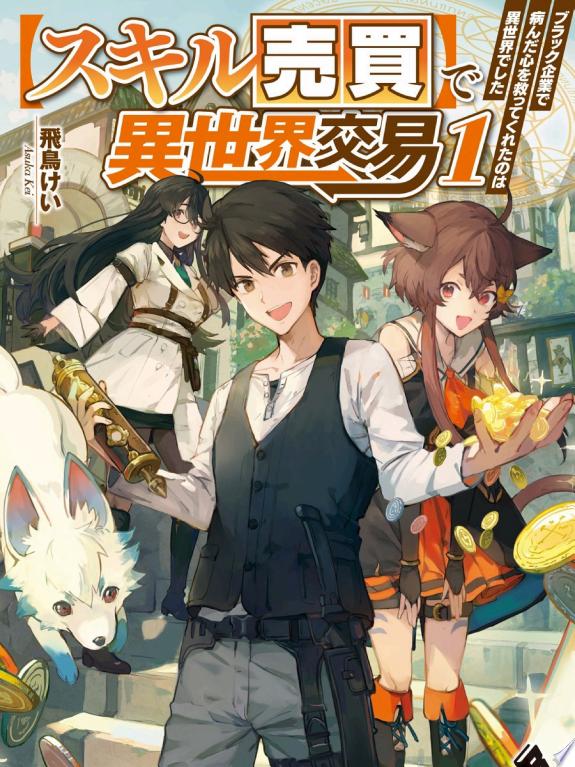
Fantasy
The Dungeon of Black Company
A review of Youhei Yasumura's The Dungeon of Black Company — 14 volumes in Comic Newtype. Kinji Ninomiya used financial schemes to become wealthy without working; transported to a fantasy world, he is immediately forced into brutal dungeon labor and must scheme his way out. Seven Seas Entertainment's English edition is complete.

Fantasy / Isekai
Villainess Level 99: I May Be the Hidden Boss but I'm Not the Demon Lord
Yu's review of Villainess Level 99 — Eumiella Dolkness reincarnated into an otome game as the villainess destined for a bad end; to avoid this fate, she spent her childhood grinding levels in secret until she reached the maximum level 99; the problem is that the game world treats anyone at level 99 as a Demon Lord candidate, and everyone is now afraid of her.
Fantasy / Comedy
That Time I Got Reincarnated as a Slime: Slime Diaries
Yu's review of Slime Diaries — a spinoff from That Time I Got Reincarnated as a Slime following Rimuru and the people of Tempest through daily life; farming festivals, cooking competitions, seasonal celebrations, and the small situations that don't make it into the main series.
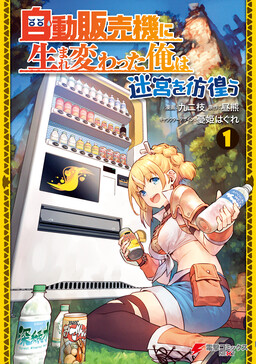
Fantasy / Isekai
Reborn as a Vending Machine, I Now Wander the Dungeon
Yu's review of Reborn as a Vending Machine, I Now Wander the Dungeon — a vending machine enthusiast who dies in a vending machine accident is reborn as an actual vending machine in a dungeon-layered fantasy world; unable to speak except through vending machine phrases, he must survive, help those who find him, and slowly build a new life from the most absurd starting position in isekai fiction.
Fantasy / Comedy
My Next Life as a Villainess: All Routes Lead to Doom!
Yu's review of My Next Life as a Villainess — after a bump on the head, noble girl Catarina Claes realizes she is the villain of an otome game she played in her past life; in every route, her character gets exiled or killed; she spends the series desperately trying to avoid all bad endings, inadvertently charming everyone around her in the process.
Written by
Yu
Manga Enthusiast from Japan
I grew up in Japan and manga literally saved me during a tough time in elementary school. My English isn't perfect, but my love for manga is real — and I want to share it with you.
Disclosure: This post contains affiliate links. As an Amazon Associate, I earn from qualifying purchases at no extra cost to you.