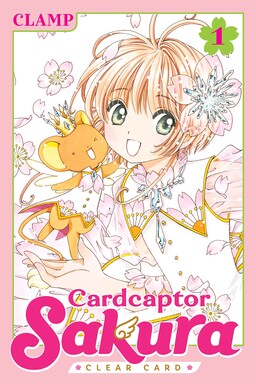
Cardcaptor Sakura: Clear Card Review: The Sequel That Asks What You'd Erase to Keep Someone Safe
by CLAMP
Read the first volume. If it doesn't hook you, put it down. It'll hook you.
Buy Cardcaptor Sakura: Clear Card on Amazon →*Affiliate link — I earn a small commission at no extra cost to you.
The first manga I ever owned was a worn copy of the original Cardcaptor Sakura that a classmate left behind when she moved away. I was a kid with no friends and a lot of empty afternoons, and Sakura — cheerful, brave, terrified of ghosts but never of doing the right thing — felt like the friend I didn't have. So when I heard CLAMP was bringing her back, twenty years later, I was scared. Sequels to the things you loved as a child usually hurt.
Clear Card doesn't hurt. It does something stranger: it lets Sakura stay exactly as warm as she was, then quietly puts her at the center of a mystery about memory, protection, and the people who lie to you because they love you. I finished the last volume on a train and had to sit there a while before I could move.
Quick Take
- CLAMP returns to Sakura Kinomoto twenty years after the original — same warmth, more refined art, a slower and sadder mystery underneath
- The real subject isn't card-catching; it's what people will erase to keep someone they love safe
- All Ages — gentle on the surface, but the emotional themes land harder for grown-up fans of the original
Who Is This Manga For?
- Fans of the original Cardcaptor Sakura who want the continuation, not a reboot
- Readers who like magical-girl adventure with a melancholy, mystery-box undercurrent
- CLAMP fans who enjoy the studio's recurring themes of memory, time, and sacrifice
- Anyone who finished the original and wondered what Sakura and Syaoran grew into
Story Overview
Sakura Kinomoto starts middle school. Syaoran has returned from Hong Kong, they're a couple now, and life in Tomoeda is gentle again. She expects to keep living as a Card Captor with the Sakura Cards she transformed as a child.
Then she has a prophetic dream of a hooded figure — and overnight, every Sakura Card turns blank and powerless. A new, much stronger key appears to her in that dream, and strange transparent "Clear Cards" begin manifesting around town. Sakura starts capturing them with a power she doesn't understand and a key she didn't earn.
The turning point is that the mystery isn't really about the cards. A transfer student named Akiho Shinomoto arrives, living with her young guardian Yuna D. Kaito, and she becomes Sakura's close friend. Slowly the story reveals that Kaito is a sorcerer deliberately engineering these magical incidents to make Sakura create specific new cards — and that almost everyone close to Sakura, Syaoran included, is keeping a secret from her for what they believe is her own good.
By the finale (the series ran 80 chapters across 16 volumes, completing in early 2024), the truth comes out: the whole quiet drama has been about protecting Akiho and Kaito — whose true names are revealed as Cosmos and Cristaux — from the magical organizations that would use them, even if protection means rewriting memories and pretending people were never there.
Characters
Sakura Kinomoto — Now thirteen, and the miracle of the book is that she's still herself: generous, determined, allergic to giving up, and quick to cry for other people rather than herself. Her arc is realizing that the adults and the boy she loves have all been managing her — and choosing to forgive that while refusing to let anyone be erased on her behalf.
Syaoran Li — The secret-keeper. His mother Yelan warns him of a prophecy that Sakura's growing power to create cards could bring her disaster. Working with Eriol, Syaoran takes responsibility for that danger and hides it from the girl he loves — which is the series' central ache, because his silence reads first as distance and only later as devotion.
Akiho Shinomoto — The new friend, and the heart of the mystery. Gentle, lonely, and tied to the hooded figure in Sakura's dreams, she's carrying magic and a fate she didn't choose. Her bond with Sakura is real even though their meeting was engineered.
Yuna D. Kaito — Akiho's guardian and the quiet antagonist. He orchestrates everything not out of malice but to absorb the dangerous magic placed inside Akiho and rewrite the world so she'd be safe and loved as part of Sakura's family. He's the rare CLAMP villain whose plan is, at its core, a sacrifice.
Tomoyo Daidouji — Still filming, still designing impossible battle costumes, still the warmest supporting presence in manga. Her devotion is the series' comfort blanket.
What I Love About It
Syaoran's secret. The whole middle stretch of Clear Card runs on the fact that he knows something he won't tell Sakura, and CLAMP refuses to make it easy. He's not being cold or cruel — he's holding the danger himself so it doesn't touch her. Eriol won't explain either, and Cerberus reasons that if Eriol is staying silent, there must be a protective reason, because Eriol never acts against Sakura's interest. That's the emotional engine: everyone who loves Sakura is lying to her, and they're all right to.
What gets me is how the manga lets that ache breathe instead of resolving it for tension's sake. There's a long quiet where Sakura senses the people closest to her are pulling away and can't understand why, and she keeps loving them anyway. As an adult rereading a series I imprinted on as a lonely kid, that hit a nerve the original never touched — the original was about a child capting the world; this one is about realizing the people who protect you sometimes do it by keeping you in the dark, and deciding whether you can live with that. When Syaoran finally tells her everything, the relief isn't dramatic. It's just two kids being honest again. That's the whole point.
Memorable Scene ⚠️ Spoiler Warning
The finale. Sakura spends so much power resolving everything that she sleeps for four days afterward, and the Clear Cards vanish as the world quietly rewrites — except the Flight card, which she keeps. The truth about Akiho (Cosmos) and Kaito (Cristaux) finally settles: Kaito's plan works, but it traps him in a kind of stopped time, so he won't age. Akiho chooses to leave Japan with him to search for a way to restart his time, knowing she will grow older while he stays exactly as he is.
What stayed with me is the small domestic grace notes around it — Sakura keeping Akiho's room as a guest room, as though leaving a door open for a friend who can't come back yet. And the finale echoes the original's most famous line in a new form, "You'll be together forever," now spoken over Cosmos and Cristaux. It's bittersweet on purpose: a forever that costs something. After a series that was so often gentle on its surface, that ending is where CLAMP lets you feel the weight underneath.
What English-Speaking Fans Say
Western readers tend to frame Clear Card as a successful return rather than a cash-in — praised specifically for art that evolved instead of freezing in nostalgia, for a mystery developed with real patience, and for the emotional continuity with the original being preserved. The most common reservation is that the slow pacing and the long-withheld central secret test the patience of readers who came for card-catching action.
Pros & Cons
Pros
- CLAMP's art at its most refined — elegant linework, gorgeous costume design
- The mystery has genuine emotional stakes, not just monster-of-the-week captures
- Syaoran's withheld secret is a real, aching subplot
- Emotional continuity with the original is fully intact
Cons
- You really do need the original series first
- Pacing is slower and quieter than the original
- The central secret is withheld a long time — that patience is either the appeal or the frustration, depending on you
Is Cardcaptor Sakura: Clear Card Worth Reading?
If you loved the original, yes — this is the rare legacy sequel that respects both the character and the grown-up reader. It trades childhood adventure for a gentler, sadder mystery about protection and memory, and rewards patience with a genuinely moving finale. Newcomers should read the original twelve-volume series first; Clear Card is a continuation, not an entry point.
Yu's Rating
| Category | Score |
|---|---|
| Story Depth | ★★★★☆ |
| Art Style | ★★★★★ |
| Character Development | ★★★★☆ |
| Accessibility for Non-Japanese Readers | ★★★★★ |
| Reread Value | ★★★★☆ |
Similar Manga
| Title | Its Approach | How Clear Card Differs |
|---|---|---|
| Cardcaptor Sakura | The original — childhood card-catching adventure | Clear Card is the direct sequel: older, slower, sadder |
| Magic Knight Rayearth | CLAMP's brighter fantasy-adventure with a gut-punch twist | Clear Card stays gentle on the surface and hides its weight |
| xxxHolic | CLAMP at its most melancholy, all about choices and consequence | Clear Card keeps the all-ages warmth while borrowing that ache |
| Sailor Moon | The other landmark magical-girl legacy series | Clear Card is a single continuing mystery, not an episodic saga |
Reading Order / Where to Start
Read the original Cardcaptor Sakura (12 volumes) first, then start Clear Card from Volume 1. The sequel assumes you know Sakura, Syaoran, Tomoyo, Eriol, and the Sakura Cards.
Official English Translation Status
Kodansha Comics published the complete series in English, in both print and digital, across all 16 volumes. The series is finished, so you can read it start to end without waiting.
Format Comparison
| Format | Notes |
|---|---|
| Individual Volumes | Kodansha Comics; all 16 volumes available |
| Digital | Available through Kodansha and major digital storefronts |
Where to Buy
Read the first volume. If it doesn't hook you, put it down. It'll hook you.
This post contains affiliate links. If you purchase through these links, I may earn a small commission at no extra cost to you. As an Amazon Associate, I earn from qualifying purchases.
*Affiliate link — I earn a small commission at no extra cost to you.
More Manga You Might Like
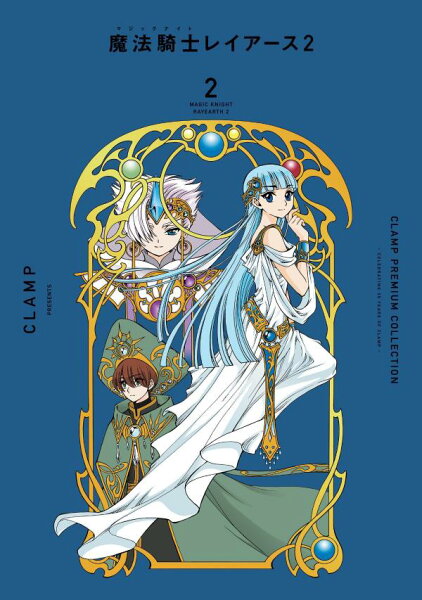
Fantasy / Action
Magic Knight Rayearth 2
The sequel that asks: what if the magical girls came back, and everything was their fault?
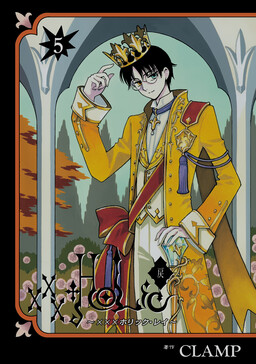
Fantasy
xxxHOLiC: Rei
Yu's review of xxxHOLiC: Rei — the sequel to xxxHOLiC, where Watanuki continues to run the wish shop but something is wrong with his memories of what happened; CLAMP's return to the xxxHOLiC universe, exploring the aftermath of the original series and the nature of wishes that change everything.

Fantasy / Action
Tokyo Mew Mew new
A review of Tokyo Mew Mew new — Mia Ikumi's three-volume continuation of the beloved Tokyo Mew Mew magical girl series, following a new team of girls who inherit the Mew Mew powers to face a new threat to Earth.
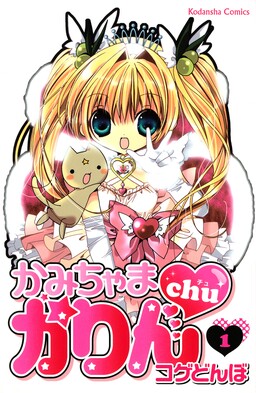
Fantasy
Kamichama Karin Chu
Yu's review of Kamichama Karin Chu — the sequel to Kamichama Karin; Karin and Kazune's story continues with a mysterious boy from the future who claims to be their son, new divine power developments, and escalating conflict with forces who want to control what gods can do.
Fantasy / Magical Girl
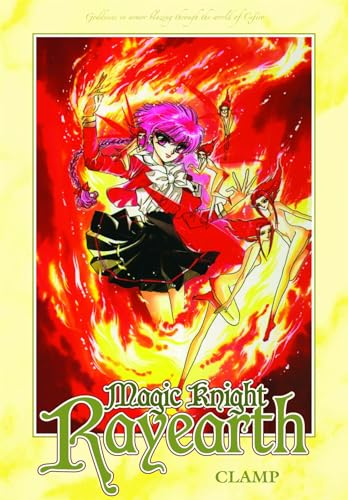
Magic Knight Rayearth
A review of CLAMP's Magic Knight Rayearth — six volumes (Part 1 + Part 2) running in Nakayoshi 1993–1996, a magical-girl manga where the rescue mission is the trap and the real story is what happens after. Complete in English from Dark Horse.
Fantasy
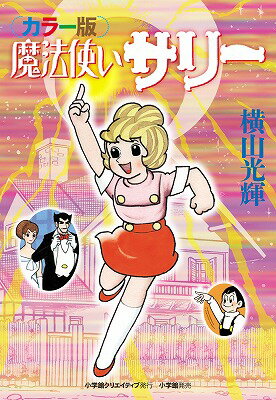
Sally the Witch
Sally the Witch is a princess from the magical world who chooses to live among ordinary humans — a manga that invented the magical girl genre and established every template that followed.
Written by
Yu
Manga Enthusiast from Japan
I grew up in Japan and manga literally saved me during a tough time in elementary school. My English isn't perfect, but my love for manga is real — and I want to share it with you.
Disclosure: This post contains affiliate links. As an Amazon Associate, I earn from qualifying purchases at no extra cost to you.