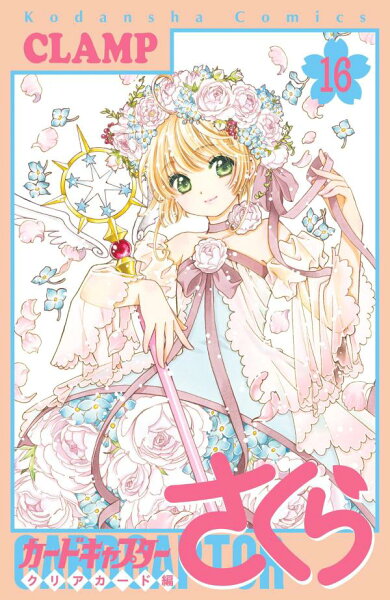
Cardcaptor Sakura Review: A Fourth Grader Opens the Wrong Book and Spends 12 Volumes Loving the Whole World Back Together
by CLAMP
Read the first volume. If it doesn't hook you, put it down. It'll hook you.
Buy Cardcaptor Sakura on Amazon →*Affiliate link — I earn a small commission at no extra cost to you.
When I was small and friendless, the manga I loved most were the loud ones — ninjas, pirates, kids screaming about their dreams. Cardcaptor Sakura came to me later, when I was old enough to be embarrassed about reading a magical-girl manga aimed at little girls. I read it anyway, alone, the way I read everything back then. And it did something none of the loud ones did: it made me feel like the world was, underneath everything, basically kind.
That's the strange power of this one. There's no villain who wants to destroy the planet. The biggest threat is a ten-year-old's own self-doubt. And yet by volume 12 I was sitting on my floor, completely undone, because CLAMP had spent twelve quiet books proving a single idea — that being brave because you love people is its own kind of magic. I've reread it more than almost anything else I own.
Quick Take
- A fourth grader named Sakura opens a book in her father's study, releases the magical Clow Cards into the world, and has to capture every one of them — then earns the right to make them hers
- CLAMP's warmest and most accessible complete work, serialized in Nakayoshi (1996–2000), 12 volumes, fully translated
- Age rating: All Ages. Gentle fantasy peril and tender, sincere romance. The modern Kodansha USA edition is unedited
Story Overview
Sakura Kinomoto is ten when she finds a strange book in her dad's library. She opens it, reads the word on the top card aloud, and a gust of wind scatters the rest of the deck across town. Out pops Kerberos — "Kero-chan," a tiny winged guardian beast who looks like a stuffed animal — who tells her the truth: those were the Clow Cards, created by the sorcerer Clow Reed, each one a living spirit with its own nature and power. Loose, they'll cause disasters. Sakura has to catch them all and seal them. Congratulations, she's a Cardcaptor.
The first half (the Clow Card arc) is largely episodic, and CLAMP uses that structure deliberately. Each card — Fly, Watery, Shadow, Sleep, Jump — is a small puzzle Sakura has to understand before she can seal it. Her best friend Tomoyo Daidouji sews her a new battle costume for every single capture and films the whole thing on a camcorder. A serious, scowling boy named Syaoran Li arrives from Hong Kong, a descendant of Clow Reed himself, convinced he should be the one collecting the cards. He starts as a rival and very slowly stops being one.
The turning point is the Judgement. Once the cards are gathered, the second guardian, Yue — hidden all along inside the body of Yukito, the gentle older boy Sakura has a crush on — appears to test whether she's worthy of becoming the cards' new master. She passes, but barely, and at a cost: her magic is too young to sustain Yue, so her brother Touya secretly gives up his own powers and his sixth sense to keep Yue alive.
The second half (the Sakura Card arc) is where the manga deepens. A polite transfer student, Eriol Hiiragizawa, begins staging eerie, escalating magical "incidents" that force Sakura to convert each Clow Card — powered by Clow's sun magic — into a Sakura Card powered by her own star. Eriol is eventually revealed as half of Clow Reed's reincarnation. He isn't an enemy; he's engineering Sakura's growth on purpose, because he needs her to grow strong enough to relieve him of a power that lets him see the future he no longer wants. In the final confrontation she does exactly that, splitting Clow's power so half passes to her father, Fujitaka (the other half of the reincarnation), and Eriol can finally stop seeing what's coming.
Then the manga sets the magic aside and lets its real ending happen: Syaoran confesses.
Characters
Sakura Kinomoto — One of shojo's great protagonists, and great precisely because she isn't a chosen prodigy. She's scared of ghosts, bad at math, prone to tripping over her own feet. Her arc is the slow accumulation of confidence — from a kid who captures cards because she has to, into a girl who chooses to transform every Clow Card into her own. Her magic isn't strength. It's that she cares about the people in front of her, and acts anyway. Her refrain, "everything will surely be all right," sounds like a child's optimism until the manga makes you believe it's a discipline.
Tomoyo Daidouji — Sakura's best friend, costume designer, and personal cinematographer. CLAMP gives Tomoyo something unusual: she's in love with Sakura, knows Sakura loves someone else, and decides that Sakura's happiness — not her own — is the thing worth protecting. The manga never plays this for a joke or a tragedy. It treats her as one of the most quietly selfless characters in the book.
Syaoran Li — The rival turned partner turned first love. Stiff, proud, terrible at expressing himself, Syaoran spends the second half realizing his feelings for Sakura and being absolutely wrecked by them. His arc is the slow thaw of a boy who came to win and stayed to love, and his confession is the emotional payoff the whole back half builds toward.
Touya Kinomoto & Yukito/Yue — Sakura's older brother and his best friend Yukito, who is secretly the false form of the guardian Yue. Touya's quiet sacrifice — handing over his magic and his sixth sense so Yue won't fade — is one of the manga's most underrated gut-punches, because his only condition is that Yue protect Sakura in his place.
Eriol Hiiragizawa — The "antagonist" who isn't one. As Clow Reed's reincarnation, he orchestrates Sakura's trials with total composure, because he's not trying to beat her — he's trying to make her ready.
Art Style
This is CLAMP near the peak of their craft. The character designs became globally iconic for a reason, but the real flex is Tomoyo's costumes — a brand-new, fully realized outfit for nearly every capture, each one drawn with the loving detail of a fashion plate. The magical sequences have genuine visual imagination, and the soft, airy linework matches the emotional register perfectly. The modern Kodansha editions present the art at its intended quality; older editions don't always.
What I Love About It
Tomoyo. Every time I reread this, I come back to her.
CLAMP could have made her a comic-relief sidekick or a love-rival, the two easiest shapes for a character like this. Instead they wrote a girl who loves Sakura completely, understands it won't be returned, and chooses to spend that love on making Sakura's bravery possible — sewing the costumes, holding the camera, cheering from just off-frame. Her happiness is witnessing Sakura be brave and grow up. The manga states this plainly and then refuses to simplify it or resolve it neatly. It just lets her love be real and good and slightly sad, all at once. I've never read another character quite like her, and she's the reason I think of Cardcaptor Sakura as a story about love far more than a story about magic.
And the genius is structural: every elaborate costume Tomoyo makes is, in a sense, a love letter Sakura wears into battle without quite knowing it. The manga's entire visual signature — those gorgeous outfits — is Tomoyo's feeling, made into fabric and put on screen.
Memorable Scene ⚠️ Spoiler Warning
The ending. After the final magical confrontation, Syaoran finds Sakura in Penguin Park and finally says it — directly, no card battle to hide behind — that he loves her, and that he has to go back to Hong Kong. Sakura is so overwhelmed she can't answer, and he leaves the question hanging.
What undoes me is what comes after. Sakura goes home, cries, and her own grief manifests a card — the nameless final card, which she names The Hope — born out of her love for Syaoran. There's a superstition woven through the back of the manga: if you make a teddy bear, name it after someone, and give it to them, that person becomes the most important person in your life. Sakura makes a bear for Syaoran. When she realizes she loves him too, she races to catch him before he's gone, chases down his departing bus, and presses the bear into his hands along with the words she couldn't say in the park. He'd already made one for her.
It's the gentlest possible climax — no monster, no city in ruins, just two kids and a homemade teddy bear and a bus pulling away — and it's more emotionally complete than half the epic finales I've read. CLAMP spent twelve volumes earning the right to end on that, and they earned every page of it.
Pros & Cons
Pros
- 12 volumes, complete, and beautifully paced toward its real climax
- CLAMP's art is consistently gorgeous; Tomoyo's costumes alone are a reason to read
- All-ages without ever being shallow — the emotional writing is genuinely mature
- Tomoyo, Touya's sacrifice, and the ending land harder than the cute exterior suggests
Cons
- Very gentle — if you want high-stakes action, the threat level here is mostly internal
- The Clow Card arc is episodic and can feel repetitive before the Eriol/Sakura Card arc deepens things
- Older TokyoPop editions altered some relationships; use the Kodansha USA version
- This is a soft, sincere, slow-burning story — that's the whole appeal, or it's not for you. Decide accordingly.
Is Cardcaptor Sakura Worth Reading?
Yes — completely. It's CLAMP at their warmest and most accessible: a gorgeously drawn, all-ages magical-girl story that turns out to be a deeply moving book about loving people bravely. If you want explosions and stakes, look elsewhere. If you want a story that leaves you gentler than it found you, start volume one.
Similar Manga
| Title | Its Approach | How Cardcaptor Sakura Differs |
|---|---|---|
| Sailor Moon | Team-based magical girls with a galaxy-scale war | Cardcaptor Sakura keeps its stakes small and personal — the real conflict is the heart, not the world |
| Magic Knight Rayearth | Same authors (CLAMP), but a darker, tragic isekai twist | Cardcaptor Sakura is the warm, hopeful side of CLAMP rather than the heartbreaking one |
| Puella Magi Madoka Magica | Deconstructs the magical-girl genre into horror | Cardcaptor Sakura is the sincere, un-ironic original the deconstructions are reacting against |
Reading Order / Where to Start
Volume 1. Read the original 12-volume series first — it's a complete, self-contained story. The sequel, Cardcaptor Sakura: Clear Card, picks up years later and is also available, but the original ends so beautifully you can absolutely stop there.
Official English Translation Status
Kodansha USA publishes the complete original 12-volume series in a modern, unedited edition (earlier Tokyopop and Dark Horse omnibus releases also exist). All volumes are available in English.
Where to Buy
Read the first volume. If it doesn't hook you, put it down. It'll hook you.
This post contains affiliate links. If you purchase through these links, I may earn a small commission at no extra cost to you. As an Amazon Associate, I earn from qualifying purchases.
*Affiliate link — I earn a small commission at no extra cost to you.
More Manga You Might Like
Fantasy / Slice of Life
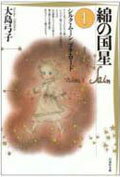
The Star of Cottonland
The Star of Cottonland follows Chi, a small stray kitten who believes with complete sincerity that she is a human child temporarily in cat form — Yumiko Oshima's beloved shojo classic about identity, belonging, and the particular consciousness of cats.
Fantasy / Magical Girl
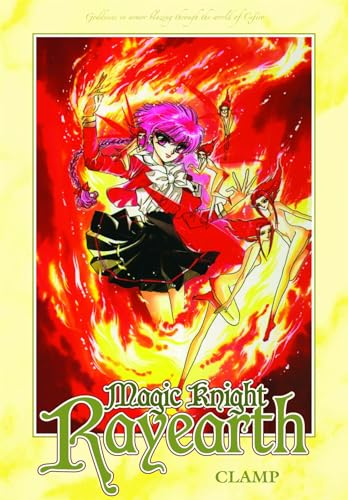
Magic Knight Rayearth
A review of CLAMP's Magic Knight Rayearth — six volumes (Part 1 + Part 2) running in Nakayoshi 1993–1996, a magical-girl manga where the rescue mission is the trap and the real story is what happens after. Complete in English from Dark Horse.
Fantasy
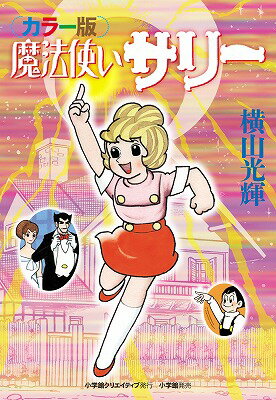
Sally the Witch
Sally the Witch is a princess from the magical world who chooses to live among ordinary humans — a manga that invented the magical girl genre and established every template that followed.
Fantasy / Slice of Life
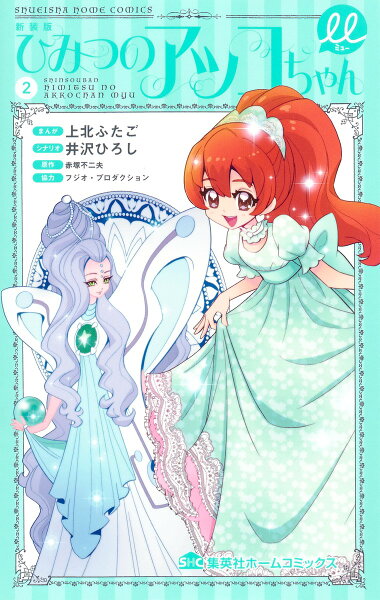
Himitsu no Akko-chan
Himitsu no Akko-chan is the manga that established the magical girl transformation formula — a young girl receives a magical mirror that allows her to transform into anyone or anything, and uses this power to solve problems and help people.

Fantasy / Comedy
Shugo Chara!
Yu's review of Shugo Chara! — Amu Hinamori is the 'cool and spicy' girl at school whose real self is shy and ordinary; three guardian characters hatch from eggs that represent who she could become, and she discovers that transformation is more complicated than it looks.
Fantasy / Romance
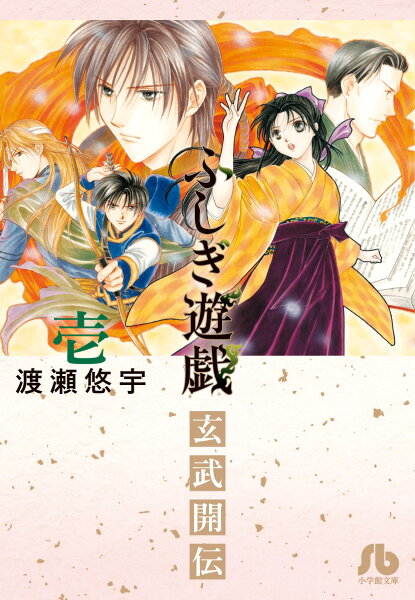
Fushigi Yugi: The Mysterious Play
Yu's review of Fushigi Yugi — a middle school girl is pulled into a historical Chinese fantasy book and becomes the Priestess of Suzaku, destined to gather seven celestial warriors and summon a god.
Written by
Yu
Manga Enthusiast from Japan
I grew up in Japan and manga literally saved me during a tough time in elementary school. My English isn't perfect, but my love for manga is real — and I want to share it with you.
Disclosure: This post contains affiliate links. As an Amazon Associate, I earn from qualifying purchases at no extra cost to you.