
Blade Dance of the Elementalers Review: The Boy Who Won a Girls-Only Tournament in a Dress
by Issei Hyouju (art), Yu Shimizu (story)
Read the first volume. If it doesn't hook you, put it down. It'll hook you.
Buy Blade Dance of the Elementalers on Amazon →*Affiliate link — I earn a small commission at no extra cost to you.
I have a soft spot for stories where the "overpowered protagonist" trope hides something sadder underneath. When I first read Blade Dance of the Elementalers, I expected a throwaway harem comedy — a boy lands in an all-girls magic school, hilarity ensues, the end. What kept me reading was the thing the comedy was built on top of: Kamito wasn't a lucky everyman who stumbled into power. He was a weapon. Raised to kill, hollowed out on purpose, and the only reason he can feel anything at all is that a spirit once decided to teach him what the world looked like from outside the cage.
The premise is loud and a little ridiculous. The thing under the premise is not. That gap is the whole appeal for me.
Quick Take
- A spirit-academy battle fantasy where the protagonist being male isn't a gag — it's the structural problem the whole world reacts to
- The hook isn't the harem; it's Kamito's assassin past and the secret that he once won the Blade Dance disguised as a girl named "Ren Ashbell"
- Age rating: T (Teen) — persistent fan service, fantasy combat, harem framing
Story Overview
In this world, only women can form contracts with elemental spirits. Noble daughters gather at Areishia Spirit Academy to train as elementalists — knights who fight using spirits bound into weapon form. That's the rule, and the rule has exactly one exception walking through the front gate.
Kamito Kazehaya gets an invitation from the academy's director, Greyworth, and promptly loses his way in the spirit forest. There he stumbles onto Claire Rouge purifying herself in a lake. She is furious, embarrassed, and immediately tries to incinerate him. Once that's sorted, he learns she's about to attempt a contract with a powerful sealed sword spirit. The attempt fails. The spirit goes berserk. To save Claire's life, Kamito forms the contract himself — and becomes the only male elementalist in the world. The spirit takes the form of a silver-haired girl named Est.
That single act detonates Claire's plans, because she needed that spirit, and now this boy has it. She forces him into a contract of obligation instead: he will fight as her elementalist as repayment. From there the story settles into its real engine — the Blade Dance, a tournament two months out where teams of contractors compete, and each member fights for a wish the winning Elemental Lord might grant.
The turning point that elevates the series is Kamito's backstory. He was raised by the Instructional School as an emotionless assassin. A darkness spirit named Restia rekindled his feelings and taught him the world. And three years before the story begins, Kamito entered the Blade Dance disguised as a girl, under the name "Ren Ashbell" — and won, becoming the Strongest Blade Dancer. The legend half the cast worships is the boy standing in front of them.
Characters
Kamito Kazehaya — Not a confused everyman. A trained killer learning, slowly, how to want things for himself. His competence is earned by a childhood that broke him, and his real arc is whether he can fight for a team rather than a handler. He once wielded the black sword Restia in his left hand; now he wields the holy sword Est in his right. The contrast is the whole character.
Claire Rouge — The red-haired, fire-tempered noble who drags Kamito into being her contracted elementalist. Behind the tsundere exterior is a girl who studied herself ragged to claw back standing after her family fell, and who quietly idolizes "Ren Ashbell" without knowing he's the boy she's bullying. Her partner spirit Scarlet takes the form of a flaming cat or a fire whip.
Est — The sealed sword spirit, now bonded to Kamito and operating at a fraction of her true power because the contract is incomplete. Childlike, blunt, quietly devoted — she reads romance novels to understand him. Understated in a genre that usually isn't.
Ellis Fahrengart — Captain of the academy's Sylphid Knights, rigid and justice-driven, the disciplinarian who suspects Kamito on principle and slowly thaws into an ally. Her swordsmanship is as straight-edged as her personality.
Fianna Ray Ordesia — The "Lost Queen," second princess of Ordesia, who lost her standing when she failed the duties she was raised for. She joins the team to compete in the Blade Dance and reclaim her name.
Rinslet Laurenfrost — Proud ice specialist and Claire's childhood friend, who hides her kindness behind rich-girl airs. She enters the Blade Dance with a wish: to free her cursed sister Judia from an eternal ice.
What I Love About It
The single best decision the series makes is making Kamito's strongest self a girl. "Ren Ashbell" isn't a throwaway disguise gag — it's the reason a world that bars men from spirit contracts has a male contractor walking around at all. He learned to be the best in a space that would never have let Kamito Kazehaya in, so he became someone else to get there. There's something genuinely poignant in a protagonist whose greatest achievement is one he can't claim under his own name and face.
It also reframes every fan worshipping the legendary Ren Ashbell. Claire, who needles Kamito constantly, privately reveres a hero she'd never recognize standing beside her. The dramatic irony does a lot of quiet work — it turns a stock tsundere dynamic into something with a buried tenderness, because we know what she doesn't. For a series this easy to dismiss from its cover, that's a sharper emotional core than the genre usually bothers to build.
Memorable Scene ⚠️ Spoiler Warning
The contract by the lake is the moment the whole series pivots on, and the manga frames it well. Claire's attempt to bind the sealed sword spirit fails, the spirit goes berserk, and Kamito — who by every rule of this world should not be able to do this — steps in and forms the contract himself to keep her from being killed. Est crystallizes into a girl. The world's one impossible exception is made in a single panel.
What sticks with me isn't the spectacle, it's the consequence. He didn't do it to be a hero or to win anything. He did it reflexively, the way a person trained his whole life to act under pressure would. And it costs him immediately — he's robbed Claire of the spirit she needed, and his "reward" is being conscripted into her service. The act that defines him as special is the same act that traps him. That double edge is the series in miniature.
Pros & Cons
Pros
- The assassin-past and "Ren Ashbell" twist give the harem premise a real spine
- Kamito is competent and quietly damaged rather than cluelessly lucky
- Est is a genuinely well-handled spirit-in-human-form character
- The Blade Dance gives every heroine a concrete wish to fight for, so the stakes aren't abstract
- Hyouju Issei's art renders the spirit combat with clean, dynamic energy
Cons
- The fan service is persistent and front-and-center
- Supporting cast depth is thinner than the leads
- The school-tournament structure is familiar territory
- The manga only adapts the opening stretch of a much longer light novel
- If the harem framing isn't for you, nothing here will win you over — that's a feature or a dealbreaker depending entirely on you
Is Blade Dance of the Elementalers Worth Reading?
If you want a spirit-academy battle fantasy with a protagonist whose backstory actually carries weight, yes — the "Ren Ashbell" reveal alone gives it more of a center than its cover suggests. If persistent fan service is a hard no for you, this won't change your mind, and that's fine.
Official English Translation Status
This is the part worth knowing before you go looking. The manga adaptation ran six complete volumes in Japan (Monthly Comic Alive, 2012–2017, art by Issei Hyouju, story by Yu Shimizu). Digital Manga Publishing licensed it for English and released only Volume 1 in October 2015 (ISBN 156970340X) before the line stalled — volumes 2 through 6 never got an official English edition.
Note that the light novels were never officially licensed in English either — so the legitimate complete run of this story only exists in Japanese.
Where to Buy
No complete English release of the manga — only a single out-of-print first volume ever shipped in English. The full six-volume run is Japanese-only, so the Japanese edition is the real way to read it.
Find the Japanese edition on Amazon.co.jp →
Similar Manga
| Title | Its Approach | How Blade Dance Differs |
|---|---|---|
| The Asterisk War | Magic-academy battle tournament with harem framing | Very similar shape; Blade Dance leans harder on the protagonist's hidden past |
| The Familiar of Zero | A boy dropped into a female-dominated magical school | Zero no Tsukaima is more romance-comedy; Blade Dance is more action-forward |
| Chivalry of a Failed Knight | Underestimated protagonist in a magic-school tournament | Chivalry digs into meritocracy themes; Blade Dance trades on its assassin-and-disguise twist |
This post contains affiliate links. If you purchase through these links, I may earn a small commission at no extra cost to you. As an Amazon Associate, I earn from qualifying purchases.
*Affiliate link — I earn a small commission at no extra cost to you.
More Manga You Might Like
Fantasy / Action
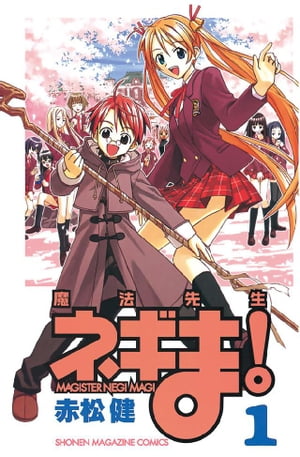
Negima!: Magister Negi Magi
A review of Negima! Magister Negi Magi, Ken Akamatsu's epic about a 10-year-old wizard assigned to teach a class of 31 junior high girls in Japan — which somehow escalates into a multiverse-spanning adventure.
Fantasy / Action
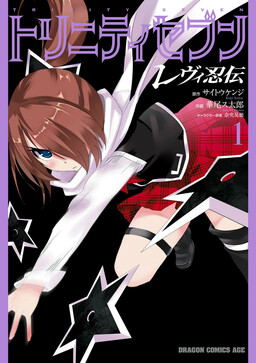
Trinity Seven
Yu's review of Trinity Seven — Arata Kasuga's town is destroyed by a Breakdown Phenomenon, his cousin Hijiri disappears, and he ends up at Royal Biblia Academy, a school that trains mages in the seven sins-based magic system; he meets the seven most powerful female mages at the academy and his inherited Archive magic, which works differently from conventional magic, makes him both their problem and their potential key.

Fantasy / Romance
Rosario + Vampire
Yu's review of Rosario + Vampire — Tsukune Aono accidentally enrolls in Yokai Academy, a school for monsters, where he meets Moka Akashiya, a vampire who wears a rosario that suppresses her true power; a monster school harem manga with genuine comedy and escalating supernatural action.
Fantasy / Action
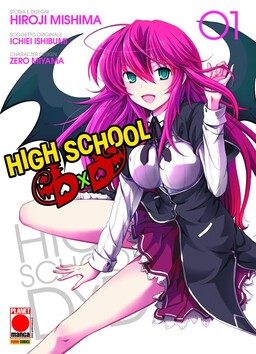
High School DxD
Yu's review of High School DxD manga — Issei Hyodo is killed on his first date by a fallen angel; he is revived by Rias Gremory, a high-ranking devil, as her servant; he joins the occult research club (actually a devil peerage) at Kuoh Academy and develops the Sacred Gear Boosted Gear, which doubles power every ten seconds, while the war between angels, fallen angels, and devils heats up around him.
Fantasy / Action
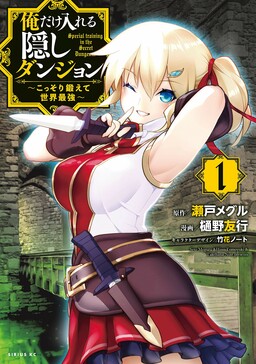
The Hidden Dungeon Only I Can Enter
Yu's review of The Hidden Dungeon Only I Can Enter — Noir discovers a hidden dungeon accessible only to him; inside he finds a Great Sage who grants him the ability to create, edit, and bestow skills; but using these powers costs him Life Points, which can only be restored by experiencing pleasure.

Fantasy
Cat Paradise
Yu's review of Cat Paradise (Gakuen Sosei Nekoten!) by Yuji Iwahara — Yumi Hayakawa picks Matabi Academy because she can bring her cat Kansuke, only to learn the school's cat-and-owner pairs guard a thousand-year-old seal on the demon cat Kaen.
Written by
Yu
Manga Enthusiast from Japan
I grew up in Japan and manga literally saved me during a tough time in elementary school. My English isn't perfect, but my love for manga is real — and I want to share it with you.
Disclosure: This post contains affiliate links. As an Amazon Associate, I earn from qualifying purchases at no extra cost to you.