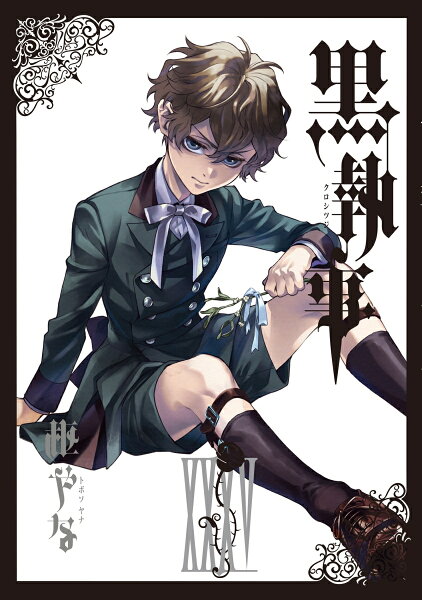
Black Butler Review: The Boy Who Ordered a Demon to Burn the Children
by Yana Toboso
Read the first volume. If it doesn't hook you, put it down. It'll hook you.
Buy Black Butler on Amazon →*Affiliate link — I earn a small commission at no extra cost to you.
The first time I read Black Butler I thought I was getting a stylish butler-and-his-master comedy. Sebastian sets a perfect table, the clumsy maid drops the china, the demon sighs, order is restored. I almost dismissed it as pretty wallpaper — gorgeous Victorian costuming wrapped around nothing.
Then I got to the end of the Noah's Ark Circus arc, and a twelve-year-old boy calmly ordered his demon to burn a building full of kidnapped children alive. And I realized the comedy had been the bait the whole time. Black Butler is not a manga about a butler. It's a manga about how far revenge will hollow out a child, and how the thing standing beside him is patiently waiting to eat what's left. That tonal whiplash is why I kept reading.
Quick Take
- A young Victorian earl contracts a demon to avenge his murdered parents; the demon serves as his flawless butler until the revenge is done, at which point he eats the boy's soul
- A gothic mystery that hides genuine cruelty under deadpan comedy and some of the most detailed costume art in any ongoing manga
- 35 volumes in Japan and still ongoing; rated T (Teen), but several arcs run far darker than that label suggests
Story Overview
Ciel Phantomhive is the Earl of Phantomhive, head of a noble house that secretly serves the British crown as "the Queen's Watchdog," handling the crimes Her Majesty cannot officially acknowledge. He is twelve. On the night his parents were murdered and the manor burned, he was taken, branded, and offered up in an occult ritual — and in that pit he summoned a demon. The price of the contract is Ciel's soul, to be devoured once his revenge is complete. Until then, the demon takes the human name Sebastian Michaelis and becomes the perfect butler.
The early volumes look episodic: Ciel investigates a case for the Queen, Sebastian solves the impossible parts with inhuman skill, the household staff cause chaos, repeat. But the Noah's Ark Circus arc is where the formula breaks open. Children are vanishing from London, and the trail leads to a traveling circus whose performers were themselves rescued orphans — and to the patron who "saved" them for monstrous reasons. The arc ends with Ciel making a choice no comedy survives.
Then the manga goes somewhere I did not expect. The Blue Cult arc detonates the central premise: the Ciel we have followed is the younger of twin brothers. The original heir, the real Ciel, died in that ritual — and the Undertaker, one of the Reapers, has been working to bring him back. The revived twin steps into the manor, takes the name, and brands our protagonist a fraud, sending him and Sebastian into flight. Nearly two decades on, it remains ongoing, and that twist recolors everything that came before it.
Characters
Ciel Phantomhive — Cold, precise, and so committed to revenge that there is no childhood left in him. What makes him work is that the manga never lets you forget he is a traumatized boy underneath the calculation. His relationship with Sebastian is pure contract — and the Circus arc shows exactly what that has cost him, when he gives the order to burn without flinching. The Blue Cult reveal that he is the surviving twin, living in a dead brother's name, makes his whole identity a kind of theft he has to keep defending.
Sebastian Michaelis — "One hell of a butler." A demon who takes genuine, almost artisanal pride in flawless service while feeling total contempt for human morality. His charm is that he is loyal only to the contract, not to Ciel, and he enjoys the cruelty his work permits. The Circus arc strips the mask: this is the first time the manga lets you fully see the monster behind the tailcoat.
The Household Staff — Mey-Rin (a former sniper with terrible eyesight up close), Baldroy (a battle-scarred veteran cook), Finnian (a lab experiment with superhuman strength), and the ancient steward Tanaka. They are hopeless at actual housework and lethal as bodyguards. Their slapstick is the manga's pressure valve — and the moment that comedy ends is how you know the floor has dropped out.
The Undertaker — A grinning shopkeeper for the dead who is far more than he seems. By the Blue Cult arc he is revealed as the engine behind the entire twin conspiracy, a Reaper who refuses to lose any more Phantomhives, even if it means raising the dead.
What I Love About It
The order to burn the manor. At the end of the Circus arc, Ciel and Sebastian find the kidnapped children Baron Kelvin had collected, and Ciel understands they cannot be saved — too far gone, too broken. So he tells Sebastian to burn the manor down with the children still inside, and Sebastian obeys. What I love is how Toboso refuses to let it be a clean heroic choice or a clean villainous one. Ciel is not a monster gloating; he is a child who has decided that mercy is a luxury his mission cannot afford, and the panel work makes you sit in that decision rather than rush past it.
What turns it from shock into something that stayed with me is the contrast the whole arc was built on. The circus performers were orphans too, rescued from a workhouse, doing terrible things out of loyalty to the man who saved them. Joker, their leader, begs for that man's life because without him the others die. Ciel — also an orphan, also surviving on a single fixed loyalty — looks at people who are mirrors of himself and orders them erased anyway. Black Butler spent volumes earning my affection for these characters specifically so that their deaths would mean something. That is the trick the comedy was setting up the entire time: make you care first, then make you watch.
Memorable Scene ⚠️ Spoiler Warning
The Blue Cult reveal. After two dozen volumes anchored on one boy's revenge, the Undertaker pulls back the curtain: our Ciel is the younger twin, and the real Ciel Phantomhive — the original heir, sacrificed in the summoning ritual — has been reanimated. The revived brother walks into the Phantomhive manor and simply takes the name back, accusing our protagonist of being the impostor.
What makes it land is how cleanly it reframes the contract. Our Ciel has been living in a dead boy's identity the whole time, and now the dead boy has come to reclaim it. Every "Ciel Phantomhive" line from the past 24 volumes flips meaning at once. It is the rare long-running shonen-adjacent twist that doesn't feel like a desperate swerve — Toboso planted it years in advance — and it sends the protagonist from master of the manor to fugitive in a single scene. I genuinely did not see it coming, and going back to reread the early volumes with it in mind is a different manga.
Pros & Cons
Pros
- The Sebastian/Ciel dynamic is one of the most distinctive lead pairings in manga
- Toboso's art is exceptional and has only sharpened across the run — the Victorian costuming alone is worth it
- Self-contained mystery arcs that genuinely earn their dark turns
- The Circus and Blue Cult arcs are payoffs that recontextualize everything before them
Cons
- Ongoing for nearly two decades with long gaps between volumes — no ending in sight
- Some mid-run arcs sag between the high points
- The horror and child-death content in certain arcs goes well past what a "Teen" rating implies — this won't work for everyone, and you should know that going in
Is Black Butler Worth Reading?
Yes — if you can handle a manga that uses gorgeous comedy as a trap. The art is consistently top-tier, the Sebastian/Ciel relationship is unique, and the Circus and Blue Cult arcs deliver twists that reward your patience. Just go in knowing it's darker than its rating, and that as an ongoing series it asks for a long-term commitment.
Similar Manga
| Title | Its Approach | How Black Butler Differs |
|---|---|---|
| Pandora Hearts | Gothic mystery with a contract bound to a non-human partner | Black Butler grounds its gothic in a concrete Victorian England and leans harder on episodic detective cases |
| The Ancient Magus' Bride | A human-and-inhuman bond built on a binding arrangement | Black Butler's bond is openly predatory — the partner is waiting to consume the human |
| Moriarty the Patriot | Victorian London crime plotting with a morally gray lead | Black Butler adds the overt supernatural and demonic contract on top of the mystery |
Where to Buy
Read the first volume. If it doesn't hook you, put it down. It'll hook you.
This post contains affiliate links. If you purchase through these links, I may earn a small commission at no extra cost to you. As an Amazon Associate, I earn from qualifying purchases.
*Affiliate link — I earn a small commission at no extra cost to you.
More Manga You Might Like

Fantasy / Mystery
The Apothecary Diaries
Yu's review of The Apothecary Diaries — Maomao, a pharmacist's daughter sold into the imperial palace as a servant, cannot help noticing that the emperor's children are being poisoned by their cosmetics; she leaves an anonymous note, it works, and she is immediately recruited as an unofficial court investigator.

Fantasy / Mystery
In/Spectre
Yu's review of In/Spectre — Kotoko Iwanaga gave an eye and a leg to the youkai of her village when she was a child; in exchange, she became their Goddess of Wisdom, mediating disputes and solving the problems of the spirit world; she enlists the help of Kurou Sakuragawa, a man with a strange relationship to death, and together they maintain peace between humans and spirits.

Fantasy / Supernatural
Toilet-Bound Hanako-kun
Yu's review of Toilet-Bound Hanako-kun — Nene Yashiro summons Hanako-kun, the most famous of her school's Seven Wonders, the ghost rumored to grant wishes; when she accidentally becomes bound to him as his helper, she enters a world of supernatural politics, competing spirits, and the mystery of who Hanako actually was.
Fantasy / Historical
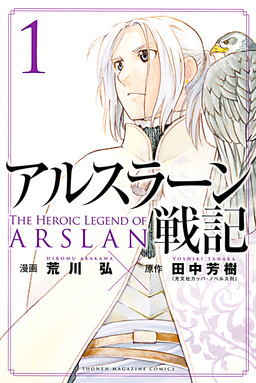
The Heroic Legend of Arslan
Yu's review of The Heroic Legend of Arslan — Prince Arslan of Pars watches his kingdom fall to an invading force; his father is betrayed by a trusted general; Arslan must gather allies and rebuild an army to retake his throne, while learning what kind of king he wants to be.
Fantasy / Isekai
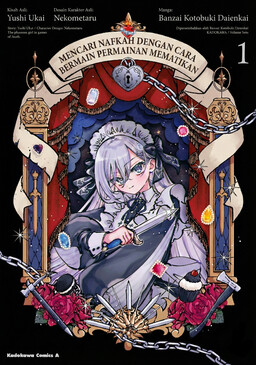
Dead Mount Death Play
Yu's review of Dead Mount Death Play — Ryohgo Narita and Shinta Fujimoto's reverse-isekai thriller. The Corpse God, a feared necromancer, is slain by the hero Shagrua and reincarnates into modern Shinjuku in the body of a murdered teenager, Polka Shinoyama. Wanting only a peaceful life, he is pulled into Tokyo's criminal underworld.
Fantasy / Supernatural
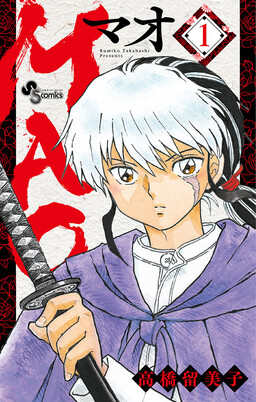
Mao
Yu's review of Mao — middle school girl Nanoka Kiba can slip between present-day Tokyo and Taisho-era Japan, where she encounters Mao, an onmyouji cursed with immortality who is searching for the source of his curse; together they investigate supernatural cases while pursuing the connection that links their lives across a century.
Written by
Yu
Manga Enthusiast from Japan
I grew up in Japan and manga literally saved me during a tough time in elementary school. My English isn't perfect, but my love for manga is real — and I want to share it with you.
Disclosure: This post contains affiliate links. As an Amazon Associate, I earn from qualifying purchases at no extra cost to you.