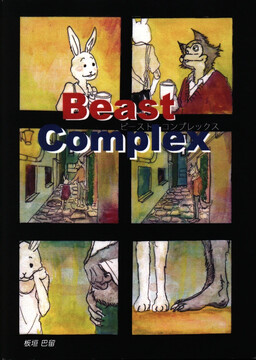
Beast Complex Review: The Short Stories Where Beastars Learned to Breathe
by Paru Itagaki
Read the first volume. If it doesn't hook you, put it down. It'll hook you.
Buy Beast Complex on Amazon →*Affiliate link — I earn a small commission at no extra cost to you.
I came to Beast Complex backwards. I read Beastars first — all of it, Legoshi and Haru and the long argument that manga makes about what it means to live inside a body other people are afraid of. So when I picked up Beast Complex, I expected leftovers. Side dishes. The scraps Itagaki couldn't fit into the main story.
I was wrong, and it took exactly one story to figure that out. The first ten pages of this book are a lion knocking on the door of a building where a fruit bat has been hiding for a year, because the bat's parents were eaten by a lion. Ten pages. And it landed harder on me than entire arcs of things I'd spent months reading. I sat there on my futon thinking: this is where Beastars came from. This is the seed. Before there was a school and a murder mystery, there was just Paru Itagaki testing, two animals at a time, how much weight a predator-and-prey pair could carry.
That's what Beast Complex is. And I think, quietly, it might be the most honest thing she's made.
Quick Take
- A short-story anthology set in the Beastars world — each chapter is a different predator-prey pairing, complete in around ten pages
- It is literally the predecessor to Beastars: the 2016 run in Weekly Shōnen Champion that did well enough to get Beastars greenlit
- T+ (Older Teen) — violence, grief, discrimination, and one frankly adult story about a one-night stand
Story Overview
Beast Complex isn't a single narrative. It's a collection. Paru Itagaki ran the original short stories in Weekly Shōnen Champion in 2016, and they did well enough that her editors handed her the ongoing series that became Beastars. After Beastars finished, she kept making more of these standalone stories, and they were eventually collected — four volumes so far, published in English by VIZ Media.
The world is the same one Beastars fans know: anthropomorphic animals split into carnivores and herbivores, where eating meat is illegal because the only meat is other people. Every story takes that premise and drops a single pair into it. A lion and a bat. A tiger and a beaver. A camel and a wolf. A crocodile and a gazelle. A kangaroo and a black panther. A fox and a chameleon. Then it asks one question: what happens when these two specific animals have to actually deal with each other?
The structure means there's no overarching plot, no resolution to build toward. The "turning point" of Beast Complex is internal to each story. Some end in friendship. Some end in someone walking away forever. One ends with a man deciding not to quit his job because of a single night he'll never repeat. The collection's whole argument is that the social machinery of this world — who's allowed to befriend whom, who's allowed to want whom — breaks differently for every pair, and Itagaki wanted to show you the breakage from a dozen angles instead of one.
Characters
Because it's an anthology, the "characters" are really the pairs. Here are the ones that stuck with me.
Raul and Azumo (The Lion and the Bat) — Raul is a lion, the student council president, sent by a teacher to coax a fruit bat named Azumo back to school after a year's absence. The catch: Azumo's parents were eaten by a lion. When Raul first shows up at the abandoned building Azumo hides in, the bat asks if he's come to eat him, and Raul is the one who flinches. Raul comes back to apologize, brings his notes so Azumo can study, and they keep meeting. Azumo's arc is the one that wrecks me — he tells Raul, on a full-moon night, that he'd been trembling with fear and hadn't felt like living since his parents died, until Raul. Then he says he's not a sad bat anymore, and he leaves town, certain Raul will become a great lion.
Galom and Abby (The Camel and the Wolf) — Galom is a burnt-out camel journalist whose paper makes him write inflammatory pieces about carnivores eating herbivores. He's decided his next article — carnivores being "born to eat meat" — will be his last before he quits. Then he ends up sharing a café table with a wolf named Abby, treats her to dinner, and spends one night with her. It's the most adult story in the book. The implication is that the romance didn't last — but it shook Galom enough that he stays a journalist, holding onto the memory of that night.
The Crocodile and the Gazelle — A crocodile chef and a gazelle assistant forced to work together on a cooking show with sinking ratings. The comedy of a predator and prey having to plate food side by side, and the genuine chemistry that grows out of pure professional necessity.
The Kangaroo and the Black Panther — A hotel manager (kangaroo) takes a fatherly interest in a furtive teenage black panther hiding out in one of his rooms, clearly in some kind of trouble. The quietest, most paternal story in Volume 1.
What I Love About It
It's the ten-page constraint. I keep coming back to it. Itagaki gives herself almost no room — a NetGalley-era reviewer at Noisy Pixel put it exactly right, that the challenge is "fitting two characters' worth of personality within the confines of ten pages." And what I love is that she doesn't cheat to solve it. She doesn't info-dump. She leans on the world Beastars fans already carry in their heads, and then she trusts a single image or a single line to do the work an entire chapter would do in a normal manga.
The Lion and the Bat is the cleanest example. There's no time to slowly build a friendship, so Itagaki gives you the moment Raul flinches when Azumo jokes about being eaten — and in that flinch you understand everything. You understand that Raul, the confident lion, is also afraid of what he is. You understand that Azumo's grief has curdled into a kind of armor. The whole relationship is encoded in one panel of a predator being more scared than his prey. That's the thing I love about this collection: it's Itagaki working in miniature, and the miniature exposes how good her instincts actually are. Beastars is the cathedral. Beast Complex is the sketchbook where she figured out she could build one.
Memorable Scene ⚠️ Spoiler Warning
The full-moon ending of The Lion and the Bat.
After Raul and Azumo have been meeting for a while — studying, talking, becoming friends — they meet one last time under a full moon. Raul brings up their first meeting, how scared he'd been of this small grieving bat. And Azumo answers him honestly: he says he'd been trembling with fear too, the whole time, and that he hadn't felt like he wanted to live since his parents were eaten — not until Raul kept coming back. Then he tells Raul he's not a sad bat anymore. He's leaving town. And he says it with complete certainty that Raul is going to grow into a great lion.
What kills me about it is that nothing dramatic happens. Nobody is eaten. Nobody confesses love. A predator and a grieving prey animal simply admit, on the same night, that they were both terrified of each other and saved each other anyway. Then one of them walks away healed. In ten pages, Itagaki built a relationship strong enough that the goodbye actually hurts. I've read 200-chapter manga that couldn't earn a goodbye like that. This one did it before lunch.
Pros & Cons
Pros
- Itagaki's worldbuilding compressed to its purest form — every story is a complete idea
- The Lion and the Bat and the adult Camel and the Wolf are genuinely some of her best writing
- The art carries all of Beastars' visual quality and animal-design intelligence
- Complete and self-contained; you can read one story on a train and feel something
Cons
- The ten-page format means the weaker stories (Tiger and Beaver, Fox and Chameleon) feel like familiar coming-of-age territory
- It rewards Beastars readers far more than newcomers — a lot of the emotional shorthand assumes you know the world
- The tonal range is wide: a tender lion-and-bat story sits a few pages from a sensual one-night-stand story, which won't land the same for every reader. That whiplash is either a feature or a flaw depending on you.
Is Beast Complex Worth Reading?
If you've read Beastars: yes, without hesitation — it's the origin point of everything you loved, and at least two of these shorts hit harder than full arcs of the main series. If you haven't read Beastars: read that first. Beast Complex is a brilliant sketchbook, but it assumes you already know the gallery.
Similar Manga
| Title | Its Approach | How Beast Complex Differs |
|---|---|---|
| Beastars | Itagaki's full ongoing series; one long story in this world | Beast Complex is the short-story predecessor — the same world in self-contained ten-page pieces |
| Dungeon Meshi | Builds an elaborate, rule-bound fantasy ecology around food | Beast Complex uses the food taboo as social metaphor about identity, not survival logistics |
| Blue Flag | Realistic teen relationships shaped by social pressure | Beast Complex abstracts the same pressures through predator-prey biology |
Where to Buy
Read the first volume. If it doesn't hook you, put it down. It'll hook you.
This post contains affiliate links. If you purchase through these links, I may earn a small commission at no extra cost to you. As an Amazon Associate, I earn from qualifying purchases.
*Affiliate link — I earn a small commission at no extra cost to you.
More Manga You Might Like
Fantasy
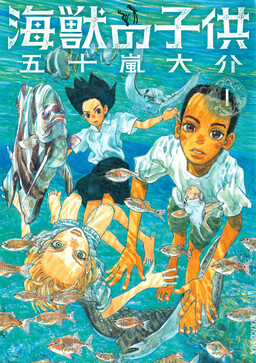
Children of the Sea (Kaijuu no Kodomo)
Yu's review of Children of the Sea (Kaijuu no Kodomo) by Daisuke Igarashi — Ruka, a lonely middle-schooler benched from her handball team, meets two boys, Umi and Sora, raised in the ocean by dugongs; fish vanish worldwide; a meteorite, a 'festival,' and a rebirth the story refuses to fully explain. VIZ Signature's most visually astonishing literary fantasy in 5 complete volumes.
Fantasy / Romance
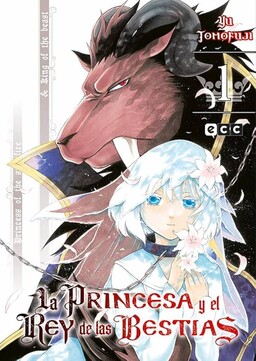
Sacrificial Princess and the King of Beasts
Yu's review of Sacrificial Princess and the King of Beasts — Sariphi is a human girl offered as a sacrifice to the Beast King Leonhart, who is expected to devour her; instead of pleading for her life, she asks to spend the remaining time as his companion; Leonhart, bewildered by her response, agrees.

Fantasy / Shoujo
Revolutionary Girl Utena
Yu's review of Revolutionary Girl Utena — Utena Tenjou, who decided as a child to become a prince rather than a princess, attends Ohtori Academy and becomes drawn into its secret dueling system; the winner of the duels wins possession of Anthy Himemiya, the Rose Bride; a surrealist fairy tale manga about power, freedom, and who gets to be the subject of a story.

Fantasy
Poe Clan
Yu's review of Poe Clan — Edgar is a vampire child, eternally young, moving through European history across several centuries; his vampire existence means watching everyone he cares for age and die while he remains unchanged; Moto Hagio's foundational vampire manga, originally published in 1972.

Fantasy
Spice and Wolf (Manga)
Yu's review of the Spice and Wolf manga — traveling merchant Kraft Lawrence finds Holo the Wise Wolf hidden in his cart; she is a wolf deity who was the harvest god of a village for centuries; she wants to go north to her homeland; Koume's adaptation of Hasekura's beloved light novel about economics, religion, and two people who are good at pretending they don't need each other.

Fantasy
xxxHOLiC: Rei
Yu's review of xxxHOLiC: Rei — the sequel to xxxHOLiC, where Watanuki continues to run the wish shop but something is wrong with his memories of what happened; CLAMP's return to the xxxHOLiC universe, exploring the aftermath of the original series and the nature of wishes that change everything.
Written by
Yu
Manga Enthusiast from Japan
I grew up in Japan and manga literally saved me during a tough time in elementary school. My English isn't perfect, but my love for manga is real — and I want to share it with you.
Disclosure: This post contains affiliate links. As an Amazon Associate, I earn from qualifying purchases at no extra cost to you.