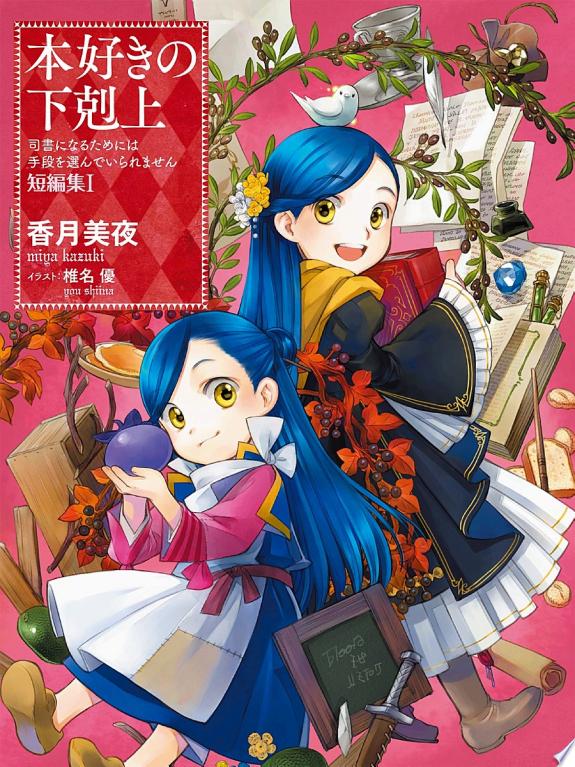
Ascendance of a Bookworm Review: Reincarnated With One Goal — Make Books
by Miya Kazuki (story) / Suzuka, Ryo Namino, Hikaru Katsuki (art)
Read the first volume. If it doesn't hook you, put it down. It'll hook you.
Buy Ascendance of a Bookworm on Amazon →*Affiliate link — I earn a small commission at no extra cost to you.
Urano Motosu died surrounded by books and was reincarnated into a world with almost none. This is, to a book-obsessed librarian, the worst possible outcome.
Her response: build them. From scratch. Starting with clay tablets.
Quick Take
- An isekai where the goal is not to defeat a Demon King but to recreate the history of bookmaking from clay tablets to printing press in a medieval fantasy world
- The most original isekai premise currently running in English, executed with exceptional care across 33+ volumes
- Rated T (Teen); 33+ volumes ongoing with consistent quality
Who Is This Manga For?
- Readers who want isekai where the protagonist's power is knowledge and creativity rather than combat
- Anyone who loves slow, detailed world-building where economics and technology matter
- People who love books — this is a manga for people who love books as an identity
- Readers who want something warm, funny, and genuinely affecting
Content Warnings & Age Rating
Age Rating: T (Teen) Content Warnings: Myne has a chronic illness threatening her life throughout the early volumes; class discrimination is a central theme, depicted with increasing complexity; political intrigue increases significantly in later arcs
The early illness themes are handled with care and drive character development rather than being exploited for shock value.
Yu's Rating
| Category | Score |
|---|---|
| Story Depth | ★★★★★ |
| Art Style | ★★★★☆ |
| Character Development | ★★★★★ |
| Accessibility for Non-Japanese Readers | ★★★★★ |
| Reread Value | ★★★★★ |
Story Overview
Urano Motosu is a book-obsessed librarian who dies in an earthquake while surrounded by the books she loves. She is reincarnated as Myne, a five-year-old girl from a lower-class commoner family in a medieval fantasy city — and discovers that in this world, books are so scarce and expensive that only the nobility can own them.
This is unacceptable.
With a librarian's knowledge of papermaking, printing, and bookbinding, and a modern understanding of how information technology was historically developed, Myne sets out to manufacture books herself. She starts with what is available in a lower-class household. She makes clay tablets. Then she works on plant-fiber paper. Then she develops ink. Then she figures out how to bind pages.
The series follows the actual history of bookmaking, each technological step requiring resources Myne has to find, relationships she has to build, and problems she has to solve without the benefit of modern tools or materials. It is not a power fantasy. The progress is real and limited and dependent on what the medieval world actually contains.
As her work draws attention she didn't seek, Myne is pulled into the class system and political structure of her world in ways that expand the story far beyond bookmaking — involving the nobility, the Church, and eventually the entire social structure of literacy as a class marker. The central argument the series makes: democratizing books is democratizing knowledge, and knowledge is power, which means the nobility has reasons to resist.
Characters
Myne — One of the most delightful protagonists in isekai manga. She has a librarian's encyclopedic knowledge and a child's body, and she deploys both simultaneously. Her love of books is completely genuine and drives every decision she makes. She is also, beneath the warmth and enthusiasm, a strategist of considerable ability who understands that her survival in a class-stratified society depends on being useful before she can be revolutionary.
Lutz — Myne's childhood friend who becomes her business partner and, eventually, the person who understands her better than anyone. His practicality provides the counterweight to Myne's obsessive book focus. The series uses their friendship to explore what it means to support someone whose goals you don't fully share.
Ferdinand — The noble who becomes Myne's complex patron — exasperated by her, reluctantly invested in her, genuinely caring about her outcome. His relationship with Myne is the series' most interesting adult dynamic: an aristocrat who recognizes that this commoner is doing something he doesn't understand but can see is important.
Art Style
The manga's art varies by part — Suzuka handled Parts 1, 2, and 5; Ryo Namino drew Part 3; Hikaru Katsuki drew Part 4. Each brings a consistent warmth to Myne's enormous enthusiasm and her occasional genuine fear. The world design — the medieval city, the workshop settings where Myne experiments with materials — is detailed without overwhelming the character focus.
Cultural Context
The manga's depiction of medieval bookmaking is surprisingly accurate: the scarcity of vellum, the expense of copying by hand, the role of literacy as a class marker that serves the existing power structure. Readers with interest in the history of information technology will recognize the choices. Western readers may recognize elements of actual European medieval social structure.
The series is also deeply about reading as identity — the experience of loving books not as objects but as the thing that makes life worth having. This lands differently for readers who recognize that feeling in themselves.
What I Love About It
There is a chapter where Myne, having finally produced something that can be read — a rough clay tablet with words pressed into it — holds it and cries.
She has been working toward this for multiple volumes. The object is crude. It is nothing like what she wanted. She cries from happiness anyway.
The series is about the specific joy of working toward something that matters to you, and the way that joy coexists with how far you still have to go. Myne's first clay tablet is not a book. But she made it. That means books are possible. That is enough.
Memorable Scene ⚠️ Spoiler Warning
Myne's first completed book — after volumes of setbacks, experiments that fail, compromises with what the medieval world can actually provide — is the series' emotional culmination of its early arc. Not the book she imagined. A real object she made with real materials from a real medieval world. The gap between what she wanted and what she has built is enormous. She holds it anyway. Anyone who has worked toward something difficult and finally held it will recognize what happens next.
Similar Manga
| Title | Its Approach | How Ascendance of a Bookworm Differs |
|---|---|---|
| Frieren: Beyond Journey's End | Similar patience and depth in a fantasy setting | Frieren is about the past; Bookworm is about building something new |
| Dungeon Meshi | Similar love of practical knowledge in a fantasy world | Dungeon Meshi is more episodic; Bookworm is a continuous character arc |
| Silver Spoon | Learning how things actually work in a specialized setting | Silver Spoon is contemporary; Bookworm uses the medieval world as a material problem to solve |
Reading Order / Where to Start
Volume 1. The series builds patiently. The first volumes are humble in scope — clay tablets and commoner households — and that humility is the foundation everything else stands on.
Official English Translation Status
Status: Ongoing English Volumes: 33+ Publisher: J-Novel Club Translation Quality: Excellent
Pros & Cons
Pros
- The most original isekai premise currently in English translation
- Myne is one of manga's greatest protagonists
- World-building is patient, detailed, and consistently rewarding
- Warm, funny, and genuinely affecting
Cons
- Very slow start — the early volumes are humble in scope
- 33+ volumes is a significant investment
- The political complexity of later arcs can feel dense compared to the early material
Is Ascendance of a Bookworm Worth Reading?
Yes — for readers who love books, world-building, and protagonists whose power is knowledge and creativity. One of the essential ongoing manga in English translation. Start at volume 1 and give it three volumes before deciding.
Where to Buy
Read the first volume. If it doesn't hook you, put it down. It'll hook you.
This post contains affiliate links. If you purchase through these links, I may earn a small commission at no extra cost to you. As an Amazon Associate, I earn from qualifying purchases.
*Affiliate link — I earn a small commission at no extra cost to you.
More Manga You Might Like

Fantasy / Isekai
That Time I Got Reincarnated as a Slime
Yu's review of That Time I Got Reincarnated as a Slime — an isekai manga where the protagonist becomes a slime and builds a monster nation. Lighter and more optimistic than most isekai, with genuine political world-building underneath the fun.

Fantasy / Isekai
Farming Life in Another World
Yu's review of Farming Life in Another World — Hiraku Machio spent most of his life ill and died young; granted a second life by God with restored health and a magic farming tool that can do anything, he starts a farm in an uninhabited forest; the farm grows, the community grows, and his life becomes everything illness prevented.
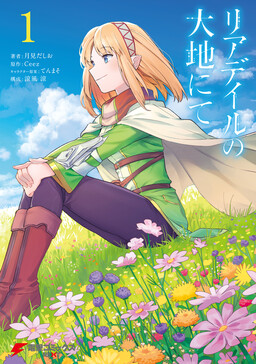
Fantasy / Slice of Life
In the Land of Leadale
Yu's review of In the Land of Leadale — Cayna, bedridden in reality due to illness and connected to a VR game as her only escape, wakes up inside Leadale 200 years after the game's timeline; her game-created children have grown into full people, and she must navigate a world that has changed around her in-game self.

Fantasy
Drugstore in Another World: The Slow Life of a Cheat Pharmacist
Yu's review of Drugstore in Another World — Reiji Kirio is reincarnated into a fantasy world with the ability to create potions and medicines; he opens a pharmacy in a small town and builds a slow life making medicines for the community; Esla's manga adaptation of Kennoji's slow-life pharmacist light novel.

Fantasy / Slice of Life
By the Grace of the Gods
Yu's review of By the Grace of the Gods (Kami-tachi ni Hirowareta Otoko) — the manga by Ranran adapting Roy's light novel. A worn-out salaryman dies and is reincarnated by three apologetic gods as an 8-year-old boy. He spends years in a forest taming and breeding slimes, then moves to the city of Gimul and opens a cleaning business. It's isekai as recovery, not power fantasy.
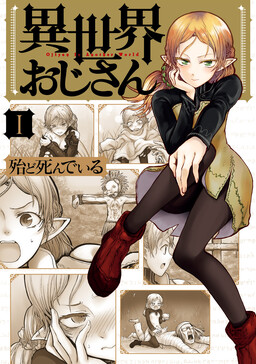
Fantasy / Comedy
Uncle from Another World
Yu's review of Uncle from Another World — Takafumi's uncle Yosuke wakes from a 17-year coma having been an isekai hero in another world; Takafumi discovers his uncle has magical powers but also deeply embarrassing stories about how he was treated in the other world.
Written by
Yu
Manga Enthusiast from Japan
I grew up in Japan and manga literally saved me during a tough time in elementary school. My English isn't perfect, but my love for manga is real — and I want to share it with you.
Disclosure: This post contains affiliate links. As an Amazon Associate, I earn from qualifying purchases at no extra cost to you.