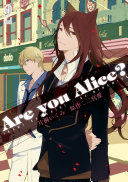
Are You Alice? Review: A Logic Dream Where the Rules Keep Changing and the Name Is the Problem
by Ai Ninomiya (story) / Ikumi Katagiri (art)
Read the first volume. If it doesn't hook you, put it down. It'll hook you.
Buy Are You Alice? on Amazon →*Affiliate link — I earn a small commission at no extra cost to you.
What would it mean to be given a name and told: that's who you are now? What if the name had been worn by eighty-eight people before you — and none of them survived?
Are You Alice? asks these questions across thirteen volumes using Wonderland as its architecture, and it is more philosophically serious than the setup suggests.
Quick Take
- A dark, beautiful reimagining of Alice in Wonderland with a male protagonist who didn't choose the role — and can't leave it
- The identity questions — who gets to be Alice, what Alice means to Wonderland, whether a role can become a self — are more interesting than the plot mechanics
- Rated T (Teen); 13 volumes complete, published by Yen Press
Who Is This Manga For?
- Fans of surreal fantasy and dark fairy-tale retellings who want philosophical substance
- Readers who enjoy mysteries where the premise keeps destabilizing
- People who liked Pandora Hearts or similar Wonderland-mythology manga
- Anyone who wants their fantasy manga to take ideas seriously
Content Warnings & Age Rating
Age Rating: T (Teen) Content Warnings: Violence including gun violence; psychological themes; identity deconstruction throughout; some disturbing imagery
The tone is consistently dark but not gratuitous. The content is in service of the thematic content.
Yu's Rating
| Category | Score |
|---|---|
| Story Depth | ★★★★★ |
| Art Style | ★★★★★ |
| Character Development | ★★★★☆ |
| Accessibility for Non-Japanese Readers | ★★★☆☆ |
| Reread Value | ★★★★★ |
Story Overview
A nameless boy wanders into Wonderland without knowing how. The Cheshire Cat greets him with a question: "Are you Alice?" Then, without waiting for an answer: "Then you're Alice. Your name is Alice."
Alice in this Wonderland is not a title of honor. It is a role in a game — the 89th iteration of a game that has been running for as long as Wonderland exists. The rules are obscure: Alice must find and kill the White Rabbit. The March Hare is the game master. The Mad Hatter carries a gun and is not entirely trustworthy. The Queen of Hearts wants Alice dead. And this Alice — who still doesn't know their actual name, who didn't choose this role, who only arrived in Wonderland by accident — must figure out not just how to survive but why the game exists at all.
The story accumulates complexity deliberately. Each arc adds new rules, new players, new complications. The mythology of Wonderland — why the game exists, what Alice represents to it, what the previous Alices were and what happened to them, what ends when the game ends and what doesn't — is built out across thirteen volumes in ways that reward patience and repeated reading.
The question underneath all of it: can a role become a self? If you perform Alice long enough, if you make the choices Alice makes, if you survive the things Alice survives — do you become Alice? Or are you always the person who was given the name without choosing it?
Characters
Alice — Stubborn, confused, increasingly competent. The journey from "I don't know who I am" to "this is who I have chosen to be" is the real story. What makes Alice interesting is that the final choice is neither simple acceptance of the role nor rejection of it — it is something more complicated.
The Hatter — One of manga's more interesting mentor-antagonist figures. He wants Alice to succeed and he has his own agenda and both things are true simultaneously. His relationship to the game and to previous Alices is revealed carefully.
The Cheshire Cat — The keeper of rules he enjoys watching break. His affection for chaos is a cover for something more specific, which the series develops in the later volumes.
The Duchess — A late-series addition whose presence reveals essential information about the history of the game and why it keeps running.
Art Style
Ai Ninomiya's art is lush, detailed, and dramatically composed. The Wonderland designs are distinctive — this is a world with its own visual logic, not a copy of any prior adaptation. Character designs are beautiful in a slightly unsettling way that fits the material. Action sequences are clear despite the stylistic complexity.
The cover art especially is striking. This is the kind of manga that looks exceptional on a shelf.
Cultural Context
The Alice in Wonderland mythology has been reimagined in Japanese media extensively — there is a recognized subgenre of "dark Alice" works. What Are You Alice? does specifically is engage with Carroll's original philosophical concerns: the nature of identity, the logic of nonsense, the way rules both create and constrain what is possible. The "game" structure is a formalization of Wonderland's logical-game quality, made literal and made lethal.
The gender ambiguity of the protagonist is deliberate. The name Alice is female-coded in Japanese cultural context but applied to a character who appears male, and this ambiguity is part of the thematic content about identity and assignment rather than an oversight.
What I Love About It
The moment where Alice — after volumes of being told who they are, told what role they're playing, told that their prior identity doesn't matter — makes a deliberate choice about identity is one of the series' most satisfying moments.
The choice is quiet. It is the choice of someone who has been defined by others for a long time and is choosing to define themselves through acceptance rather than rejection. That is a more interesting choice than either simple acceptance or simple rejection would be. The series earns that moment through its patience.
Memorable Scene ⚠️ Spoiler Warning
The revelation about the previous Alices — who they were, what happened to them across eighty-eight iterations of the game, why the game keeps running despite never successfully concluding — reframes the entire story. This Alice is not a fresh start. This Alice carries the weight of eighty-eight previous failures. The series makes this weight visible and then asks: knowing this, knowing that everyone who held this role before you died trying, what do you do next?
Similar Manga
| Title | Its Approach | How Are You Alice? Differs |
|---|---|---|
| Pandora Hearts | Dark Wonderland mythology with gothic atmosphere | Pandora Hearts is more plot-driven; Are You Alice? is more philosophically focused on identity |
| Joker Game | Dense, complex narrative requiring close attention | Joker Game is historical thriller; Are You Alice? is visual and emotionally warmer |
| Clover (CLAMP) | Surreal narrative with deep mythology | Clover is incomplete; Are You Alice? is 13 volumes fully resolved |
Reading Order / Where to Start
Volume 1, straight through. 12 volumes. The story is designed to accumulate — don't rush it.
Official English Translation Status
Yen Press published all 12 volumes in English. Complete and available.
Pros & Cons
Pros
- Visually striking dark fantasy manga with some of the best art in the Yen Press catalog
- Identity themes handled with genuine sophistication
- 13 volumes that feel complete and purposeful
- The Wonderland mythology is original and internally consistent
- Rewards rereading — the setup for later revelations is visible on second read
Cons
- Dense and complex — not accessible casual reading
- Plot mechanics can be confusing across the middle volumes
- The pacing frustrates some readers before the mythology clarifies
- The gender ambiguity requires cultural context to fully appreciate
- The ending is elliptical enough to divide readers
Is Are You Alice? Worth Reading?
Yes — for readers who want fantasy with philosophical substance and are willing to invest in complexity. One of the more interesting dark fantasy manga in English translation.
Where to Buy
Read the first volume. If it doesn't hook you, put it down. It'll hook you.
This post contains affiliate links. If you purchase through these links, I may earn a small commission at no extra cost to you. As an Amazon Associate, I earn from qualifying purchases.
*Affiliate link — I earn a small commission at no extra cost to you.
More Manga You Might Like
Fantasy / Mystery
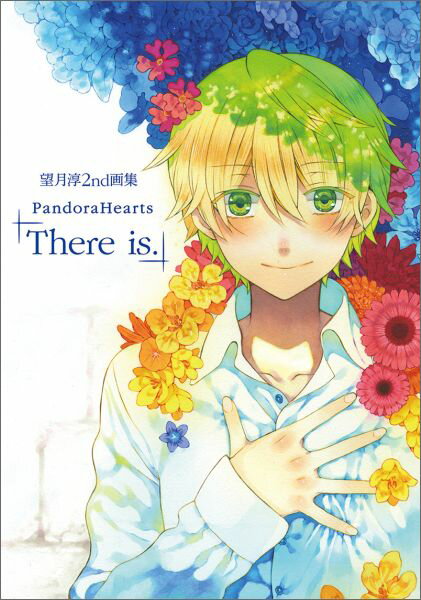
Pandora Hearts
Yu's review of Pandora Hearts — a nobleman's son is cast into a prison dimension called the Abyss on his fifteenth birthday, returns with a powerful chain partner, and unravels a conspiracy that rewrote the history of his world.
Fantasy / Supernatural
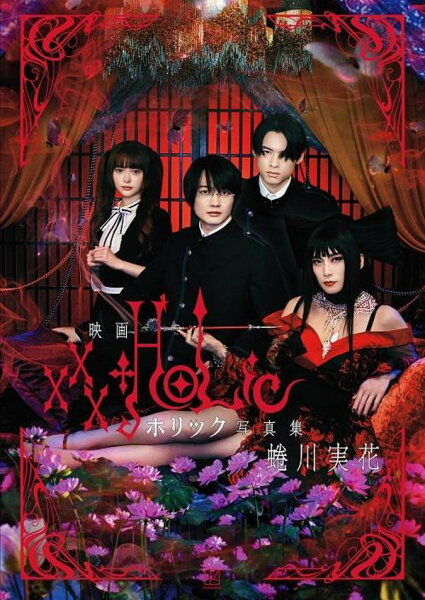
xxxHOLiC
Yu's review of xxxHOLiC — a high school student cursed with the ability to see spirits finds a mysterious shop run by the dimension witch Yūko, who agrees to remove his power in exchange for becoming her shop worker.
Fantasy / Historical
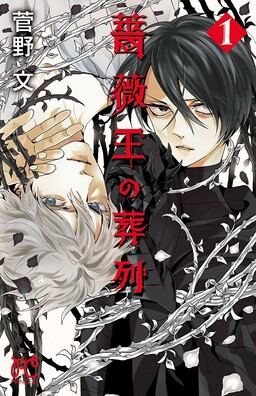
Requiem of the Rose King
Yu's review of Requiem of the Rose King — a dark manga adaptation of Shakespeare's Henry VI and Richard III set during the Wars of the Roses, reimagining Richard of Gloucester as intersex; ambitious historical dark fantasy that takes the psychological portrait of one of literature's great villains and asks what made him.
Fantasy / Horror
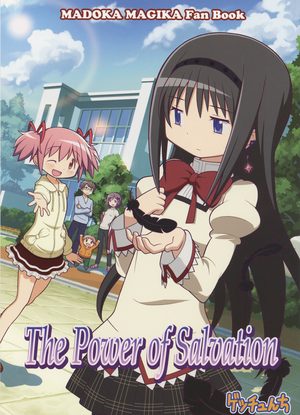
Puella Magi Madoka Magica
Yu's review of Puella Magi Madoka Magica — Madoka Kaname is invited to become a magical girl by a small creature named Kyubey; she hesitates, and across three volumes discovers why hesitating was the only reasonable thing to do.
Fantasy
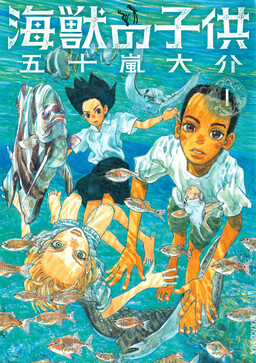
Children of the Sea (Kaijuu no Kodomo)
Yu's review of Children of the Sea (Kaijuu no Kodomo) by Daisuke Igarashi — Ruka, a lonely middle-schooler benched from her handball team, meets two boys, Umi and Sora, raised in the ocean by dugongs; fish vanish worldwide; a meteorite, a 'festival,' and a rebirth the story refuses to fully explain. VIZ Signature's most visually astonishing literary fantasy in 5 complete volumes.
Fantasy / Mystery
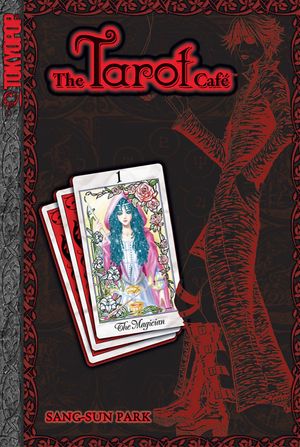
Tarot Cafe
A review of Tarot Cafe — Sang-Sun Park's seven-volume Korean manhwa following Pamela, a tarot card reader who helps supernatural beings fulfill their wishes — while bound by a contract of her own that may cost her everything.
Written by
Yu
Manga Enthusiast from Japan
I grew up in Japan and manga literally saved me during a tough time in elementary school. My English isn't perfect, but my love for manga is real — and I want to share it with you.
Disclosure: This post contains affiliate links. As an Amazon Associate, I earn from qualifying purchases at no extra cost to you.