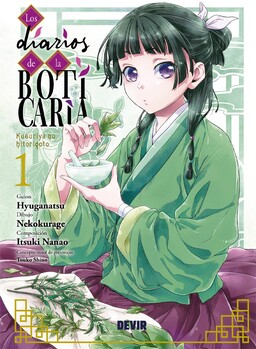
The Apothecary Diaries Review: A Pharmacist's Daughter Solves Imperial Court Mysteries With Medicine and Flat Indifference
by Itsuki Nanao / Nekokurage
Read the first volume. If it doesn't hook you, put it down. It'll hook you.
Buy The Apothecary Diaries on Amazon →*Affiliate link — I earn a small commission at no extra cost to you.
The first mystery in The Apothecary Diaries is this: two of the emperor's favored children are mysteriously ill. The answer, visible immediately to anyone with basic knowledge of lead cosmetics and their interaction with infant skin, is not mysterious at all to Maomao.
She leaves an anonymous note. It works. And then everything gets more complicated.
Quick Take
- One of the best mystery manga currently publishing — Maomao's combination of medical knowledge and complete indifference to court politics makes her the ideal investigator in a setting where everyone else is performing status
- The historical Chinese-adjacent court setting is richly rendered, and the mysteries are genuinely well-constructed with satisfying solutions
- Rated T (Teen); 12+ volumes ongoing
Who Is This Manga For?
- Readers who want mystery manga in a historically grounded setting with actual puzzle structure
- Anyone drawn to a female protagonist defined entirely by professional competence and disinterest in romance
- Fans of court intrigue who want politics filtered through a medical and observational lens
- Readers who appreciate humor that comes from character rather than situation
Content Warnings & Age Rating
Age Rating: T (Teen) Content Warnings: Period medicine themes including poison, illness, and period-appropriate treatments; court intrigue with political violence; mild violence
A genuine T rating appropriate for older children and adults.
Yu's Rating
| Category | Score |
|---|---|
| Story Depth | ★★★★★ |
| Art Style | ★★★★★ |
| Character Development | ★★★★★ |
| Accessibility for Non-Japanese Readers | ★★★★☆ |
| Reread Value | ★★★★☆ |
Story Overview
Maomao is the daughter of an apothecary working in the Pleasure District of a historical fantasy empire analogous to imperial China. She is sold to the imperial palace as a low-ranking servant and intends to keep her head down until her contract expires.
This plan fails immediately.
Two of the emperor's favored children — both recently born to high-ranking consorts — are ill in a way that the palace physicians cannot explain. Maomao can explain it immediately: the consorts are using beauty products with high lead content, and the lead is passing to their infants through skin contact and breast milk. This was common practice in periods without modern cosmetic safety knowledge.
She leaves an anonymous note. The children recover. This draws the attention of Jinshi — the extraordinarily beautiful head eunuch of the inner court, whose actual role and position in the imperial hierarchy becomes one of the series' primary ongoing questions.
Jinshi recruits Maomao as his personal food taster and unofficial investigator. The mysteries expand: political poisonings, disease outbreaks, historical crimes within the court, and the question of what the court's elaborate hierarchy actually conceals. Maomao investigates each with the same tool: careful observation, knowledge of medicine and chemistry, and complete indifference to the social performance happening around her.
Characters
Maomao — A protagonist of genuine rarity in manga: a person defined entirely by her professional competence and her complete indifference to romantic attention. She sees everything through the lens of what something is made of and what it does. Her deadpan response to the court's obsession with appearance and status is consistently funny because it is character-true, not a gimmick.
Jinshi — One of the most powerful figures in the inner court, extraordinarily beautiful and extraordinarily perceptive. His actual position — whether he is truly what he appears to be — is one of the series' primary ongoing mysteries. What makes his dynamic with Maomao work is her complete unimpressiveness by him; she is solving problems in his vicinity while he tries to figure out why she doesn't care that he's beautiful.
The Imperial Court — Functions as a character in itself. The rules about who can be where and with whom, how information moves through a hierarchical system, why certain people have power and others don't — these structures are depicted with internal consistency and care.
Art Style
Nekokurage's art is clean and expressive. Maomao's flat affect and Jinshi's theatrical expressiveness are rendered precisely, and the visual contrast between them is a reliable source of comedy. The historical court settings — costuming, architecture, the inner court layout — are detailed without overwhelming the character focus.
Cultural Context
The setting is analogous to the Tang or Song dynasty Chinese imperial system — the inner court where the emperor's consorts and households live, the eunuch bureaucracy that manages it, the hierarchies of rank that determine access and information. Readers familiar with this history will recognize the structures; readers unfamiliar can follow the series' own internal rules without external knowledge.
What I Love About It
Maomao's complete imperviousness to Jinshi's beauty is one of the series' funniest running elements, and it works because the series never breaks it for cheap development. She is not secretly interested. She is simply focused on the problem. Jinshi finding someone who is good at her job and entirely uninterested in him as anything other than a puzzle source is an unusual situation for the most attractive person in the court, and the series understands exactly how that dynamic works.
Memorable Scene ⚠️ Spoiler Warning
The opening mystery — the lead cosmetics poisoning of the imperial children — is the series' characteristic pleasure in concentrated form. Maomao identifies the cause, understands why no one else saw it (they weren't looking through a medical lens), calculates the risk of revealing knowledge a low-ranking servant shouldn't have, and finds the anonymous note solution. All of this happens in her head, visible to the reader, before she acts. Watching the reasoning is the show.
Similar Manga
| Title | Its Approach | How Apothecary Diaries Differs |
|---|---|---|
| Mushishi | Episodic mystery with deep specialized knowledge | Mushishi is supernatural and melancholic; Apothecary Diaries is historical and deadpan |
| In/Spectre | Mystery with unusual female protagonist | In/Spectre's protagonist enjoys social maneuvering; Maomao is indifferent to it |
| A Bride's Story | Historical Central Asian setting, cultural detail | A Bride's Story focuses on daily life and craft; Apothecary Diaries is a mystery series |
Reading Order / Where to Start
Volume 1 — the opening mystery, Maomao's recruitment, and the establishment of the court setting.
Official English Translation Status
Square Enix Manga publishes the ongoing series in English.
Pros & Cons
Pros
- Mysteries are genuinely well-constructed with satisfying solutions
- Maomao is one of manga's most original female protagonists
- Historical court setting is richly detailed without requiring external knowledge
- Consistent quality across 12+ volumes
Cons
- Court hierarchy can be disorienting initially
- Romantic development is deliberately slow — some readers find the pace frustrating
- Ongoing status means no complete arc resolution yet
Is The Apothecary Diaries Worth Reading?
Yes — among the best mystery manga currently publishing in English. The combination of a genuinely original protagonist, well-constructed puzzles, and a richly rendered historical setting is rare.
Where to Buy
Read the first volume. If it doesn't hook you, put it down. It'll hook you.
This post contains affiliate links. If you purchase through these links, I may earn a small commission at no extra cost to you. As an Amazon Associate, I earn from qualifying purchases.
*Affiliate link — I earn a small commission at no extra cost to you.
More Manga You Might Like
Fantasy / Action
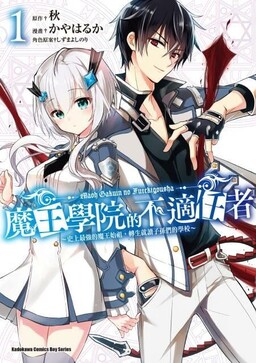
The Misfit of Demon King Academy
Yu's review of The Misfit of Demon King Academy — Anos Voldigoad is the legendary Demon King reincarnated, who attends the academy for demons to find his descendants; the academy, however, has misidentified his history and tells him his power scores are too low to be the real Demon King.
Fantasy / Supernatural
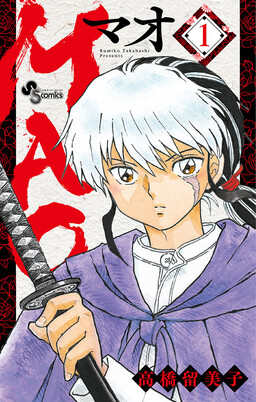
Mao
Yu's review of Mao — middle school girl Nanoka Kiba can slip between present-day Tokyo and Taisho-era Japan, where she encounters Mao, an onmyouji cursed with immortality who is searching for the source of his curse; together they investigate supernatural cases while pursuing the connection that links their lives across a century.
Fantasy / Mystery
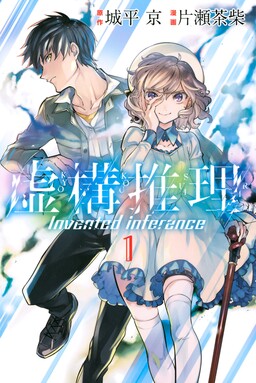
In/Spectre
Yu's review of In/Spectre — Kotoko Iwanaga gave an eye and a leg to the youkai of her village when she was a child; in exchange, she became their Goddess of Wisdom, mediating disputes and solving the problems of the spirit world; she enlists the help of Kurou Sakuragawa, a man with a strange relationship to death, and together they maintain peace between humans and spirits.
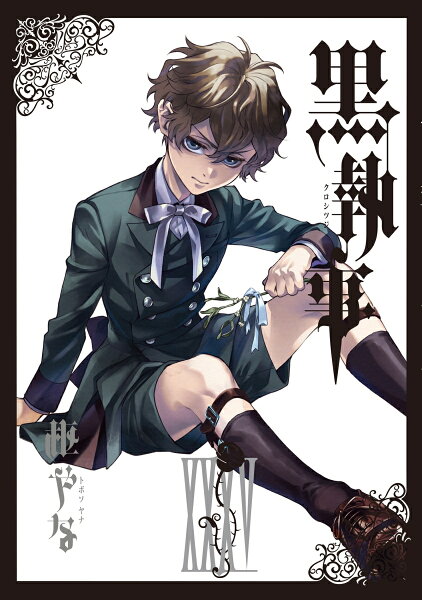
Fantasy / Mystery
Black Butler
Yu's review of Black Butler — a boy contracts a demon to avenge his murdered family, with a butler so perfect he hides exactly what he is. A Victorian gothic mystery that earns its darkness.
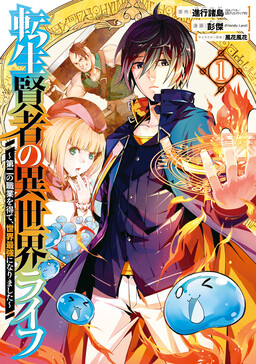
Fantasy / Action
The Strongest Sage with the Weakest Crest
Yu's review of The Strongest Sage with the Weakest Crest — Mathias, the world's greatest sage, reincarnates into the future deliberately to obtain the crest type suited for close combat magic rather than his original long-range specialization; reborn into a world where magical knowledge has declined, he rapidly surpasses everyone while remembering everything from his previous life.
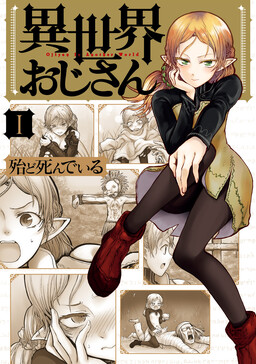
Fantasy / Comedy
Uncle from Another World
Yu's review of Uncle from Another World — Takafumi's uncle Yosuke wakes from a 17-year coma having been an isekai hero in another world; Takafumi discovers his uncle has magical powers but also deeply embarrassing stories about how he was treated in the other world.
Written by
Yu
Manga Enthusiast from Japan
I grew up in Japan and manga literally saved me during a tough time in elementary school. My English isn't perfect, but my love for manga is real — and I want to share it with you.
Disclosure: This post contains affiliate links. As an Amazon Associate, I earn from qualifying purchases at no extra cost to you.