Angel Diary Review: Heaven's Most Wanted Runaway Is Hiding in a Korean High School
by YunHee Lee / Kara
Read the first volume. If it doesn't hook you, put it down. It'll hook you.
Buy Angel Diary on Amazon →*Affiliate link — I earn a small commission at no extra cost to you.
The arranged marriage was between heaven and the underworld. The escape plan involved disguising yourself as an ordinary Korean high school student. The complication was that your betrothed transferred to your school specifically to find you, and neither of you knew who the other was.
That is the entire engine of Angel Diary, and across thirteen volumes it runs surprisingly well.
Quick Take
- A Korean manhwa about a heavenly princess who flees an arranged marriage and hides as a human student — the king of the underworld shows up as her classmate
- The identity-concealment premise sustains tension across thirteen volumes because both characters are genuinely developing feelings before they know who they're dealing with
- Rated T (Teen); complete in 12 volumes, published by Yen Press
Who Is This Manga For?
- Readers interested in Korean manhwa with supernatural romance and East Asian mythological traditions
- Shojo/manhwa fans who enjoy disguise and secret identity premises
- People who like fantasy settings where heaven and the underworld operate as political entities with hierarchies and arranged marriages
- Anyone who wants a complete twelve-volume supernatural romance
Content Warnings & Age Rating
Age Rating: T (Teen) Content Warnings: Supernatural combat, fantasy elements, mild romance
Standard shoujo/manhwa content throughout.
Yu's Rating
| Category | Score |
|---|---|
| Story Depth | ★★★☆☆ |
| Art Style | ★★★★☆ |
| Character Development | ★★★☆☆ |
| Accessibility for Non-Japanese Readers | ★★★★☆ |
| Reread Value | ★★★☆☆ |
Story Overview
Dong-Young is a princess from heaven who ran away from an arranged marriage — her betrothed is the king of the underworld, a political match made for reasons of cosmic diplomacy between the celestial and underworld realms. She has been hiding on earth disguised as a boy, living under a human identity to avoid detection.
Her cover collapses when the underworld king himself transfers to her school, sent to find the missing heavenly princess. Neither knows the other's true identity at first. He knows her as an annoying classmate named Eun-Ah. She knows him as the aggressive new student who seems to follow her everywhere.
The series develops through their school interactions — the friction between their personalities, the ways they conflict and complement each other despite not knowing why — and the growing complication when both start to develop feelings for someone they think is an ordinary person. Twelve volumes track this relationship alongside the supernatural politics of heaven and the underworld, which have not forgotten that their princess and their king are both missing.
The East Asian mythological framework — heaven and the underworld as hierarchical political structures with their own courts, obligations, and arrangements — gives the story a distinct flavor from Western angel-demon premises.
Characters
Dong-Young / Eun-Ah — A princess whose decision to run was impulsive but whose reasons for staying hidden become more complicated as she develops feelings she didn't plan to have. She is willful and capable — the supernatural princess training is not something she left behind when she disguised herself.
The Underworld King — Cold, powerful, and initially indifferent to the girl he's been sent to retrieve. His development across thirteen volumes — from someone who has never been anything but obeyed to someone who would rather be chosen — is the series' emotional arc. What he becomes is better than what he was.
The Guardian Cast — Various heavenly and underworld beings who are aware of both characters' true identities and have to navigate maintaining the deception while their respective principals keep getting more entangled.
Art Style
Kara's art is clean, appealing manhwa — expressive characters with strong visual designs for both the supernatural forms and the school setting. The celestial and underworld characters have visual distinction from the ordinary human world; the same characters look different when they drop their human disguises. The art is consistently good across the thirteen volumes.
Cultural Context
Angel Diary draws on East Asian cosmological tradition — the organization of heaven and the underworld as political entities with their own hierarchies, obligations, and marriage politics — rather than the Western angel-demon binary. The arranged marriage between celestial and underworld powers is treated as seriously as any dynastic political arrangement in a historical setting.
The manhwa is part of the early-2000s Korean comics wave that introduced many readers to Korean manhwa through publishers like Yen Press, and it represents the supernatural romance subgenre that was particularly strong in that era.
What I Love About It
The school scenes where Dong-Young and the king interact without knowing who the other is — the specific comedy of two people who have been avoiding each other for cosmic political reasons accidentally developing normal human friction — are the series' most enjoyable material. He is annoying to her. She is infuriating to him. Neither knows they are the reason the other is in this school at all.
That is a genuinely good premise, and the series uses it with the consistency it deserves.
Memorable Scene ⚠️ Spoiler Warning
The chapter where both characters' true identities are revealed simultaneously — when each has to reckon not just with being known, but with everything they have already shown to someone they thought was an ordinary person — is the pivot the series had been building toward. It works because the series has spent enough time establishing what each character revealed during the period of disguise. The reveal is not just a plot point; it is a reckoning with what the disguise period meant.
Similar Manga
| Title | Its Approach | How Angel Diary Differs |
|---|---|---|
| Absolute Boyfriend | Supernatural romance with identity complications | Absolute Boyfriend is more melancholic; Angel Diary is more comedic |
| Fushigi Yugi | Fantasy world politics with romance at center | Fushigi Yugi is longer and more dramatic; Angel Diary is lighter in tone |
| Tarot Cafe | Korean manhwa supernatural | Tarot Cafe is darker; Angel Diary is primarily romantic comedy |
Reading Order / Where to Start
Volume 1, straight through. The identity-concealment structure requires the buildup to land.
Official English Translation Status
Yen Press published all 12 volumes in English. Complete and available.
Pros & Cons
Pros
- The reverse arranged-marriage premise is used with genuine comedy
- The identity-reveal structure maintains tension across thirteen volumes
- Kara's art is appealing throughout
- Complete and properly resolved
Cons
- Character development outside the main pair is limited
- The supernatural politics can feel like scaffolding rather than substance
- Some readers find thirteen volumes longer than the premise requires
- The manhwa format may feel different from readers used to Japanese shojo
Is Angel Diary Worth Reading?
For supernatural romance fans who want something complete — yes. The identity-concealment premise is executed with enough wit to sustain thirteen volumes, and the resolution earns what was built.
Where to Buy
Read the first volume. If it doesn't hook you, put it down. It'll hook you.
This post contains affiliate links. If you purchase through these links, I may earn a small commission at no extra cost to you. As an Amazon Associate, I earn from qualifying purchases.
*Affiliate link — I earn a small commission at no extra cost to you.
More Manga You Might Like
Fantasy / Supernatural
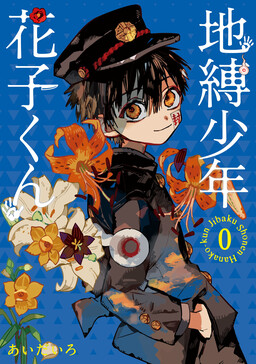
Toilet-Bound Hanako-kun
Yu's review of Toilet-Bound Hanako-kun — Nene Yashiro summons Hanako-kun, the most famous of her school's Seven Wonders, the ghost rumored to grant wishes; when she accidentally becomes bound to him as his helper, she enters a world of supernatural politics, competing spirits, and the mystery of who Hanako actually was.
Fantasy / Mystery
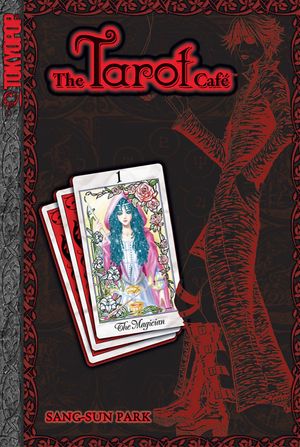
Tarot Cafe
A review of Tarot Cafe — Sang-Sun Park's seven-volume Korean manhwa following Pamela, a tarot card reader who helps supernatural beings fulfill their wishes — while bound by a contract of her own that may cost her everything.

Fantasy / Comedy
Witch Watch
Yu's review of Witch Watch — Nico is a witch who sees disaster visions; Morihito is her childhood friend and an ogre who has sworn to protect her; they live together in modern Japan, where Nico's disaster visions lead to increasingly absurd comedic situations.
Fantasy / Romance
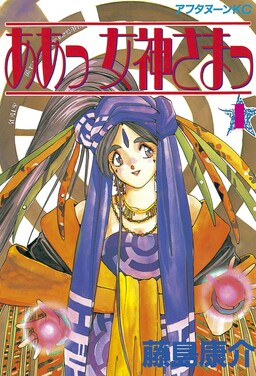
Oh My Goddess!
Yu's review of Oh My Goddess! — Keiichi Morisato misdials a goddess helpline and Belldandy appears in his dorm room; she grants him one wish and he wishes for her to stay with him; she does, and the series follows their life together as other goddesses and demons complicate their quiet romance.
Fantasy / Comedy
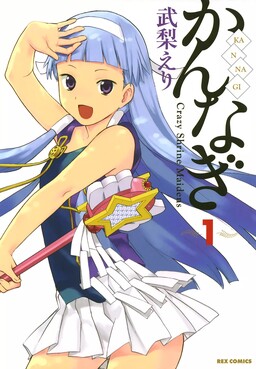
Kannagi: Crazy Shrine Maidens
Yu's review of Kannagi — Mikuriya Jin carves a wooden figure from a sacred tree and it comes to life as Nagi, the local land god in the form of a shrine maiden; Nagi has lost much of her power and must rely on Jin while fighting 'impurity' creatures that have appeared in the area.
Fantasy / Romance
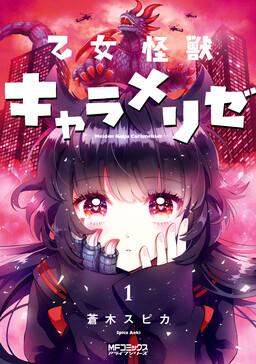
Kaiju Girl Caramelise
Yu's review of Kaiju Girl Caramelise — Kuroe Akaishi has always been alone because strong emotions cause her to transform into a giant kaiju; when a popular boy notices her, the transformations start happening at school; a comedy-romance about a girl whose heart is literally too big to contain.
Written by
Yu
Manga Enthusiast from Japan
I grew up in Japan and manga literally saved me during a tough time in elementary school. My English isn't perfect, but my love for manga is real — and I want to share it with you.
Disclosure: This post contains affiliate links. As an Amazon Associate, I earn from qualifying purchases at no extra cost to you.