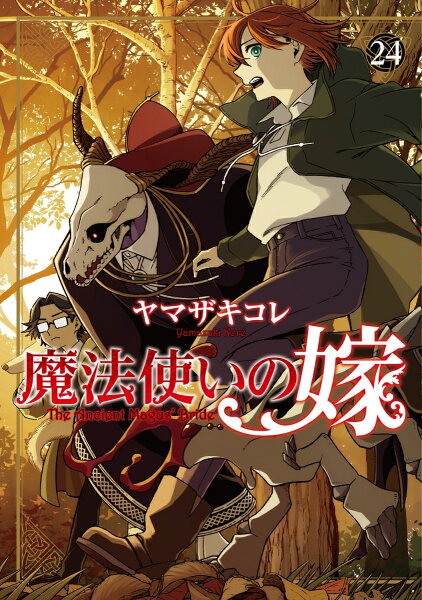
The Ancient Magus' Bride Review: The Girl Who Was Sold and Found a Home
by Kore Yamazaki
Read the first volume. If it doesn't hook you, put it down. It'll hook you.
Buy The Ancient Magus' Bride on Amazon →*Affiliate link — I earn a small commission at no extra cost to you.
Chise Hatori sells herself because she has nothing left to protect. That is the starting point. What the series then does, very carefully over many volumes, is give her things worth protecting.
That is not a summary. That is the whole story. Everything else is detail.
Quick Take
- A girl with no will to live is purchased by a non-human sorcerer who calls her his apprentice and bride — and the series follows her slow, careful, specific recovery
- The folklore world-building draws genuinely from Celtic and British mythology, and the art is among the finest in ongoing fantasy manga
- Rated T (Teen); 21+ volumes ongoing with consistent quality
Who Is This Manga For?
- Readers who want fantasy manga with genuine literary care — the writing earns its emotional weight
- Anyone who loves Celtic and European folklore woven into a detailed magical system
- Readers who want a slow, character-driven story about healing and belonging
- People looking for something that feels unlike any other fantasy manga
Content Warnings & Age Rating
Age Rating: T (Teen) Content Warnings: Chise's suicidal ideation in early volumes is depicted clearly — she sells herself because she has no wish to live; the power imbalance in the central relationship is real and acknowledged by the narrative; some dark fantasy content throughout; the self-sale premise requires engagement
These themes are handled with care. They are also present consistently in the early volumes.
Yu's Rating
| Category | Score |
|---|---|
| Story Depth | ★★★★★ |
| Art Style | ★★★★★ |
| Character Development | ★★★★★ |
| Accessibility for Non-Japanese Readers | ★★★★★ |
| Reread Value | ★★★★★ |
Story Overview
Chise Hatori is fifteen years old. She can see things others cannot — spirits, magical beings, the unseen world beneath the visible one — and this ability has driven everyone away from her for as long as she can remember. She has no family, no future, and no will to continue.
She auctions herself.
The buyer is Elias Ainsworth: a bone-headed sorcerer of unknown species, ancient and powerful, who lacks the human emotional understanding that would make his purchase obviously troubling. He pays a significant sum for Chise and announces two things — she will be his apprentice and learn magic, and she will be his bride.
The series follows Chise as she moves into Elias's home in the English countryside, begins learning magic from him, and encounters the world of fae and spirits and ancient magical creatures that exists alongside ordinary human life. The folklore is genuine: the Seelie and Unseelie Courts, the sleigh-beggy (a powerful magical conduit, which Chise is), the specific rules of bargains with beings who do not experience time or obligation the way humans do.
Her recovery is not plotted dramatically. It accumulates in small things: she cares about what happens to her. She is angry about injustice. She wants Ruth, her familiar, to be safe. She wants to understand Elias. Small wants, then larger ones. The series measures her healing in the size of what she allows herself to want.
Characters
Chise Hatori — One of manga's most carefully written protagonists living with depression. Her passivity in early volumes is not weakness — it is the accurate depiction of someone who has stopped believing she deserves to survive. Her development is the series' central achievement, measured in small things.
Elias Ainsworth — A magical creature who genuinely does not understand human emotion and is genuinely trying to learn. His relationship with Chise is complicated: the power imbalance is real, the care is also real, and the series is honest about both. The "bride" framing is deliberate discomfort that the narrative uses rather than avoids.
Ruth — Chise's familiar, a dog-spirit who chose her. His loyalty is the series' most uncomplicated warmth. In a narrative full of complication and power dynamics, Ruth is simply devoted.
Lindel — An ancient mage who serves as a more experienced guide and keeper of Elias's backstory. His role in recontextualizing who Elias is and why he is the way he is arrives in the early volumes and significantly deepens both characters.
Art Style
Yamazaki's art is exceptional — intricate, detailed, and saturated with European fairy-tale atmosphere. The magical creatures draw on actual Celtic and Norse folklore with evident research: the designs are not generic fantasy but specifically informed by the traditions being referenced. The British countryside settings are rendered with the care of someone who found them beautiful.
Character expressions are subtle and reward attention. Chise's gradual warming — visible in posture, in the set of her shoulders, in her willingness to make eye contact — is conveyed without dialogue.
Cultural Context
British folklore — Yamazaki drew extensively on actual Celtic and British folklore. The Seelie and Unseelie Courts, the concept of the sleigh-beggy, the relationship between humans and fae as one of obligation and bargain rather than simple hierarchy. The research is genuine and the world feels inhabited.
Ibasho (居場所) — In Japanese, ibasho means "a place to be" — a sense of belonging, of having somewhere you are welcome. Chise's journey is fundamentally about finding ibasho after a childhood without any. This is a recognizable concept in Japanese culture with emotional weight that translates across languages.
The bride framing — Deliberate discomfort. The series knows that calling a fifteen-year-old girl "bride" is strange and potentially troubling. It uses that discomfort to examine what the relationship actually is and what Chise's actual needs are, separate from how Elias initially frames things.
What I Love About It
There is a chapter where Chise, asked what she wants, cannot answer. She has spent so long not wanting anything — because wanting things assumes you expect tomorrow — that she has lost the capacity.
Then, very slowly, across many chapters, she starts wanting things again.
She wants to be good at magic. She wants the people around her to be safe. She wants to understand Elias. Small things, then larger ones.
Watching Chise slowly, carefully relearn how to want — the specific tenderness with which Yamazaki depicts that process — is what the series is actually doing beneath the folklore and the magic and the complicated central relationship.
Memorable Scene ⚠️ Spoiler Warning
Chise's first Christmas.
In an early volume, Chise experiences a Christmas with Elias and a few of their magical acquaintances. For a girl who has never had a family, never had a home, never had a reason to mark a day as different from other days, the experience of a shared meal and small gifts is overwhelming.
She cries. Not from sadness.
Yamazaki draws this with characteristic restraint. There is no narration explaining what Chise feels. The scene shows her face and trusts you to know. It is one of the most quietly devastating moments in ongoing manga, and it works because the series has spent enough time establishing the absence that makes this presence so enormous.
Similar Manga
| Title | Its Approach | How Ancient Magus' Bride Differs |
|---|---|---|
| Frieren: Beyond Journey's End | European-influenced fantasy, similar emotional intelligence | Frieren is about the past; Ancient Magus' Bride is about learning to want a future |
| Mushishi | Meditative tone, Japanese-influenced magical world | Mushishi is episodic; Ancient Magus' Bride follows one character's continuous arc |
| Natsume's Book of Friends | Human-spirit relationships, quieter register | Natsume is warmer and more accessible; Ancient Magus' Bride is darker in its starting point |
Reading Order / Where to Start
Volume 1. The healing arc requires the foundation. Starting anywhere else loses the baseline that makes later chapters land.
Official English Translation Status
Status: Ongoing English Volumes: 21+ Publisher: Seven Seas Entertainment Translation Quality: Excellent
Pros & Cons
Pros
- The most beautiful art in ongoing fantasy manga
- Chise's healing arc is one of manga's most carefully written
- Genuine folklore depth and research
- Exceptional emotional intelligence throughout
Cons
- The central relationship's power imbalance requires reader engagement with its complications
- Very slow pace — patience is required across many volumes
- Some middle arcs feel less focused than the early material
Is The Ancient Magus' Bride Worth Reading?
Yes — if you want fantasy manga that earns its emotional weight through patience and genuine character work. For readers who want quick payoffs, this will frustrate. For readers who want something that stays with you: this stays.
Where to Buy
Read the first volume. If it doesn't hook you, put it down. It'll hook you.
This post contains affiliate links. If you purchase through these links, I may earn a small commission at no extra cost to you. As an Amazon Associate, I earn from qualifying purchases.
*Affiliate link — I earn a small commission at no extra cost to you.
More Manga You Might Like
Fantasy
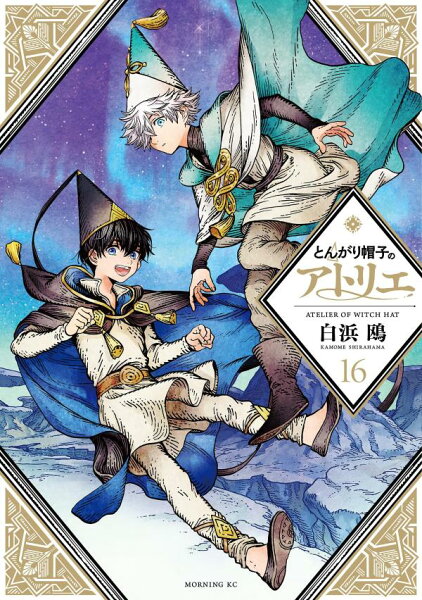
Witch Hat Atelier
Yu's review of Witch Hat Atelier — a girl born without magic witnesses the forbidden secret of how magic actually works, and must now become a witch to undo what she accidentally caused.
Fantasy / Slice of Life
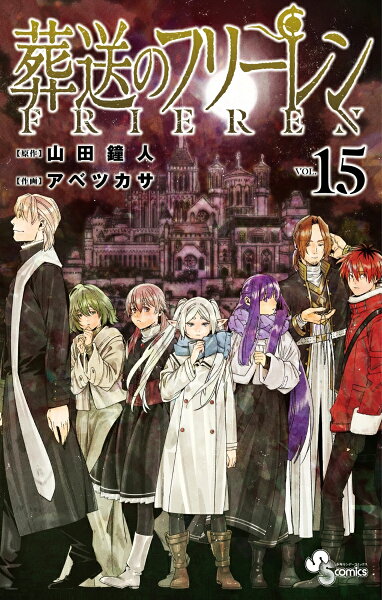
Frieren: Beyond Journey's End
Yu's review of Frieren: Beyond Journey's End — an elf mage who helped defeat the Demon King but barely knew her companions because she outlives everyone. A manga about what it means to look back and finally understand what you had.
Fantasy / Slice of Life
Kamakura Story
Kamakura Story follows mystery writer Ichiro Maekawa and his young wife Akiko as they navigate married life in Kamakura — a coastal city where the supernatural is simply part of daily existence, and demons and spirits share the streets with ordinary people.

Fantasy / Comedy
Witch Watch
Yu's review of Witch Watch — Nico is a witch who sees disaster visions; Morihito is her childhood friend and an ogre who has sworn to protect her; they live together in modern Japan, where Nico's disaster visions lead to increasingly absurd comedic situations.
Fantasy / Romance
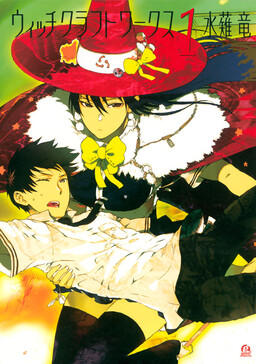
Witch Craft Works
Yu's review of Witch Craft Works — Honoka Takamiya is an ordinary high school student who accidentally discovers that Ayaka Kagari, the school's most beautiful and admired girl, is a powerful witch who has been his secret bodyguard; the revelation upends his understanding of his entire life.
Fantasy / Action
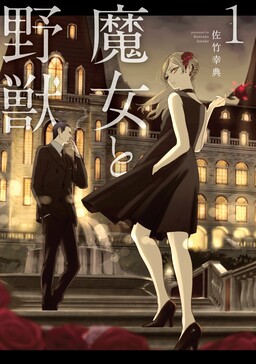
The Witch and the Beast
Yu's review of The Witch and the Beast — Guideau is a woman cursed into the body of a beast; she travels with Phanora, a man who carries a coffin, hunting the witch responsible; witches in this world are immensely powerful and largely above human law; the series follows their encounters with witches and the magic system that makes each encounter unique.
Written by
Yu
Manga Enthusiast from Japan
I grew up in Japan and manga literally saved me during a tough time in elementary school. My English isn't perfect, but my love for manga is real — and I want to share it with you.
Disclosure: This post contains affiliate links. As an Amazon Associate, I earn from qualifying purchases at no extra cost to you.