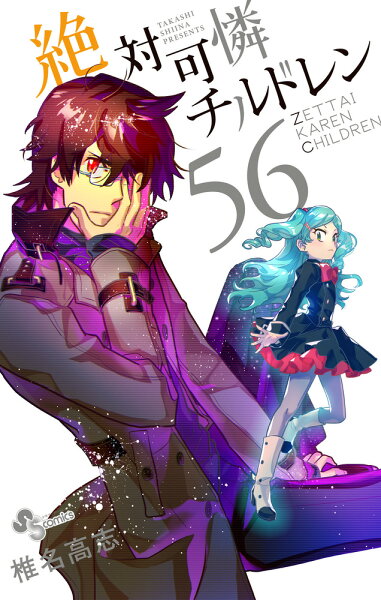
Zettai Karen Children Review: The Psychic Manga That Grew Up With Its Readers
by Takashi Shiina
Read the first volume. If it doesn't hook you, put it down. It'll hook you.
Buy Zettai Karen Children on Amazon →*Affiliate link — I earn a small commission at no extra cost to you.
What if the world's three most powerful people were ten-year-old girls — and their handler was the only adult taking them seriously?
Quick Take
- Takashi Shiina's long-running psychic action comedy — starts lighthearted, deepens significantly in later volumes
- The Children's relationship with Minamoto is the emotional core: he believes in them when society mostly fears them
- 49 volumes that reward patience — the tonal shift in the later third is one of manga's more effective slow burns
Who Is This Manga For?
- Fans of Shiina's other work (Zettai Shonen, Sumire 16-sai) who want his longest and most developed story
- Action comedy readers who want something that transitions to genuine drama
- Readers interested in psychic powers in a social rather than purely action context
- Anyone who has read the early volumes and wants to know whether the later volumes justify the investment
Content Warnings & Age Rating
Age Rating: T (Teen) Content Warnings: Psychic action violence. Comedy content. Themes of discrimination and growing up. Appropriate for the rating.
Suitable for teen readers.
Yu's Rating
| Category | Score |
|---|---|
| Story Depth | ★★★★★ |
| Art Style | ★★★★☆ |
| Character Development | ★★★★★ |
| Accessibility for Non-Japanese Readers | ★★★★☆ |
| Reread Value | ★★★★☆ |
Story Overview
Kaoru, Aoi, and Shiho are three ten-year-old girls who collectively hold the highest psychic classification: Level 7. Each has a different power — telekinesis, teleportation, and ESP respectively — and collectively they are capable of overwhelming almost any opposition.
They are also children. Difficult, funny, impulsive children who resist authority, fight with each other, and have crushes on their handler.
Kouichi Minamoto is assigned to manage them. He is patient, competent, and unusual in that he treats the girls as people rather than weapons or threats. In a world that views powerful psychics with suspicion and fear, his belief in them matters more than he knows.
The early volumes are comedy. As the children grow, the series' concerns deepen — the social position of psychics, the question of whether power that can be feared will inevitably be feared, the relationship between Minamoto and the children as they stop being children. By the final volumes, this is a genuinely serious story about belonging and trust.
Characters
Kaoru, Aoi, and Shiho (The Children): Three distinct characters whose dynamics — rivalry, friendship, complementary powers — are the series' foundation. Their development from children to young adults is careful and earned.
Kouichi Minamoto: One of manga's more quietly heroic protagonists — his superpower is steadiness. He doesn't panic, doesn't categorize, doesn't betray. In the context of the series' world, that makes him genuinely extraordinary.
Art Style
Shiina's art is clean and expressive, handling both comedy and action with equal competence. The character designs allow the Children's aging to be visible and meaningful. The psychic action sequences are visually inventive.
Cultural Context
Zettai Karen Children ran in Weekly Shonen Sunday from 2004 to 2018. The series uses psychic powers as a metaphor for social difference — the Children are feared because they are powerful and different, and the question of how they will use their power is presented as a genuine social problem rather than a simple villain-hero conflict.
The series was adapted into an anime (2008) and has a spinoff, The Unlimited, which follows a different psychic character.
What I Love About It
I love the tonal shift when it comes.
The early volumes establish character and comedy. Then the series begins to show you what it was actually building toward — the Children's power has implications that the comedy mode couldn't fully address, and Shiina addresses them seriously. The transition is gradual enough that it never feels jarring, but significant enough that arriving at the later volumes feels like being in a different and better manga.
What English-Speaking Fans Say
Not known in English-speaking markets. Among readers who have encountered the series through fansubs of the anime or fan translations, the tonal shift in the later manga volumes is consistently cited as the series' most significant accomplishment.
Memorable Scene ⚠️ Spoiler Warning
A late-series confrontation between the Children and the social structures that have been trying to categorize and contain them — in which the Children demonstrate what they have actually become, which is different from what anyone expected. The scene works because of how carefully the earlier volumes established the baseline.
Similar Manga
- Esper Mami: Older psychic girl manga — same Sunday tradition
- Needless: Psychic/power action with similar ensemble structure
- The Disastrous Life of Saiki K.: Psychic comedy, lighter
Reading Order / Where to Start
Volume 1. The payoff requires the full journey.
Official English Translation Status
Zettai Karen Children has no official English translation.
Pros & Cons
Pros
- One of the better long-form tonal transitions in manga
- The Children's development is carefully managed over 49 volumes
- Minamoto is a genuinely unusual protagonist
- Complete
Cons
- No English translation
- 49 volumes — very long commitment
- Early volumes may feel lightweight to readers who discover the later depth
Format Comparison
| Format | Notes |
|---|---|
| Physical | Japanese editions available |
| Digital | Available in Japanese |
| Omnibus | Collected editions available |
Where to Buy
No English release yet. That just means you find it before everyone else does.
*Affiliate link — I earn a small commission at no extra cost to you.
More Manga You Might Like
Action / Comedy
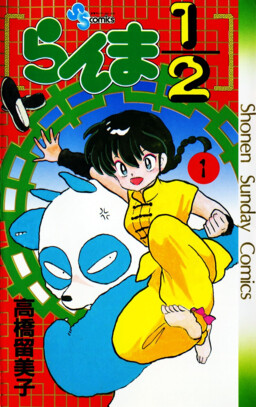
Ranma ½
A review of Ranma ½ — 38 volumes in Weekly Shonen Sunday. Ranma Saotome transforms into a girl when splashed with cold water; his father has arranged him to be engaged to Akane Tendo, who hates boys; the series follows their chaotic not-quite-relationship and increasingly bizarre martial arts challenges. Rumiko Takahashi's most kinetic work. VIZ Media's English edition is complete.
Action / Comedy
Gintama
A review of Gintama — 77 volumes in Weekly Shonen Jump. Gintoki Sakata runs an odd-jobs business in an alternate Edo Japan where aliens conquered the country and samurai are forbidden to carry swords. The funniest manga ever made, hiding some of the most devastating serious arcs in the genre. VIZ Media's English edition is complete.
Comedy / Action
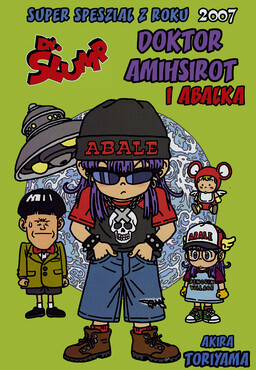
Dr. Slump
Yu's review of Dr. Slump — Senbei Norimaki is a not-very-good inventor who creates the perfect android girl, Arale, who is stronger than any human, has perfect vision but is terribly nearsighted without her glasses, and has the complete absence of self-preservation instinct that characterizes someone who cannot be hurt.
Action / Comedy
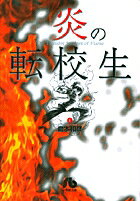
Blazing Transfer Student
Blazing Transfer Student parodies the conventions of school delinquent and transfer-student fight manga by playing every single convention completely straight — with such intensity that it becomes genuinely funny and then genuinely moving.
Action / Comedy
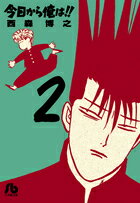
Kyo Kara Ore Wa!!
Kyo Kara Ore Wa!! follows two completely ordinary high school students who, upon transferring to a new school, independently decide to reinvent themselves as the toughest delinquents around — and discover they are both surprisingly and absurdly effective at this.
Action / Comedy
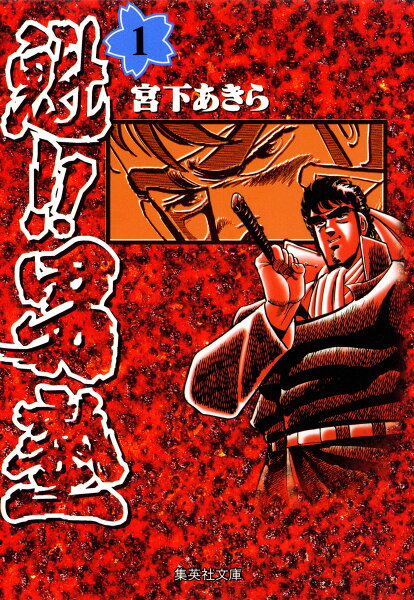
Sakigake!! Otokojuku
Otokojuku is a private school for delinquents where the curriculum consists entirely of brutal martial arts trials designed to forge men of iron will — and the manga is the story of Momotaro Tsurugi, who survives every trial while everyone else fails.
Written by
Yu
Manga Enthusiast from Japan
I grew up in Japan and manga literally saved me during a tough time in elementary school. My English isn't perfect, but my love for manga is real — and I want to share it with you.