
Worst Review: The Sequel That Made Suzuran's Legend Even Bigger
by Hiroshi Takahashi
Read the first volume. If it doesn't hook you, put it down. It'll hook you.
Buy Worst on Amazon →*Affiliate link — I earn a small commission at no extra cost to you.
Quick Take
- The worthy successor to Crows — same school, same spirit, new generation of memorable fighters
- Hana Tsukishima brings a different energy than Bouya Harumichi, and the series earns the comparison
- 34 volumes that expand the Suzuran mythology while standing on their own
Who Is This Manga For?
- Readers of Crows who want to return to Suzuran — this is essential
- Delinquent manga fans who want the genre taken seriously as drama
- Anyone interested in the "school as proving ground" concept at full intensity
- Readers of Clover or Rokudenashi Blues — the late-era successors to the delinquent manga tradition
Content Warnings & Age Rating
Age Rating: M (Mature) Content Warnings: Delinquent violence throughout — significant, and the point of the series. Gang dynamics and hierarchies. Mature content consistent with the predecessor.
Mature content. Read Crows first if possible, though Worst works independently.
Yu's Rating
| Category | Score |
|---|---|
| Story Depth | ★★★★☆ |
| Art Style | ★★★★☆ |
| Character Development | ★★★★★ |
| Accessibility for Non-Japanese Readers | ★★★★☆ |
| Reread Value | ★★★★☆ |
Story Overview
A new generation has arrived at Suzuran All-Boys High School — the school where nothing is resolved without fighting, where every incoming class represents a new attempt to establish dominance, and where the legends of previous generations hang over everything.
Hana Tsukishima enters Suzuran with a simple goal: to become the strongest. This is not unusual for Suzuran. What is unusual is how he goes about it — his specific combination of fighting ability, personal code, and complicated relationships with both rivals and allies.
The series follows the internal politics of Suzuran alongside the external conflicts with other schools and factions — all while building on the mythology established in Crows. Characters from the predecessor appear, older and changed. Their legacies shape what the current generation is fighting for and against.
Characters
Hana Tsukishima: A protagonist distinct from Crows' Bouya Harumichi — more thoughtful, more complicated in his motivations, equally dangerous in a fight. His development across 34 volumes is the series' strongest element.
The Suzuran factions: The internal political landscape of Suzuran is as detailed as in Crows — multiple groups, competing claims to dominance, uneasy alliances. The ensemble is large and consistently characterized.
Connections to Crows: Characters from the predecessor appear at significant moments — older, carrying the weight of what they built, watching the next generation with complicated feelings. These appearances are handled with genuine care.
Art Style
Takahashi's art has evolved from Crows — the same underlying style but with more fluency and confidence. Fight sequences are clear and kinetic, character designs are immediately distinctive, and the visual shorthand for the specific culture of Suzuran is rendered with consistent detail. The school and its surroundings feel like a real place.
Cultural Context
Worst exists in the tradition of Japanese delinquent manga — a genre that peaked in the 1980s-90s and has since been less prominent but remains culturally significant. The series treats the delinquent school experience not as mere juvenile delinquency but as a specific social world with its own values, codes, and forms of meaning-making.
The Suzuran mythology — the idea of a school where strength is the only currency — has enough internal consistency across two series to function as genuine worldbuilding.
What I Love About It
I love that Worst takes the question of legacy seriously.
Hana and his generation are not fighting in a vacuum — they are fighting in a place that has already produced legends, and the awareness of that shapes everything they do. Worst is, among other things, a manga about what it means to follow people who were genuinely great.
This gives the series a weight that most delinquent manga doesn't attempt. It is not enough to be strong. You have to figure out what being strong at Suzuran means, given what Suzuran has already been. Hana's answer to this question is the series' emotional center.
What English-Speaking Fans Say
Not widely known in English-speaking markets outside delinquent manga enthusiasts who read in Japanese. Among that audience, Worst is considered equal or superior to Crows in terms of character development and emotional depth. The consensus is that reading both series together provides the fullest experience.
Memorable Scene
A confrontation between Hana and one of the remaining legends from Crows' era — a fight that isn't just about who's stronger, but about what Suzuran is supposed to be, and whether the current generation understands what they've inherited. The fight ends without a clear victor, which is exactly right.
Similar Manga
- Crows: The essential predecessor — read it first
- Clover (Tetsuya Kudo): Later delinquent manga with similar emotional depth
- Rokudenashi Blues: Same tradition, different school, lighter tone
Reading Order / Where to Start
Read Crows first, then Worst Volume 1. The series functions independently but resonates much more deeply with the predecessor's context.
Official English Translation Status
Worst has no official English translation.
Pros & Cons
Pros
- Exceptional character development across a large ensemble
- Expands and honors the Crows mythology
- Complete at 34 volumes
- Stands as a great delinquent manga independently
Cons
- No English translation
- Best experienced after reading Crows (additional 26 volumes)
- 34 volumes is a significant commitment
Format Comparison
| Format | Notes |
|---|---|
| Physical | Japanese editions available |
| Digital | Available in Japanese |
| Omnibus | Various compilation formats available |
Where to Buy
No English release yet. That just means you find it before everyone else does.
*Affiliate link — I earn a small commission at no extra cost to you.
More Manga You Might Like
Action / Drama
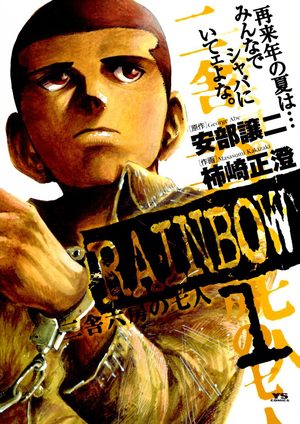
Rainbow: Nisha Rokubō no Shichinin
Yu's review of Rainbow — six juvenile delinquents are sent to a brutal reformatory in 1955 Japan and placed in Cell 6, where they bond with their cellmate Rokurouta Sakuragi, a former boxer who teaches them what it means to survive with dignity.

Action / Drama
Oshi no Ko
Yu's review of Oshi no Ko — a doctor reincarnates as the son of the idol he worshipped, retaining his adult memories; he enters the entertainment industry to find his mother's killer while his twin sister becomes an idol herself.
Action / Drama
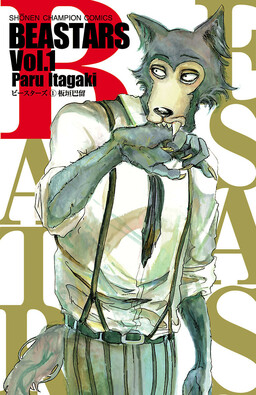
Beastars
Yu's review of Beastars — In a society of anthropomorphic animals where carnivores and herbivores live side by side, Legoshi is a gray wolf who is afraid of what he is. After a classmate is killed and eaten, he is pulled toward Haru, a tiny dwarf rabbit, and has to decide what kind of animal he wants to become.
Action / Drama
Angel Heart
A review of Angel Heart by Tsukasa Hojo — the parallel-world City Hunter manga where a teenage assassin receives Kaori Makimura's transplanted heart and slowly turns the legendary sweeper Ryo Saeba into a father.
Action / Martial Arts
Air Master
A review of Air Master, Yokusaru Shibata's seinen brawler about Maki Aikawa, a 184cm ex-gymnast who quit the sport for being too tall and found the only thing that makes her feel alive: street fighting, mid-air.
Action / Drama
Crows
A review of Hiroshi Takahashi's Crows (クローズ) — 26 volumes in Bessatsu Shōnen Champion from 1990 to 1998. Harumichi Bouya arrives at Suzuran All-Boys High looking for a real fight and finds the most dangerous school in Japan.
Written by
Yu
Manga Enthusiast from Japan
I grew up in Japan and manga literally saved me during a tough time in elementary school. My English isn't perfect, but my love for manga is real — and I want to share it with you.