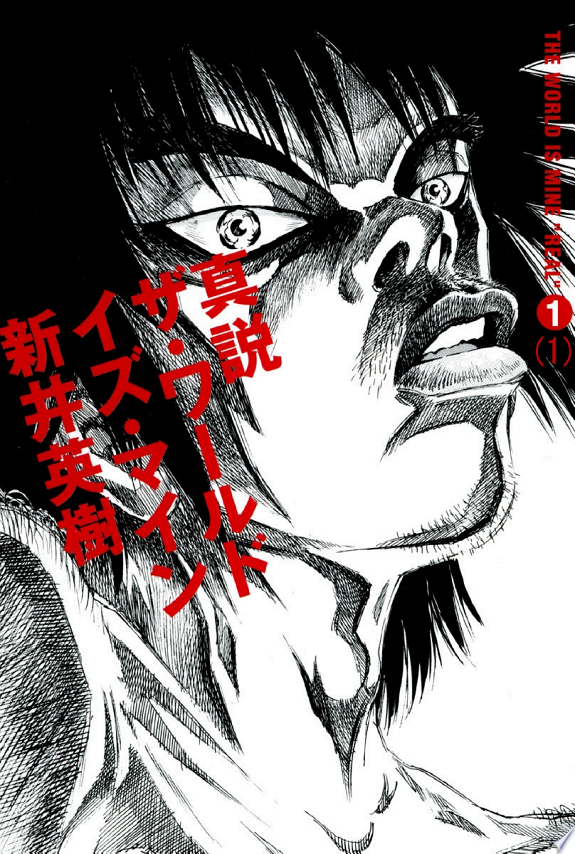
The World Is Mine Review: The Crime Manga That Made Violence Feel Inevitable
by Hideki Arai
Read the first volume. If it doesn't hook you, put it down. It'll hook you.
Buy The World Is Mine on Amazon →*Affiliate link — I earn a small commission at no extra cost to you.
What if the most dangerous people in Japan were also the most interesting — and the most human?
Quick Take
- Hideki Arai's crime epic — one of manga's most controversial and praised works, completely unlike anything else in its genre
- Mon and Toshi are not antiheroes in the comfortable sense: their violence is real and its consequences are real
- Running parallel to the crime spree is a mystery about a forest monster that eventually merges with the main narrative in surprising ways
Who Is This Manga For?
- Mature readers of crime fiction who want manga that operates without safety nets
- Readers of literary crime in the tradition of Blood Meridian or No Country for Old Men
- Fans of seinen manga at its most serious and uncompromising
- Anyone who has wondered what crime manga looks like when it refuses to romanticize
Content Warnings & Age Rating
Age Rating: 18+ Content Warnings: Extreme graphic violence. Serial killing depicted in detail. Mature criminal content throughout. Not appropriate for younger readers or sensitive readers.
Treat the 18+ rating seriously — this is genuinely extreme.
Yu's Rating
| Category | Score |
|---|---|
| Story Depth | ★★★★★ |
| Art Style | ★★★★★ |
| Character Development | ★★★★★ |
| Accessibility for Non-Japanese Readers | ★★★★☆ |
| Reread Value | ★★★★★ |
Story Overview
Mon is impulsive, violent, and responds to frustration by escalating. Toshi is precise, thoughtful, and responds to Mon by managing the consequences. Together they form a criminal partnership that operates through Japan, leaving destruction behind them.
Arai does not make them sympathetic in any conventional sense — he makes them real. Mon's violence emerges from recognizable psychological conditions; Toshi's calculation serves ends that are genuinely his own. Understanding them doesn't excuse them, but it makes them impossible to dismiss as cartoon villains.
Running parallel to their story is a thread about Higumadon — a massive, unknown creature moving through rural Japan. The two storylines seem disconnected, then less so, then finally merge in ways that change the meaning of everything that came before.
The series is interested in violence as a systemic condition — not just the violence of two criminals but the violence of the world they move through, the media that covers them, the institutions that pursue them, and the society that produced them.
Characters
Mon: One of manga's most disturbing protagonists — not because his violence is exaggerated but because it is comprehensible. Arai builds Mon from recognizable materials: frustration, resentment, a specific inability to process certain kinds of experience. His violence is the outcome of psychological conditions the reader can recognize, which makes it more disturbing than mere cruelty would be.
Toshi: The counterpoint — his relationship with Mon is one of the series' most complex elements. He is not a victim and not a controller; he is Mon's companion in a specific and irreducible way.
Art Style
Arai's art is one of manga's most distinctive styles — jagged, energetic, and capable of extraordinary expressiveness. The violence is depicted with unflinching precision, and the moments of stillness between violence have their own weight. The Higumadon sequences are visually unlike anything else in the series.
Cultural Context
The World Is Mine ran in Weekly Shonen Sunday — a publication not generally associated with extreme content — which created significant controversy during its run. Arai fought for the work throughout its serialization. The manga is now recognized as one of the most significant crime manga works.
What I Love About It
I love the double structure.
Mon and Toshi's crime spree is grounded in social and psychological reality. Higumadon is mythology. Arai brings these two registers into contact, and the contact changes both of them. The crime story becomes something larger; the monster story becomes something more grounded. The combination is one of the things that makes the work genuinely original.
What English-Speaking Fans Say
Not known in English-speaking markets. Among readers of manga who seek out difficult, serious work — readers who found Shigurui or Biomega or similar titles — The World Is Mine is cited as one of the most significant untranslated works: a manga that would immediately be recognized as a masterpiece if it were available.
Memorable Scene ⚠️ Spoiler Warning
A scene that brings the Higumadon thread and the Mon-Toshi thread into contact for the first time — where the two registers of the series meet and the reader realizes that what appeared to be two separate stories was always one. The scene recontextualizes everything that came before.
Similar Manga
- Shigurui: Extreme violence with literary seriousness — different setting
- Biomega: Unusual genre combination — different tone
- MPD Psycho: Crime psychology, comparable intensity
Reading Order / Where to Start
Volume 1. This is a complex work that should be read in order.
Official English Translation Status
The World Is Mine has no official English translation.
Pros & Cons
Pros
- One of manga's most original and serious crime works
- The double-structure concept is brilliantly executed
- Complete at 14 volumes
- Mon is genuinely one of manga's most complex protagonists
Cons
- No English translation
- Extreme content — not for most readers
- The violence is real and the series is not reassuring
Format Comparison
| Format | Notes |
|---|---|
| Physical | Japanese editions available |
| Digital | Available in Japanese |
| Omnibus | Collected editions available |
Where to Buy
No English release yet. That just means you find it before everyone else does.
*Affiliate link — I earn a small commission at no extra cost to you.
More Manga You Might Like
Action / Comedy
The Fable
Yu's review of The Fable — Akira (codename 'The Fable') is considered the deadliest assassin in Japan; his boss orders him to take a year off and live as an ordinary person without killing anyone; the comedy of an extraordinarily dangerous man trying and mostly succeeding at being normal while the criminal world swirls around him.
Action
Tekkon Kinkreet
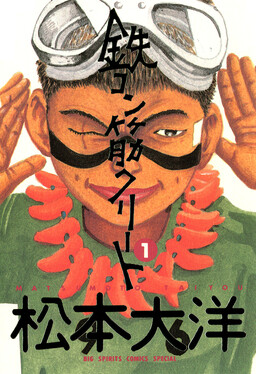
Yu's review of Tekkon Kinkreet — Black and White are two orphaned street kids who rule Treasure Town from the rooftops; when organized crime moves in to develop the city, Black and White must fight to keep what they consider theirs; a visually revolutionary manga about the psychic cost of violence and the specific love between two people who only have each other.
Action / Romance
Call of the Night
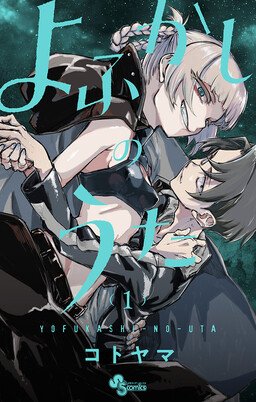
Yu's review of Call of the Night — Ko Yamori cannot sleep; unable to feel anything during the day, he starts sneaking out at night and discovers that he actually belongs in the night; when he meets Nazuna, a vampire who drinks blood from sleeping humans, he asks her to turn him into a vampire — but the only way to become one is to fall in love.
Action / Crime
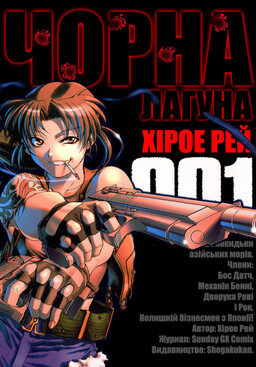
Black Lagoon
Yu's review of Black Lagoon by Rei Hiroe — Rokuro 'Rock' Okajima, a Tokyo salaryman, is taken hostage by the mercenary crew of the torpedo boat Black Lagoon; when his company writes him off rather than pay ransom, he joins them in the lawless Thai port city of Roanapur.
Action / Drama
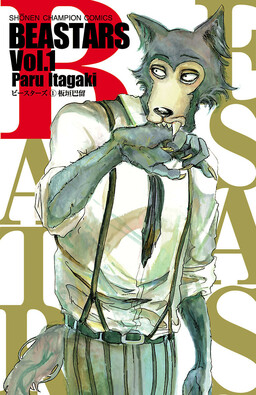
Beastars
Yu's review of Beastars — In a society of anthropomorphic animals where carnivores and herbivores live side by side, Legoshi is a gray wolf who is afraid of what he is. After a classmate is killed and eaten, he is pulled toward Haru, a tiny dwarf rabbit, and has to decide what kind of animal he wants to become.
Action
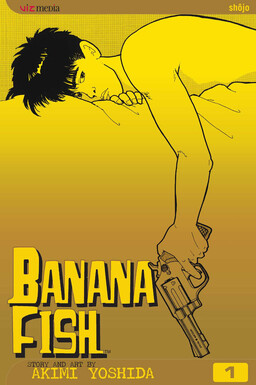
Banana Fish
Yu's review of Banana Fish — Ash Lynx is a seventeen-year-old gang boss in 1980s New York whose life collides with Eiji Okumura, a gentle Japanese photographer's assistant, when a dying man whispers the words 'Banana Fish.' Akimi Yoshida's 19-volume crime epic about a mind-control drug, the men who own the streets, and the one connection that almost saved a boy built only to kill.
Written by
Yu
Manga Enthusiast from Japan
I grew up in Japan and manga literally saved me during a tough time in elementary school. My English isn't perfect, but my love for manga is real — and I want to share it with you.