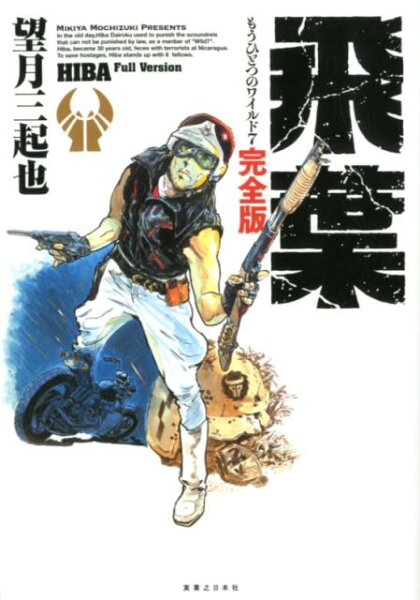
Wild 7 Review: The Vigilante Police Squad That Fights Crime Outside the Law
by Mikiya Mochizuki
Read the first volume. If it doesn't hook you, put it down. It'll hook you.
Buy Wild 7 on Amazon →*Affiliate link — I earn a small commission at no extra cost to you.
Quick Take
- One of the foundational vigilante action manga — Wild 7 established conventions that influenced decades of subsequent work
- The motorcycle-squad aesthetic and extralegal justice premise were genuinely novel in 1969
- 46 volumes of escalating action that retains its visceral energy across the full run
Who Is This Manga For?
- Action manga historians interested in the origins of vigilante action as a genre
- Readers of 1970s manga who want the era's specific energy and aesthetics
- Motorcycle and action enthusiasts who want the genre at its purest
- Fans of Judge Dredd, The Punisher — the Japanese predecessor to Western vigilante antiheroes
Content Warnings & Age Rating
Age Rating: M (Mature) Content Warnings: Vigilante violence — the unit kills criminals; this is explicit and consistent. 1970s action manga content including some sexual content. Mature throughout.
Genuinely M-rated content.
Yu's Rating
| Category | Score |
|---|---|
| Story Depth | ★★★☆☆ |
| Art Style | ★★★★☆ |
| Character Development | ★★★☆☆ |
| Accessibility for Non-Japanese Readers | ★★★★☆ |
| Reread Value | ★★★☆☆ |
Story Overview
The Wild 7 are seven convicted criminals recruited by the police: given the choice between prison and a special assignment, they become an extralegal enforcement unit authorized to use lethal force against criminals who the regular police cannot stop.
They ride motorcycles. They do not negotiate. The criminals they pursue are genuinely dangerous — the kind of organized crime and political corruption that the regular police are either unable or unwilling to confront directly.
The series follows the Wild 7 through successive operations — each arc a different target, a different kind of threat — with the ongoing tension of their own legal status: they are criminals doing police work, which means nobody will protect them if things go wrong.
Characters
Hiba: The de facto leader of the Wild 7 — not officially, but in practice. His combination of competence and willingness to do what needs to be done makes him the unit's center of gravity.
The six others: Each member of the Wild 7 has a different criminal background and a different skill set. The ensemble is varied enough that different members are relevant to different operations.
Art Style
Mochizuki's art has the kinetic energy of 1970s action manga — dynamic motorcycle sequences, expressive violence, character designs that communicate personality through physical presence. The motorcycles are drawn with evident enthusiasm. The action is clear and fast.
Cultural Context
Wild 7 began in 1969 — the same year as the peak of Japan's student movement, in a political climate where the legitimacy of authority and the meaning of justice were live questions. The premise of criminals being better tools of justice than the regular police had specific resonance in that moment.
The series is one of the first Japanese manga to take vigilante action as a consistent premise rather than an occasional plot element — establishing conventions that would appear in subsequent decades of action manga and anime.
What I Love About It
I love the premise's specific honesty.
Wild 7 doesn't pretend its vigilantes are heroes in a simple sense. They are criminals using criminal methods in the service of something that may be justice. The series doesn't resolve this tension — it lives in it. The seven members know what they are. The police who deploy them know what they are. The criminals they pursue are sometimes not worse people than the people using them.
This moral complexity was unusual in action manga of the era and is part of why the series has lasting significance.
What English-Speaking Fans Say
Not known in English-speaking markets. Among action manga historians and scholars of 1970s Japanese popular culture, it is recognized as a significant foundational work. The premise's influence on subsequent manga and anime is traceable but the original is largely unread outside Japan.
Memorable Scene
An early arc where one of the Wild 7 is given the opportunity to walk away — to leave the unit and the violence — and chooses not to. His reason is not heroic. It is simply that he has no better option and he might as well do something useful while he has the chance. The scene establishes the series' relationship to its characters' moral status.
Similar Manga
- Crows: Different genre, similar willingness to depict extralegal masculine action
- GTO: Later era, similar premise of unconventional person doing unconventional justice
- Sanctuary: Similar 1990s extralegal political action, more sophisticated politics
Reading Order / Where to Start
Volume 1. The unit and its premise are established from the beginning.
Official English Translation Status
Wild 7 has no official English translation.
Pros & Cons
Pros
- Foundational vigilante action manga
- The premise's moral complexity is handled honestly
- Complete at 46 volumes
- Historically significant for understanding action manga's development
Cons
- No English translation
- 1970s content including dated gender elements
- 46 volumes is a significant commitment
Format Comparison
| Format | Notes |
|---|---|
| Physical | Japanese editions available |
| Digital | Available in Japanese |
| Omnibus | Various compilation formats available |
Where to Buy
No English release yet. That just means you find it before everyone else does.
*Affiliate link — I earn a small commission at no extra cost to you.
More Manga You Might Like
Action / Crime
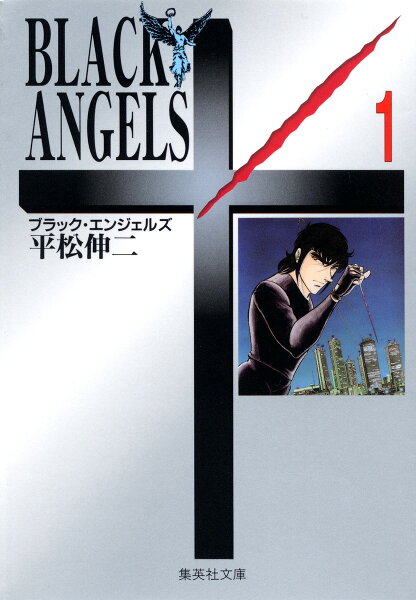
Black Angels
Black Angels follows Yoji Yukito, a meek-looking young man who kills criminals the law cannot touch with a single bicycle spoke. A 1980s Weekly Shonen Jump vigilante manga that uses extreme violence to ask who gets to decide who lives.
Action / Crime
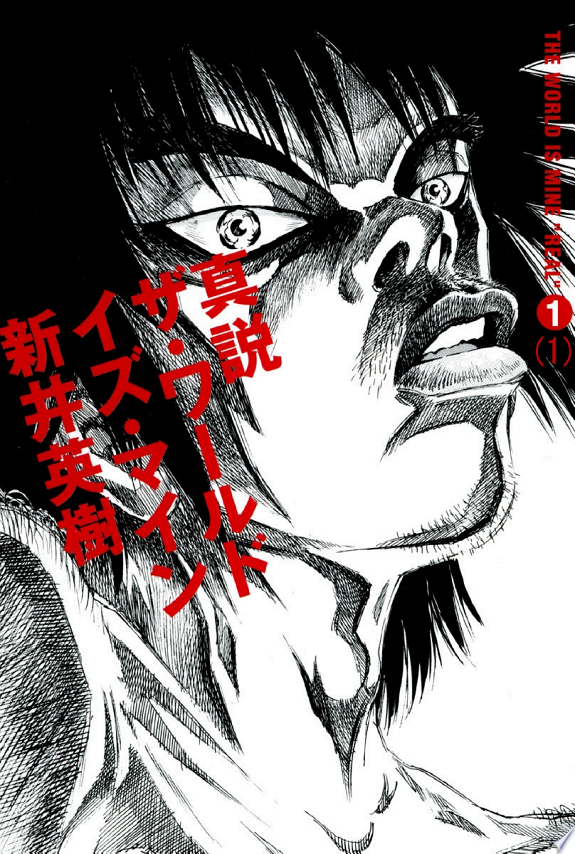
The World Is Mine
The World Is Mine follows two criminal partners — the unpredictable Mon and the calculating Toshi — on a violent crime spree across Japan, alongside a separate thread about a mysterious monster emerging in the wilderness.
Action
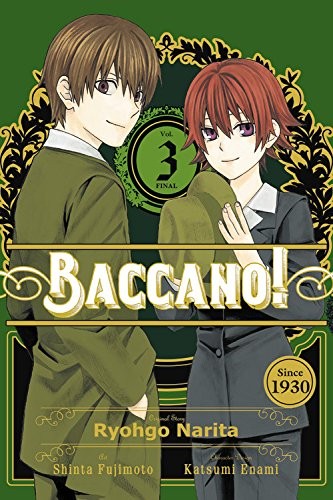
Baccano!
A review of the Baccano! manga by Shinta Fujimoto — the 3-volume Young Gangan adaptation of Ryohgo Narita's Grand Punk Railroad arc, where immortals, gangsters, and a bloody urban legend collide aboard the 1931 Flying Pussyfoot express.
Action / Crime
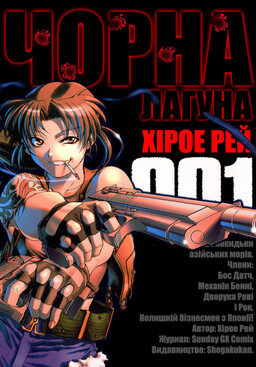
Black Lagoon
Yu's review of Black Lagoon by Rei Hiroe — Rokuro 'Rock' Okajima, a Tokyo salaryman, is taken hostage by the mercenary crew of the torpedo boat Black Lagoon; when his company writes him off rather than pay ransom, he joins them in the lawless Thai port city of Roanapur.
Action
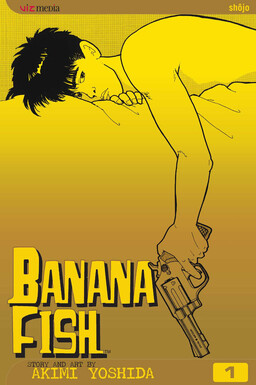
Banana Fish
Yu's review of Banana Fish — Ash Lynx is a seventeen-year-old gang boss in 1980s New York whose life collides with Eiji Okumura, a gentle Japanese photographer's assistant, when a dying man whispers the words 'Banana Fish.' Akimi Yoshida's 19-volume crime epic about a mind-control drug, the men who own the streets, and the one connection that almost saved a boy built only to kill.
Action / Drama
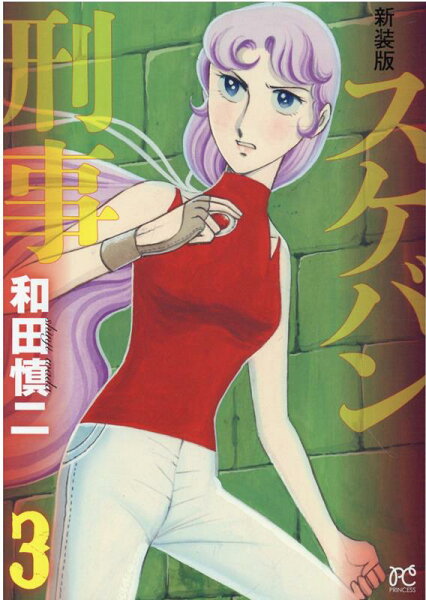
Sukeban Deka
Sukeban Deka follows Saki Asamiya, a delinquent girl recruited by the police to work undercover at a series of schools — armed only with a steel yo-yo and her reputation as the toughest girl in Japan.
Written by
Yu
Manga Enthusiast from Japan
I grew up in Japan and manga literally saved me during a tough time in elementary school. My English isn't perfect, but my love for manga is real — and I want to share it with you.