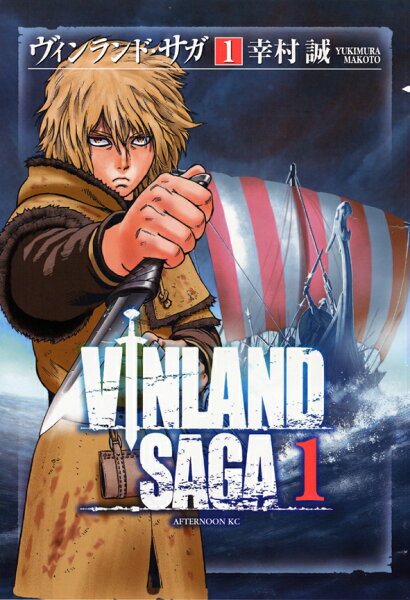
Vinland Saga Review: The Manga That Asks What It Means to Live Without Violence
by Makoto Yukimura
Read the first volume. If it doesn't hook you, put it down. It'll hook you.
Buy Vinland Saga on Amazon →*Affiliate link — I earn a small commission at no extra cost to you.
Quick Take
- A Viking manga that begins as a brutal revenge epic and transforms into something much deeper
- The second half is one of the most moving and philosophically rich manga being published today
- Essential reading for anyone who wants to understand what the medium can do
Who Is This Manga For?
Vinland Saga is for you if:
- You want historical fiction that takes its setting seriously while building to something timeless
- You love character transformations that unfold over hundreds of chapters and feel completely earned
- You can handle mature, graphic content in service of a serious story
- You want a manga that asks real questions — about violence, freedom, and what it means to be a person
Content Warnings & Age Rating
Age Rating: M (Mature) Content Warnings: Extensive and graphic depictions of Viking-era warfare; slavery depicted with unflinching realism; significant character death; themes of revenge, trauma, and the psychological cost of violence
Vinland Saga does not soften its historical setting. The violence is purposeful and the suffering is real. This is adult content that earns its weight.
Yu's Rating
| Category | Score |
|---|---|
| Story Depth | ★★★★★ |
| Art Style | ★★★★★ |
| Character Development | ★★★★★ |
| Accessibility for Non-Japanese Readers | ★★★★★ |
| Reread Value | ★★★★★ |
Story Overview
Thorfinn is a boy who watches his father — the greatest warrior of his age — killed by the mercenary captain Askeladd. He has only one goal after that: to grow strong enough to kill Askeladd in a fair duel. He spends years traveling with Askeladd's company, earning his chances at duels, losing each one, growing stronger, and becoming exactly the kind of person his father died hoping he would never become.
This is the first half of Vinland Saga. It is already excellent.
Then the second half begins, and Vinland Saga becomes something else.
The question Yukimura asks — and keeps asking, for hundreds of chapters — is simple: Thorfinn has been formed by violence, lives for violence, has become violence. When he finally gets what he wanted, what is left? What does a weapon do when there is no longer a war to fight in?
The answer, developed across the Farm arc and beyond, is one of the most patient and moving things I have read in any medium.
Characters
Thorfinn Karlsefni — The manga's greatest achievement. His transformation — from a boy consumed by hatred to a man trying to build something instead of destroying — is drawn with such care and patience that when he finally arrives at peace, you feel it as if it happened to you.
Askeladd — One of manga's most complex antagonists. He is the killer of Thorfinn's father, but also Thorfinn's protector, teacher, and in a warped way, his most important relationship. His motivations, when revealed, recast everything that came before.
Canute — The historical Cnut the Great, depicted here as a sheltered boy who becomes something unexpected. His arc — from terrified prince to ruthless king — is a political tragedy.
Einar — Thorfinn's companion in the second half, a slave whose quiet decency and rage at his own circumstances provides the second arc's moral center. His friendship with Thorfinn is the heart of the Farm arc.
Art Style
Yukimura's art is extraordinary — among the best draftsmanship in currently running manga. His battle sequences achieve something rare: they are visually thrilling while simultaneously being horrifying. You can feel the weight of every strike. The corpses look like corpses.
The landscapes are painted with almost documentary precision. The Norse seas, the English countryside, the Danish camps — each environment has a specific texture and atmosphere.
The Farm arc requires a completely different visual register — quieter, more intimate, occasionally comic — and Yukimura handles the transition seamlessly.
Cultural Context
Historical Vinland — The manga is named for the Norse settlement in North America (modern Newfoundland) that the historical Thorfinn Karlsefni established. The manga treats this as Thorfinn's unrealized dream: a place without war. The title is both promise and goal.
Viking Age Iceland and England — Yukimura's research is meticulous. The political dynamics of the Danelaw, the nature of Viking mercenary culture, the institution of thralldom (Norse slavery) — all are depicted with historical care while serving the story's thematic purposes.
Bushido and the warrior's dilemma — The question at Vinland Saga's center — what does a warrior do in peacetime? — has deep resonance in Japanese culture, where the samurai's role in civil society posed similar questions. Yukimura is writing a Viking story, but it speaks to a specifically Japanese anxiety.
What I Love About It
There is a scene in the Farm arc where Thorfinn, who spent years learning to be the most dangerous person in any room, picks up a farming tool and tries to work the earth. He is bad at it. His hands know other shapes.
He persists anyway.
I think about that scene often. The idea that becoming good at peace is something you have to learn, that it does not simply arrive when violence ends — that the skills required for one are different from the skills required for the other, and that the transition requires as much effort as any training — is one of the truest things I have encountered in fiction.
Vinland Saga taught me that.
What English-Speaking Fans Say
Vinland Saga gained a massive Western audience through the anime adaptation, which covers roughly the first half of the manga. Many Western readers discovered it through the anime and then found the manga's Farm arc — the slower, quieter second half — to be where the series becomes transcendent.
Common praise: Thorfinn's transformation, Askeladd's complexity, the Farm arc's emotional depth, the historical authenticity.
Common criticism: The Farm arc's pace surprises readers expecting the kinetic action of the first half. Some readers wanted more of what the early chapters offered; what they get instead is better, but different.
Memorable Scene ⚠️ Spoiler Warning
Askeladd's final act.
When Askeladd — who has seemed, for hundreds of chapters, to be the story's primary antagonist — makes a choice that sacrifices everything for something he actually believes in, the series turns inside out. You realize, suddenly, that you had been reading a character you didn't fully understand.
The scene is violent and quiet at the same time. It is the kind of moment that changes the meaning of everything before it. It is what great fiction does.
Similar Manga
If you liked Vinland Saga, try:
- Berserk — Different tone, similar scope and seriousness about violence
- Vagabond — Same question about the warrior's purpose, Japanese setting
- Golden Kamuy — Historical action with similar research depth
- Hunter x Hunter — Different genre, similar thematic ambition
Reading Order / Where to Start
Start from Volume 1. The Farm arc (which begins around volume 9–10) is a significant tonal shift — knowing it's coming helps.
Official English Translation Status
Status: Ongoing English Volumes: 27 Translator: Kodansha Comics Translation Quality: Excellent
Pros & Cons
Pros
- One of the greatest ongoing manga being published
- Thorfinn's transformation is one of the most complete character arcs in the medium
- Askeladd is a masterclass in antagonist construction
- The art is among the best in the industry
Cons
- Very graphic mature content — not for all readers
- The Farm arc's slower pace loses readers who came for the action
- Ongoing — you're committing to a series without a known endpoint
Format Comparison
| Format | Volumes | Price per vol. (approx.) | Best for |
|---|---|---|---|
| Paperback (individual) | 27 vols | ~$12–15 | Collecting |
| Kindle | 27 vols | ~$8–10 | Ongoing reading |
| Deluxe Hardcover | ~14 vols | ~$22–28 | Premium collection |
Where to Buy
Read the first volume. If it doesn't hook you, put it down. It'll hook you.
This post contains affiliate links. If you purchase through these links, I may earn a small commission at no extra cost to you. As an Amazon Associate, I earn from qualifying purchases.
*Affiliate link — I earn a small commission at no extra cost to you.
More Manga You Might Like
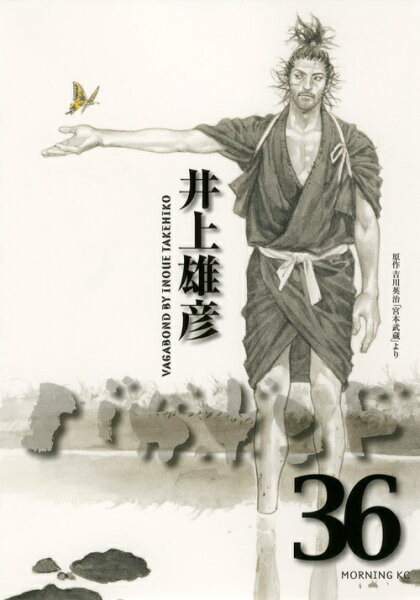
Action / Historical
Vagabond
Yu's review of Vagabond — a manga about the historical Miyamoto Musashi's journey to become the greatest swordsman alive, and his gradual understanding that invincibility is not the same as wisdom. Visually the most beautiful manga ever published.
Action / Historical Fantasy
Drifters
Yu's review of Drifters — great warriors from throughout human history — Shimazu Toyohisa, Oda Nobunaga, Nasu no Yoichi — are transported at the moment of their deaths to a fantasy world by mysterious bureaucrats; they are called Drifters; a parallel group called the Ends are transported figures who were killed by betrayal and seek to destroy humanity; the two sides are at war.
Action / Fantasy
Sengoku Youko
Yu's review of Sengoku Youko — in Sengoku-era Japan, a powerful spirit girl travels with a timid human boy seeking to create a world where humans and youkai can live in peace.
Action / Historical
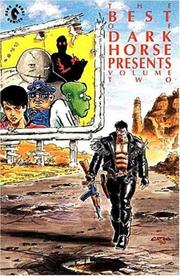
Lone Wolf and Cub
Yu's review of Lone Wolf and Cub — Ogami Ittō was the Shogunate's official executioner; framed for treason by the Yagyū clan, stripped of his position, his wife murdered; he chose the Meifumadō — the road to hell — placing his infant son Daigorō before a ball and a sword, and the child chose the sword; they travel as assassins for hire, seeking vengeance.
Action
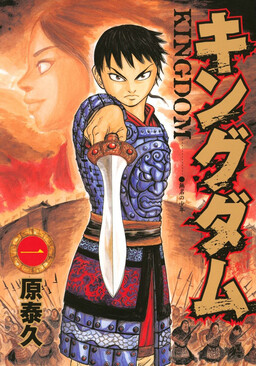
Kingdom
Yu's review of Kingdom — Xin is a war orphan in Warring States China who dreams of becoming the greatest general under the heavens; he encounters the young king Ying Zheng who intends to unify all of China; Yasuhisa Hara's historical epic about the birth of the Qin Empire through the eyes of soldiers and commanders who fought for it.
Action / Historical
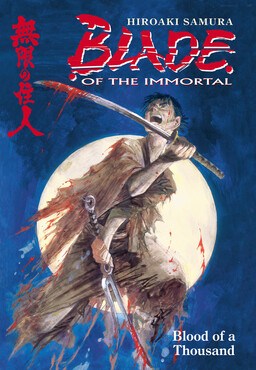
Blade of the Immortal
Yu's review of Blade of the Immortal — Manji is a ronin cursed with immortality by sacred bloodworms; to end the curse he must kill a thousand evil men, and he agrees to protect Rin Asano, a girl whose family was destroyed by the Itto-ryu sword school led by Anotsu Kagehisa. Hiroaki Samura's nineteen-year masterpiece, complete in 31 volumes from Dark Horse.
Written by
Yu
Manga Enthusiast from Japan
I grew up in Japan and manga literally saved me during a tough time in elementary school. My English isn't perfect, but my love for manga is real — and I want to share it with you.
Disclosure: This post contains affiliate links. As an Amazon Associate, I earn from qualifying purchases at no extra cost to you.