
Usogui Review — The 49-Volume Gambling Manga Where Losers Don't Walk Away
by Toshio Sako
Read the first volume. If it doesn't hook you, put it down. It'll hook you.
Buy Usogui on Amazon →*Affiliate link — I earn a small commission at no extra cost to you.
I want to be honest with you about Usogui. I haven't finished it. I'm somewhere around volume 30, slowly, in Japanese, with a dictionary open. It's the kind of manga that takes years instead of weeks.
But I want to write about it now because almost nothing exists in English about Usogui beyond "it's like Kaiji but darker," and that undersells what the manga is actually doing.
Quick Take
- The most technically demanding gambling manga ever serialized — every game is built on real game theory and then layered with psychological warfare
- Baku Madarame, "Usogui," is a protagonist defined by competence in a system where losing means dying
- Age rating: M (Mature) — graphic violence, death as a game mechanic, torture content in mid-series arcs
What Does "Usogui" Mean in English?
The title 嘘喰い (Usogui) translates literally as "Liar Eater" or "Lie Devourer." It is the underground nickname given to the protagonist, Baku Madarame.
The meaning is operational, not metaphorical. Baku doesn't just spot lies. He lets opponents lie to him on purpose. He invites the cheat, accepts the false impression, takes the bluff at face value — and then uses the lie itself as the lever to win. His signature line to a defeated opponent is "あんた、嘘つきだね" ("You're a liar, aren't you") — delivered at the moment the opponent realizes they were only ever winning because Baku let them.
The title is a thesis about the character. He doesn't win because he can't be deceived. He wins because deception is the food he metabolizes.
What Is Usogui About?
Usogui is set in the world of Kakerou (賭郎) — a secret gambling organization founded 441 years ago that arbitrates wagers in which the stakes can include life itself. Kakerou is an institution: it has a hierarchy, an arbiter class, written rules, and a 441-year history. The current head is the 21st generation Oyakata-sama.
Membership is limited to 48 gamblers. Disputes between Kakerou members are arbitrated by the Tachiainin (立会人) — 101 specialized referees ranked from Zero to One Hundred. The Tachiainin enforce the rules with absolute authority, and they're combat-capable on top of game-rule-capable. If a loser refuses to pay, the Tachiainin collect — by force, including the forfeit of life if that was the wager.
Baku Madarame became a Kakerou member at fifteen. He defeated nearly every senior member of the organization. He then attempted Yakata-goe (屋形越え) — a formal challenge for the position of Oyakata-sama — and lost. He disappeared.
The manga opens with his return. He partners with Kaji Takanori — an ordinary college student in debt, whose unremarkable nature makes him exactly the right anchor for Baku — and begins climbing back toward his eventual second attempt at Yakata-goe. Each arc is a different game against a different opponent. Each game has its own architecture. The series spends 49 volumes building from a small debt-collection job to a confrontation with seven antagonists who threaten the entire Kakerou system.
Who Is This Manga For?
- Kaiji and Liar Game fans who want gambling manga pushed to a higher technical ceiling
- Game theory enjoyers who like watching mechanics unfold with real internal logic
- Long-series committers — 49 volumes, rewards reading from beginning to end
- Readers comfortable with high violence including torture and death as game stakes
- Japanese readers: the manga is unlicensed in English. Reading Usogui means reading it in Japanese or via fan scanlation
Content Warnings & Age Rating
Age Rating: M (Mature) — 18+ Content Warnings: Death as a recurring game outcome; graphic violence including torture; psychological manipulation throughout; some sexual content; the Hangman arc in particular contains extended scenes of physical brutality
Story Overview: The Major Arcs
I'll structure this by the manga's actual arc divisions, with light spoilers but no resolutions.
Volumes 1–4 — Establishment: Baku meets Kaji. The Kakerou system is introduced through smaller games — a hostage situation, a memory-stakes gamble. We learn what Tachiainin are. We learn how Baku reads opponents.
Volumes 5–10 — Hangman Arc: Baku faces Sadakuni, a yakuza boss, in a game called Hangman set inside an abandoned mine. The arc is the manga's first major showcase of how Baku constructs winning positions inside seemingly losing scenarios. It's also the arc where Marco Rodrigo and his alternate personality Rodem are introduced.
Volumes 11–17 — Labyrinth Gamble: A police memory-extraction case that broadens the world. Yakou Hikoichi, Baku's specialist Tachiainin, becomes a major character. The series introduces the manga's most extended thematic question: what does it mean to play against an opponent who is genuinely your equal?
Volumes 18–28 — Protoporos Arc: The series' centerpiece. A floating island. Multiple games. The final climax — Air Poker — is widely considered one of the greatest single games in any gambling manga. The opponent, Lalo, is the kind of antagonist who genuinely could beat Baku and the manga makes you believe it for several volumes.
Volumes 29–41 — Yakata-goe: Baku's second attempt at the challenge that broke him at fifteen. The opponent is Kirima Souichi, the 21st Oyakata-sama, a man with memory disorder and a complicated relationship to power.
Volumes 42–49 — The Seven Akutokumono: The final arc. Seven antagonists representing different threats to the Kakerou system. Baku, now in a different position than where he started, has to defend something he once attacked. The ending arrives.
Characters
Baku Madarame — The series' fundamental question is what Baku is. He's clearly extraordinary; the question is what kind. He doesn't claim moral superiority. He operates inside Kakerou, kills when the rules permit, and doesn't apologize for being a person who is good at this. What he does have, instead of conventional morality, is a specific code about gambling: he never breaks the rules, he never welshes on payment, and he treats every opponent as worth defeating completely rather than carelessly. This is not the same as being good. The manga is interested in the difference.
Kaji Takanori — Baku's partner, an ordinary debt-ridden student who becomes the human anchor for the operation. Kaji's role is critical and the manga takes him seriously. He doesn't become a great gambler. He becomes a person of unusual moral clarity in a world that has very little. His arc is one of the best supporting-character arcs in seinen.
Marco Rodrigo / Rodem — Bodyguard with dissociative identity disorder. Marco is the gentle personality. Rodem is the violent one. The series handles this with more care than the premise suggests; both personalities are characters, not gimmicks.
Yakou Hikoichi — Baku's specialist Tachiainin. An older man, formidable in both knowledge and combat. His mentor relationship with Baku is the closest thing the manga has to a family bond.
Kirima Souichi — The 21st Oyakata-sama. Memory-impaired, possibly in ways he chose. His Yakata-goe match with Baku is the series' most psychologically intricate single confrontation.
Lalo — Air Poker antagonist. The first opponent in the series who fully matches Baku.
Art Style
Toshio Sako's art is dynamic and increasingly assured as the series progresses. Early volumes show some rough edges; by the Protoporos arc, the page compositions and character expressions are at a high seinen level. The game sequences use panel structure specifically to control information — what the reader knows, what each character knows, when the gap between those collapses. The violence is drawn unflinchingly. So is psychological collapse — Sako can render a person realizing they've lost in a single panel.
Cultural Context
Usogui sits in the lineage of Japanese gambling manga that runs from Mahjong manga through Kaiji (Nobuyuki Fukumoto) and Liar Game (Shinobu Kaitani). What Usogui adds to the genre:
- Greater game-mechanical sophistication (real game theory, not just psychological gimmicks)
- A protagonist who is genuinely competent rather than initially out of his depth
- An institutional setting (Kakerou) that gives the gambles a worldbuilding spine
- 49 volumes of continuity — longer than almost any peer in the genre
The genre's interest in gambling-as-philosophy — what it means to risk everything, what perfect strategy looks like, how superior minds operate against each other — reaches one of its most developed forms in Usogui.
What I Love About It
The Air Poker climax in the Protoporos arc.
I'm going to keep this vague enough to avoid spoiling. Air Poker is a poker variant that Baku and Lalo play with their lives — not metaphorically, mechanically. Each round of the game is connected to actual physiological stakes for both players. The game runs for multiple volumes. Sako doesn't compress it.
What I love is what the game forces Baku to do.
Throughout the series, Baku's defining trait has been that he's always one step ahead. He sees the entire game. He chooses what to let his opponent see. He maintains a kind of psychological altitude over every confrontation. Air Poker is the first game where Baku is forced down to the same level as his opponent. He has to bluff, gamble, and bet not because he has constructed the perfect position, but because he can't.
The pages where Baku — who has spent thirty volumes being unflappable — actually flaps. Where he has to make a decision under conditions where he doesn't fully know the right answer. Where you see him be human for the first time in the series. Those pages are the manga's emotional payoff for years of buildup.
That's what gambling manga at its best can do. It can build a character so competent that watching them be uncertain has the weight of a battle manga's most powerful punch.
What English-Speaking Fans Say
Usogui's English-language community is small but devoted. Discussion happens primarily on r/manga, r/Usogui, and a few specialized gambling-manga subreddits. The consensus among readers who have completed it (typically via scanlation) is:
- Among the top three gambling manga ever made
- Air Poker is widely cited as one of the greatest games in any gambling manga
- The ending is divisive — some readers find the final arc rushed compared to earlier arcs; others find the conclusion satisfying
- The lack of an English license is the single biggest barrier to wider recognition
A live-action film adaptation released in 2022 in Japan but is not available in English-language markets.
Memorable Scene ⚠️ Spoiler Warning
The end of the Yakata-goe arc. Baku, having defeated Kirima Souichi for the position of Oyakata-sama, takes the seat at the head of the Kakerou organization.
The series has spent forty volumes positioning Baku as the eternal challenger — the man who climbs against the system. The moment he becomes the system is the pivot point of the entire manga. He doesn't celebrate. He doesn't gloat. The panel of him sitting in the Oyakata-sama's chair for the first time is drawn small, almost still. Sako lets the silence sit.
What makes the moment work is the immediate consequence: the seven Akutokumono — the seven antagonists of the final arc — emerge specifically because Baku has taken this position. He went from defeating the system to becoming the target of attacks against it. The final arc is what Baku does when he has to defend something instead of attack it. Whether he's any good at that is the manga's last question.
Similar Manga
| Title | Its Approach | How Usogui Differs |
|---|---|---|
| Kaiji | Sympathetic everyman protagonist who learns gambling by surviving | Usogui's protagonist is already a master; the question is what mastery costs |
| Liar Game | Game theory psychological warfare, less violence | Usogui plays for actual lives and runs much longer |
| One Outs | Baseball as game theory; cold protagonist | Same intellectual approach but Usogui's stakes are physical, not athletic |
| Tobaku Mokushiroku Kaiji (Gambling Apocalypse Kaiji) | Foundational genre work | Usogui builds on Kaiji's foundation with more elaborate institutional worldbuilding |
Reading Order / Where to Start
Volume 1. The 49 volumes form a single connected arc. Skipping is not advisable. The Hangman arc (volumes 5–10) is where the manga's distinct identity solidifies, but you need the setup from 1–4 first.
Official English Translation Status
Usogui has no official English release. Shueisha has not licensed the manga to any English publisher. The most plausible explanations:
- 49 volumes is a substantial commitment for a publisher of unproven Western market
- Mature content may have limited the licensing pool
- The 2022 Japanese live-action film didn't generate enough international demand to push a license
For English readers, the manga is accessible only via Japanese editions (physical, available from Japan; digital, available via region-locked Japanese ebook services) or via fan scanlations.
Pros & Cons
Pros
- Game design is among the most sophisticated in any manga
- 49 volumes complete with a real ending
- Baku Madarame is one of the most distinctive protagonists in seinen
- Air Poker, Hangman, and Yakata-goe arcs are top-tier gambling manga
- The Kakerou worldbuilding is more developed than peer series
Cons
- No English translation — reading requires Japanese or scanlation
- 49 volumes is a major commitment
- Violence and death are consistent and extreme
- Some game logic is dense enough to require re-reading
- The final arc is divisive. Some readers find it the best part; others find it rushed. It's an acquired taste — like the rest of the manga, it won't land for everyone.
Is Usogui Worth Reading?
If you can read Japanese, or are willing to use scanlations: yes, unconditionally. It's one of the best gambling manga ever made and there's no equivalent experience in English-language seinen.
If you need an official English release: not yet. Watch for licensing announcements. The 2022 film and the manga's reputation may eventually move Shueisha to license it.
Format Comparison
| Format | Notes |
|---|---|
| Physical (Japanese) | All 49 volumes in print in Japan; available via Japanese import retailers |
| Digital (Japanese) | Available on Japanese ebook services |
| English | None — unlicensed |
Where to Buy
No English release yet. That just means you find it before everyone else does.
*Affiliate link — I earn a small commission at no extra cost to you.
More Manga You Might Like
Action / Drama
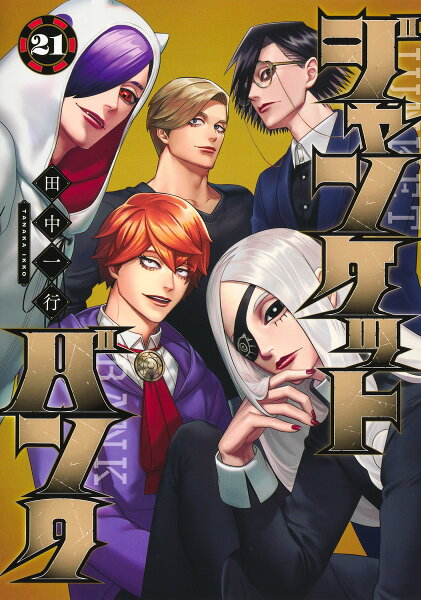
Juncket Bank
Juncket Bank follows Shinonome Ginji, a man who discovers he cannot lose at any game of chance — and a casino operator who wants to harness this ability for something far more dangerous than ordinary gambling.
Action / Drama
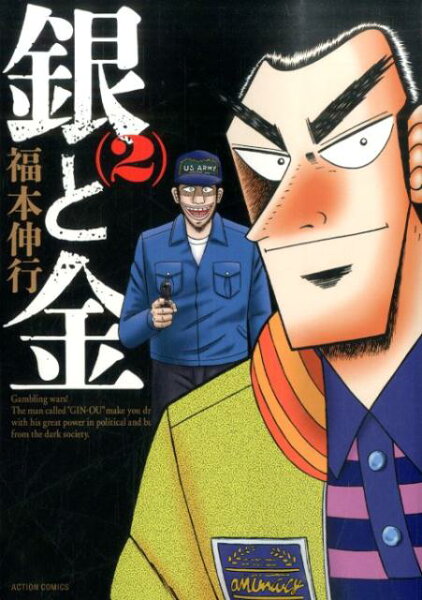
Gin to Kin
Gin to Kin is Nobuyuki Fukumoto's gambling manga about Morita Tetsuo, a young man drawn into the inner world of high-stakes underground gambling — a slower, denser predecessor to Kaiji where every game is a psychological war.
Action / Drama
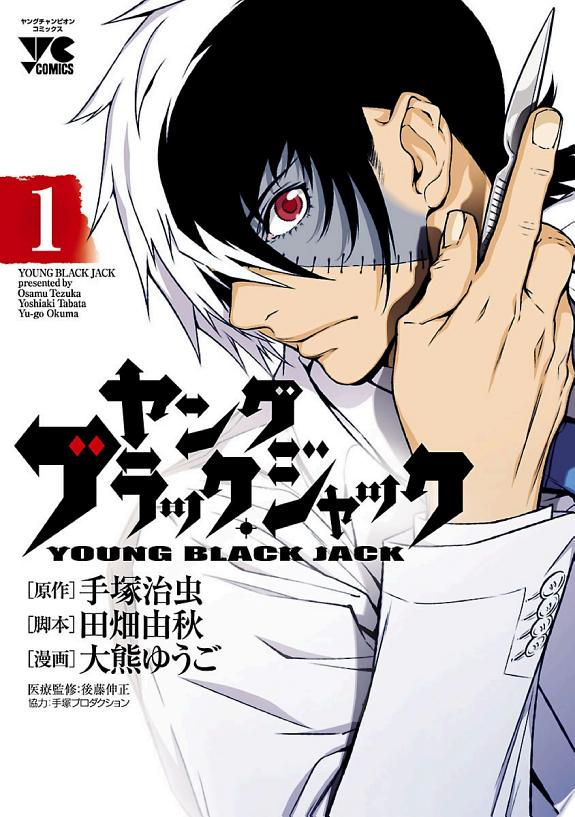
Young Black Jack
A review of Yoshiaki Tabata and Yugo Okuma's Young Black Jack — 16 volumes in Weekly Young Champion. Young Hazama Kuroo — the future Black Jack — as a medical student in 1960s Japan, performing extraordinary surgeries in an era of political upheaval and moral complexity. No official English edition.
Action / Drama
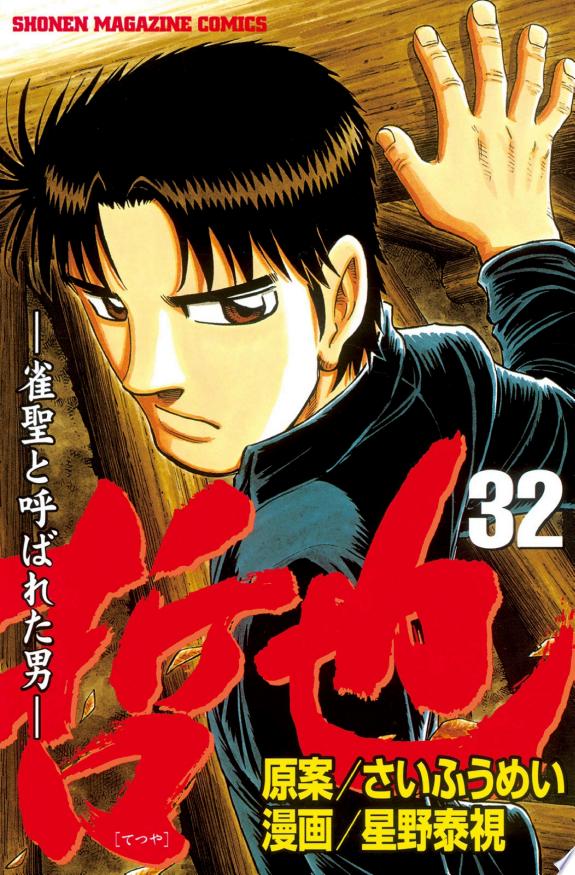
Tetsuya
Tetsuya follows a young man known as Tetsuya who becomes Japan's greatest underground mahjong player in the devastation of postwar Tokyo — using skill, psychological insight, and sometimes outright cheating to survive in a world where the stakes are always real.
Action / Psychological
Tomodachi Game
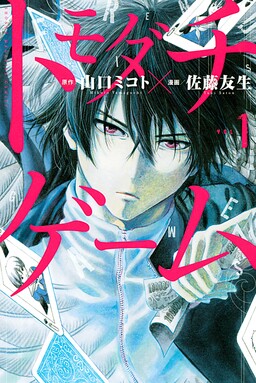
Yu's review of Tomodachi Game — Yuichi and his four close friends suddenly find themselves participating in the 'Tomodachi Game,' a debt-resolution game run by a mysterious organization; one of them enrolled everyone to pay off a debt, and the games are specifically designed to strain and destroy friendships.
Action / Psychological
Shamo
Yu's review of Shamo — a model student who murders his parents learns karate in juvenile detention and emerges as a dangerous, broken prodigy with nowhere to put his violence.
Written by
Yu
Manga Enthusiast from Japan
I grew up in Japan and manga literally saved me during a tough time in elementary school. My English isn't perfect, but my love for manga is real — and I want to share it with you.