
Ultimo Review: Stan Lee and Hiroyuki Takei's Good vs. Evil Robot Doji Battle Across Reincarnations
by Stan Lee / Hiroyuki Takei
Read the first volume. If it doesn't hook you, put it down. It'll hook you.
Buy Ultimo on Amazon →*Affiliate link — I earn a small commission at no extra cost to you.
Quick Take
- The Stan Lee and Hiroyuki Takei collaboration is unusual enough to be interesting — the American comics legend and the Shaman King creator's aesthetic combination produces something distinct from either's solo work
- The Doji designs are visually inventive, mixing medieval Japanese aesthetics with mechanical fantasy
- 12 volumes complete; a complete collaborative action manga curiosity
Who Is This Manga For?
- Readers interested in the Stan Lee / manga collaboration as historical artifact
- Anyone who wants action manga with the Shaman King creator's visual sensibility
- Fans of good-vs-evil binary conflict with elaborate mechanical being designs
- Readers looking for complete action manga with unusual creative origin
Content Warnings & Age Rating
Age Rating: T+ (Older Teen) Content Warnings: Doji battle violence with real consequences; good vs evil conflict with casualties; reincarnation death sequences
T+ rating — action violence content appropriate for older teens.
Yu's Rating
| Category | Score |
|---|---|
| Story Depth | ★★★☆☆ |
| Art Style | ★★★★☆ |
| Character Development | ★★★☆☆ |
| Accessibility for Non-Japanese Readers | ★★★★☆ |
| Reread Value | ★★★☆☆ |
Story Overview
Dunstan is an ancient scientist who created the Karakuri Doji — mechanical beings embodying ultimate virtues and vices. Ultimo embodies ultimate good. Vice embodies ultimate evil. The other Doji represent gradations between these poles.
They have been fighting across centuries, their masters reincarnating in each era to continue the conflict. In contemporary Japan, Yamato Agari is a high school student who becomes Ultimo's new master. Vice's master is a classmate. The medieval conflict is now a schoolyard dynamic.
The series follows Yamato's growth as Ultimo's master, the expansion of the Doji cast as other beings and their masters enter the conflict, and the larger question of what Dunstan's experiment is actually intended to prove.
Characters
Yamato Agari — A protagonist whose ordinary high school beginning is immediately complicated by being bonded to the embodiment of absolute good; the series uses his ordinary nature as contrast for what Ultimo is.
Ultimo — A Doji whose mechanical design is part medieval Japanese aesthetic and part something alien; his bond with Yamato is the series' central relationship.
Vice — The evil counterpart who is explicitly designed to oppose Ultimo; his relationship with his master is a dark mirror of Yamato's relationship with Ultimo.
Art Style
Hiroyuki Takei's art (Shaman King) brings the inventive mechanical character design that makes the Doji visually distinctive — each Doji has a design reflecting its virtue or vice, which means the character designs carry thematic information. The battle choreography is clear and kinetic. Stan Lee's American influence is felt in the premise more than the visual execution.
Cultural Context
Ultimo was created for Weekly Shonen Jump's international collaboration initiative — Stan Lee provided the core concept (ancient robots embodying good and evil fighting across time) and Takei executed it in his manga style. The collaboration raised questions about creative authorship that the series itself doesn't address, but the result reads as genuine manga rather than a licensed property adaptation.
What I Love About It
The Doji designs. Each mechanical being's visual design is distinctive in ways that reflect their nature — the good Doji tend toward light and openness, the evil Doji toward density and aggression. Takei's character design work is the series' most consistent quality.
What English-Speaking Fans Say
Western readers describe Ultimo as an interesting collaboration experiment that works better than expected — specifically noted for Takei's art being consistently good regardless of the unusual origin, for the Doji designs being genuinely inventive, and for the good-vs-evil mythology having more complexity than the binary premise suggests. Recommended as a curiosity for Shaman King fans.
Memorable Scene ⚠️ Spoiler Warning
The revelation of Dunstan's actual purpose — what the centuries-long good-vs-evil experiment is designed to determine — gives the binary conflict more philosophical substance than the initial premise suggests.
Similar Manga
- Shaman King — Hiroyuki Takei's primary work with similar spirit-bonding structure
- Angelic Layer — Mechanical being bonded to human master
- Zatch Bell — Paired beings fighting across a large cast with similar tournament structure
- D.Gray-man — Good vs evil conflict with elaborate mechanical/supernatural beings
Reading Order / Where to Start
Volume 1 — Yamato's encounter with Ultimo and the establishment of the Doji conflict sets up the full premise.
Official English Translation Status
VIZ Media published the complete English series. All 12 volumes available.
Pros & Cons
Pros
- Takei's Doji designs are visually inventive
- Complete in 12 volumes
- Collaboration origin gives historical interest
- Good-vs-evil mythology has real complexity
Cons
- Binary premise can feel constraining
- Stan Lee's influence is more in concept than execution
- Mid-series pacing has some inconsistency
Format Comparison
| Format | Notes |
|---|---|
| Individual Volumes | VIZ Media; complete series |
| Digital | Available |
Where to Buy
Read the first volume. If it doesn't hook you, put it down. It'll hook you.
This post contains affiliate links. If you purchase through these links, I may earn a small commission at no extra cost to you. As an Amazon Associate, I earn from qualifying purchases.
*Affiliate link — I earn a small commission at no extra cost to you.
More Manga You Might Like
Action / Sci-Fi
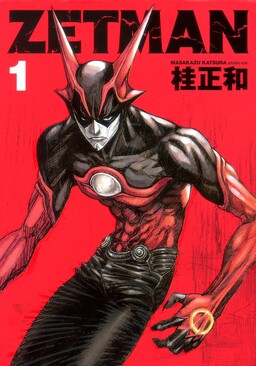
Zetman
Yu's review of Zetman — Jin Kanzaki is a boy who can transform into ZET, a living weapon created by a corporation's experiment; his story is intertwined with Kouga Amagi, heir to a company that creates its own superhero armor — two different ideas of what a hero means, in conflict and occasional partnership.

Action
Wild Adapter
Yu's review of Wild Adapter — Makoto Kubota is a Yakuza boy genius who gets drawn into investigating Wild Adapter, a drug that turns users into monsters; he finds Tokito, a boy with no memory and a monster's hand, and takes him home; Kazuya Minekura's crime manga about an unlikely pair and the mystery of a transforming drug.
Action
Tuxedo Gin
Yu's review of Tuxedo Gin — Ginji Kusanagi is a teenage boxing prodigy who dies in an accident the night before his first date with Minako; he reincarnates as a penguin and is found by Minako, who keeps him as a pet while his spirit must wait until the karmic debt is paid.
Action
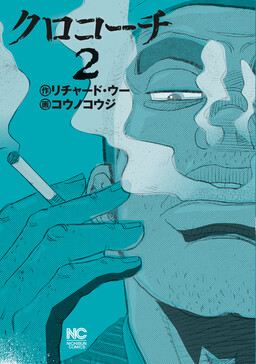
Inspector Kurokochi
Yu's review of Inspector Kurokochi — Keishi Kurokochi is a police inspector who is deeply, openly corrupt; his partner Seike is an idealist; together they solve cases that the normal police apparatus won't or can't touch; Seima Itoh's police manga about effective but morally compromised law enforcement.

Action
Good Luck Girl! (Binbougami-ga!)
Yu's review of Good Luck Girl! — Ichiko Sakura has so much luck that she unconsciously drains it from the people around her; Momiji, a Poverty God, is sent to drain Ichiko's excess luck and restore the balance; the problem is that Ichiko is extremely difficult to handle.

Action
Rosario + Vampire: Season II
Yu's review of Rosario + Vampire: Season II — picking up from the end of Season I, Tsukune Aono and his monster companions return with higher stakes; the series shifts toward darker action with genuine monster-world political conflict while retaining the original's character relationships.
Written by
Yu
Manga Enthusiast from Japan
I grew up in Japan and manga literally saved me during a tough time in elementary school. My English isn't perfect, but my love for manga is real — and I want to share it with you.
Disclosure: This post contains affiliate links. As an Amazon Associate, I earn from qualifying purchases at no extra cost to you.