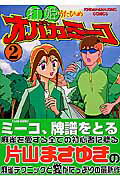
Uchihime Obakamiko Review: The Mahjong Manga Where the Hero Was Bad on Purpose
by Nobuyuki Fukumoto
Read the first volume. If it doesn't hook you, put it down. It'll hook you.
Buy Uchihime Obakamiko on Amazon →*Affiliate link — I earn a small commission at no extra cost to you.
Fukumoto wrote a comedy. The mahjong is still serious. The protagonist is just bad at it.
Quick Take
- Nobuyuki Fukumoto's lighter mahjong manga — 8 volumes following Mieko, a technically poor but enthusiastic player, and her reluctant mentor
- Proof that Fukumoto can write outside Kaiji's intensity register without losing technical rigor
- Compact, accessible, and unexpectedly warm given the author's reputation
Who Is This Manga For?
- Fukumoto fans who want to see his work in a lighter register
- Mahjong manga readers who want a friendly entry point to the genre
- Underdog story readers who want a protagonist whose enthusiasm exceeds her ability
- Anyone who has ever been bad at something they refused to give up
Content Warnings & Age Rating
Age Rating: T (Teen) Content Warnings: Mahjong content, mild comedy violence. Nothing concerning.
Suitable for most readers.
Yu's Rating
| Category | Score |
|---|---|
| Story Depth | ★★★★☆ |
| Art Style | ★★★★☆ |
| Character Development | ★★★★☆ |
| Accessibility for Non-Japanese Readers | ★★★☆☆ |
| Reread Value | ★★★★☆ |
Story Overview
Mieko has loved mahjong since childhood. Her enthusiasm is total. Her technical skill is, kindly, limited. She enters competitive mahjong with the obstinate confidence of someone who has not yet been beaten enough times to learn what she's missing.
Toshio is a former player whose talent has been blunted by years of disappointment. He has no interest in being anyone's mentor. He becomes Mieko's mentor anyway, because her relentless cheerfulness wears him down and because he sees in her terrible play what good play could be if anyone bothered to teach her.
The series follows Mieko's development across competitive contexts. The mahjong is depicted with Fukumoto's standard rigor — readers can follow strategies, see why moves matter — but the tone is comedic and warm rather than the existential weight of his more famous works. Mieko's growth is real, and so is the friendship she builds with Toshio.
Characters
Mieko: A protagonist defined by enthusiasm without skill — her arc is genuine improvement that she earns through play rather than through narrative gift.
Toshio: The reluctant mentor whose own arc is parallel — teaching Mieko teaches him what he has lost, and what's still possible.
Art Style
Fukumoto's signature angular style is present, but the tonal application is different — less sweat, less psychological tension, more expressive comedy in faces and reactions. Mahjong sequences retain technical accuracy, but the spaces around them are warmer.
Cultural Context
Uchihime Obakamiko ran from 2003 to 2007 in Kindai Mahjong. The series sits in Fukumoto's broader catalog as proof that he isn't only the writer of Kaiji and Akagi — he can write lighter material with the same rigor in the technical sequences.
The title is wordplay: "Uchihime" means "playing princess" (mahjong is "uchi"), and "Obakamiiko" combines "baka" (fool) with "Mieko" — "the foolish princess who plays."
What I Love About It
I love that Fukumoto wrote it.
After the intensity of Kaiji and Akagi, Fukumoto could have stayed in his lane forever — endless variations on psychological gambling warfare. Uchihime Obakamiko is a creative choice: the same author choosing to write friendship and warmth instead of dread. The mahjong is still serious, but it's serious about Mieko getting better, not about Mieko losing her soul. That's a meaningful shift.
What English-Speaking Fans Say
Among Fukumoto fans aware of his broader catalog, regarded affectionately as the "lighter Fukumoto" — proof of the author's range and a recommended entry point for mahjong manga newcomers.
Memorable Scene ⚠️ Spoiler Warning
Mieko's first technically correct read of an opponent's hand — the moment when her enthusiasm and her practice converge into actual skill. The scene is small but crucial; it's the series' thesis about why teaching matters.
Similar Manga
| Title | Its Approach | How Uchihime Obakamiko Differs |
|---|---|---|
| Akagi | Fukumoto's mahjong intensity peak | Uchihime is the warm inverse — same rigor, different mood |
| Saki | Light mahjong with cute girls | Uchihime has more technical seriousness despite comedic tone |
| Hikaru no Go | Mentor-student game-mastery narrative | Uchihime is mahjong-specific and adult rather than coming-of-age |
Reading Order / Where to Start
Volume 1. Mieko's growth depends on the foundation laid early.
Official English Translation Status
Uchihime Obakamiko has no official English translation.
Pros & Cons
Pros
- Fukumoto's lighter register, with technical mahjong rigor preserved
- Mieko's growth arc is earned and warm
- Compact at 8 volumes
- The mentor relationship is the series' emotional core
Cons
- No English translation
- Mahjong knowledge enhances appreciation
- Fans expecting Kaiji-tier intensity will find this calmer
- The lighter tone means fewer dramatic peaks
Is Uchihime Obakamiko Worth Reading?
For Fukumoto fans curious about his full range and for mahjong manga readers wanting a warm entry point, yes — this is one of the most accessible mahjong manga and shows the author at his most genial. For readers seeking psychological gambling intensity, this deliberately isn't that. As warm character study with mahjong rigor, it's a small gem.
Format Comparison
| Format | Notes |
|---|---|
| Physical | Japanese editions available |
| Digital | Available in Japanese |
| Omnibus | Collected editions available |
Where to Buy
No English release yet. That just means you find it before everyone else does.
*Affiliate link — I earn a small commission at no extra cost to you.
More Manga You Might Like
Action / Comedy
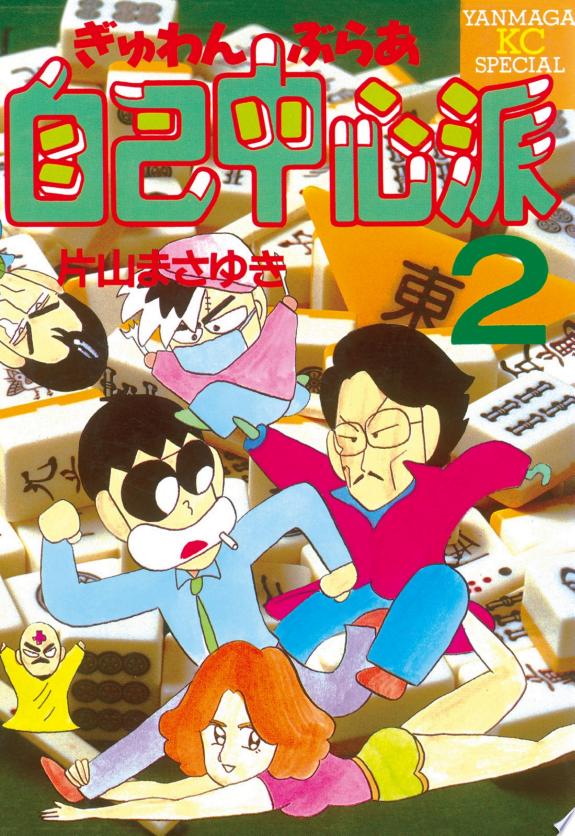
Gambler Jiko Chuushinha
Gambler Jiko Chuushinha is Masayuki Katayama's mahjong comedy from Weekly Young Magazine — a 17-volume tribute to mahjong's social culture, where the comedy comes from the players' bizarre personalities while the mahjong remains genuinely played.
Action / Drama
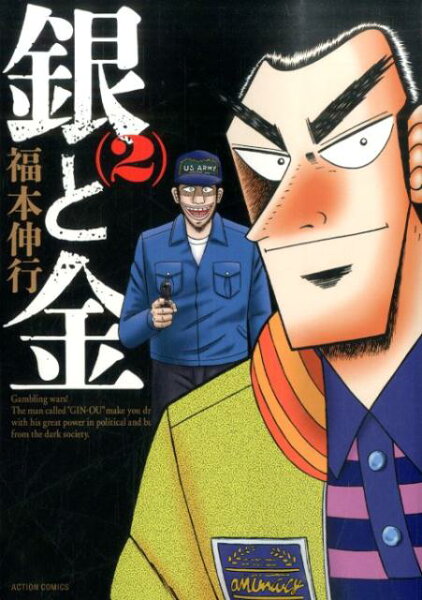
Gin to Kin
Gin to Kin is Nobuyuki Fukumoto's gambling manga about Morita Tetsuo, a young man drawn into the inner world of high-stakes underground gambling — a slower, denser predecessor to Kaiji where every game is a psychological war.

Action / Comedy
Zom 100: Bucket List of the Dead
A review of Zom 100: Bucket List of the Dead — 15 volumes in Monthly Sunday GX. Akira Tendo spent three years being worked to death at a black company; when the zombie apocalypse starts, his first thought is relief that he doesn't have to go to work; he makes a list of 100 things to do before becoming a zombie. The most original zombie premise in years. VIZ Media's English edition is complete.
Action / Comedy
The Fable
Yu's review of The Fable — Akira (codename 'The Fable') is considered the deadliest assassin in Japan; his boss orders him to take a year off and live as an ordinary person without killing anyone; the comedy of an extraordinarily dangerous man trying and mostly succeeding at being normal while the criminal world swirls around him.
Action / Comedy
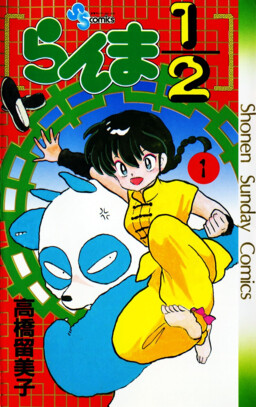
Ranma ½
A review of Ranma ½ — 38 volumes in Weekly Shonen Sunday. Ranma Saotome transforms into a girl when splashed with cold water; his father has arranged him to be engaged to Akane Tendo, who hates boys; the series follows their chaotic not-quite-relationship and increasingly bizarre martial arts challenges. Rumiko Takahashi's most kinetic work. VIZ Media's English edition is complete.
Action / Comedy
Mob Psycho 100
A review of Mob Psycho 100 — 16 volumes on Ura Sunday. Shigeo Kageyama (Mob) is the most powerful psychic alive and keeps his powers suppressed because he doesn't want to hurt anyone; he just wants to get better at talking to his crush. The best manga about emotional suppression and what actual strength looks like. Dark Horse Comics' English edition is complete.
Written by
Yu
Manga Enthusiast from Japan
I grew up in Japan and manga literally saved me during a tough time in elementary school. My English isn't perfect, but my love for manga is real — and I want to share it with you.