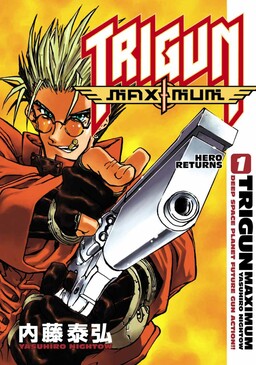
Trigun Maximum Review — The Most Wanted Man on a Desert Planet Refuses to Kill, and the Manga Asks What That Costs
by Yasuhiro Nightow
Read the first volume. If it doesn't hook you, put it down. It'll hook you.
Buy Trigun Maximum on Amazon →*Affiliate link — I earn a small commission at no extra cost to you.
I watched the Trigun anime in middle school. I cried at episode 23 — most people who watched the anime did — and then I went looking for the manga because the anime had ended before the actual ending could arrive. The manga took me three more years to find, in English, in a used bookstore in Akihabara.
The thing nobody tells you about Trigun Maximum is that the anime, as good as it is, was a 26-episode preview of the real work. The manga is the answer the anime asked the question to.
Quick Take
- A $60 billion bounty hunter who has never killed anyone, walking a desert planet that wants him dead — a 14-volume argument about whether pacifism can survive contact with the world
- Vash the Stampede is one of the great manga protagonists; Nicholas D. Wolfwood is the supporting character who breaks readers
- Age rating: T (Teen) — violence is frequent but not graphic; the weight is thematic, not visual
What Is the Age Rating for Trigun (Maximum)?
Dark Horse rates the English release T (Teen) — 13+, and the rating is accurate.
What's in the manga:
- Action violence: gunfights, explosions, structural destruction. Frequent but never graphically gory
- Character death: named characters die, including some you've grown attached to. The deaths are emotionally heavy rather than visually graphic
- Themes: pacifism and its cost, genocide, the ethics of revenge, what humans owe each other. Heavy thematic content
- No sexual content; mild romance only
- Brief partial nudity in one or two volumes (non-sexual context)
The 13+ rating is the floor. Teen readers can handle the visual content easily. What may be heavier for younger readers is the moral complexity — the manga asks questions it does not give clean answers to. Readers who want clear heroes and villains may find the middle volumes frustrating.
Trigun vs Trigun Maximum: Which Is This Manga?
Yasuhiro Nightow's Trigun universe is published in two stages:
- Trigun (1995–1997): 3 volumes (2 in English Dark Horse omnibus). The original. Serialized in Shonen Captain. Establishes Vash, the planet of Gunsmoke, and the basic premise
- Trigun Maximum (1997–2007): 14 volumes. The continuation in Young King OURs after Shonen Captain folded. This is where the story actually finishes. The vast majority of Trigun's plot, character work, and emotional weight is in Maximum
The two are one continuous story with a serialization gap. Dark Horse's English releases keep them separate, but they should be read in sequence. The original 2-volume Trigun comes first. Then 14 volumes of Maximum. Most discussions of "the Trigun manga" are really discussions of Trigun Maximum.
What Is Trigun Maximum About?
The planet Gunsmoke is a desert world settled by humanity after a generation ship crashed there over a century before the manga begins. Two moons hang in a yellow sky. Towns are built around "Plants" — bioengineered power sources that the colonists no longer fully understand and that may be failing.
Vash the Stampede is the most wanted man on Gunsmoke. He has a sixty billion double-dollar bounty on his head — large enough that every drifter, lawman, and bounty hunter on the planet is a potential threat. His reputation is for destruction: towns leveled, cities damaged, witnesses describing him as the humanoid typhoon.
The man under the red coat is, however, not what his reputation suggests. Vash is goofy, kind, and embarrassingly committed to a single rule: he does not kill people. Ever. Not bounty hunters trying to collect on him. Not bandits. Not the men who burned his friends' towns.
The manga's central tension is between Vash's reputation (planet-destroying killer) and his actual nature (pacifist refusing to kill). The reasons for both — his power, his refusal, and what happened in his past — emerge gradually. The escalation comes from his twin brother Knives Millions, who has spent decades trying to make Vash abandon his rule by raising the stakes high enough that the rule has to break.
The 14 volumes of Maximum are Vash's slow journey toward the inevitable confrontation with Knives. Along the way: insurance investigators Meryl Stryfe and Milly Thompson document his trail; the priest Nicholas D. Wolfwood joins him for reasons of his own; the Gung-Ho Guns — Knives's lieutenants, each with their own ability and their own argument against Vash's worldview — pursue him through every arc.
Vash the Stampede: The Character
Vash is one of the most carefully constructed protagonists in manga.
The surface: blond hair, red coat, prosthetic left arm hiding a gun. Speaks in cheerful exclamations. Eats donuts. Cries easily. Apologizes for things that aren't his fault. Loves people, plural and indiscriminately.
The depth: 130+ years old, technically not human (the manga reveals what he and Knives are over the course of the series), holding immense and not fully controlled power that he refuses to use. The cheerfulness is not naivety. It's a chosen discipline. Vash has seen what violence does. He knows what he is capable of if he stops choosing not to.
What makes Vash work as a protagonist is that the manga never lets him off easy for his pacifism. He gets challenged. He loses people. He almost breaks. The question of whether his rule will hold is real because the cost of holding it keeps escalating. By volume 12, Nightow has put Vash in situations where the moral arithmetic of refusing to kill is genuinely complicated. The manga's most affecting writing is what Vash does — and does not do — under that pressure.
The famous lines you may have heard:
- "Love and peace!" (his ironic catchphrase)
- "This world is made of love and peace!" (same)
- "Sins cannot be undone, only forgiven." (volume 12, in context)
The first two are jokes Vash tells against himself. The third is the manga.
Who Is This Manga For?
- Anime watchers who loved Trigun and want the ending
- Action manga readers who want themes alongside the action
- Western fans who want the genre in space
- Readers of moral fiction — Trigun Maximum belongs alongside Vinland Saga, Berserk, and Monster in the canon of manga that treat violence as a real subject
- Completionists: 16 total volumes (2 original + 14 Maximum), all available in English
Content Warnings & Age Rating
Age Rating: T (Teen) — 13+ Content Warnings: Frequent action violence (gunfights, explosions); deaths of supporting characters; themes including genocide, the ethics of pacifism, trauma, religious crisis; one mid-series volume contains scenes of mass civilian death (Augusta City, off-page but heavy)
Story Overview
The manga is structured in three major movements.
Volumes 1–4 — Continuation. Vash, Meryl, Milly, and Wolfwood travel between towns, surviving Gung-Ho Guns attacks and trying to figure out what Knives is planning. The Gung-Ho Guns introduced here — Zazie, Rai-Dei, Leonof — each pose a different version of the question Vash has to answer: is your rule worth the cost it imposes on the people around you?
Volumes 5–9 — Catastrophe and recovery. The Augusta City sequence (volume 5) is where the manga turns dark. Vash survives an event that breaks him. The middle volumes are him in pieces, slowly putting himself back together. Wolfwood's arc reaches its apex here. This is the section of the manga that did not exist in the original 1998 anime, and it is the section that does the most thematic work.
Volumes 10–14 — Endgame. Knives's plan finally moves to the surface. The remaining Gung-Ho Guns — and a few who were not visible earlier — converge. The final confrontation between Vash and Knives is given the space it needs to actually argue. The manga ends in a way that respects everything that came before it.
Characters
Vash the Stampede — Discussed above. The protagonist whose pacifism is the manga's central proposition.
Nicholas D. Wolfwood — A priest who carries a giant cross-shaped weapon case (the cross holds an arsenal). He's a more complicated mirror of Vash than the manga initially lets on. Wolfwood does kill. He has reasons. His arc — and his final volume — is where Trigun Maximum becomes one of the great manga. I'm not going to spoil what happens, but it's the part of the manga readers cite when they say Trigun broke them.
Knives Millions — Vash's brother. Identical in power, opposite in conclusion. Knives believes humanity is a parasite that the Plants should be free of, and his methods follow that belief without apology. The manga makes him understandable without making him sympathetic. The final argument between him and Vash is the most direct philosophical confrontation in any Nightow work.
Meryl Stryfe and Milly Thompson — Insurance agents from the Bernardelli Insurance Society, assigned to follow Vash and document the destruction he causes for liability claims. Meryl is the sharp-tongued one. Milly is the gentle giant with the stungun rifle and an emotional intelligence the manga rewards. They are not love interests in the conventional sense; they are the people whose continued existence is the answer to one of the manga's questions.
The Gung-Ho Guns — Knives's lieutenants. Each volume of the early manga introduces a new one. Each is a thematic argument given a body — pleasure, power, despair, doubt, hatred. The manga's pacing is shaped by their arrivals and departures.
Art Style
Yasuhiro Nightow's art is divisive. The character designs are distinctive — Vash's coat, Wolfwood's cross, the Gung-Ho Guns' silhouettes are all iconic. The action sequences are dense; Nightow packs energy and detail into single panels in a way that can be difficult to parse on first reading. His sense of scale is excellent — when Vash uses his power, the world responds appropriately.
The art improves visibly across Maximum. Volume 1 is the roughest; by volume 8, Nightow is in full control of his style. The final volumes (12–14) contain some of his best work.
Cultural Context
Trigun is a space western — desert planet, gunfighters, lawless towns, vigilante violence — built on the visual language of classic American westerns (especially Sergio Leone) but doing distinctly Japanese thematic work. The pacifism question, the conflict with a brother-mirror, the religious imagery (Wolfwood's cross, the Plants, the deity-like power Vash and Knives possess) all connect to Japanese postwar literature about violence and inheritance.
The 1998 anime adaptation became a major international gateway to manga in the early 2000s. The 2023 Studio Orange remake "Trigun Stampede" covers different material and uses different character designs; the manga remains the canonical text.
What I Love About It
Wolfwood's final volume.
I won't say the specifics. The whole arc — what Wolfwood is, what he has been carrying, who he was before he met Vash, and what he chooses to do with his last hours — is some of the cleanest emotional writing in any manga. The chapter where the final choice is made is rendered with restraint Nightow uses sparingly across the series. There's a panel of Wolfwood walking, in the rain, that I think about often. It's not a dramatic panel. It's a man walking. The drama is in what we know about him.
What I love is that Trigun Maximum makes Wolfwood's answer to the pacifism question different from Vash's, and refuses to call one of them right. Vash will not kill. Wolfwood does. Vash is alive at the end of the manga. Wolfwood is what the manga lets us miss for the rest of the series. The manga's argument is not "pacifism is correct, see, Wolfwood is wrong." The argument is that both choices have costs. Both choices have meaning. Both men were doing their best.
That's the moral seriousness that puts Trigun Maximum on the shelf with the great manga. It does not have an answer. It just has people, each of them choosing, each of them paying.
What English-Speaking Fans Say
The English Trigun community is large and durable. The 1998 anime created a generation of fans; the manga is generally regarded as the deeper work. Reddit discussions of Trigun Maximum tend to focus on three things: Wolfwood (universally loved), the Augusta City arc (universally cited as the manga's bleakest and best section), and the ending (universally praised).
The 2023 Stampede anime split the fanbase; most longtime fans prefer the manga over either anime adaptation. The Dark Horse English release is well-regarded.
Memorable Scene ⚠️ Spoiler Warning
The Wolfwood / Livio sequence in volume 9–10. Wolfwood, dying, meets Livio — a man he knew before Vash, before he became the priest. The conversation they have, what Wolfwood asks Livio to do, and what Livio chooses, is one of the manga's most carefully constructed sequences.
What makes the scene work is Nightow's restraint. The manga has been an action manga. Bullets have flown. Buildings have collapsed. The Wolfwood-Livio scene is two men talking. The panels are quieter than almost any other sequence in the series. There is no music in manga, but if there were, this sequence would be played without it.
Wolfwood, knowing what is happening to him, asks for forgiveness. Not from God. From a friend. The friend gives it. The friend then asks Wolfwood what he should do next, and Wolfwood gives him an answer that I think about whenever I'm trying to figure out how to live around grief.
I'm not going to write the line. Read it.
Similar Manga
| Title | Its Approach | How Trigun Maximum Differs |
|---|---|---|
| Berserk | Violence as subject, dark fantasy | Berserk is darker and longer; Trigun is more hopeful and tighter |
| Vinland Saga | Pacifism arc in a violent world | Same thematic territory; Vinland is historical, Trigun is space western |
| Hellsing | Gunfighters in supernatural conflict | Hellsing is much more violent and stylish; Trigun is more morally weighty |
| Rurouni Kenshin | Pacifist gunman/swordsman premise | Kenshin is historical, gentler; Vash carries more philosophical weight |
Reading Order / Where to Start
Original Trigun (2-volume Dark Horse omnibus) first. Then Trigun Maximum (14 volumes). Do not skip the original — the basic premise and Vash's history are established there.
If you've seen the 1998 anime: the manga overlaps with the anime through approximately volume 7 of Maximum, after which the manga continues into new territory the anime never adapted. Volumes 8–14 are where the real story lives.
Official English Translation Status
Dark Horse Comics published the complete English series. The original Trigun is available in a 2-volume English release. Trigun Maximum is available in 14 individual English volumes. Both are widely in print and digital.
Pros & Cons
Pros
- One of the most thematically serious action manga ever made
- Vash is a great protagonist; Wolfwood is a great supporting character
- The ending lands and respects everything that came before it
- Complete and available in English at reasonable prices
Cons
- Nightow's art is dense and divisive
- The original 2-volume Trigun is necessary context but is the rougher work
- The middle volumes are emotionally heavy and may be hard for some readers
- Nightow's style — visual density, philosophical interludes — is an acquired taste. It won't land for everyone.
Is Trigun Maximum Worth Reading?
Yes. Among the best action manga of its generation, with thematic depth that puts it on the shelf with Berserk and Vinland Saga. The Wolfwood arc alone is worth the price of admission. Read the original Trigun first, then commit to Maximum's 14 volumes.
Format Comparison
| Format | Notes |
|---|---|
| Physical (Dark Horse) | Original Trigun in 2-volume omnibus; Trigun Maximum in 14 individual volumes |
| Digital | Available via Dark Horse digital, ComiXology, Kindle |
| Omnibus | The original 2-volume Trigun is itself an omnibus; Trigun Maximum is not collected as omnibus |
Where to Buy
Read the first volume. If it doesn't hook you, put it down. It'll hook you.
This post contains affiliate links. If you purchase through these links, I may earn a small commission at no extra cost to you. As an Amazon Associate, I earn from qualifying purchases.
*Affiliate link — I earn a small commission at no extra cost to you.
More Manga You Might Like
Action / Sci-Fi
Cobra
Cobra is the greatest space pirate who ever lived — charming, unstoppable, and armed with the Psychogun fused to his arm — in a galaxy-spanning adventure that turned stylish cool into a manga philosophy.
Action / Comedy
Level E
Yu's review of Level E — a self-declared alien prince has crashed his ship on Earth and has conveniently developed amnesia; he moves in with Yukitaka Tsutsui, a freshman baseball prospect in rural Yamagata; the prince turns out to be the most intelligent and least cooperative being in the galaxy, and he treats everything around him as a long-running game designed for his own amusement.
Action / Sci-Fi
Dr. Stone
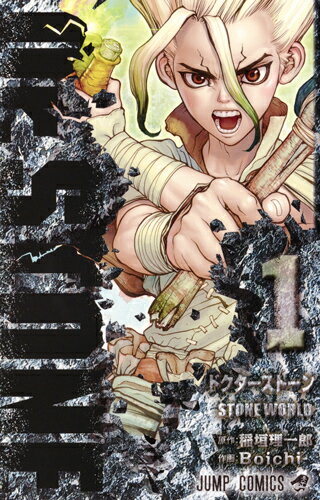
Yu's review of Dr. Stone — Senku Ishigami, a scientific genius, wakes from a millennia-long stone petrification to find human civilization erased; he decides to use science to rebuild everything humanity ever created, starting from zero.
Action / Sci-Fi
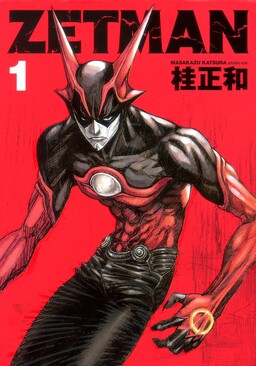
Zetman
Yu's review of Zetman — Jin Kanzaki is a boy who can transform into ZET, a living weapon created by a corporation's experiment; his story is intertwined with Kouga Amagi, heir to a company that creates its own superhero armor — two different ideas of what a hero means, in conflict and occasional partnership.
Action / Sci-Fi
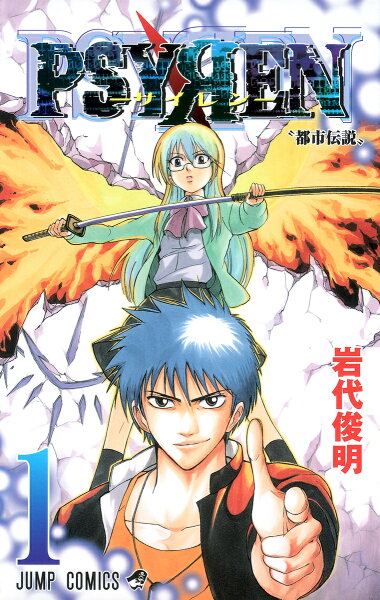
Psyren
Yu's review of Psyren — Ageha Yoshina finds a phone card called Psyren; using it transports him to a devastated future Japan where monsters called Taboo hunt humans; players who survive the game develop psychic powers; together with others, he tries to prevent this future from happening.
Sci-Fi / Action
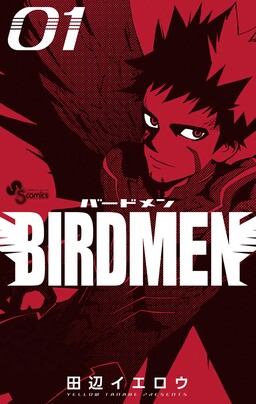
Birdmen
Yu's review of Birdmen by Yellow Tanabe — Eishi Karasuma and three classmates survive a bus crash because a winged classmate, Takayama, shares his blood with them. They wake up as Seraphs who can grow wings, and slowly learn that the gift may cost them the part of themselves that is still human.
Written by
Yu
Manga Enthusiast from Japan
I grew up in Japan and manga literally saved me during a tough time in elementary school. My English isn't perfect, but my love for manga is real — and I want to share it with you.
Disclosure: This post contains affiliate links. As an Amazon Associate, I earn from qualifying purchases at no extra cost to you.