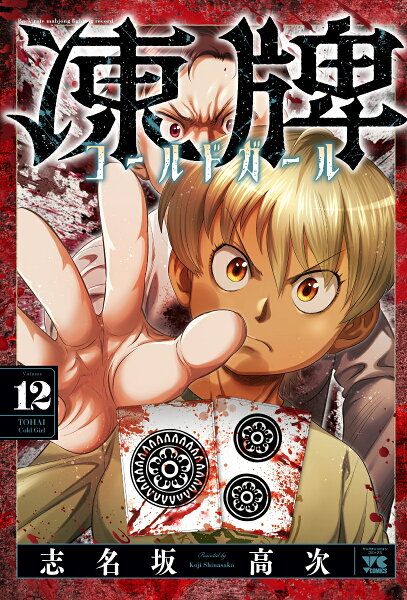
Toupai Review: The Underground Mahjong Manga Where Losing Meant Worse Than Losing
by Hiroyuki Shinohara
Read the first volume. If it doesn't hook you, put it down. It'll hook you.
Buy Toupai on Amazon →*Affiliate link — I earn a small commission at no extra cost to you.
Some games end when you lose. Other games are designed so that losing only begins what happens next.
Quick Take
- Hiroyuki Shinohara's 17-volume mahjong manga — K, the high-school prodigy navigating underground games with life-or-death stakes
- A brutal modern entry in the mahjong-manga tradition that emphasizes consequences over technique
- Combines mahjong rigor with yakuza-fiction darkness in a way few works manage
Who Is This Manga For?
- Mahjong manga readers who want the genre's darker register
- Akagi/Kaiji fans who want the modern equivalent of high-stakes psychological play
- Yakuza fiction readers who want gambling as the venue for power struggles
- Anyone who wonders what mahjong looks like when the table is a battlefield
Content Warnings & Age Rating
Age Rating: M (Mature) Content Warnings: Significant violence, criminal underworld, gambling consequences, occasional torture and intimidation.
For mature readers comfortable with seinen darkness.
Yu's Rating
| Category | Score |
|---|---|
| Story Depth | ★★★★☆ |
| Art Style | ★★★★☆ |
| Character Development | ★★★★☆ |
| Accessibility for Non-Japanese Readers | ★★☆☆☆ |
| Reread Value | ★★★★☆ |
Story Overview
K is a high-school student with extraordinary mahjong ability. He has no interest in legitimate competitive play. The games he plays are underground, with stakes set by yakuza commissioners — sometimes money, sometimes property, sometimes the lives of the participants and their associates. K plays because he is what he is, and the underground is where his abilities matter.
The series follows him through escalating arcs: each new game is more dangerous, each new opponent more capable, each new commissioner more invested in K's failure or success. K's high-school identity is partial cover; the people who employ him don't care about his age, only his ability to deliver wins under conditions where losing has consequences.
What sets Toupai apart is the seriousness of those consequences. The series doesn't soften: when characters lose, they suffer real, depicted, unsanitized consequences. The mahjong is technically rigorous, but the psychological pressure isn't from gameplay alone — it's from the certainty that the table is the venue for actual violence afterward.
Characters
K: A protagonist whose youth contrasts deliberately with the adult underworld he inhabits — his prodigy status doesn't insulate him from the consequences, but it does explain why the underworld wants him.
The yakuza commissioners: Each represents a different faction with different stakes — the political dynamics among them are part of the series' tension.
The opponents: Each game's antagonist is rendered with enough specificity that their fate matters.
Art Style
Shinohara's art has the visceral quality that the subject matter requires — close-ups on faces under pressure, hands trembling on tiles, the visual texture of underground gambling rooms. The style emphasizes weight; mahjong sequences feel heavy because the stakes are heavy.
Cultural Context
Toupai ran from 2006 to 2017 in Young Champion. The series belongs to the mahjong-yakuza tradition of Naki no Ryu and the underground-mahjong tradition of Akagi, but pushes the consequences further than either. A spin-off, Toupai: Daiichigen, continued the universe afterward.
The series fits within seinen manga's willingness to depict violence and dark consequences — the same publishing context that produces Berserk and similar works.
What I Love About It
I love that the consequences are real.
A lot of mahjong-yakuza manga gestures at consequences without committing to them — characters threaten violence but somehow nobody actually suffers. Toupai commits. When characters lose at the wrong table, they suffer. The depicted consequences make every game heavier, and the heaviness is what distinguishes Toupai from contemporaries that hint at darkness without delivering it.
What English-Speaking Fans Say
Among mahjong manga readers who have engaged with it through fan translations, recognized as one of the most intense modern entries in the genre. Limited general awareness due to the absence of official translation.
Memorable Scene ⚠️ Spoiler Warning
A late-volume game where K's opponent fully understands the consequences of losing — and chooses to play to win rather than to survive. The moment of moral choice in the face of certain harm is the series' most powerful scene.
Similar Manga
| Title | Its Approach | How Toupai Differs |
|---|---|---|
| Akagi | Mahjong with prodigy and supernatural intensity | Toupai is more grounded in real-world consequences |
| Naki no Ryu | Yakuza-mahjong with conflicted master | Toupai's protagonist is a prodigy rather than a torn moralist |
| Kaiji | High-stakes psychological gambling | Toupai is darker and more violent in depicted consequences |
Reading Order / Where to Start
Volume 1. The escalation depends on early arcs establishing the underworld's logic.
Official English Translation Status
Toupai has no official English translation.
Pros & Cons
Pros
- Among the most intense modern mahjong manga
- Consequences depicted unflinchingly give weight to every game
- Mahjong technical content remains rigorous
- Complete at 17 volumes
Cons
- No English translation
- Mahjong knowledge is necessary for full appreciation
- The violence and consequences may be too dark for some readers
- High-school protagonist in adult underworld may strain plausibility for some
Is Toupai Worth Reading?
For mahjong manga readers who want the genre at its darkest and most consequential, yes — this is among the most committed entries in the modern era. For readers without mahjong familiarity or who find depicted violence uncomfortable, the appeal narrows. As intense seinen mahjong fiction, it's exemplary.
Format Comparison
| Format | Notes |
|---|---|
| Physical | Japanese editions available |
| Digital | Available in Japanese |
| Omnibus | Collected editions available |
Where to Buy
No English release yet. That just means you find it before everyone else does.
*Affiliate link — I earn a small commission at no extra cost to you.
More Manga You Might Like
Action / Drama
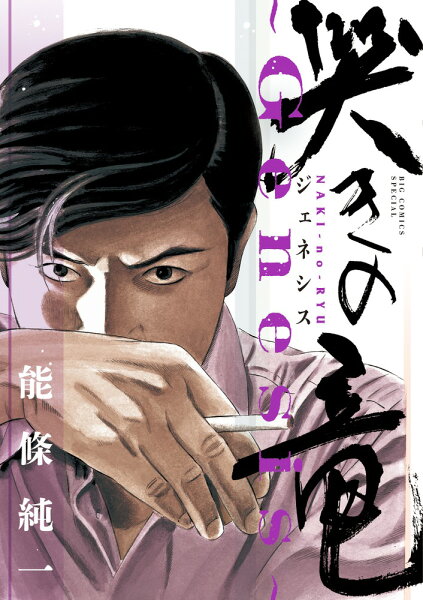
Naki no Ryu
Naki no Ryu follows Ryu, a mahjong master called by underworld figures to play games with consequences far beyond money — a yakuza-mahjong manga that turned the table into a stage where lives, allegiances, and futures were decided.
Action / Drama
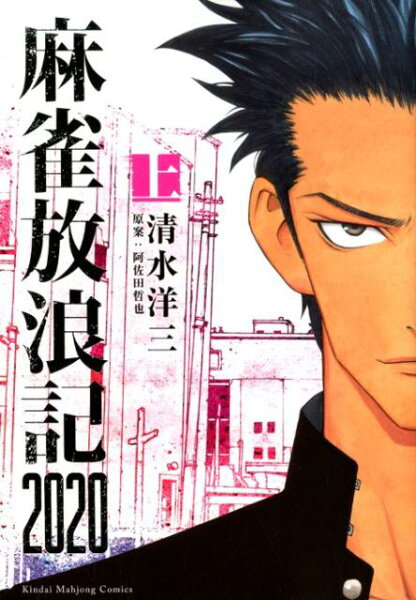
Mahjong Hourouki
Mahjong Hourouki is Tatsuhiko Kuroki's manga adaptation of Tetsuya Asada's classic postwar mahjong-hustler novel — Bouya, a young drifter in the chaos of immediately-postwar Tokyo, who learns mahjong as the only way to survive the era's rubble economy.
Action / Comedy
Uchihime Obakamiko
Uchihime Obakamiko is Nobuyuki Fukumoto's lighter mahjong manga — Mieko, an enthusiastic but technically poor player whose mentor Toshio reluctantly trains her, with the comedic premise that even Fukumoto can write characters who are not psychological warlords.
Action / Drama
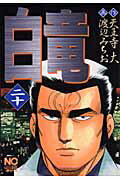
Hakuryuu
Hakuryuu follows Hakuryu, a yakuza whose intelligence and ambition take him through the Japanese underworld with the procedural precision of business fiction — Manga Goraku's 25-volume yakuza epic that treated the criminal world as a working economy.
Action / Comedy
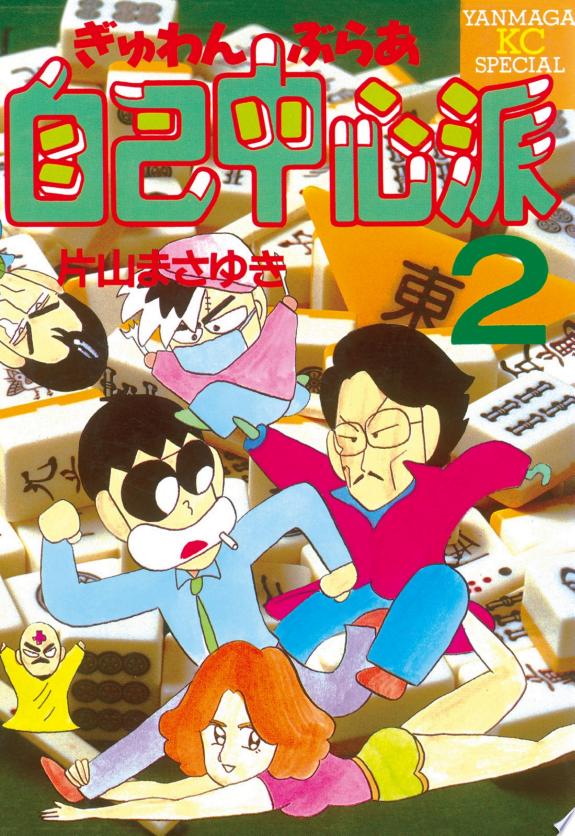
Gambler Jiko Chuushinha
Gambler Jiko Chuushinha is Masayuki Katayama's mahjong comedy from Weekly Young Magazine — a 17-volume tribute to mahjong's social culture, where the comedy comes from the players' bizarre personalities while the mahjong remains genuinely played.
Action
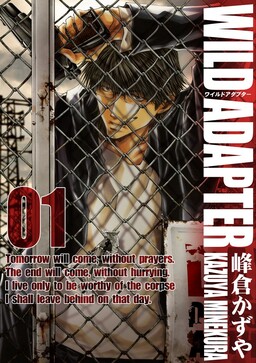
Wild Adapter
Yu's review of Wild Adapter — Makoto Kubota is a Yakuza boy genius who gets drawn into investigating Wild Adapter, a drug that turns users into monsters; he finds Tokito, a boy with no memory and a monster's hand, and takes him home; Kazuya Minekura's crime manga about an unlikely pair and the mystery of a transforming drug.
Written by
Yu
Manga Enthusiast from Japan
I grew up in Japan and manga literally saved me during a tough time in elementary school. My English isn't perfect, but my love for manga is real — and I want to share it with you.