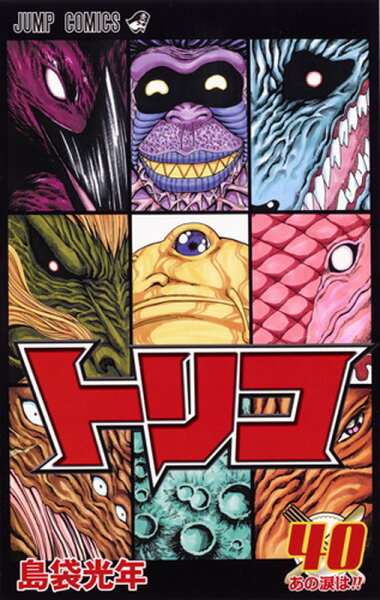
Toriko Review: A Gourmet Hunter Searches for the World's Greatest Ingredients
by Mitsutoshi Shimabukuro
Read the first volume. If it doesn't hook you, put it down. It'll hook you.
Buy Toriko on Amazon →*Affiliate link — I earn a small commission at no extra cost to you.
Quick Take
- In a world where food is the highest value, a Gourmet Hunter with superhuman strength battles fantastic creatures to capture rare ingredients and build his perfect full-course meal
- Food + action shonen with tremendous creative energy and one of the most inventive fictional ecologies in the genre
- 43 volumes, complete
Who Is This Manga For?
- Readers who want action shonen with a genuinely original premise
- Food enthusiasts who want a manga where cuisine is treated as epic quest material
- Fans of large-scale shonen action with creative power systems
- Readers who want a complete long-form series from the 2010s Jump era
Content Warnings & Age Rating
Age Rating: T (Teen) Content Warnings: Fantasy violence, hunting and consumption of fictional creatures, large-scale battles
Accessible. The violence is in service of cooking rather than destruction.
Yu's Rating
| Category | Score |
|---|---|
| Story Depth | ★★★☆☆ |
| Art Style | ★★★★★ |
| Character Development | ★★★★☆ |
| Accessibility for Non-Japanese Readers | ★★★★★ |
| Reread Value | ★★★☆☆ |
Story Overview
In a world where the human civilization is organized around the pursuit of rare and powerful ingredients, Gourmet Hunters are the elite — people with superhuman physical capabilities who hunt the fantastic creatures that provide the world's most prized food.
Toriko is the most famous Gourmet Hunter, a massive man with four "Demons" inside him and an appetite to match. He is assembling his ideal full-course meal — one item for each course, each more elusive than the last. His companion is Komatsu, a skilled chef who can prepare whatever Toriko captures.
The manga follows their expeditions to increasingly extreme environments to capture increasingly dangerous ingredients, with the escalating reveals of what provides food to the world's most powerful entities.
Characters
Toriko — Enormous, cheerful, with a combat power that escalates to absurd scale. His friendship with Komatsu — the strongest and the most skilled, together invincible — is the manga's emotional core.
Komatsu — The chef; no combat ability, genuine cooking genius. His role is to be the reason the captured ingredients matter — without his preparation, Toriko's hunting would have no meaning.
The Four Heavenly Kings — The four greatest Gourmet Hunters; each is a specific physical and conceptual complement to the others.
Art Style
Shimabukuro's art is spectacular — the creature designs are among the most creative in shonen manga, the ingredient concepts are visually inventive, and the battle sequences scale appropriately to the manga's escalating power levels. The food illustrations are genuinely appealing.
Cultural Context
Toriko reflects Japan's specific reverence for food culture — the idea that great ingredients deserve the greatest effort to obtain is Japanese culinary philosophy translated into action manga. The fictional ecology (entire food chains built around impossible ingredients) is a creative extension of this premise.
What I Love About It
The ingredient concepts. Shimabukuro's food imagination is extraordinary — each new hunt introduces an ingredient that is both scientifically impossible and completely appetizing in concept. A fish that spawns in a volcano because its meat requires mineral content from magma. A fruit that only ripens in zero gravity. A broth that requires a creature whose existence spans thousands of years. The creativity never stops.
Komatsu's role is also specifically appealing. He is not the hero, but the manga takes his contribution — transforming what Toriko catches into something worth eating — with complete seriousness. The combat and the cooking are equally important.
What English-Speaking Fans Say
Toriko has a Western following from the anime adaptation. Western readers appreciate the creative premise and the creature design. The later escalation of power levels (standard for long-form Jump manga) is the primary criticism. The food concepts are consistently praised as imaginative.
Memorable Scene ⚠️ Spoiler Warning
Toriko's first use of his full power against a high-tier threat — the moment the manga reveals what he is actually capable of, as opposed to what it has been showing — is the scale reveal that the early volumes are building toward.
Similar Manga
- One Piece — Similar adventure scale, similar crew dynamic
- Dragon Ball — Similar power escalation, similar cheerful protagonist
- Assassination Classroom — Same Jump era, similar creative premise
- Food Wars! — Food as competition, more focused on cooking
Reading Order / Where to Start
Volume 1. The premise is established immediately.
Official English Translation Status
VIZ Media published the complete 43-volume series. All volumes available.
Pros & Cons
Pros
- One of manga's most creative fictional ecologies
- 43 volumes, complete
- The Toriko/Komatsu partnership is one of shonen manga's best
- Art that is spectacular throughout
Cons
- Story depth is lower than the best shonen
- The power escalation in later volumes follows familiar Jump patterns
- 43 volumes is a significant commitment
Format Comparison
| Format | Notes |
|---|---|
| Individual Volumes | Standard VIZ release |
| Digital | Recommended for this length |
| Physical | Fine |
Where to Buy
Read the first volume. If it doesn't hook you, put it down. It'll hook you.
This post contains affiliate links. If you purchase through these links, I may earn a small commission at no extra cost to you. As an Amazon Associate, I earn from qualifying purchases.
*Affiliate link — I earn a small commission at no extra cost to you.
More Manga You Might Like
Action / Adventure
Zatch Bell!
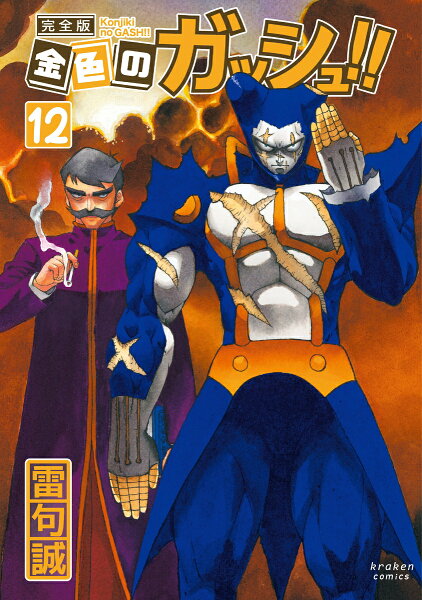
A review of Zatch Bell! — 33 volumes in Weekly Shonen Sunday. Genius middle schooler Kiyo Takamine partners with demon child Zatch Bell in a battle royale of 100 demon/human pairs competing to become King of the Mamodo World; Zatch wants to be a kind king. The manga that made an entire generation cry about a book burning. VIZ Media's English edition is complete.
Action / Adventure
Dragon Ball
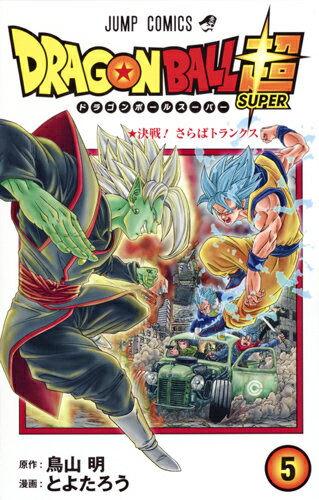
A review of Dragon Ball — 42 volumes in Weekly Shonen Jump. Son Goku's journey from a boy in the wilderness to the strongest being in the universe — the manga that defined what shonen action could be and that every battle manga since has owed something to. VIZ Media's English edition is complete.
Action / Adventure
Tegami Bachi: Letter Bee
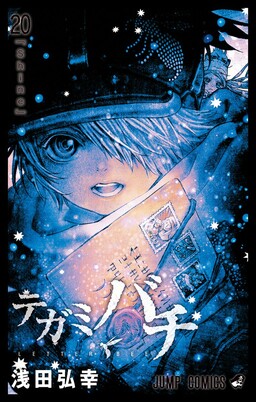
Yu's review of Tegami Bachi — in a land of perpetual night called AmberGround, Letter Bees risk their lives to deliver correspondence across insect-haunted wastelands; Lag Seeing, the child who was once delivered as a letter, grows up to become a Letter Bee and searches for the mentor who first carried him.
Action / Adventure
Sand Land
Yu's review of Sand Land — Beelzebub is the son of the Demon King; he teams up with an old sheriff named Rao to cross a desert and find a legendary lake, because the Demon Realm needs water and the king is hoarding what exists; Akira Toriyama's standalone adventure.
Action / Adventure
Rave Master (Groove Adventure Rave)
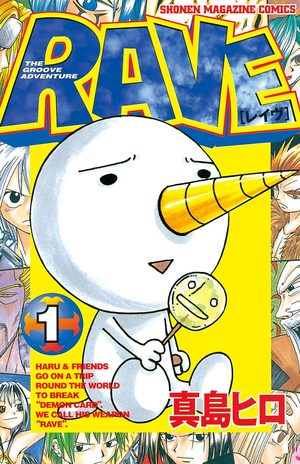
Yu's review of Rave Master — Haru Glory discovers he is the second Rave Master, holder of the legendary Holy Bring sword; with his companions, he travels the world collecting the five Rave stones and destroying the Dark Bring before they can be used to end the world.
Action / Dark Fantasy
Karakuri Circus
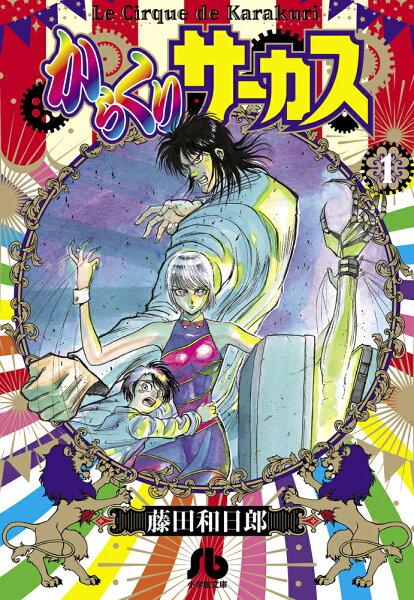
A young boy chased by assassins. A young woman who fights with a marionette. An ancient secret about puppets that hunt humans. Karakuri Circus is Kazuhiro Fujita's masterpiece — relentless, emotional, and unlike anything else.
Written by
Yu
Manga Enthusiast from Japan
I grew up in Japan and manga literally saved me during a tough time in elementary school. My English isn't perfect, but my love for manga is real — and I want to share it with you.
Disclosure: This post contains affiliate links. As an Amazon Associate, I earn from qualifying purchases at no extra cost to you.