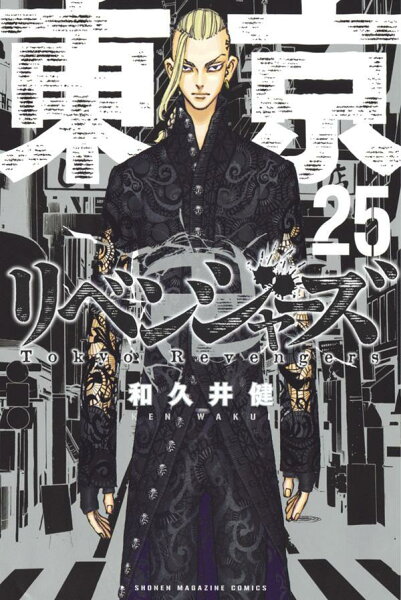
Tokyo Revengers Review: Time Travel, Gangs, and One Boy's Impossible Promise
by Ken Wakui
Read the first volume. If it doesn't hook you, put it down. It'll hook you.
Buy Tokyo Revengers on Amazon →*Affiliate link — I earn a small commission at no extra cost to you.
Quick Take
- A time travel story set in Tokyo's delinquent gang world — and it works better than it should
- The emotional core — a powerless person trying desperately to save someone they failed — is genuinely affecting
- 31 volumes, complete, with an ending that satisfies most of what it promises
Who Is This Manga For?
Tokyo Revengers is for you if:
- You like time travel stories that use the mechanics for emotional effect rather than puzzle-solving
- You want a gang/delinquent manga with real character stakes
- You're looking for a complete series with forward momentum
- You want something that blends action, tragedy, and hope in roughly equal measure
Content Warnings & Age Rating
Age Rating: T (Teen) Content Warnings: Gang violence throughout; character death (including significant characters); themes of powerlessness, bullying, and the cost of loyalty; time travel creates some distressing scenarios around altered timelines
The violence is significant but not graphic in the way of mature-rated manga. The emotional content can be more affecting than the physical.
Yu's Rating
| Category | Score |
|---|---|
| Story Depth | ★★★★☆ |
| Art Style | ★★★★☆ |
| Character Development | ★★★★☆ |
| Accessibility for Non-Japanese Readers | ★★★★☆ |
| Reread Value | ★★★☆☆ |
Story Overview
Takemichi Hanagaki is 26 years old and has nothing. No career, no relationships, no direction — just the knowledge that the girl he dated briefly in middle school, Hinata Tachibana, has been killed by the Tokyo Manji Gang.
Then he is pushed onto train tracks. He closes his eyes.
He wakes up in middle school.
Twelve years in the past. Two days before the incident that sets in motion everything that will eventually lead to Hinata's death. Takemichi has no idea why this is happening or how long it will last — but he knows that if he can change something here, maybe the future changes too.
The problem: Takemichi is not strong. He is not clever. He is not a natural leader or a fighter or a strategist. He has one thing: the willingness to take hits for other people and keep getting up.
Tokyo Revengers is the story of how that is sometimes enough.
Characters
Takemichi Hanagaki — One of shounen manga's most unusual protagonists: a genuine coward who knows he is a coward and keeps acting despite it. His courage is not natural — it is chosen, repeatedly, at great cost. This makes him more interesting than a character who is simply brave.
Manjiro "Mikey" Sano — The charismatic, terrifyingly capable leader of the Tokyo Manji Gang. His relationship with Takemichi is the series' central mystery — why does this person, who could have anyone as a friend, choose the most ordinary person in the room? The answer, when it arrives, is the best thing in the series.
Ken "Draken" Ryuguji — Mikey's second-in-command and the moral anchor of the gang. His death (and the missions to prevent it) drives much of the early series' tension.
Hinata Tachibana — The person Takemichi is trying to save. She is more than just a motivation — her warmth and belief in Takemichi is what makes him worth saving in the first place.
Art Style
Wakui's art is clean and dynamic with a strong sense of kinetic energy in fight sequences. His character designs for the various gang members are distinctive — in a series with a large cast of delinquents who all wear similar outfits, keeping them visually distinguishable is an accomplishment.
The art improves noticeably across the series. The later volumes have a polish and confidence the early chapters lack. The character expressions during the series' emotional peaks are particularly well-drawn.
Cultural Context
Bosozoku and Yankee culture — Tokyo Revengers draws on the real subcultures of bosozoku (biker gangs) and yankii (delinquent subculture) that were prominent in Japan from the 1970s through the 1990s. The aesthetic — the pompadours, the modified uniforms, the specific gang hierarchy — is drawn from real cultural memory. Japanese readers experience Tokyo Revengers as a period piece as much as a fantasy.
The 2000s nostalgia — The series is set partly in 2005–2006, a period that has specific nostalgic resonance for Japanese readers who were young at the time. Feature phones, specific fashion, a particular social atmosphere — these details anchor the time-travel emotionally.
The value of loyalty — The gang world of Tokyo Revengers operates on loyalty as its primary currency. Betrayal is the worst thing a person can do; standing by your people, regardless of cost, is the highest value. This reflects real values in delinquent subculture and resonates with broader Japanese cultural emphasis on group loyalty.
What I Love About It
There is a moment where Takemichi, after yet another timeline adjustment that didn't work quite right, stands in front of someone who is about to hurt him and simply refuses to move.
He is shaking. He is going to lose. He knows this.
He doesn't move anyway.
I have read a lot of stories about brave characters. Tokyo Revengers is one of the few where the bravery looks exactly like what bravery looks like in real life: doing the thing while terrified, not because you believe it will work, but because you cannot be the person who didn't try.
What English-Speaking Fans Say
Tokyo Revengers gained enormous Western readership through the anime adaptation, which covered the first major arc. The manga's reception is mostly positive, with the emotional core — Takemichi's determination, Mikey's complexity — praised universally.
Common praise: The time travel mechanics are used for emotional effect rather than cleverness, which most readers find refreshing. The gang dynamics are compelling. Mikey is one of the most discussed characters in recent manga.
Common criticism: The series' multiple time leaps can feel repetitive, and some readers found the later arcs less focused than the early ones. The ending is divisive — some readers found it earned, others felt it resolved too quickly.
Memorable Scene ⚠️ Spoiler Warning
Draken's first near-death.
In one timeline, Takemichi watches Draken die. In another timeline — the one he's fighting to create — he has to prevent it. The sequence where Takemichi, having no real ability to fight, throws himself between Draken and the knife is the moment the series establishes exactly what kind of story it is.
The person who saves the day is not the person you expected. The most ordinary person in the room is the one who decides it matters enough to try.
Similar Manga
If you liked Tokyo Revengers, try:
- Assassination Classroom — Different genre, same theme of ordinary people rising to extraordinary challenges
- Re:Zero — Time loop mechanics used for emotional effect (manga adaptation available)
- Attack on Titan — Different tone, similar stakes around preventing specific catastrophic deaths
- Blue Lock — Gang-adjacent intensity, similar obsessive focus on becoming the best
Reading Order / Where to Start
Start from Volume 1. The time travel mechanics are established immediately and the series runs continuous.
Official English Translation Status
Status: Complete English Volumes: 31 (all volumes available) Translator: Kodansha Comics Translation Quality: Good throughout
Pros & Cons
Pros
- Takemichi is one of the most interesting protagonists in recent shounen
- Mikey is one of the most compelling characters in current manga
- The emotional stakes are genuinely high and consistently maintained
- Complete, 31 volumes, with a satisfying ending
Cons
- The time loop structure can feel repetitive across 31 volumes
- Some later arcs are less focused than the early material
- The ending divides readers
Format Comparison
| Format | Volumes | Price per vol. (approx.) | Best for |
|---|---|---|---|
| Paperback (individual) | 31 vols | ~$10–12 | Collecting |
| Kindle | 31 vols | ~$7–9 | Quick read |
Where to Buy
Read the first volume. If it doesn't hook you, put it down. It'll hook you.
This post contains affiliate links. If you purchase through these links, I may earn a small commission at no extra cost to you. As an Amazon Associate, I earn from qualifying purchases.
*Affiliate link — I earn a small commission at no extra cost to you.
More Manga You Might Like
Action
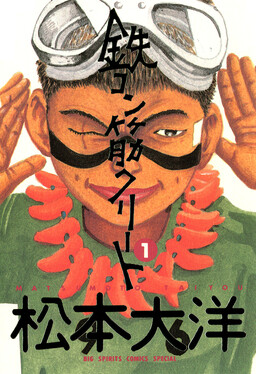
Tekkon Kinkreet
Yu's review of Tekkon Kinkreet — Black and White are two orphaned street kids who rule Treasure Town from the rooftops; when organized crime moves in to develop the city, Black and White must fight to keep what they consider theirs; a visually revolutionary manga about the psychic cost of violence and the specific love between two people who only have each other.
Action / Drama
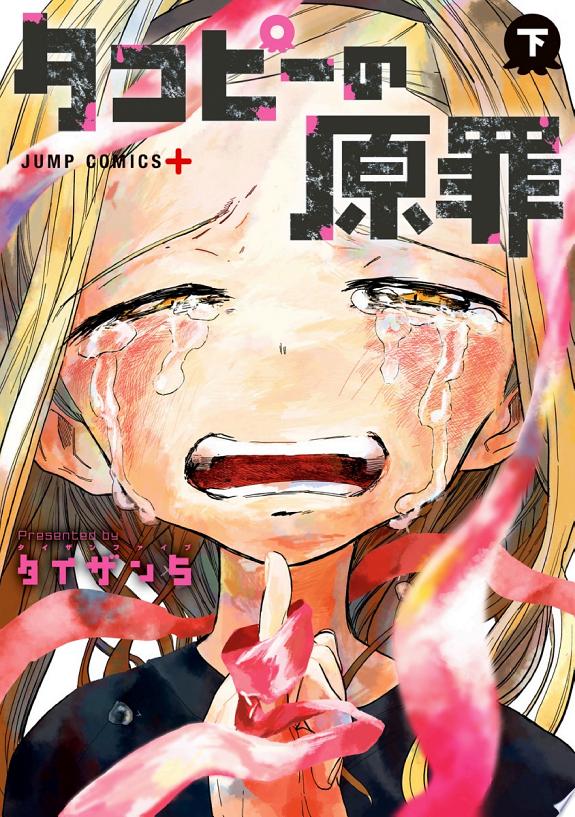
Takopi's Original Sin
Yu's review of Takopi's Original Sin — Takopi is an alien from Happy Planet sent to spread happiness on Earth; he meets Shizuka, a girl who is being bullied and whose home life is deeply troubled; the series uses Takopi's happiness abilities to examine what happiness means when suffering is real.
Action / Drama
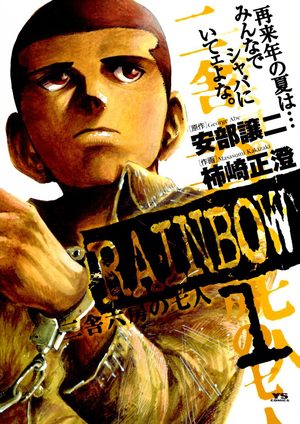
Rainbow: Nisha Rokubō no Shichinin
Yu's review of Rainbow — six juvenile delinquents are sent to a brutal reformatory in 1955 Japan and placed in Cell 6, where they bond with their cellmate Rokurouta Sakuragi, a former boxer who teaches them what it means to survive with dignity.
Action / Drama
Beastars
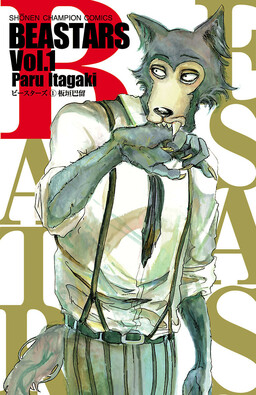
Yu's review of Beastars — In a society of anthropomorphic animals where carnivores and herbivores live side by side, Legoshi is a gray wolf who is afraid of what he is. After a classmate is killed and eaten, he is pulled toward Haru, a tiny dwarf rabbit, and has to decide what kind of animal he wants to become.
Action
Banana Fish
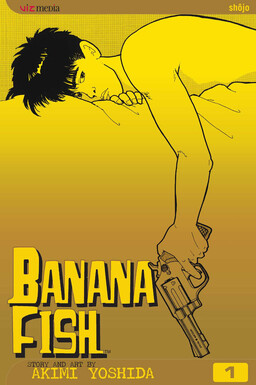
Yu's review of Banana Fish — Ash Lynx is a seventeen-year-old gang boss in 1980s New York whose life collides with Eiji Okumura, a gentle Japanese photographer's assistant, when a dying man whispers the words 'Banana Fish.' Akimi Yoshida's 19-volume crime epic about a mind-control drug, the men who own the streets, and the one connection that almost saved a boy built only to kill.

Action / Drama
Otoko Ippiki Gaki Daisho
Otoko Ippiki Gaki Daisho follows Tora Otori, a young delinquent whose goal is not just to be the toughest kid in his school but to become the undisputed boss of the entire country — and who pursues this goal with a force of personality that makes followers out of former enemies.
Written by
Yu
Manga Enthusiast from Japan
I grew up in Japan and manga literally saved me during a tough time in elementary school. My English isn't perfect, but my love for manga is real — and I want to share it with you.
Disclosure: This post contains affiliate links. As an Amazon Associate, I earn from qualifying purchases at no extra cost to you.