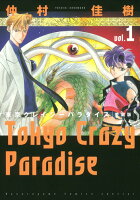
Tokyo Crazy Paradise Review: A Girl Raised as a Boy Who Became a Yakuza Boss's Bodyguard in 2020 Tokyo
by Yoshiki Nakamura
Read the first volume. If it doesn't hook you, put it down. It'll hook you.
Buy Tokyo Crazy Paradise on Amazon →*Affiliate link — I earn a small commission at no extra cost to you.
She was raised as a boy to survive. He runs the most powerful yakuza family in a future Tokyo. The logic that put them together is completely insane and completely convincing.
Quick Take
- Yoshiki Nakamura's (Skip Beat) pre-debut shojo epic: nineteen volumes of action-romance set in a crime-saturated futuristic Tokyo
- The female lead is one of shojo's most physically capable protagonists — raised as a boy by police parents, fighting is her first language
- Not officially in English, but important context for understanding Nakamura's later work and a significant piece of shojo action history
Who Is This Manga For?
- Fans of Yoshiki Nakamura (Skip Beat) who want her earlier work
- Shojo readers who want action alongside their romance
- People interested in futuristic yakuza settings in manga
- Readers comfortable with Japanese-language material or fan translations
Content Warnings & Age Rating
Age Rating: T (Teen) Content Warnings: Yakuza violence and crime themes, action sequences, cross-dressing premise
Standard shojo action content. The yakuza world is depicted with genre convention rather than graphic realism.
Yu's Rating
| Category | Score |
|---|---|
| Story Depth | ★★★★☆ |
| Art Style | ★★★★☆ |
| Character Development | ★★★★★ |
| Accessibility for Non-Japanese Readers | ★★☆☆☆ |
| Reread Value | ★★★★☆ |
Story Overview
Set in a futuristic 2020 Tokyo (written in the 1990s, so the "future" is stylized rather than predictive) where crime has taken over much of public life, Tsukasa Kozuki grew up as the child of two police officers who raised her as a boy for her own safety in a world where women were considered targets.
When her parents are killed, Tsukasa is thrown into the orbit of Ryuji Shirogami — the young head of one of Tokyo's most powerful yakuza organizations. Through circumstances that are both absurd and internally logical, Tsukasa ends up as his bodyguard. She is completely capable of doing the job. The fact that she is a girl raised as a boy, protecting a yakuza boss she shouldn't have any reason to care about, is the premise Nakamura develops across nineteen volumes.
The action sequences are genuinely engaging — Tsukasa fights with tactical competence rather than magical girl power — and the romance develops slowly enough to feel earned. Nakamura's craft in building character dynamics across a long series, which would reach its fullest expression in Skip Beat, is visible in prototype here.
Characters
Tsukasa Kozuki — A physically capable female protagonist whose competence is never incidental — it's the foundation of who she is and how the story treats her. Her emotional development from someone who doesn't know how to process feelings to someone who chooses them is the series' central arc.
Ryuji Shirogami — The yakuza boss whose initial use of Tsukasa develops into something more complex. Nakamura gives him enough internal life that his eventual feelings have weight.
Art Style
Early Nakamura — you can see Skip Beat in development. The art is shojo with strong action composition; fights are drawn with the clarity that the physical premise requires. Character design is expressive and appealing. The futuristic setting is sketched with sufficient detail to feel consistent rather than generic.
Cultural Context
Tokyo Crazy Paradise was serialized in Sho-Comi in the 1990s, during a period when shojo action manga was a significant genre. The yakuza setting, treated from a shojo perspective, gives the action a different emotional register than shonen crime manga — the relationships and their consequences are always the central concern.
Nakamura's development here toward the character-driven work of Skip Beat is visible and interesting for anyone who reads both.
What I Love About It
Tsukasa's combat sequences — specifically the way she uses her police-family training rather than any supernatural ability. She fights like someone who was taught by people who fight for real. That specificity is rare in shojo action and gives the series a different texture.
What English-Speaking Fans Say
A cult series among Nakamura fans and shojo action readers — widely discussed despite the lack of official English translation. Consistently cited as essential context for understanding Skip Beat. The Tsukasa-Ryuji dynamic is considered among the better slow-burn shojo romances of the era. Readers access it through fan translations.
Memorable Scene ⚠️ Spoiler Warning
The chapter where Ryuji learns the truth about Tsukasa's gender — not as a shock comedy moment, but as a realization that reframes everything he's been feeling — and his response to that realization, is the pivot point that the series was building toward from the beginning.
Similar Manga
| Title | Its Approach | How Tokyo Crazy Paradise Differs |
|---|---|---|
| Skip Beat | Same artist; female protagonist with fierce determination | Skip Beat is entertainment-industry focused; TCP is action/yakuza |
| Ouran High School Host Club | Comedy with gender-coded premise | Ouran is lighter and more comedic; TCP has genuine action plot |
| Black Bird | Shojo romance with dangerous supernatural male | Black Bird is more romance-dominated; TCP is more action-balanced |
Reading Order / Where to Start
Volume 1, straight through. The premise establishes immediately.
Official English Translation Status
No official English release. Fan translations exist. An official release has not been announced.
Pros & Cons
Pros
- Tsukasa is one of shojo's most compelling action protagonists
- The romance develops slowly and is earned
- Essential context for Nakamura's later acclaimed work
- The futuristic setting is used with consistency
Cons
- No official English translation
- Nineteen volumes is a significant commitment
- Some story arcs are stronger than others
- The futuristic setting dates it in some ways
Is Tokyo Crazy Paradise Worth Reading?
For Yoshiki Nakamura fans and shojo action readers — yes. Tsukasa is a protagonist worth nineteen volumes, and the slow-burn with Ryuji earns its development.
Format Comparison
| Format | Pros | Cons |
|---|---|---|
| Physical (JP) | Original Japanese volumes | Japanese-language only |
| Fan Translation | Most accessible for English readers | Unofficial; quality varies |
| Official English | — | Does not exist |
Where to Buy
No English release yet. That just means you find it before everyone else does.
*Affiliate link — I earn a small commission at no extra cost to you.
More Manga You Might Like

Action / Comedy
City Hunter
A sweeper for hire in Shinjuku cleans up the city's worst criminals while hiding a heart softer than anyone suspects — City Hunter is the definitive action-romance manga.
Action / Romance
Sailor Moon
Yu's review of Sailor Moon — a clumsy, crybaby middle schooler is revealed to be the legendary Sailor Moon, guardian warrior of love and justice, and eventually the reincarnated princess of the Moon Kingdom.
Comedy / Action
Patalliro!
A child king runs a tiny country with the help of MI6 assassins, BL romance subplots, and absolute chaos.
Comedy / Action
From Eroica with Love
A flamboyant art thief and a stoic NATO spy chase each other across Cold War Europe in one of shojo's longest-running adventures.
Action / Supernatural
Dandadan
Yu's review of Dandadan — Momo believes in ghosts, Ken believes in aliens, and they make a deal to test each other's beliefs; both get immediately proven wrong and right simultaneously, and a bizarre supernatural romance begins.
Action / Romance
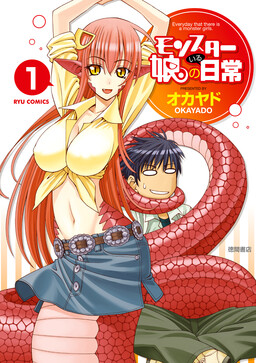
Monster Musume: Everyday Life with Monster Girls
Yu's review of Monster Musume — in a Japan where monsters have been revealed to exist and a cultural exchange program places them with human host families, Kimihito Kurusu ends up hosting a lamia, a harpy, a centaur, and more, while navigating the law that forbids human-monster relationships.
Written by
Yu
Manga Enthusiast from Japan
I grew up in Japan and manga literally saved me during a tough time in elementary school. My English isn't perfect, but my love for manga is real — and I want to share it with you.