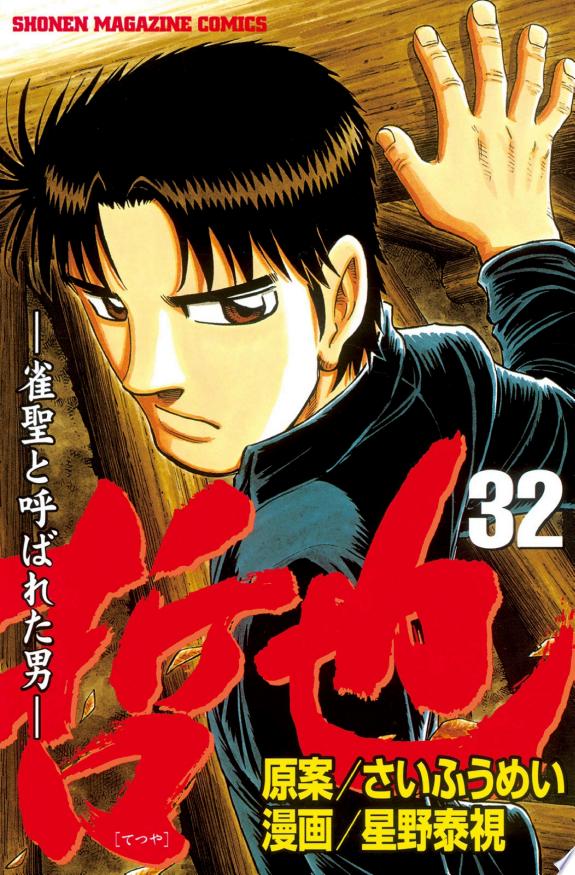
Tetsuya Review: The Mahjong Manga That Made a Gambler Into a Legend
by Fumei Sai (story) / Yasushi Kanami (art)
Read the first volume. If it doesn't hook you, put it down. It'll hook you.
Buy Tetsuya on Amazon →*Affiliate link — I earn a small commission at no extra cost to you.
Quick Take
- The definitive mahjong manga — postwar Tokyo as the backdrop, psychological warfare as the method
- Based loosely on real mahjong legend Koudo Takei, giving the story documentary weight
- 41 volumes of escalating stakes where mahjong is a survival skill, not a game
Who Is This Manga For?
- Mahjong players who want the game depicted with genuine strategic depth
- Readers interested in postwar Japan — the setting is as much about historical atmosphere as gambling
- Fans of Kaiji or Akagi who want the gambling manga genre's roots
- Anyone interested in how underground economies work in devastated societies
Content Warnings & Age Rating
Age Rating: M (Mature) Content Warnings: Gambling throughout; postwar poverty and desperation; adult underground gambling culture; occasional cheating techniques depicted
Mature content throughout.
Yu's Rating
| Category | Score |
|---|---|
| Story Depth | ★★★★☆ |
| Art Style | ★★★★☆ |
| Character Development | ★★★★☆ |
| Accessibility for Non-Japanese Readers | ★★★☆☆ |
| Reread Value | ★★★★☆ |
Story Overview
The setting is Tokyo immediately after World War II — the city in rubble, the economy destroyed, ordinary life collapsed. In this environment, underground mahjong has become a survival economy: men playing for money that determines whether they eat.
Tetsuya enters this world as a young man with extraordinary mahjong instincts. The series follows his development into a player of legendary skill — someone who can read opponents, manipulate the psychological atmosphere of a game, and when necessary, cheat with a sophistication that amounts to its own artistry.
The series is structured around a series of opponents — each bringing a different style, a different philosophy, a different kind of dangerous — with the ongoing tension of a world where losing means losing everything.
Characters
Tetsuya: A protagonist whose genius is matched by his pragmatism. He understands that mahjong in this context is not a game — it's a livelihood — and plays accordingly. His relationship to cheating is practical rather than moral: he does what the situation requires.
Boushu-san: Tetsuya's mentor, a veteran player who teaches him the deeper aspects of mahjong psychology. Their relationship is one of the series' emotional cores — the passing of knowledge in a world that has lost most other forms of transmission.
The opponents: A gallery of memorable adversaries, each with a distinctive style and backstory. The best of them are worthy opponents — not villains but men who have found their own way to survive in postwar chaos.
Art Style
Kanami's art communicates the postwar setting with consistent atmospheric depth — the specific visual quality of ruined Tokyo, the underground clubs, the particular humanity of men playing mahjong in desperate circumstances. The game sequences are drawn with enough clarity that mahjong players can follow the logic, while maintaining tension even for readers who don't know the game.
Cultural Context
Mahjong has a specific place in postwar Japanese culture — it was widely played in underground and semi-legal establishments, it was associated with yakuza and hustler culture, and it was one of the few available forms of social and economic activity in the immediate postwar years.
The real figure behind Tetsuya — Koudo Takei, a legendary mahjong player of the era — gives the series a documentary quality. The underground mahjong world depicted is not fiction dressed as history but history drawn as drama.
What I Love About It
I love how the series treats survival as its subject.
Tetsuya is nominally a mahjong manga, but what it's actually about is how people find ways to live when ordinary life has collapsed. The men in these underground clubs are not playing for entertainment. They're playing because this is what they have — their skill, their nerve, the specific knowledge of how mahjong works.
The series takes this seriously. It doesn't romanticize the gambling or the desperation. It simply shows people doing what they can with what they have, and it finds genuine dignity in that.
What English-Speaking Fans Say
Not known in English-speaking markets. Among gambling manga enthusiasts who read in Japanese, it is cited as one of the foundational works of the genre — the series that established the psychological depth and historical grounding that later works like Kaiji and Akagi developed in different directions.
Memorable Scene
A late-series match where Tetsuya faces an opponent who cheats with more sophistication than he does — and is forced to win not by out-cheating him but by out-playing him honestly. The scene is about the limits of technique and the irreducible importance of actual skill.
Similar Manga
- Akagi: Mahjong gambling, later era, more supernatural approach to the same psychological territory
- Kaiji: Different gambling games, same postwar-inflected desperation and psychological depth
- Gambling Apocalypse Kaiji: Same author as Akagi (Nobuyuki Fukumoto), essential for fans of the genre
Reading Order / Where to Start
Volume 1. The postwar setting is established from the beginning and the series builds chronologically.
Official English Translation Status
Tetsuya has no official English translation.
Pros & Cons
Pros
- Definitive mahjong manga with genuine historical grounding
- Psychological depth that makes even non-mahjong readers engaged
- Complete at 41 volumes
- Strong character development across antagonists
Cons
- No English translation
- Mahjong knowledge enhances the experience significantly
- 41 volumes is a major commitment
Format Comparison
| Format | Notes |
|---|---|
| Physical | Japanese editions available |
| Digital | Available in Japanese |
| Omnibus | Various compilation formats available |
Where to Buy
No English release yet. That just means you find it before everyone else does.
*Affiliate link — I earn a small commission at no extra cost to you.
More Manga You Might Like
Action / Drama
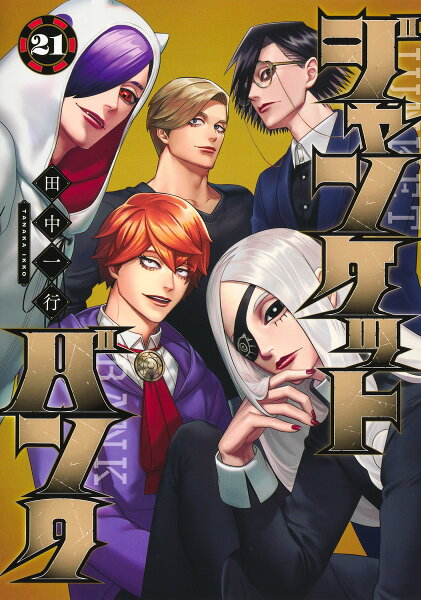
Juncket Bank
Juncket Bank follows Shinonome Ginji, a man who discovers he cannot lose at any game of chance — and a casino operator who wants to harness this ability for something far more dangerous than ordinary gambling.
Action / Drama
Pumpkin Scissors
Yu's review of Pumpkin Scissors — a ceasefire has ended the war between the Empire and the Republic, but the civilian population is suffering from poverty, bandit violence, and the breakdown of social infrastructure; the Imperial Army's Section III — Pumpkin Scissors — is supposed to handle war relief; Alice L. Malvin leads the section with the conviction that soldiers have an obligation to serve civilians; Randel Oland, a massive ex-soldier with a blue lantern and a traumatic past, joins.
Action / Drama
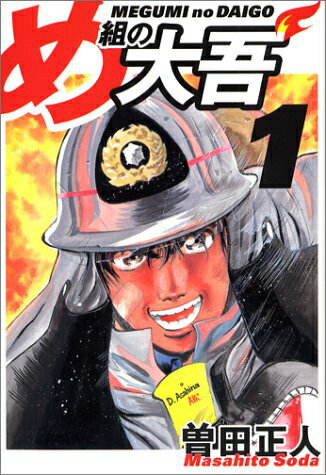
Daigo of Fire Company M
Daigo of Fire Company M follows Daigo Asahina, an extraordinary new firefighter who joins Company M — and the question of what drives a young man of exceptional ability to choose the most dangerous possible job.
Action / Drama
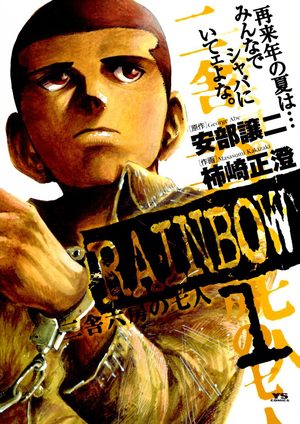
Rainbow: Nisha Rokubō no Shichinin
Yu's review of Rainbow — six juvenile delinquents are sent to a brutal reformatory in 1955 Japan and placed in Cell 6, where they bond with their cellmate Rokurouta Sakuragi, a former boxer who teaches them what it means to survive with dignity.

Action / Drama
Oshi no Ko
Yu's review of Oshi no Ko — a doctor reincarnates as the son of the idol he worshipped, retaining his adult memories; he enters the entertainment industry to find his mother's killer while his twin sister becomes an idol herself.

Action / Drama
Beastars
Yu's review of Beastars — In a society of anthropomorphic animals where carnivores and herbivores live side by side, Legoshi is a gray wolf who is afraid of what he is. After a classmate is killed and eaten, he is pulled toward Haru, a tiny dwarf rabbit, and has to decide what kind of animal he wants to become.
Written by
Yu
Manga Enthusiast from Japan
I grew up in Japan and manga literally saved me during a tough time in elementary school. My English isn't perfect, but my love for manga is real — and I want to share it with you.