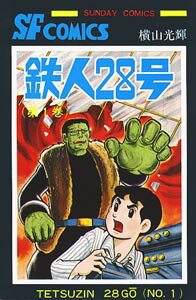
Tetsujin 28-go Review: The 1956 Manga That Invented the Giant Robot Genre — And Asked Whether the Robot Was the Hero
by Mitsuteru Yokoyama
Read the first volume. If it doesn't hook you, put it down. It'll hook you.
Buy Tetsujin 28-go on Amazon →*Affiliate link — I earn a small commission at no extra cost to you.
I read Tetsujin 28-go late, the way most people my age in Japan read it: through reprints, in the wake of the 2004 anime, and with a sense of obligation more than excitement. I was wrong to feel that way. By the time I finished the second volume of the bunkobon reissue, I'd stopped reading it as homework and started reading it as a man who'd had no idea his grandfather's manga could feel this strange.
I'm Yu, and I am here to tell you that the 1956 robot manga is weirder, more politically pointed, and more unsettling than its 1960s reputation lets on.
Quick Take
- Mitsuteru Yokoyama's Tetsujin 28-go ran in Kobunsha's Shōnen magazine from July 1956 to May 1966 — 97 chapters across 12 tankōbon volumes.
- The first major giant robot manga in Japan; directly named by Guillermo del Toro as the seed for Pacific Rim and by Katsuhiro Otomo as the source of character names in Akira.
- Rated All Ages in spirit — 1950s-style action violence, no explicit content, but a wartime undercurrent that is heavier than the cover art suggests.
Story Overview
In the closing days of the war, the Japanese military funded a secret weapons project: build a giant remote-controlled robot. After 27 failed prototypes, the 28th unit — Tetsujin — was completed, but the war ended before it could be deployed. Its creator, the scientist Dr. Kaneda, died. The robot sat dormant.
Years later, Dr. Kaneda's young son Shotaro Kaneda — a ten-year-old boy detective who works alongside Inspector Otsuka of the Tokyo police — finds himself in possession of the controller. Tetsujin obeys whoever holds the remote. In Shotaro's hands, the robot fights crime. In someone else's hands, it would be exactly what it was originally built to be.
The series unfolds as episodic detective-adventure cases, each turning on the same anxiety: the remote can be stolen, the robot can be rebuilt and repurposed, the most powerful machine in the world has no opinion about who is right. Professor Shikishima — Dr. Kaneda's old assistant and Shotaro's adult guardian — provides the technical anchor; Inspector Otsuka provides the institutional one.
The series concluded in 1966 after a decade of serialization. Yokoyama would revisit and reboot Tetsujin many times across his career, but the original 1956–1966 run is the version everything else builds on.
Characters
Shotaro Kaneda — Ten years old, perpetual short pants and a flat cap. The series doesn't lean on his trauma over his father's death; Shotaro is brisk, competent, and treated by the adult cast as an equal. His relationship to Tetsujin is responsibility, not friendship — the robot is not his pet, it's his inheritance, and the manga is unusually careful to distinguish those.
Inspector Otsuka — Chief of the Tokyo police, warm and slightly bumbling, the adult who treats Shotaro as a colleague. Yokoyama uses Otsuka to keep the series grounded in postwar Japanese civic life — the police procedural is half the show.
Professor Shikishima — Dr. Kaneda's former assistant, now Shotaro's de facto guardian and Tetsujin's caretaker engineer. The character who quietly carries the manga's strongest theme: this technology was built for war, and we are responsible for what we do with it now.
The recurring villains — A rotating cast of criminal scientists, foreign agents, and rival robots, the most famous of which is Black Ox, built by the reclusive Dr. Franken Shutain. The fights themselves are simple by modern standards; what matters is that almost every villain is, in some form, trying to take the controller.
What I Love About It
The thing that stayed with me about Tetsujin 28-go is how it refuses to flatter its own robot.
Almost every mecha manga that followed — Mazinger Z, Gundam, Eva — gave its giant robot at least some moral weight. The pilot is inside. The robot reflects the pilot. The fight is the soul of the pilot expressed in steel. Yokoyama's robot is none of that. Tetsujin is just a body. There's no cockpit. The boy holding the controller stands a hundred meters away. The robot doesn't know whose side it's on, because it doesn't have a side.
That choice is the whole politics of the series. Tetsujin 28-go was published eleven years after Hiroshima and Nagasaki by a Japanese cartoonist drawing a giant unmanned weapon that was originally built by the Japanese military. The fact that the weapon survives the war, ends up in a child's hands, and the question of "what is this for now" becomes the story — that's the part that doesn't read as innocent kids' adventure once you sit with it. It reads as Yokoyama working something out in front of his readers, one episode at a time.
What I love is that he doesn't moralize. He just keeps showing the controller changing hands. Over and over. The lesson is in the repetition.
Memorable Scene ⚠️ Spoiler Warning
The recurring image that haunts the series — and that I think about more than any single chapter — is the controller itself getting taken. A criminal corners Shotaro, hits him, or just talks fast, and the small box gets pried out of the boy's hands. Tetsujin, mid-air over Tokyo, doesn't stop fighting. It just changes what it's fighting for. Sometimes it turns on its own caretakers in the next panel.
Yokoyama draws these sequences with no dialogue from the robot. Tetsujin's face is the same in both panels — the boxy industrial mask Yokoyama designed in 1956, still the most iconic robot face in the medium. The horror is structural, not emotional. The robot doesn't betray Shotaro. The robot was never loyal in the first place.
I have read decades of mecha manga that came after this, and none of them have made a sequence about a button feel this dangerous.
Pros & Cons
Pros:
- A foundational text for the entire mecha genre — reading it is reading the gene line of Gundam, Eva, Pacific Rim.
- Yokoyama's 1950s art is plain in a way that looks weirdly modern now — pared down, confident, never showing off.
- The postwar political subtext is genuinely there, not retroactively projected.
Cons:
- Episodic structure with thin character interiority — modern readers used to long arcs may find the pacing flat.
- The English release situation is messy: licensed English print runs (e.g. ComicsOne's 2003-onward editions) are long out of print, and there is no currently in-print English edition of the original manga.
- The art will feel "old" before it feels "honest" — give it two volumes before you decide.
Is Tetsujin 28-go Worth Reading?
Yes, if you read manga at all seriously and want to see where the giant robot lineage actually starts. Skip it if you need modern pacing and continuous arcs; this is a 1950s episodic shōnen and it never pretends otherwise.
Who Is This Manga For?
- Mecha fans who want to find the source code for the genre.
- Readers interested in postwar Japanese pop culture and how it processed the war.
- Yokoyama completists working backward from Sangokushi or Babel II.
- Anyone curious how Akira got its character names.
Official English Translation Status
There is no currently in-print English edition of the original 1956–1966 Tetsujin 28-go manga. Earlier English editions (notably from ComicsOne and related imprints in the 2000s) covered some of the run but did not complete it, and those volumes are now out of print and only available through the secondary market. Used copies surface on Amazon and through specialty manga sellers; reading the full series in English currently requires patience and luck.
Where to Buy
Used copies of the out-of-print English editions are the practical entry point — secondary-market on Amazon, eBay, and used-manga specialists. If you read Japanese, the bunkobon and kanzenban reissues from Kobunsha are widely available.
Search used Tetsujin 28 manga on Amazon →
This post contains affiliate links. If you purchase through these links, I may earn a small commission at no extra cost to you. As an Amazon Associate, I earn from qualifying purchases.
*Affiliate link — I earn a small commission at no extra cost to you.
More Manga You Might Like
Action / Drama
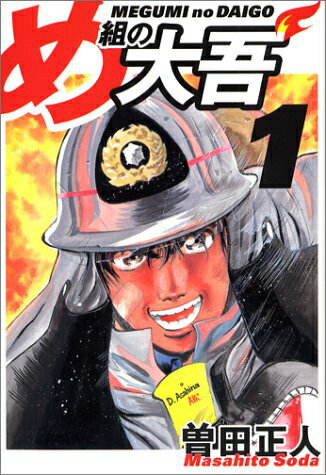
Daigo of Fire Company M
Daigo of Fire Company M follows Daigo Asahina, an extraordinary new firefighter who joins Company M — and the question of what drives a young man of exceptional ability to choose the most dangerous possible job.
Action / Comedy
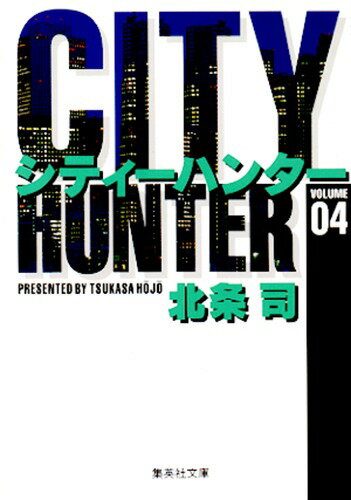
City Hunter
A sweeper for hire in Shinjuku cleans up the city's worst criminals while hiding a heart softer than anyone suspects — City Hunter is the definitive action-romance manga.
Action / Adventure
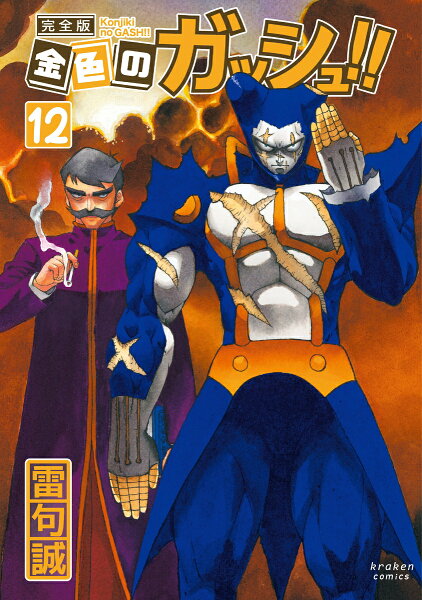
Zatch Bell!
A review of Zatch Bell! — 33 volumes in Weekly Shonen Sunday. Genius middle schooler Kiyo Takamine partners with demon child Zatch Bell in a battle royale of 100 demon/human pairs competing to become King of the Mamodo World; Zatch wants to be a kind king. The manga that made an entire generation cry about a book burning. VIZ Media's English edition is complete.
Action / Supernatural
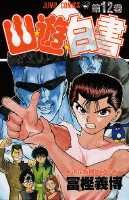
Yu Yu Hakusho
A review of Yu Yu Hakusho — 19 volumes in Weekly Shonen Jump. Yusuke Urameshi dies heroically saving a child, is recruited as a Spirit Detective to investigate supernatural cases, and grows from a delinquent who doesn't care about anything into someone with people worth protecting. The series Togashi made before Hunter x Hunter. VIZ Media's English edition is complete.
Action / Supernatural
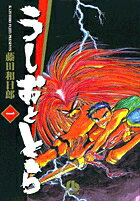
Ushio and Tora
Yu's review of Ushio and Tora — Ushio finds an ancient beast-spirit called Tora pinned under the temple floor; he releases Tora to fight other spirits threatening his town; Tora intends to eat Ushio eventually; they travel Japan fighting supernatural threats.
Action / Historical
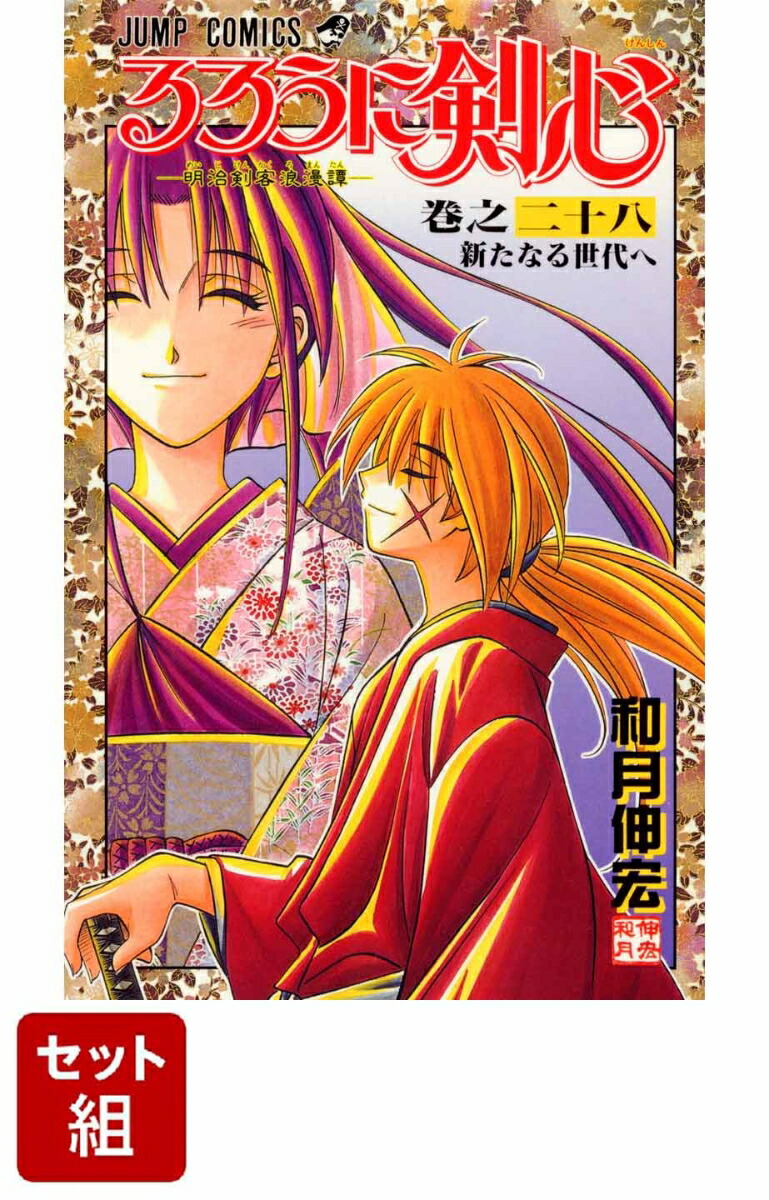
Rurouni Kenshin
A review of Rurouni Kenshin — 28 volumes in Weekly Shonen Jump. Himura Kenshin was Japan's most feared assassin of the Bakumatsu; he now wanders with a reverse-blade sword, trying to protect without killing. The Kyoto Arc is one of the greatest extended arcs in manga, and Shishio is the genre's finest villain. VIZ Media's English edition is complete.
Written by
Yu
Manga Enthusiast from Japan
I grew up in Japan and manga literally saved me during a tough time in elementary school. My English isn't perfect, but my love for manga is real — and I want to share it with you.
Disclosure: This post contains affiliate links. As an Amazon Associate, I earn from qualifying purchases at no extra cost to you.