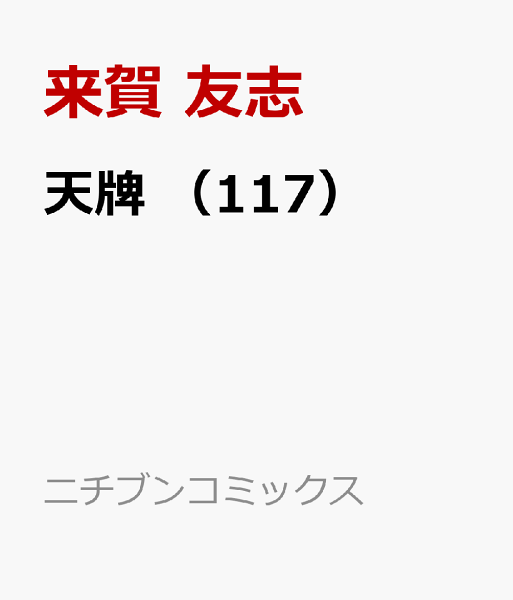
Tenpai Review: The Mahjong Manga That Treated the Table Like a Battlefield Forever
by Mitsutoshi Kuroda
Read the first volume. If it doesn't hook you, put it down. It'll hook you.
Buy Tenpai on Amazon →*Affiliate link — I earn a small commission at no extra cost to you.
Some manga end. Tenpai keeps dealing.
Quick Take
- Mitsutoshi Kuroda's mahjong epic — Manabu Sotokawa's career through Japan's mahjong world, over 119 volumes and counting
- One of the longest-running mahjong manga ever, with a depth of game theory and character that justifies its length
- A canonical work for fans of psychological mahjong fiction
Who Is This Manga For?
- Mahjong manga fans who want the genre's most extensive treatment
- Long-running series readers who want a manga that grows with them
- Strategy fiction enthusiasts who want games depicted with technical seriousness
- Anyone who has ever wondered what a story looks like when it doesn't intend to end
Content Warnings & Age Rating
Age Rating: M (Mature) Content Warnings: Yakuza presence, gambling, occasional violence, adult themes.
For mature readers.
Yu's Rating
| Category | Score |
|---|---|
| Story Depth | ★★★★☆ |
| Art Style | ★★★★☆ |
| Character Development | ★★★★☆ |
| Accessibility for Non-Japanese Readers | ★★☆☆☆ |
| Reread Value | ★★★★☆ |
Story Overview
Manabu Sotokawa enters the mahjong world young, with talent immediately recognized by older players. The series follows his ongoing development across decades of in-universe time — opponents come and go, alliances form and dissolve, the mahjong world's hierarchy shifts as Manabu rises through it.
The structure is a long career rather than a single arc. Each multi-volume sequence has its central rivalry, its central game, its central lesson. The connective tissue is Manabu himself and the mahjong world he inhabits, with its specific rules of conduct, its respected elders, and its dangers for the unprepared.
What makes Tenpai endure is the technical rigor of the mahjong. Kuroda treats the game with respect — readers can follow strategies, recognize the tells, understand why specific tiles matter at specific moments. Across 119+ volumes, the technical depth keeps the games fresh even as character relationships develop slowly.
Characters
Manabu Sotokawa: The protagonist whose long career is the series' through-line — his growth across volumes is depicted with patience.
The mentors: Several across his career, each teaching different aspects of the mahjong life.
The rivals: Each multi-volume opponent represents a specific style or philosophy of play.
Art Style
Kuroda's art has the steady, atmospheric quality of long-running seinen — characters age across volumes, the visual world expands gradually, mahjong sequences are drawn with technical clarity. The art doesn't aim for dramatic spikes; it aims for sustained density, which is what the format requires.
Cultural Context
Tenpai began in 1999 in Manga Goraku and has continued for over 25 years — making it among the longest-running mahjong manga ever. The series belongs to the venerable mahjong-manga tradition that includes Akagi, Tetsuya, and Naki no Ryu, but distinguishes itself through sheer duration.
The mahjong world the series depicts is realistic rather than fantastical — game halls, tournament structures, the social ecosystem around competitive play. This realism is part of what has sustained reader engagement.
What I Love About It
I love how the series respects time.
Most manga compress time — years of training in a few volumes, years of relationship in a few chapters. Tenpai lets time happen at its actual rate. Manabu changes slowly because people change slowly. Relationships deepen slowly because that's how relationships work. The format makes the series feel like a life rather than a story, and that's a rare and valuable thing.
What English-Speaking Fans Say
Limited international audience without translation. Among mahjong manga enthusiasts who have followed it through fan translations or Japanese editions, regarded as the most rigorous long-form mahjong manga available.
Memorable Scene ⚠️ Spoiler Warning
A late-volume game where Manabu, now experienced, faces a younger player who clearly sees in him what he once saw in his own mentors. The mirror moment captures the series' long view of how mahjong careers cycle.
Similar Manga
| Title | Its Approach | How Tenpai Differs |
|---|---|---|
| Akagi | Mahjong with prodigy and tonal extremity | Tenpai is realistic and long-form rather than concentrated |
| Tetsuya | Postwar mahjong hustler | Tenpai is contemporary and career-spanning |
| Naki no Ryu | Yakuza-mahjong with episodic structure | Tenpai is more straightforward in its mahjong-world setting |
Reading Order / Where to Start
Volume 1. The career builds from the beginning, and the early volumes establish the world's logic.
Official English Translation Status
Tenpai has no official English translation.
Pros & Cons
Pros
- The most extensive long-form mahjong manga available
- Technical mahjong content is rigorous throughout
- Time and character development unfold at realistic rates
- Ongoing, with new volumes continuing
Cons
- No English translation
- Mahjong knowledge is essential for full appreciation
- 119+ volumes is an extreme commitment
- The career format lacks a clear endpoint
Is Tenpai Worth Reading?
For mahjong fans who want the most extensive treatment of the game in manga form, yes — this is the canonical long-form work. For readers wanting tighter pacing or unfamiliar with mahjong, the genre and length will frustrate. As long-form genre fiction, it's exceptional.
Format Comparison
| Format | Notes |
|---|---|
| Physical | Japanese editions available |
| Digital | Available in Japanese |
| Omnibus | Collected editions available |
Where to Buy
No English release yet. That just means you find it before everyone else does.
*Affiliate link — I earn a small commission at no extra cost to you.
More Manga You Might Like
Action / Drama
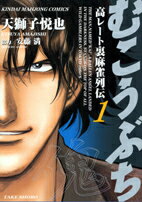
Mukobuchi
Mukobuchi follows the mysterious mahjong player Asakura, a man whose presence at any high-stakes table reveals everyone else's true character — over 70 volumes of compact, intense games where Asakura serves as both player and moral mirror.

Action / Mystery
Case Closed (Detective Conan)
Yu's review of Case Closed (Detective Conan) — Shinichi Kudo is a teen genius detective who is given a poison by a criminal organization and shrunk to elementary school age; he lives with his childhood friend's family using a fake identity as Conan Edogawa; every volume contains multiple murder mysteries he must solve while hiding who he is.
Action / Comedy
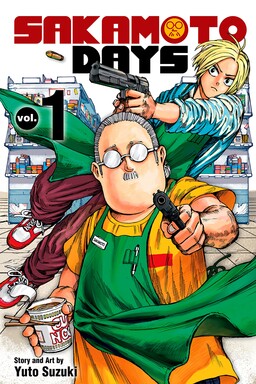
Sakamoto Days
Yu's review of Sakamoto Days — Taro Sakamoto was the most feared hitman in the world; he retired when he fell in love, married, and opened a convenience store; now overweight, domestically happy, and out of practice, he must repeatedly deal with the assassin world that cannot accept his retirement; an action comedy about a legendary fighter who would rather stock shelves.
Comedy / Action
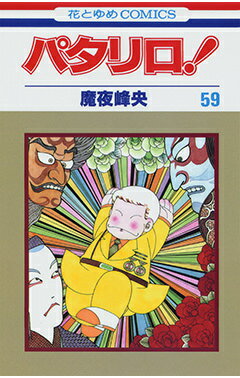
Patalliro!
A child king runs a tiny country with the help of MI6 assassins, BL romance subplots, and absolute chaos.
Action / Comedy
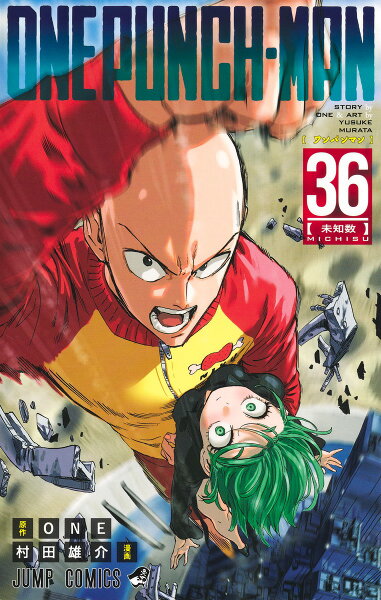
One Punch Man
Yu's review of One Punch Man — a manga about the most powerful hero in the world who can't feel excited about anything anymore because he always wins in one punch. Visually the most spectacular action manga alive. Philosophically surprisingly deep.

Action / Adventure
One Piece
Yu's review of One Piece — the manga that has been running for over 25 years and still feels alive. About freedom, friendship, and one ridiculous boy who refuses to be defined by anyone else's rules.
Written by
Yu
Manga Enthusiast from Japan
I grew up in Japan and manga literally saved me during a tough time in elementary school. My English isn't perfect, but my love for manga is real — and I want to share it with you.