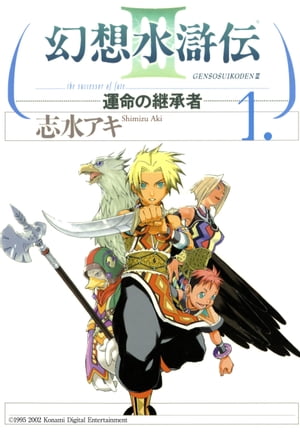
Suikoden III Manga Review: Three Perspectives on a War Nobody Wanted
by Aki Shimizu
Read the first volume. If it doesn't hook you, put it down. It'll hook you.
Buy Suikoden III on Amazon →*Affiliate link — I earn a small commission at no extra cost to you.
The same war. Three people. None of them are wrong about what they're fighting for.
Quick Take
- A manga adaptation of the Konami JRPG, using the game's three-protagonist structure to show one conflict from multiple perspectives simultaneously
- Aki Shimizu brings genuine craft to a game adaptation — the story works independently of the source
- 9 complete volumes; one of the better JRPG manga adaptations
Who Is This Manga For?
- Suikoden III players who want to revisit the story in manga form
- Readers who want fantasy with political complexity and war themes
- People interested in multi-protagonist manga where perspective genuinely changes the story
- Anyone who wants a complete fantasy story with real stakes
Content Warnings & Age Rating
Age Rating: T (Teen) Content Warnings: War, political violence, character death, morally complex factions
The war is real in its costs. Characters die with consequence.
Yu's Rating
| Category | Score |
|---|---|
| Story Depth | ★★★★☆ |
| Art Style | ★★★★☆ |
| Character Development | ★★★★☆ |
| Accessibility for Non-Japanese Readers | ★★★★☆ |
| Reread Value | ★★★★☆ |
Story Overview
The Suikoden III manga adapts the game's three-protagonist structure: Hugo, a chief's son from the Grasslands; Geddoe, a mercenary captain investigating the True Fire Rune; and Chris, a knight from Zexen whose mother disappeared years ago. Their stories run in parallel, intersecting and diverging as a conflict between the Grasslands and Zexen escalates toward war — with the Harmonious Country pulling strings from a distance.
Shimizu's adaptation makes the structure work in manga form: each character's section is distinct in tone — Hugo's is warmer and more personal, Geddoe's is more cynical and strategic, Chris's is more formal and burdened by expectation. The parallel storytelling means the reader sees the same events from different vantage points, which is the series' central dramatic device.
The adaptation compresses some game content while preserving the structure that made Suikoden III distinctive among JRPGs.
Characters
Hugo — The most emotionally reactive protagonist; his response to loss is the series' first major dramatic engine.
Geddoe — The perspective character who knows the most and reveals the least; his gradual disclosure of what he knows drives the series' mystery dimension.
Chris — Her arc is about what she inherits from her mother and what she chooses to do with that inheritance.
Thomas — A fourth perspective added in smaller quantities; his storyline at Budehuc Castle provides lighter tonal contrast.
Art Style
Shimizu's art is detailed and expressive — character designs that diverge enough from the game's style to be her own while remaining recognizable to fans. The action sequences are clearly staged. The political scenes use space and composition to communicate status and tension. The art is consistently strong across nine volumes.
Cultural Context
Suikoden III was unusual among JRPGs for its explicit moral ambiguity about political conflict — the war is shown to have multiple legitimate perspectives and no clearly correct faction. The manga preserves this ambiguity, which makes it more interesting than typical adaptation material.
The 108 Stars of Destiny structure from the games — recruiting large ensembles of playable characters — is present in condensed form; the manga focuses on the central cast while including the most plot-significant recruitable characters.
What I Love About It
The war council scene where representatives from Grasslands and Zexen face each other and the audience knows, from having followed both sides, exactly what each person is wrong about and exactly why they believe what they believe. Neither side is lying. Both sides are limited. Shimizu draws the scene with a restraint that lets the dramatic irony carry itself.
What English-Speaking Fans Say
Considered one of the better video game manga adaptations — praised for faithfulness to the source material's tone and for working as a manga independently of the game. Geddoe is consistently cited as the most successfully adapted character. Non-players find the story accessible; players appreciate the fidelity.
Memorable Scene ⚠️ Spoiler Warning
The scene that brings all three protagonist storylines to their convergence — where each of them finally understands what the conflict is actually about and what they actually have in common — is the scene the nine volumes build toward. Shimizu earns it by building each perspective carefully enough that the convergence lands as revelation rather than convenience.
Similar Manga
| Title | Its Approach | How Suikoden III Differs |
|---|---|---|
| Record of Lodoss War | High fantasy with political conflict | Lodoss is more traditional hero narrative; Suikoden III shows the war from multiple sides |
| Berserk | Dark fantasy with political background | Berserk is more character-focused on one protagonist; Suikoden is explicitly multi-perspective |
| Fire Emblem manga | JRPG adaptation with political conflict | Fire Emblem adaptations tend to follow one protagonist; Suikoden III maintains the game's structure |
Reading Order / Where to Start
Volume 1, straight through. The three-protagonist structure establishes in the first volume.
Official English Translation Status
Tokyopop published all 9 volumes in English. Complete and available.
Pros & Cons
Pros
- The three-protagonist structure works in manga form
- Each perspective is distinct in tone
- The political complexity is preserved from the game
- Complete 9-volume story
Cons
- The large cast can be hard to track without game familiarity
- Some game content is compressed or omitted
- Some volumes out of print following Tokyopop's closure
- Dense political worldbuilding requires engagement
Is Suikoden III Worth Reading?
For Suikoden fans and political fantasy readers — yes. One of the better game adaptations in manga form.
Format Comparison
| Format | Pros | Cons |
|---|---|---|
| Physical | Complete 9-volume set | Some volumes out of print |
| Digital | More accessible | — |
| Omnibus | No omnibus available | — |
Where to Buy
Read the first volume. If it doesn't hook you, put it down. It'll hook you.
This post contains affiliate links. If you purchase through these links, I may earn a small commission at no extra cost to you. As an Amazon Associate, I earn from qualifying purchases.
*Affiliate link — I earn a small commission at no extra cost to you.
More Manga You Might Like
Action / Drama
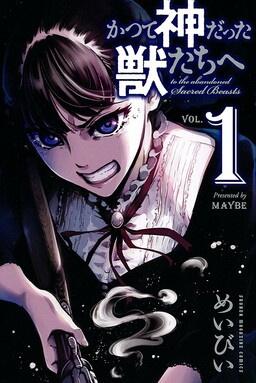
To the Abandoned Sacred Beasts
Yu's review of To the Abandoned Sacred Beasts — during a civil war, soldiers of the Northern Army were transformed into Incarnates — humans with the ability to become powerful monsters — to win; now the war is over, and the Incarnates cannot return to human society; the man who led them has become their hunter, and the daughter of one who died follows him.
Action / Fantasy
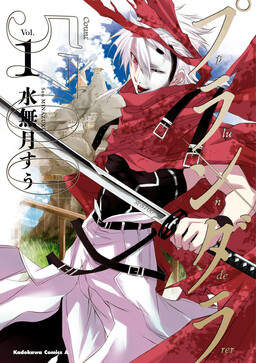
Plunderer
Yu's review of Plunderer — in a world where every person has a Count visible on their body representing some aspect of their life, those whose Count reaches zero are dragged into the Abyss; Hina searches for the legendary Ace who her dying mother told her about, and finds Licht Bach.
Action / Fantasy
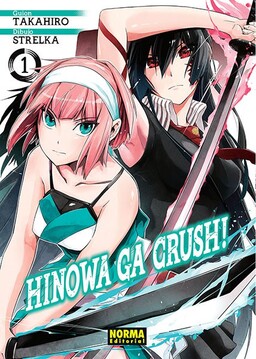
Hinowa ga CRUSH!
Yu's review of Hinowa ga CRUSH! — set in a feudal Japan-inspired world, young warrior Hinowa fights alongside the skilled fighter Akame — yes, that Akame — in a land divided between the nation of Soukai and the conquering empire of Tenrou; the series chronicles the resistance against occupation with the same willingness to kill its characters that defined Akame ga Kill.
Action / Fantasy
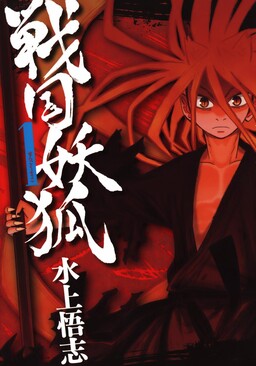
Sengoku Youko
Yu's review of Sengoku Youko — in Sengoku-era Japan, a powerful spirit girl travels with a timid human boy seeking to create a world where humans and youkai can live in peace.
Fantasy / Action
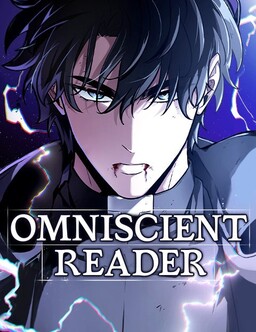
Omniscient Reader's Viewpoint
A review of Omniscient Reader's Viewpoint, the manhwa adaptation of singNsong's 551-chapter web novel, drawn by Sleepy-C — about Kim Dokja, the only person on Earth who read the web novel that is now coming true around him.
Action / Fantasy
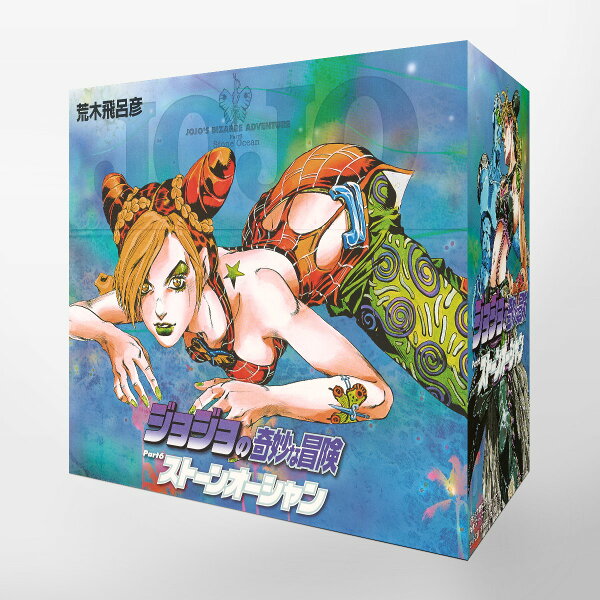
JoJo's Bizarre Adventure
Yu's review of JoJo's Bizarre Adventure — a generational saga following the Joestar bloodline across centuries and continents, each story featuring a new JoJo facing supernatural evil with increasingly creative and bizarre combat abilities.
Written by
Yu
Manga Enthusiast from Japan
I grew up in Japan and manga literally saved me during a tough time in elementary school. My English isn't perfect, but my love for manga is real — and I want to share it with you.
Disclosure: This post contains affiliate links. As an Amazon Associate, I earn from qualifying purchases at no extra cost to you.