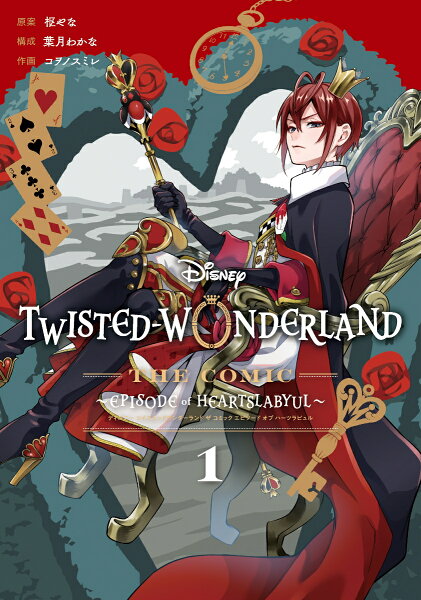
Soul Eater Review: Where Weapons Have Souls and Madness Is a World-Ending Threat
by Atsushi Ohkubo
Read the first volume. If it doesn't hook you, put it down. It'll hook you.
Buy Soul Eater on Amazon →*Affiliate link — I earn a small commission at no extra cost to you.
Quick Take
- A unique setting: a school where students partner human weapons (who transform into swords, scythes, pistols) to fight supernatural threats
- Visually distinctive gothic aesthetic that stands apart from every other action manga
- The ending is controversial, but everything before it is excellent
Who Is This Manga For?
Soul Eater is for you if:
- You want action manga with a completely distinctive visual identity — nothing else looks like Soul Eater
- You love dark fantasy settings that mix horror and humor
- You want a complete series (25 volumes) with a large, well-developed cast
- You appreciate world-building that takes its own rules seriously
Content Warnings & Age Rating
Age Rating: T (Teen) Content Warnings: Action violence with horror imagery; recurring madness theme that manifests in dark and surreal ways; some fan service in early volumes (Ohkubo moved away from this); dark fantasy content throughout
The horror elements are atmospheric and stylistic rather than disturbing. The madness theme is handled as fantasy rather than as a serious portrayal of mental illness.
Yu's Rating
| Category | Score |
|---|---|
| Story Depth | ★★★★☆ |
| Art Style | ★★★★★ |
| Character Development | ★★★★☆ |
| Accessibility for Non-Japanese Readers | ★★★★☆ |
| Reread Value | ★★★★☆ |
Story Overview
Death City is built around the Death Weapon Meister Academy, where students train to become Meisters — fighters who partner with human Demon Weapons (people who can transform into weapons). The goal: create Death Scythes, weapons powerful enough to serve Death himself.
Maka Albarn and her scythe-partner Soul Eater Evans are among the students. Their classmates include: Black Star, a ninja who never shuts up about being the greatest, and his partner Tsubaki; Death the Kid, Death's son and an obsessive perfectionist whose fixation on symmetry provides constant comedy; and his pistol partners Liz and Patty.
The enemy they face is the Kishin — a being of pure madness, sealed beneath the academy. When the Kishin is freed, its resonance begins corrupting the world, and the students must grow strong enough to face something that operates beyond normal logic.
Characters
Maka Albarn — A steady, studious Meister whose combat style rewards thought over power. Her relationship with Soul — complicated, sometimes antagonistic, fundamentally trusting — is the series' central partnership.
Soul Eater Evans — The "cool" partner who isn't quite as cool as he pretends to be. His internal landscape — a black blood and a little demon that lives there — is the series' most striking visual concept.
Black Star — The comic relief character who becomes genuinely affecting as the series progresses. His absolute belief in himself — which looks like arrogance and turns out to be something more complicated — is developed with more care than expected.
Death the Kid — One of manga's great comedy characters, whose symmetry obsession is taken to logical extremes in every chapter. His arc — what it means to be Death's son, and what kind of death he chooses to represent — is the series' most complete.
Medusa — The series' primary antagonist, a snake witch whose scheming is several levels above what the heroes can see at any given time. One of the better villains in action manga.
Art Style
Soul Eater's visual design is extraordinary. Ohkubo draws with a gothic expressiveness that has no parallel in mainstream manga — angular character designs, elaborate background architecture, a sun and moon that have disturbing expressions, cityscape that feels like a dark fairy tale.
The action sequences are kinetic and creative. The madness effects — visual distortion, patterns, unreliable geometry — require a visual vocabulary that Ohkubo essentially invents.
The series is also genuinely funny, and the comedy is delivered through exaggerated expressions and visual gags that work entirely in the visual medium.
Cultural Context
Soul music and resonance — The concept of "soul wavelength" that underlies Soul Eater's combat system is loosely inspired by the idea that two people in sync can achieve something neither can alone — a concept with roots in Buddhist ideas about spiritual resonance. The soul resonance between Meister and Weapon is, essentially, a metaphor for genuine connection.
The three great monsters — The three virtues that protect against the Kishin's madness — bravery, faith, and knowledge — map to classic virtues in multiple religious traditions while specifically invoking the three conditions said to destroy a person in Buddhist thought: delusion, desire, and anger. Ohkubo inverts them as protection.
Death as school principal — The image of Death as an authority figure running an educational institution is a specifically Japanese kind of dark humor — the idea that even death has hierarchy and paperwork.
What I Love About It
There is a chapter where Death the Kid, in the middle of a battle, stops because he notices that the enemy's footprints are asymmetrical.
His partners are yelling at him. The enemy is attacking. Kid is staring at the footprints.
I put the book down and laughed until I couldn't breathe.
Then, in the next volume, Ohkubo makes that exact same obsessive fixation the thing that allows Kid to perceive something nobody else can see. The joke becomes the weapon.
That's what Soul Eater does. It takes its absurdity completely seriously, and the absurdity becomes the story.
What English-Speaking Fans Say
Soul Eater has a devoted Western fanbase, many of whom discovered it through the anime adaptation. The manga is strongly preferred over the anime — the anime ends differently, and most readers consider the manga's overall construction superior.
Common praise: the art, the character ensemble, the tonal balance between dark fantasy and comedy, Kid's arc.
Common frustration: the ending. Soul Eater's final arc resolves more quickly than readers wanted, and the conclusion feels rushed. It doesn't ruin the series, but it's a genuine weakness.
Memorable Scene ⚠️ Spoiler Warning
Soul's black room.
Inside Soul's weapon-form, there is a space — a black room with a small demon in it. This inner world, which Maka can access, becomes the series' most visually striking location and the place where Soul's internal struggle with the black blood plays out.
The scenes in the black room are unlike anything else in the series — quieter, stranger, more surreal. They give Soul an inner life that his exterior "cool" facade deliberately hides.
Similar Manga
If you liked Soul Eater, try:
- Fire Force — Same creator, more serious tone, similar visual energy
- Blue Exorcist — Similar school setting with supernatural combat
- Noragami — Similar spirit/weapon partnership mechanic
- D.Gray-man — Similar gothic aesthetic with human-weapon themes
Reading Order / Where to Start
Start from Volume 1. The world-building is established across the early volumes and the character arcs require the full run.
Official English Translation Status
Status: Complete English Volumes: 25 (all volumes available) Translator: Yen Press Translation Quality: Excellent — Yen Press editions are well-regarded
Pros & Cons
Pros
- Visually one of the most distinctive manga ever published
- The ensemble cast is large and well-characterized
- The tonal balance between dark and funny is consistently excellent
- Complete at 25 volumes
Cons
- The ending feels rushed relative to the series' ambition
- Some mid-series arcs drag before picking up again
- The early volumes' fan service content is out of step with the rest of the series
Format Comparison
| Format | Volumes | Price per vol. (approx.) | Best for |
|---|---|---|---|
| Paperback (individual) | 25 vols | ~$12–14 | Collecting |
| Kindle | 25 vols | ~$8–10 | Quick read |
Where to Buy
Read the first volume. If it doesn't hook you, put it down. It'll hook you.
This post contains affiliate links. If you purchase through these links, I may earn a small commission at no extra cost to you. As an Amazon Associate, I earn from qualifying purchases.
*Affiliate link — I earn a small commission at no extra cost to you.
More Manga You Might Like
Action / Fantasy
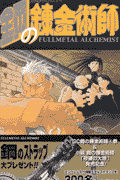
Fullmetal Alchemist
A review of Fullmetal Alchemist — 27 volumes in Monthly Shonen Gangan. Edward and Alphonse Elric commit the taboo of human transmutation trying to revive their mother; what follows is 27 volumes with zero wasted chapters about two brothers trying to fix a terrible mistake — widely considered the best-written manga ever made. VIZ Media's English edition is complete.
Action / Fantasy
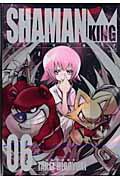
Shaman King
Yu's review of Shaman King — a laid-back shaman who communes with spirits enters the Shaman Fight, a tournament held every 500 years to determine who becomes the Shaman King and reshapes the world.
Action / Adventure
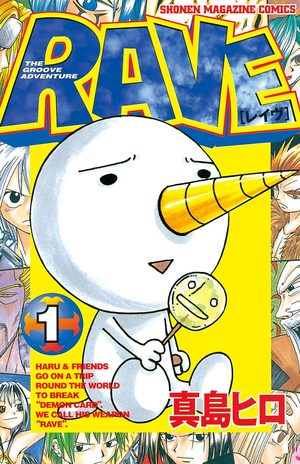
Rave Master (Groove Adventure Rave)
Yu's review of Rave Master — Haru Glory discovers he is the second Rave Master, holder of the legendary Holy Bring sword; with his companions, he travels the world collecting the five Rave stones and destroying the Dark Bring before they can be used to end the world.
Action / Fantasy
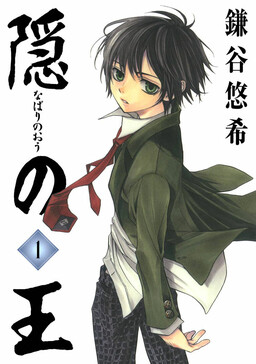
Nabari no Ou
Yu's review of Nabari no Ou — apathetic middle schooler Rokujou Miharu hosts within him the Shinrabanshou — the ultimate power of the ninja world — that every faction of the hidden world wants to control; Rokujou doesn't care about any of this, which makes him the most dangerous person in every room.
Action / Fantasy
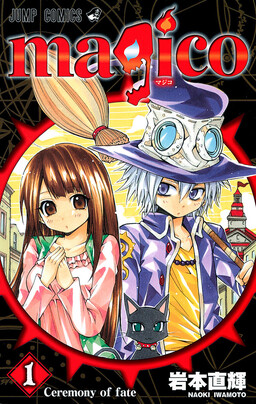
Magico
Yu's review of Magico — Shion is one of the most powerful mages in the world; Emma carries a cursed power called Echidna inside her that will eventually destroy everything; the only way to suppress it is to complete the Magico ritual, which requires the two to act as husband and wife while performing increasingly elaborate magical ceremonies.
Action / Fantasy
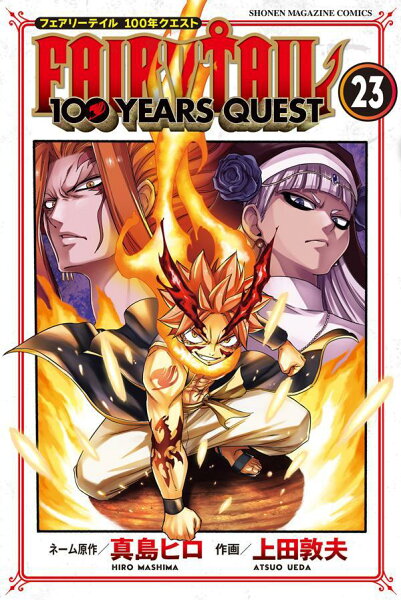
Fairy Tail
Yu's review of Fairy Tail — a celestial spirit mage joins the most destructive (and most tight-knit) guild in the kingdom, and together they save the world repeatedly through the power of friendship and overwhelming magic.
Written by
Yu
Manga Enthusiast from Japan
I grew up in Japan and manga literally saved me during a tough time in elementary school. My English isn't perfect, but my love for manga is real — and I want to share it with you.
Disclosure: This post contains affiliate links. As an Amazon Associate, I earn from qualifying purchases at no extra cost to you.