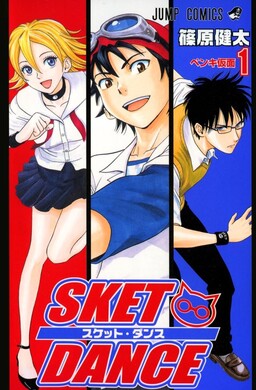
SKET Dance Review: Three Misfits Who Help Anyone With Anything — and Actually Mean It
by Kenta Shinohara
Read the first volume. If it doesn't hook you, put it down. It'll hook you.
Buy SKET Dance on Amazon →*Affiliate link — I earn a small commission at no extra cost to you.
Quick Take
- A school comedy club manga that is consistently funnier than it has any right to be — and then, when it reveals the characters' backstories, more emotionally affecting
- SKET Dance is the manga that Weekly Shonen Jump ran alongside Gintama in comedy slots, and the comparison is earned
- 32 volumes complete; starts light and builds into something with genuine emotional depth
Who Is This Manga For?
- Readers who want school comedy manga with real character investment
- Fans of Gintama's episodic comedy style who want something more grounded
- Anyone who enjoys manga where the protagonist's backstory is worth the wait
- Readers who want a complete, satisfying run
Content Warnings & Age Rating
Age Rating: T (Teen) Content Warnings: Comedy violence; the backstory content includes loss and abandonment — not gratuitous but genuinely affecting
Accessible. The dark content arrives late and is handled well.
Yu's Rating
| Category | Score |
|---|---|
| Story Depth | ★★★★☆ |
| Art Style | ★★★☆☆ |
| Character Development | ★★★★★ |
| Accessibility for Non-Japanese Readers | ★★★★☆ |
| Reread Value | ★★★★☆ |
Story Overview
At Kaimei High School, the SKET-dan — Support, Kindness, Encouragement, and Troubleshoot — is a club that will help anyone with any problem. Club leader Bossun has the ability to achieve hyper-concentration when wearing his goggles. Former yankee Himeko wields a field hockey stick. Switch communicates exclusively through a voice synthesizer program on his laptop.
The problems they solve range from absurd to trivial to, occasionally, genuinely difficult. Each case reveals something about the three members and about the school community around them.
The series' structure is episodic comedy for most of its run. Then the backstories arrive — Bossun's, Switch's, Himeko's — and the comedy framework proves it was always supporting something heavier.
Characters
Bossun (Yusuke Fujisaki) — The leader whose hyper-concentration ability and complete sincerity define the club's character. His backstory is the series' most emotionally significant revelation.
Himeko (Hime Onizuka) — The former delinquent whose transition from fighter to someone who wants to help is the series' least examined but most quietly affecting arc.
Switch (Kazuyoshi Usui) — The laptop-dependent information specialist whose voice synthesizer habit and encyclopedic knowledge provide the series' most consistent comedy, and whose backstory is its most painful.
Art Style
Shinohara's art prioritizes comic timing over technical detail — the comedic reaction shots are well-executed, the character expressions carry the humor effectively. Not the series' strength on a technical level, but entirely functional for what the series is doing.
Cultural Context
SKET Dance ran in Weekly Shonen Jump alongside Naruto and Bleach and occupied the comedy slot that Gintama would eventually dominate. The school club helper premise is a distinctly Japanese school culture concept — the "help club" as an institution reflects a specific organizational structure of Japanese high schools.
What I Love About It
The chapter where Switch's backstory is finally explained. The reason he only communicates through the voice synthesizer, what he lost, and the specific form his grief takes — the comedy series reveals it was always building toward something worth caring about.
What English-Speaking Fans Say
Western readers describe SKET Dance as the Shonen Jump manga they wish more people had read. The English-speaking fandom is smaller than the series deserves because it never got an anime that ran long enough to build the audience. Readers who finish it consistently say the final backstory arcs hit harder than expected.
Memorable Scene ⚠️ Spoiler Warning
The Gintama crossover chapter — SKET Dance characters meet Gintama characters — is the most celebrated non-backstory moment and a genuine event for readers who follow both series.
Similar Manga
- Gintama — Episodic comedy, more absurdist, similar Jump energy
- Beelzebub — School delinquent comedy, similar era
- Assassination Classroom — School setting, teacher-student dynamic, emotional payoff
- Daily Lives of High School Boys — Pure school comedy, lighter tone
Reading Order / Where to Start
Volume 1 — the three characters establish immediately and the episodic format allows any entry point.
Official English Translation Status
Viz Media published the complete 32-volume run. All volumes available.
Pros & Cons
Pros
- The comedy is consistently effective across 32 volumes
- The backstory arcs are genuinely affecting
- Complete in English
- Character development rewards patient reading
Cons
- The early volumes are lighter than what comes later — requires patience
- Art is functional rather than distinctive
- 32 volumes is a significant investment
Format Comparison
| Format | Notes |
|---|---|
| Individual Volumes | Viz Media; standard |
| Digital | Available |
Where to Buy
Read the first volume. If it doesn't hook you, put it down. It'll hook you.
This post contains affiliate links. If you purchase through these links, I may earn a small commission at no extra cost to you. As an Amazon Associate, I earn from qualifying purchases.
*Affiliate link — I earn a small commission at no extra cost to you.
More Manga You Might Like
Action / Comedy
Mob Psycho 100
A review of Mob Psycho 100 — 16 volumes on Ura Sunday. Shigeo Kageyama (Mob) is the most powerful psychic alive and keeps his powers suppressed because he doesn't want to hurt anyone; he just wants to get better at talking to his crush. The best manga about emotional suppression and what actual strength looks like. Dark Horse Comics' English edition is complete.
Action / Comedy
Gintama
A review of Gintama — 77 volumes in Weekly Shonen Jump. Gintoki Sakata runs an odd-jobs business in an alternate Edo Japan where aliens conquered the country and samurai are forbidden to carry swords. The funniest manga ever made, hiding some of the most devastating serious arcs in the genre. VIZ Media's English edition is complete.
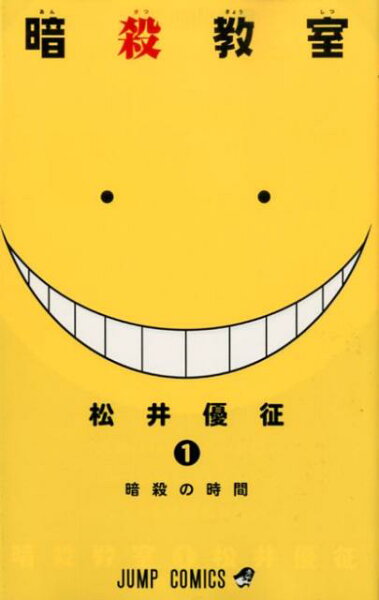
Action / Comedy
Assassination Classroom
Yu's review of Assassination Classroom — 21 volumes about a class of underachievers assigned to kill their alien teacher before he destroys the Earth. The funniest manga about murder, and the most moving manga about being seen by a teacher who refused to write you off.

Action / Comedy
Mashle: Magic and Muscles
Yu's review of Mashle: Magic and Muscles — in a world where magic determines social status, Mash Burnedead has no magic at all; he compensates entirely through physical strength so absurd it defeats every magical opponent he encounters.
Action / Comedy
The Law of Ueki
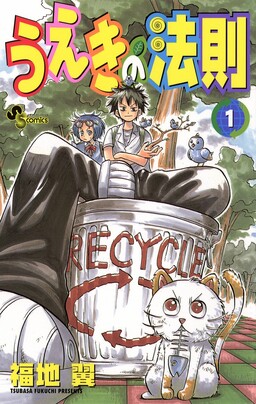
Yu's review of The Law of Ueki — Kousuke Ueki is given the power to turn trash into trees by his homeroom teacher, a god candidate competing in a divine tournament; if his teacher wins, he becomes the next ruler of the Heavenly World; if Ueki fights on his behalf and wins, he gets a blank talent.
Action / Comedy
History's Strongest Disciple Kenichi
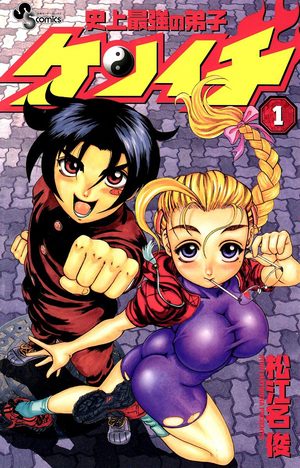
Yu's review of History's Strongest Disciple Kenichi — Kenichi Shirahama is the weakest student at his school until he joins Ryōzanpaku dojo, where six masters of different martial arts disciplines agree to train him simultaneously.
Written by
Yu
Manga Enthusiast from Japan
I grew up in Japan and manga literally saved me during a tough time in elementary school. My English isn't perfect, but my love for manga is real — and I want to share it with you.
Disclosure: This post contains affiliate links. As an Amazon Associate, I earn from qualifying purchases at no extra cost to you.