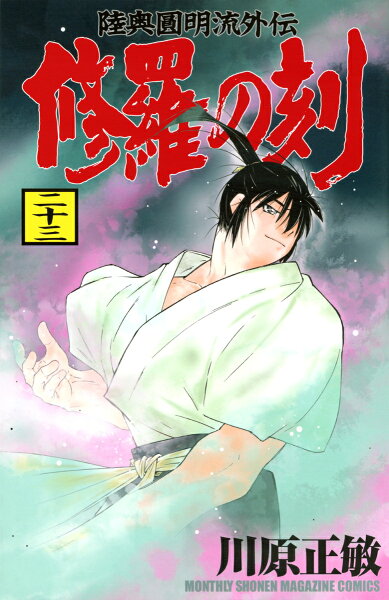
Shura no Toki Review: The Historical Martial Arts Manga That Put Its Fighters Against Every Era
by Masatoshi Kawahara
Read the first volume. If it doesn't hook you, put it down. It'll hook you.
Buy Shura no Toki on Amazon →*Affiliate link — I earn a small commission at no extra cost to you.
The Mutsu clan has no weapons. They've never needed any.
Quick Take
- Masatoshi Kawahara's historical martial arts series — members of the Mutsu clan facing legendary fighters across Japan's history, from the Sengoku period through the Meiji era
- An anthology of historical encounters: each arc drops a Mutsu into a different era and watches what happens when invincible technique meets historical circumstance
- Technically rigorous, historically detailed, and utterly committed to the premise that real martial arts is different from fictional martial arts
Who Is This Manga For?
- Martial arts manga readers who want technique depicted with genuine understanding
- Japanese history enthusiasts who want historical figures in combat contexts treated with respect
- Shura no Mon fans who want the universe expanded across time
- Action manga readers who want battles where the outcome isn't predetermined by the protagonist's power level
Content Warnings & Age Rating
Age Rating: T (Teen) Content Warnings: Martial arts combat, historical violence, blood. Nothing gratuitous.
Suitable for most readers who can handle combat content.
Yu's Rating
| Category | Score |
|---|---|
| Story Depth | ★★★★☆ |
| Art Style | ★★★★☆ |
| Character Development | ★★★★☆ |
| Accessibility for Non-Japanese Readers | ★★★☆☆ |
| Reread Value | ★★★★☆ |
Story Overview
The Mutsu clan carries a fighting style with a single principle: no weapons. Not because weapons are weak but because the Mutsu practitioner can defeat weapons with their body, which means weapons would only limit them. Across generations, members of this clan encounter the greatest fighters of each historical era.
Each arc is complete in itself — the particular Mutsu, the particular era, the particular opponent. Historical figures appear as fighters: Miyamoto Musashi, Yagyu Sekishusai, legendary samurai whose reputations have outlasted them. The Mutsu encounters each on their own terms and the battle tests what the Mutsu style is actually capable of.
What distinguishes Shura no Toki from power-fantasy martial arts manga is its honesty about what fighting is. The Mutsu win — usually — but they win through actual technique, through reading opponents, through the physical reality of combat rather than through escalating special powers. The series understands that genuine martial arts is about understanding another person's body and intentions.
Characters
The Mutsu fighters: Each arc's protagonist is a different member of the clan — different generations, different personalities, same fundamental style. The continuity is the technique rather than the person.
The historical opponents: Miyamoto Musashi, other historical figures — depicted with enough research that readers familiar with them find the characterization plausible.
Art Style
Kawahara's art captures martial arts movement with exceptional technical accuracy — the body mechanics of throws and strikes, the geometry of combat, the crucial moment between attack and response. The historical settings are rendered with period detail, and the characters are drawn with the physical specificity that martial arts requires.
Cultural Context
Shura no Toki runs alongside Shura no Mon in Kawahara's oeuvre — the "Mon" series follows a modern Mutsu practitioner, while "Toki" uses the historical approach. The series began in Monthly Shonen Magazine and has continued for decades.
The use of historical figures as opponents is a well-established tradition in Japanese martial arts fiction — Miyamoto Musashi in particular appears in many works — but Kawahara's approach is grounded in enough actual historical research that the encounters feel like plausible meetings rather than mere fanservice.
What I Love About It
I love the honesty about what martial arts is.
Martial arts manga often turns combat into power escalation — the protagonist gets stronger, the opponents get stronger, the techniques become more spectacular. Shura no Toki refuses this. The Mutsu style is what it is. The opponents' styles are what they are. The battle is about who understands the other's body and limitations better. That honesty keeps the fights legible and the outcomes meaningful.
What English-Speaking Fans Say
Known among dedicated martial arts manga readers. Recognized as among the most technically accurate martial arts manga available, with the historical structure praised for keeping each arc fresh. Fans of Shura no Mon often find this the more satisfying reading experience precisely because the historical frame provides closure that an ongoing modern series can't.
Memorable Scene ⚠️ Spoiler Warning
The Miyamoto Musashi encounter — the series' most anticipated meeting, given Musashi's legendary status in Japanese martial culture. What makes the scene work is that Kawahara doesn't give the Mutsu a simple victory: the encounter tests what the style can and cannot do against a fighter of genuine historical significance.
Similar Manga
| Title | Its Approach | How Shura no Toki Differs |
|---|---|---|
| Vagabond | Miyamoto Musashi's life as epic manga biography | Shura no Toki uses Musashi as one encounter among many — historical anthology rather than biography |
| Baki | Martial arts tournament with power escalation | Realistic technique within human limits rather than power fantasy |
| Gamaran | Historical martial arts tournament manga | Shura no Toki uses actual historical figures — more grounded in history |
Reading Order / Where to Start
Volume 1. Each arc is somewhat self-contained, but the Mutsu style's principles are established in the first arc and inform everything that follows.
Official English Translation Status
Shura no Toki has no official English translation.
Pros & Cons
Pros
- Among the most technically accurate martial arts manga available
- The historical structure keeps each arc fresh without repetition
- Historical opponents are handled with genuine research
- The refusal to escalate into power fantasy keeps the fights meaningful
Cons
- No English translation
- Knowledge of Japanese history significantly enhances appreciation
- Ongoing without a clear endpoint
- Readers who want power escalation and increasingly spectacular techniques will find this frustrating
Is Shura no Toki Worth Reading?
For martial arts manga readers who want technique over spectacle and historical accuracy over fantasy escalation, yes — this is among the best. For readers who want power scaling and tournament arcs with escalating stakes, this deliberately refuses those satisfactions. As honest martial arts manga set against actual history, it's exceptional.
Format Comparison
| Format | Notes |
|---|---|
| Physical | Japanese editions available |
| Digital | Available in Japanese |
| Omnibus | Collected editions available |
Where to Buy
No English release yet. That just means you find it before everyone else does.
*Affiliate link — I earn a small commission at no extra cost to you.
More Manga You Might Like
Action
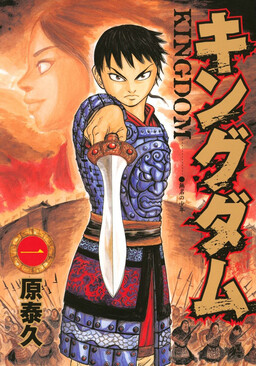
Kingdom
Yu's review of Kingdom — Xin is a war orphan in Warring States China who dreams of becoming the greatest general under the heavens; he encounters the young king Ying Zheng who intends to unify all of China; Yasuhisa Hara's historical epic about the birth of the Qin Empire through the eyes of soldiers and commanders who fought for it.
Action / Martial Arts
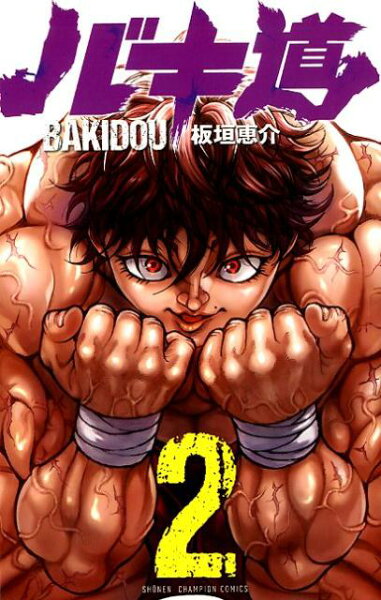
Baki-Dou
A review of Baki-Dou (刃牙道), the fourth Baki series, where a cloned Miyamoto Musashi is resurrected into the modern world and the strongest fighters alive learn that a real blade changes everything.
Action / Sports
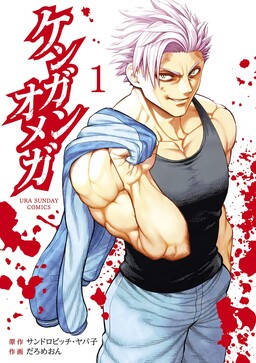
Kengan Omega
Yu's review of Kengan Omega — the sequel to Kengan Ashura; two years after the Kengan Annihilation Tournament, the underground gladiator world faces a new threat from the Purgatory organization; Narushima Koga, a dedicated but outmatched young fighter, fights his way into this world as the stakes grow larger than the previous generation understood.
Action / Historical Fantasy
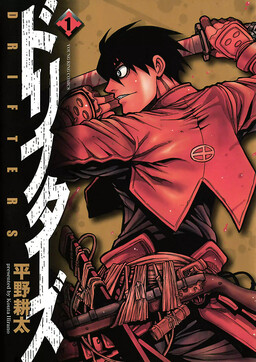
Drifters
Yu's review of Drifters — great warriors from throughout human history — Shimazu Toyohisa, Oda Nobunaga, Nasu no Yoichi — are transported at the moment of their deaths to a fantasy world by mysterious bureaucrats; they are called Drifters; a parallel group called the Ends are transported figures who were killed by betrayal and seek to destroy humanity; the two sides are at war.
Action / Historical
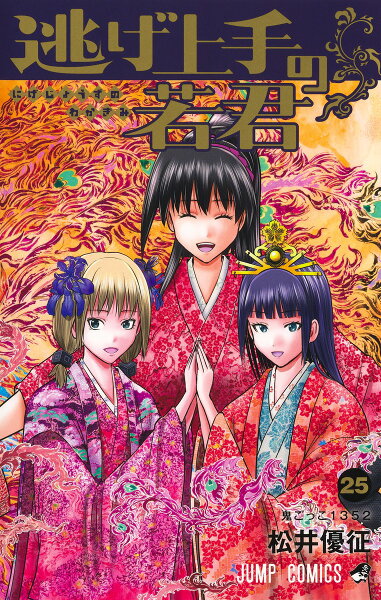
The Elusive Samurai
A review of The Elusive Samurai by Yusei Matsui, following a young noble who survives the fall of the Kamakura shogunate through unmatched evasion skills.
Action / Martial Arts
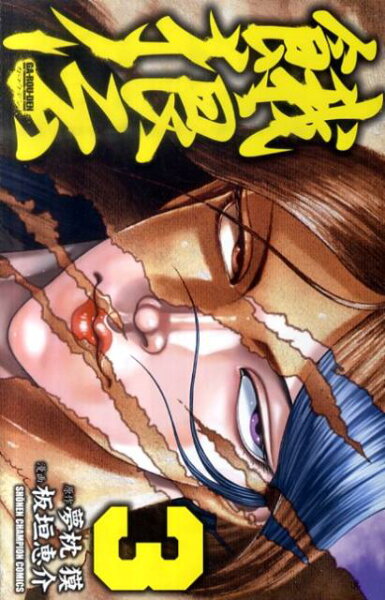
Garouden
Garouden follows Bunshichi Tanba, a former judoka who operates in the underground fighting world — a manga drawn by Jiro Taniguchi with psychological depth and physical authenticity rare in fighting manga.
Written by
Yu
Manga Enthusiast from Japan
I grew up in Japan and manga literally saved me during a tough time in elementary school. My English isn't perfect, but my love for manga is real — and I want to share it with you.