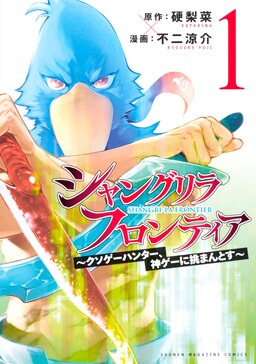
Shangri-La Frontier Review: A Gamer Obsessed with Broken Games Enters the Most Popular VR RPG and Breaks That Too
by Katarina (art), Ryosuke Fuji (original story)
Read the first volume. If it doesn't hook you, put it down. It'll hook you.
Buy Shangri-La Frontier on Amazon →*Affiliate link — I earn a small commission at no extra cost to you.
Quick Take
- A player whose expertise is breaking bad games enters a perfect VR game and applies the same unorthodox logic — finding strategies and hidden content no normal player would discover
- The boss fight sequences are some of the most inventively designed in game-manga; the game world-building is extraordinary
- Ongoing at 20 volumes in Japan; one of the most consistently excellent game-world manga being published
Who Is This Manga For?
- Readers who want game-world manga with actual game design intelligence
- Fans of boss fight sequences with tactical depth and visual spectacle
- Anyone who appreciates world-building done through the logic of a fictional game's systems
- Readers who want ongoing manga with consistent quality
Content Warnings & Age Rating
Age Rating: T (Teen) Content Warnings: In-game violence, boss fight sequences with high tension
Pure game-world content with no real-world stakes beyond the game itself.
Yu's Rating
| Category | Score |
|---|---|
| Story Depth | ★★★★☆ |
| Art Style | ★★★★★ |
| Character Development | ★★★★☆ |
| Accessibility for Non-Japanese Readers | ★★★★☆ |
| Reread Value | ★★★★☆ |
Story Overview
Rakuro Hizutome has spent years playing kusoge — terrible games that only a specific kind of masochistic player would enjoy. His expertise is finding the paths developers accidentally left open, the hitboxes that don't work, the exploits that break progression.
When he enters Shangri-La Frontier — SLF — the world's most technically perfect VR RPG, he brings the same sensibility. He approaches its world not as a tourist but as someone looking for what was left in the corners that the developers didn't intend players to find.
He finds them. He discovers hidden content, hidden bosses, hidden quest lines that no other player has triggered. His unorthodox build — developed from the mindset of someone who plays broken games — is effective in ways the game's designers didn't anticipate.
Characters
Rakuro Hizutome / Sunraku — His gamer identity (Sunraku in SLF) and his real-world personality are genuinely different, and the series uses both. His specific expertise — playing bad games — is taken seriously as a skill set.
Psyger-0 / Rei Saiga — A top-tier SLF player who becomes invested in Sunraku; her outside-the-game perspective and her own arc provide contrast to pure game-world content.
Bilac — A blacksmith NPC whose quest line Sunraku accidentally triggers; his character depth is the series' best example of the game world being genuinely inhabited rather than just a backdrop.
Emul — Sunraku's in-game companion; designed for maximum appeal, used by the series as both comedy and genuine emotional touchstone.
Art Style
Katarina's art handles the game-world content with exceptional skill — the boss designs are each visually distinct and intimidating, the boss fight sequences use page space dynamically, and the action choreography is among the best in game-manga. The architectural and environmental designs of SLF's world suggest genuine depth.
Cultural Context
Shangri-La Frontier draws on Japanese gaming culture's deep familiarity with VR game concepts and the specific subculture of kusoge appreciation. The game-world design reflects genuine JRPG traditions — boss mechanics, hidden content, NPC questlines — which gives the series' moments of discovery their weight.
What I Love About It
The Wethermon boss sequence. It is one of the most technically inventive boss fights I have read in any manga — the design of the boss, the escalation of its phases, and Sunraku's specific approach based on his kusoge expertise all combine into something that functions as genuine game design fiction. It is why this series is more than just a game-world adventure.
What English-Speaking Fans Say
Western readers familiar with Sword Art Online and game-isekai as a genre found Shangri-La Frontier operating at a higher level of game-design intelligence than most series in the space. The boss fights are consistently cited as the series' distinguishing quality. The Wethermon arc in particular has generated detailed tactical analysis from readers.
Memorable Scene ⚠️ Spoiler Warning
The revelation of what Wethermon actually is — the lore behind the boss, not just its mechanics — and how that lore connects to the hidden content Sunraku has been accumulating is the moment the series reveals it has been building a world with genuine depth, not just tactical encounter design.
Similar Manga
- Bofuri — Game-world, overpowered protagonist, lighter tone
- Sword Art Online — VR game with stakes, serious tone
- Log Horizon — Trapped in game, world-building emphasis
- The Rising of the Shield Hero — Game mechanics taken seriously
Reading Order / Where to Start
Volume 1 — the kusoge premise is established in the first chapter and is essential to understanding Sunraku's approach to everything that follows.
Official English Translation Status
Kodansha USA is publishing the ongoing series. 16 volumes available in English.
Pros & Cons
Pros
- Boss fight sequences are among the best designed in game-manga
- The game world has genuine depth and internal consistency
- Sunraku's specific expertise gives him a unique protagonist angle
- Art quality is excellent throughout
Cons
- Game-mechanics focus may not engage readers who aren't gamers
- Ongoing with a large volume commitment
- Some character arcs outside the game world are less developed
Format Comparison
| Format | Notes |
|---|---|
| Individual Volumes | Kodansha USA; standard |
| Digital | Available; boss sequences read well on large screens |
Where to Buy
Read the first volume. If it doesn't hook you, put it down. It'll hook you.
This post contains affiliate links. If you purchase through these links, I may earn a small commission at no extra cost to you. As an Amazon Associate, I earn from qualifying purchases.
*Affiliate link — I earn a small commission at no extra cost to you.
More Manga You Might Like
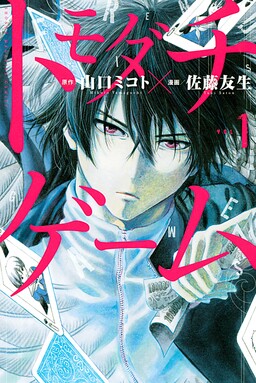
Action / Psychological
Tomodachi Game
Yu's review of Tomodachi Game — Yuichi and his four close friends suddenly find themselves participating in the 'Tomodachi Game,' a debt-resolution game run by a mysterious organization; one of them enrolled everyone to pay off a debt, and the games are specifically designed to strain and destroy friendships.
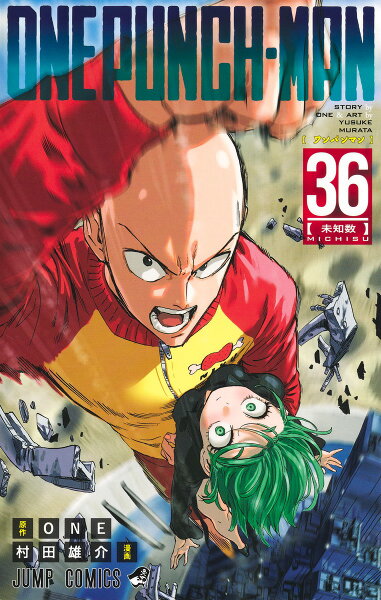
Action / Comedy
One Punch Man
Yu's review of One Punch Man — a manga about the most powerful hero in the world who can't feel excited about anything anymore because he always wins in one punch. Visually the most spectacular action manga alive. Philosophically surprisingly deep.
Action / Adventure
One Piece
Yu's review of One Piece — the manga that has been running for over 25 years and still feels alive. About freedom, friendship, and one ridiculous boy who refuses to be defined by anyone else's rules.
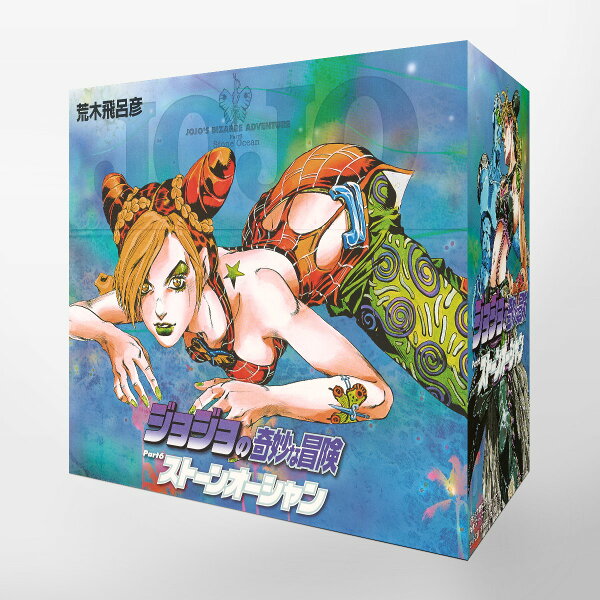
Action / Fantasy
JoJo's Bizarre Adventure
Yu's review of JoJo's Bizarre Adventure — a generational saga following the Joestar bloodline across centuries and continents, each story featuring a new JoJo facing supernatural evil with increasingly creative and bizarre combat abilities.
Action / Adventure
Hunter x Hunter
Yu's review of Hunter x Hunter — 37 volumes of the most intelligent action manga ever written, from the creator of Yu Yu Hakusho. A series that keeps reinventing itself and never stops being the best thing it possibly can be, when it's being published.

Action / Supernatural
Dandadan
Yu's review of Dandadan — Momo believes in ghosts, Ken believes in aliens, and they make a deal to test each other's beliefs; both get immediately proven wrong and right simultaneously, and a bizarre supernatural romance begins.
Written by
Yu
Manga Enthusiast from Japan
I grew up in Japan and manga literally saved me during a tough time in elementary school. My English isn't perfect, but my love for manga is real — and I want to share it with you.
Disclosure: This post contains affiliate links. As an Amazon Associate, I earn from qualifying purchases at no extra cost to you.