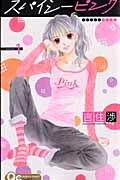
Red Hot Chili Samurai Review: A Samurai Who Runs on Spicy Food and Has No Business Being This Effective
by Yoshitsugu Katagiri
Read the first volume. If it doesn't hook you, put it down. It'll hook you.
Buy Red Hot Chili Samurai on Amazon →*Affiliate link — I earn a small commission at no extra cost to you.
His power source is chili peppers. This is treated as seriously as anything else in the manga. It works.
Quick Take
- A four-volume action comedy about a samurai whose abilities are enhanced by spicy food — the absurd premise is played completely straight and generates genuine comedy
- Light, fast, and complete; the action sequences are better than the premise implies
- A good palette cleanser for action manga readers who want something fun without weight
Who Is This Manga For?
- Action manga readers who want comedy with their fights
- People who enjoy Japanese historical settings played for comedy rather than drama
- Fans of food-as-power-source setups in manga
- Anyone who wants a complete, low-commitment action comedy
Content Warnings & Age Rating
Age Rating: T (Teen) Content Warnings: Action violence, slapstick combat, mild language
Standard action comedy content throughout.
Yu's Rating
| Category | Score |
|---|---|
| Story Depth | ★★★☆☆ |
| Art Style | ★★★☆☆ |
| Character Development | ★★★☆☆ |
| Accessibility for Non-Japanese Readers | ★★★★☆ |
| Reread Value | ★★★☆☆ |
Story Overview
Kokaku is a wandering samurai with an unusual requirement: his combat abilities are significantly enhanced when he eats spicy food, particularly chili peppers. Without them, he's merely competent. With them, he's formidable. This is not a secret he maintains well.
When he crosses paths with Momohime, a girl with her own reasons to be traveling, they end up together on the road encountering the various problems that come to people who can solve violent situations violently.
Katagiri plays the spicy-food premise completely straight — Kokaku treats his chili dependency with samurai seriousness, and that contrast between the absurd premise and the earnest treatment is the series' main comedic engine. The action sequences are quick and well-composed; the comedy comes from character and situation rather than parody.
Four volumes is the right length for this kind of comedy: it establishes the premise, delivers the best execution of it, and ends before the joke runs out.
Characters
Kokaku — The samurai who is entirely serious about everything, including his chili peppers. His earnestness is the comedy.
Momohime — The travelling companion whose reactions to Kokaku's pepper-related heroics provide the series' audience viewpoint. Her development from observer to active participant is the four volumes' secondary arc.
Art Style
Katagiri's art is clean action-comedy manga — the character designs are appealing and the action sequences are well-staged. The visual gag of Kokaku's transformation after eating spicy food is drawn consistently. Not the most distinctive art in the landscape but entirely functional.
Cultural Context
The wandering samurai (rōnin) as a manga/film archetype has a long tradition in Japanese media — the lone skilled fighter who arrives in situations and resolves them before moving on. Red Hot Chili Samurai uses this archetype as a starting point and adds the food-power element as a comedic twist.
Chili peppers (togarashi) in Japanese cuisine are a real and distinct category; the series plays with the Japanese perception of spice as a special power source with cultural roots in the idea that very spicy food has particular effect.
What I Love About It
The sequence where Kokaku is separated from his peppers in a situation that actually requires him to be at full strength, and the lengths Momohime goes to in order to get him what he needs — it's a scene that wouldn't work if the series hadn't committed fully to its own absurd premise.
What English-Speaking Fans Say
Appreciated as a light, fun action comedy with a memorable premise. Seven Seas's complete four-volume release is noted positively. The series doesn't overstay and is consistently recommended as a palate cleanser between heavier reads.
Memorable Scene ⚠️ Spoiler Warning
The final confrontation where Kokaku faces an opponent who has specifically prepared for the chili weakness — and the solution, which is completely in character for both Kokaku and Momohime — is the scene that makes the four volumes feel like they were building toward something.
Similar Manga
| Title | Its Approach | How Red Hot Chili Samurai Differs |
|---|---|---|
| Samurai Champloo | Samurai action with comedic elements | Samurai Champloo is longer and more stylistically ambitious; RHC is lighter |
| Toriko | Food as power source in action setting | Toriko is much longer and food is primary theme; RHC uses it as one element |
| Rurouni Kenshin | Wandering samurai action | Kenshin is more dramatic and serious; RHC is purely comedic |
Reading Order / Where to Start
Volume 1, straight through.
Official English Translation Status
Seven Seas Entertainment published all 4 volumes in English. Complete and available.
Pros & Cons
Pros
- The premise is absurd and committed to fully — the comedy works because of that commitment
- Complete four-volume story that ends at the right time
- Fast and fun; low time commitment for what you get
- Seven Seas publication means reasonable availability
Cons
- Thin on character depth and world-building
- The humor is the entire series — no dramatic register to balance it
- Four volumes means the jokes are repeated rather than developed
- Not memorable enough to stand out in the action-comedy landscape
Is Red Hot Chili Samurai Worth Reading?
For action comedy readers — yes. Light, complete, funny, and over before it gets repetitive.
Format Comparison
| Format | Pros | Cons |
|---|---|---|
| Physical | Complete 4-volume set | — |
| Digital | Convenient | — |
| Omnibus | No omnibus available | — |
Where to Buy
Read the first volume. If it doesn't hook you, put it down. It'll hook you.
This post contains affiliate links. If you purchase through these links, I may earn a small commission at no extra cost to you. As an Amazon Associate, I earn from qualifying purchases.
*Affiliate link — I earn a small commission at no extra cost to you.
More Manga You Might Like
Action / Historical
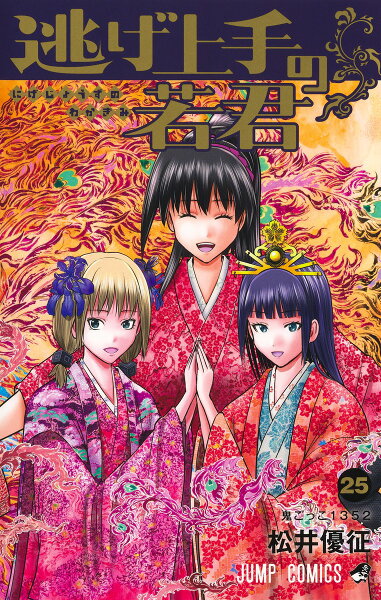
The Elusive Samurai
A review of The Elusive Samurai by Yusei Matsui, following a young noble who survives the fall of the Kamakura shogunate through unmatched evasion skills.
Action / Historical
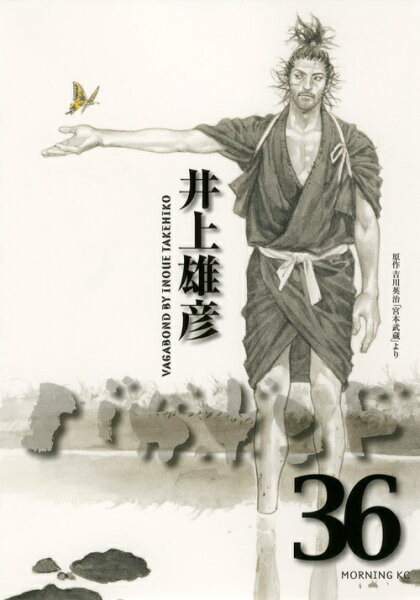
Vagabond
Yu's review of Vagabond — a manga about the historical Miyamoto Musashi's journey to become the greatest swordsman alive, and his gradual understanding that invincibility is not the same as wisdom. Visually the most beautiful manga ever published.
Action / Historical
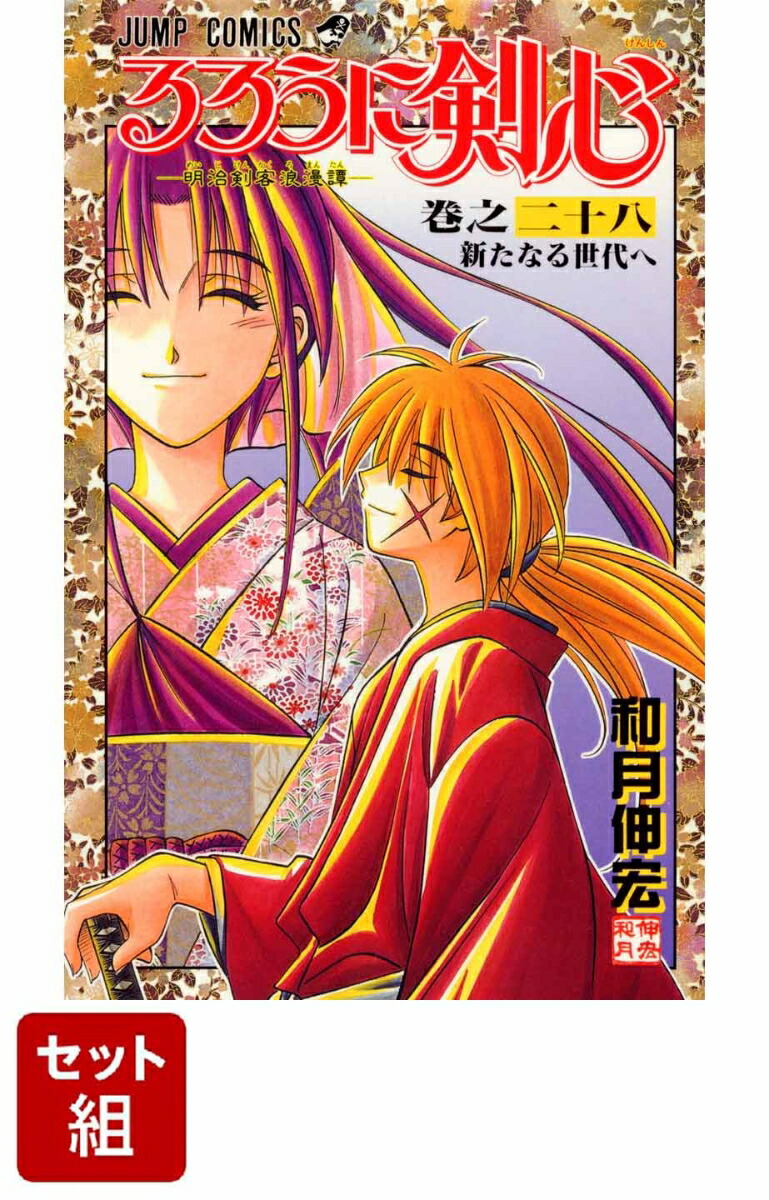
Rurouni Kenshin
A review of Rurouni Kenshin — 28 volumes in Weekly Shonen Jump. Himura Kenshin was Japan's most feared assassin of the Bakumatsu; he now wanders with a reverse-blade sword, trying to protect without killing. The Kyoto Arc is one of the greatest extended arcs in manga, and Shishio is the genre's finest villain. VIZ Media's English edition is complete.
Action / Historical
Lone Wolf and Cub
Yu's review of Lone Wolf and Cub — Ogami Ittō was the Shogunate's official executioner; framed for treason by the Yagyū clan, stripped of his position, his wife murdered; he chose the Meifumadō — the road to hell — placing his infant son Daigorō before a ball and a sword, and the child chose the sword; they travel as assassins for hire, seeking vengeance.
Action / Historical
Blade of the Immortal
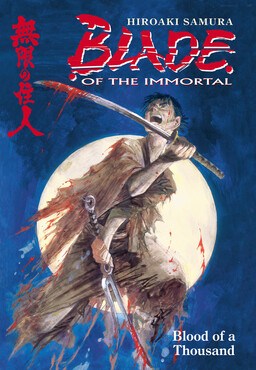
Yu's review of Blade of the Immortal — Manji is a ronin cursed with immortality by sacred bloodworms; to end the curse he must kill a thousand evil men, and he agrees to protect Rin Asano, a girl whose family was destroyed by the Itto-ryu sword school led by Anotsu Kagehisa. Hiroaki Samura's nineteen-year masterpiece, complete in 31 volumes from Dark Horse.
Action / Historical
Samurai Deeper Kyo
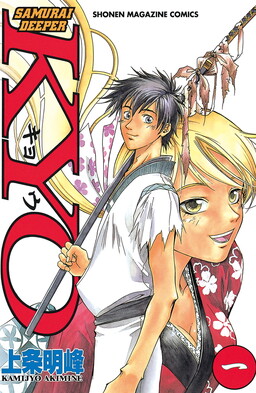
Yu's review of Samurai Deeper Kyo — after the Battle of Sekigahara, the legendary demon-eyes samurai Demon Eyes Kyo's soul is sealed inside the body of Kyoshiro Mibu, a wandering medicine seller; four years later, Kyo's consciousness begins to emerge, and the search for his original body begins.
Written by
Yu
Manga Enthusiast from Japan
I grew up in Japan and manga literally saved me during a tough time in elementary school. My English isn't perfect, but my love for manga is real — and I want to share it with you.
Disclosure: This post contains affiliate links. As an Amazon Associate, I earn from qualifying purchases at no extra cost to you.