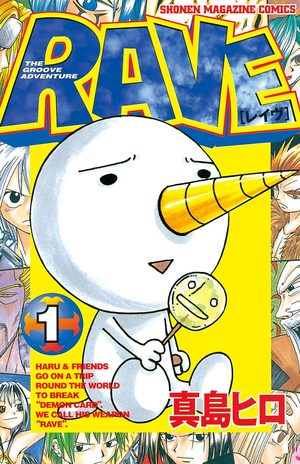
Rave Master Review: A Boy With a Legendary Sword Sets Out to Destroy All of the World's Dark Stones
by Hiro Mashima
Read the first volume. If it doesn't hook you, put it down. It'll hook you.
Buy Rave Master (Groove Adventure Rave) on Amazon →*Affiliate link — I earn a small commission at no extra cost to you.
Quick Take
- Hiro Mashima's manga before Fairy Tail — a complete 35-volume adventure with the same character warmth and action energy
- Rave Master has a beginning, middle, and end that actually resolves; it benefits enormously from being finished
- Essential reading for Fairy Tail fans who want to see where Mashima's world-building began
Who Is This Manga For?
- Readers who want a complete fantasy adventure with a satisfying conclusion
- Fairy Tail fans who want Mashima's earlier work
- Fans of classic shonen adventure — traveling companions, collecting things, escalating enemies
- Readers who appreciate ensemble casts where everyone gets their moment
Content Warnings & Age Rating
Age Rating: T (Teen) Content Warnings: Fantasy violence; some mild suggestive humor in the style of early 2000s shonen
Appropriate for teen readers and above.
Yu's Rating
| Category | Score |
|---|---|
| Story Depth | ★★★☆☆ |
| Art Style | ★★★★☆ |
| Character Development | ★★★★☆ |
| Accessibility for Non-Japanese Readers | ★★★★★ |
| Reread Value | ★★★☆☆ |
Story Overview
Haru Glory lives on Garage Island, isolated from the world's problems. He inherits the title of Rave Master from the first Rave Master, Shiba — along with the Holy Bring, a sword that changes form depending on which of its ten forms is activated.
The mission: collect the five Rave stones scattered across the world and use their combined power to destroy the Dark Bring — stones of dark power that Demon Card, the primary antagonist organization, is using to restore a weapon that could destroy the world.
The journey is the series. Companions are gained, enemies become allies, revelations about the world's history recontextualize everything that preceded them. The final arc delivers on everything that was set up.
Characters
Haru Glory — The cheerful, determined protagonist whose straightforward moral clarity is a feature rather than a flaw — the series is earnest about its values and Haru embodies them.
Elie — The amnesiac companion whose past is connected to the world's history in ways the series takes 35 volumes to reveal; her relationship with Haru is the series' central emotional thread.
Musica — The silver claimer whose cool exterior and complicated family history make him the series' most consistently interesting character.
Plue — The snowman-shaped creature who serves as mascot; his appearances in Fairy Tail as Plue are a direct callback.
Art Style
Mashima's art in Rave Master shows the development of the visual style he would refine in Fairy Tail — the action sequences are energetic, the character designs are varied and expressive, and the ten forms of the Holy Bring each have distinct visual identities. The art improves notably across 35 volumes.
Cultural Context
Rave Master appeared in Weekly Shonen Magazine from 1999 to 2005 — during the height of the "journey and collect" shonen format that Dragon Ball and similar series had established. Mashima follows the formula with genuine affection for it, but adds the emotional specificity that would later define Fairy Tail.
What I Love About It
The ending. It is rare for a 35-volume action-adventure manga to stick its landing as completely as Rave Master does. The conclusion addresses every major character's arc, resolves the central mystery about Elie's past, and delivers an emotional payoff that earns the investment across all 35 volumes. It finishes. This is rarer and more valuable than it sounds.
What English-Speaking Fans Say
Western readers who came to Rave Master from Fairy Tail consistently describe it as the more emotionally focused of the two — Fairy Tail's energy spread across more characters and more comedic content, while Rave Master stays closer to its core characters and their journey. The ending generates consistent reader response as one of shonen manga's most satisfying.
Memorable Scene ⚠️ Spoiler Warning
The revelation of what Elie actually is — and what her connection to the Rave stones means — recontextualizes her entire arc and is the series' most emotionally significant moment.
Similar Manga
- Fairy Tail — Same author, similar energy, larger cast
- One Piece — Journey and companions, adventure format
- Dragon Ball — Collect items, escalating antagonists
- Law of Ueki — Similar era, tournament and journey format
Reading Order / Where to Start
Volume 1 — Garage Island and Haru's discovery of the Rave establish immediately.
Official English Translation Status
Tokyopop published the complete 35-volume run. Out of print in physical format but available digitally.
Pros & Cons
Pros
- One of shonen manga's most complete narrative arcs
- The ending resolves everything it sets up
- Elie's arc is genuinely emotionally sophisticated
- Complete in English
Cons
- Some volumes may be out of print physically
- Early volumes are slower than the later arcs
- The "collect the stones" format is familiar to the point of formula
Format Comparison
| Format | Notes |
|---|---|
| Individual Volumes | Tokyopop; may be OOP physically |
| Digital | Available |
Where to Buy
Read the first volume. If it doesn't hook you, put it down. It'll hook you.
This post contains affiliate links. If you purchase through these links, I may earn a small commission at no extra cost to you. As an Amazon Associate, I earn from qualifying purchases.
*Affiliate link — I earn a small commission at no extra cost to you.
More Manga You Might Like
Action / Adventure
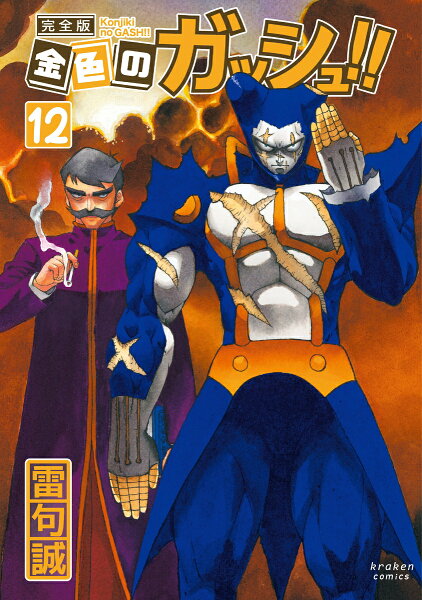
Zatch Bell!
A review of Zatch Bell! — 33 volumes in Weekly Shonen Sunday. Genius middle schooler Kiyo Takamine partners with demon child Zatch Bell in a battle royale of 100 demon/human pairs competing to become King of the Mamodo World; Zatch wants to be a kind king. The manga that made an entire generation cry about a book burning. VIZ Media's English edition is complete.
Action / Fantasy
Fullmetal Alchemist
A review of Fullmetal Alchemist — 27 volumes in Monthly Shonen Gangan. Edward and Alphonse Elric commit the taboo of human transmutation trying to revive their mother; what follows is 27 volumes with zero wasted chapters about two brothers trying to fix a terrible mistake — widely considered the best-written manga ever made. VIZ Media's English edition is complete.
Action / Adventure
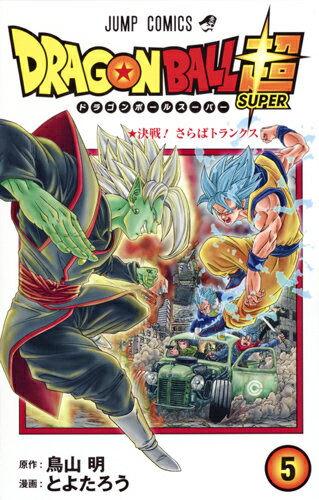
Dragon Ball
A review of Dragon Ball — 42 volumes in Weekly Shonen Jump. Son Goku's journey from a boy in the wilderness to the strongest being in the universe — the manga that defined what shonen action could be and that every battle manga since has owed something to. VIZ Media's English edition is complete.
Action / Adventure
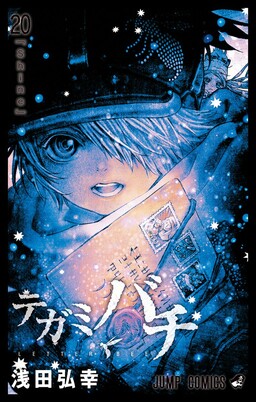
Tegami Bachi: Letter Bee
Yu's review of Tegami Bachi — in a land of perpetual night called AmberGround, Letter Bees risk their lives to deliver correspondence across insect-haunted wastelands; Lag Seeing, the child who was once delivered as a letter, grows up to become a Letter Bee and searches for the mentor who first carried him.
Action / Fantasy
Soul Eater
Yu's review of Soul Eater — a manga set in a school where students are weapon-wielders, and the weapons are people. Gothic, funny, and visually unlike anything else in manga. One of the best completed action series of its era.
Action / Fantasy
Shaman King
Yu's review of Shaman King — a laid-back shaman who communes with spirits enters the Shaman Fight, a tournament held every 500 years to determine who becomes the Shaman King and reshapes the world.
Written by
Yu
Manga Enthusiast from Japan
I grew up in Japan and manga literally saved me during a tough time in elementary school. My English isn't perfect, but my love for manga is real — and I want to share it with you.
Disclosure: This post contains affiliate links. As an Amazon Associate, I earn from qualifying purchases at no extra cost to you.