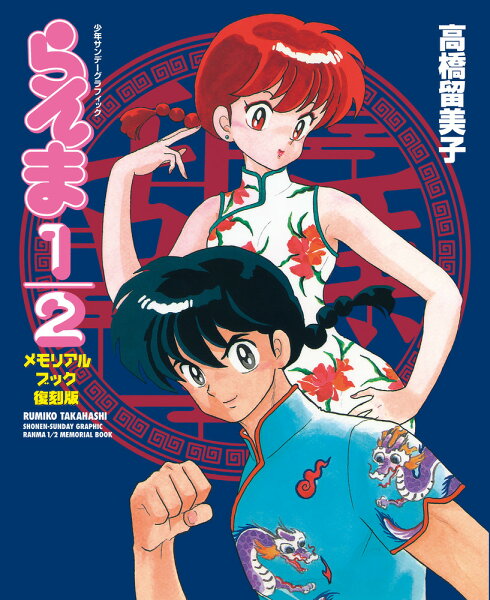
Ranma 1/2 Review — A Martial Artist Falls Into a Cursed Spring in China and Becomes a Girl Whenever Cold Water Touches Him
by Rumiko Takahashi
Read the first volume. If it doesn't hook you, put it down. It'll hook you.
Buy Ranma 1/2 on Amazon →*Affiliate link — I earn a small commission at no extra cost to you.
I read Ranma 1/2 in high school. My uncle had the full 38-volume Japanese set on his bookshelf and lent them to me one summer. I read all of them across two weeks, laughing constantly, and I have not stopped thinking about the manga since. The 2024 MAPPA anime adaptation brought me back to it — I have been re-reading the manga alongside the new anime, finding things I missed at sixteen.
This is one of the great comedy manga.
Quick Take
- Rumiko Takahashi's 38-volume manga (1987–1996, Weekly Shonen Sunday)
- Premise: cursed Chinese hot springs cause animal/gender transformations triggered by water temperature
- Complete in English from VIZ Media; 2024 MAPPA anime reboot ongoing
- Age rating: T (Teen) — comedic nudity, martial arts violence
What Is Ranma 1/2 About?
Ranma Saotome is a teenage Japanese martial artist. He has trained in martial arts since childhood under his father Genma Saotome at a small unaffiliated dojo. On a training trip to China's Jusenkyo (呪泉郷) — the legendary "Cursed Spring Country" where each spring is haunted by the spirit of someone or something that drowned there long ago — both father and son fall into different springs.
The curse: each character transforms into whatever drowned in their respective spring whenever cold water touches them. Hot water reverses the transformation.
Ranma fell into the Spring of Drowned Girl. He now transforms into a teenage girl with red hair when splashed with cold water.
Genma fell into the Spring of Drowned Panda. He now transforms into a large black-and-white panda when splashed with cold water.
The pair returns to Japan, where Genma has arranged — without telling Ranma — for Ranma to marry one of the three daughters of his old friend Soun Tendo. The Tendo family runs the Tendo Dojo in Tokyo. Soun has three teenage daughters: Kasumi (elder, gentle), Nabiki (middle, financially-minded), and Akane (younger, hot-tempered, also a martial artist). Soun has decided Akane and Ranma will be the engaged pair.
Akane does not appreciate this. Ranma does not appreciate this. The arranged engagement is the manga's romantic premise.
The next 38 volumes follow Ranma and Akane (and an ever-expanding ensemble of cursed-spring victims and martial artists with bizarre specialties) through:
- The high school they attend together
- Ranma's various rival suitors (Kuno, Mousse, Ryoga, etc.) and Akane's various rival suitors
- The cursed-spring lore (more characters keep showing up with their own transformations)
- The martial arts tournaments and rivalries
- Ranma and Akane's slow-developing relationship that neither will admit is developing
The manga is structurally episodic with sustained character development. There is no major endpoint plot until very late in the run; the manga is the accumulated comedy of these characters interacting across years of school and adventures.
The 2024 MAPPA Anime
For new readers approaching the franchise:
The original anime (1989–1992, 161 episodes by Studio Deen) covered approximately the first half of the manga.
The 2024 MAPPA anime is a complete new adaptation from the beginning of the manga. It began airing in October 2024 on Nippon Television. The MAPPA production has been well-received; the studio's animation quality is higher than the 1989 version. Three seasons are planned through 2026.
For new viewers/readers: the 2024 MAPPA anime is the best modern entry point.
Who Is This Manga For?
- Rumiko Takahashi fans — Ranma 1/2 sits alongside Urusei Yatsura, InuYasha, and Maison Ikkoku as her major works
- Comedy manga readers willing to engage with 1980s–90s gender humor
- Martial arts manga readers who like the comedic register
- Anime watchers of either the original or 2024 adaptation
- Not for: readers expecting modern sensitivity around gender transformation humor
Content Warnings & Age Rating
Age Rating: T (Teen) — 13+ Content Warnings: Comedic nudity (Ranma's gender transformation happens with water, often when clothed in a way that gets the joke across); 1980s–90s gender humor (Takahashi handles it more thoughtfully than peer works of the era, but it is still of its time); martial arts violence (slapstick rather than serious); some mild ecchi content
The T rating is generous. Younger teen readers can handle the manga.
Characters
Ranma Saotome — The protagonist. Male body / female body, depending on water. Teenage martial arts genius. Cocky, smart, gradually growing into being a more thoughtful person across the manga. The gender transformation produces both comedy and surprisingly thoughtful moments about identity, though Takahashi keeps the philosophical content light.
Akane Tendo — The fiancée. Hot-tempered, athletic, traditional martial artist herself. Initially hostile to Ranma; gradually develops feelings she will not articulate. One of Takahashi's best female leads.
Genma Saotome / Soun Tendo — The fathers. Both former martial arts partners; both varying degrees of incompetent in raising children. Comedy figures.
The recurring cursed-spring victims — Ryoga Hibiki (transforms into a small pig in cold water; perpetually lost), Mousse (transforms into a duck), Shampoo (transforms into a cat), Mu Tsu, and many others. Each gets their own arcs.
The rival suitors — Tatewaki Kuno (Akane's deluded admirer who has separately fallen for Ranma's girl form, not realizing they are the same person), Kodachi Kuno (his rhythmic gymnast sister), and others.
The Tendo sisters — Kasumi, Nabiki, and Akane each have their own personalities and arcs.
Art Style
Rumiko Takahashi's signature style — clean linework, expressive characters, comedic exaggeration in physical sequences. The art evolved noticeably across the 9-year run; the late-volume art is more polished than the early-volume art.
The transformation sequences are drawn with consistent visual signatures so readers can immediately recognize who has changed and what form they are in.
Cultural Context
Rumiko Takahashi is one of the most commercially successful manga creators in Japanese history. Her major works:
- Urusei Yatsura (1978–1987) — her breakout work
- Maison Ikkoku (1980–1987) — her romance masterwork
- Ranma 1/2 (1987–1996) — her shonen comedy peak
- InuYasha (1996–2008) — her supernatural-action major work
- MAO (2019–ongoing) — her current series
Takahashi's combined sales exceed 200 million copies. Ranma 1/2 alone has sold over 55 million copies.
The Jusenkyo curse premise is loosely based on real Chinese mythology about haunted springs (though Jusenkyo itself is invented). Takahashi uses it as a comedy mechanism with surprising thematic depth.
The 2024 MAPPA anime adaptation is one of the most-anticipated remakes of recent years, given the original 1989 anime's incomplete coverage.
What I Love About It
Ranma's casualness about being a girl.
The cursed-spring premise could have been played as horror or tragedy. Takahashi plays it as comedy — and specifically, she has Ranma treat his transformations as a manageable inconvenience rather than an identity crisis. Ranma in girl form uses her abilities (often to win fights, sometimes to manipulate Kuno's confused affections, occasionally to enjoy specific pleasures available to her in that body), then returns to boy form when convenient.
What I love is what this implicitly argues. Ranma is the same person in either body. The body changes; the person doesn't. The manga makes the argument lightly, almost incidentally, but it is the argument. Takahashi was doing this in 1987–1996, when much of Japanese popular culture was still treating gender presentation as fixed.
I read Ranma 1/2 at sixteen and did not consciously process this argument. I read Ranma 1/2 again at twenty-five and noticed it everywhere. The manga has aged better than other 1980s-90s ecchi comedies because Takahashi was, quietly, doing something more thoughtful than her peers.
What English-Speaking Fans Say
Ranma 1/2 has one of the largest English-language fanbases of any classic manga. VIZ's complete 38-volume release (including the 2014 remastered 2-in-1 editions) has kept the manga accessible across generations of fans.
The 2024 MAPPA anime has revived English-language discussion of the manga significantly.
Memorable Scene ⚠️ Mild Spoiler
The Mount Phoenix arc (final arc).
Without spoiling specifics: the manga's final major arc takes Ranma and the recurring cast back to China — to Mount Phoenix, the legendary location of the cursed springs' original source. Takahashi spends multiple volumes on this arc, which involves the cumulative resolution of multiple character threads.
The arc is the closest the manga comes to a serious extended adventure rather than episodic comedy. Takahashi treats it with the appropriate weight while preserving the manga's tonal balance.
Similar Manga
| Title | Its Approach | How Ranma 1/2 Differs |
|---|---|---|
| Urusei Yatsura (Takahashi) | Same author's earlier ecchi comedy | Urusei is broader; Ranma is more focused on its specific premise |
| Maison Ikkoku (Takahashi) | Same author's romance | Maison Ikkoku is adult-focused; Ranma is teen |
| InuYasha (Takahashi) | Same author's supernatural action | InuYasha is serious; Ranma is comedy |
| Kashimashi (Akahori) | Gender-transformation manga | Kashimashi is more thematic; Ranma is more comedic |
Reading Order / Where to Start
Volume 1. 38 volumes is a real commitment, but the episodic structure means readers can dip in and out.
The VIZ "Two-in-One" 19-volume reprint edition is the recommended modern format.
For viewers: the 2024 MAPPA anime is an excellent modern entry point.
Official English Translation Status
VIZ Media has published all 38 volumes in English in print and digital. Multiple editions exist (the original 1990s release; the 2014 19-volume Two-in-One reprint; ongoing digital availability). The series is complete and widely available.
The 2024 MAPPA anime is available on streaming services with English subtitles.
Pros & Cons
Pros
- One of Takahashi's three masterworks
- 38 volumes of accumulated character comedy
- Akane is one of Takahashi's best female protagonists
- The gender-transformation theme is handled more thoughtfully than peer works
- 2024 MAPPA anime adaptation revives accessibility
Cons
- 38 volumes is substantial
- 1980s–90s gender humor takes some adjustment
- Some readers find the episodic structure repetitive
- The classic shonen comedy register is an acquired taste. It won't land for everyone, especially modern readers wanting tighter narrative.
Is Ranma 1/2 Worth Reading?
Yes — one of the great classic shonen comedies. Multiple modern editions and the 2024 MAPPA anime make access easy.
Format Comparison
| Format | Notes |
|---|---|
| Physical (VIZ Two-in-One, 19 vols) | Recommended modern format; in print |
| Physical (VIZ original 38 vols) | Older edition; out of print but findable |
| Digital | Available via VIZ digital, Kindle |
| Anime (Studio Deen, 1989–1992) | 161 episodes; original adaptation |
| Anime (MAPPA, 2024–) | New adaptation, ongoing |
Where to Buy
Read the first volume. If it doesn't hook you, put it down. It'll hook you.
*Affiliate link — I earn a small commission at no extra cost to you.
More Manga You Might Like
Action / Comedy
Ranma ½
A review of Ranma ½ — 38 volumes in Weekly Shonen Sunday. Ranma Saotome transforms into a girl when splashed with cold water; his father has arranged him to be engaged to Akane Tendo, who hates boys; the series follows their chaotic not-quite-relationship and increasingly bizarre martial arts challenges. Rumiko Takahashi's most kinetic work. VIZ Media's English edition is complete.
Action / Martial Arts
Garouden
Garouden follows Bunshichi Tanba, a former judoka who operates in the underground fighting world — a manga drawn by Jiro Taniguchi with psychological depth and physical authenticity rare in fighting manga.
Action / Martial Arts
Karate Master
A semi-fictionalized biography of Mas Oyama, the founder of Kyokushin karate — and one of the most influential martial arts manga ever.

Action / Comedy
City Hunter
A sweeper for hire in Shinjuku cleans up the city's worst criminals while hiding a heart softer than anyone suspects — City Hunter is the definitive action-romance manga.
Action / Comedy
Zom 100: Bucket List of the Dead
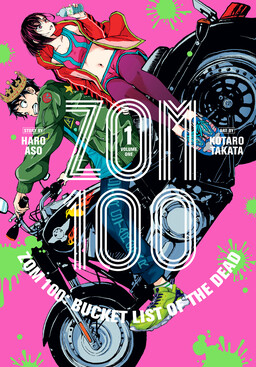
A review of Zom 100: Bucket List of the Dead — 15 volumes in Monthly Sunday GX. Akira Tendo spent three years being worked to death at a black company; when the zombie apocalypse starts, his first thought is relief that he doesn't have to go to work; he makes a list of 100 things to do before becoming a zombie. The most original zombie premise in years. VIZ Media's English edition is complete.
Action / Comedy
Sakamoto Days
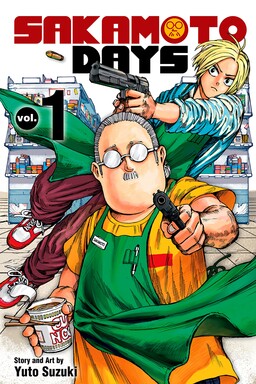
Yu's review of Sakamoto Days — Taro Sakamoto was the most feared hitman in the world; he retired when he fell in love, married, and opened a convenience store; now overweight, domestically happy, and out of practice, he must repeatedly deal with the assassin world that cannot accept his retirement; an action comedy about a legendary fighter who would rather stock shelves.
Written by
Yu
Manga Enthusiast from Japan
I grew up in Japan and manga literally saved me during a tough time in elementary school. My English isn't perfect, but my love for manga is real — and I want to share it with you.