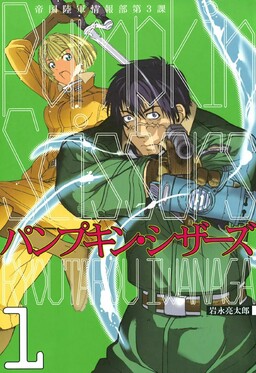
Pumpkin Scissors Review: A War Relief Squad Trying to Help Civilians After the War Is Over
by Ryotaro Iwanaga
Read the first volume. If it doesn't hook you, put it down. It'll hook you.
Buy Pumpkin Scissors on Amazon →*Affiliate link — I earn a small commission at no extra cost to you.
Quick Take
- The post-war military manga asking the question that most war manga avoids: what are soldiers supposed to do after the fighting stops, and do they have an obligation to serve the people the war hurt?
- Alice's specific conviction — that soldiers owe the civilian population their service — is one of manga's most clearly articulated ethical positions for a protagonist
- 16 of 23 volumes in English (Del Rey stopped publishing before completion); for readers who want military drama with genuine philosophical content
Who Is This Manga For?
- Readers who want military manga focused on post-war reconstruction and the obligations of soldiers to civilians
- Anyone who appreciates protagonists defined by genuine ethical conviction rather than violence
- Fans of ensemble military drama with character depth
- Readers who can accept incomplete English editions for a series worth engaging with
Content Warnings & Age Rating
Age Rating: T (Teen) Content Warnings: Post-war civilian suffering is depicted throughout — poverty, illness, bandit violence, corrupt officials exploiting desperate people; PTSD and veteran trauma are central to Oland's characterization; some action violence in confrontational sequences; political corruption depicted directly
The T rating is accurate. The darkness is moral and emotional rather than graphic.
Yu's Rating
| Category | Score |
|---|---|
| Story Depth | ★★★★★ |
| Art Style | ★★★★☆ |
| Character Development | ★★★★★ |
| Accessibility for Non-Japanese Readers | ★★★★☆ |
| Reread Value | ★★★★☆ |
Story Overview
The war is over. Both sides have signed a ceasefire. The military apparatus that fought the war still exists. Its soldiers still exist. The civilians caught between the two are in terrible condition: no food, no safety, no infrastructure, no hope that the ceasefire means anything for their daily lives.
Section III of the Imperial Army — Pumpkin Scissors — is charged with War Relief: going into these conditions and actually helping civilians. It is the least prestigious assignment in the military. It gets the soldiers nobody else wants. Its budget is inadequate. Its authority is frequently challenged by officials who would rather the problems not be acknowledged.
Alice L. Malvin is Section III's officer. She is from the nobility, which gives her political standing she uses aggressively. Her conviction — that the military owes the civilian population real service, not theatrical service — is sincere and consistent and makes her enemies in the political structure she is trying to use.
Randel Oland is a massive ex-soldier who joins the section. He carries a blue lantern. When the lantern is lit, something changes in him — he walks toward danger rather than away, feels nothing that should stop him, and becomes the section's most powerful physical asset. What he was before is revealed gradually.
Characters
Alice L. Malvin — Her specific form of nobility — literally noble by birth, using that position in service of obligations she genuinely believes the nobility owes — is unusual in manga. She is not performing idealism. She has thought about what she believes and she acts on it.
Randel Oland — His specific trauma — the lantern, what it represents, what it cost, what kind of person he was before — is the series' mystery narrative. His gentleness outside the lantern state and his effectiveness inside it create the moral question at his center.
Art Style
Iwanaga's art is technically solid with distinctive character designs — Oland's physicality is rendered with genuine scale that makes his threat credible without making him monstrous. The post-war environments — ruined towns, refugee camps, corrupt official offices — are rendered with enough specificity to establish the humanitarian stakes.
Cultural Context
Pumpkin Scissors ran in Monthly Shonen Magazine and engaged with questions about military obligation and post-war reconstruction that are unusual in a shonen context. The series draws on post-WWI European history in its aesthetic — the industrial warfare, the class structure, the specific kinds of political corruption that emerge after large wars.
What I Love About It
The civilian interaction sequences. When Alice leads Section III into a town and they actually help — organize food distribution, confront the bandits taking advantage of the chaos, fix what can be fixed — the series is clear that this is what soldiers are for. The argument is made through action rather than declaration.
What English-Speaking Fans Say
Western readers who found Pumpkin Scissors describe it as one of the most underrated military manga in English. Alice is consistently cited as one of the most genuinely admirable protagonists in the genre — her ethics are not theoretical, she acts on them at personal and political cost. Readers note with frustration that Del Rey's English publication ended before the series' completion.
Memorable Scene ⚠️ Spoiler Warning
The arc that fully reveals what the blue lantern program was — what Oland and soldiers like him were created to be, and what that means for who he is now — is the series' most ethically serious sequence and asks directly whether human beings can be created for violence and still choose something else.
Similar Manga
- Fullmetal Alchemist — Post-war moral landscape, brothers with traumatic past
- Vinland Saga — Post-violence identity, what soldiers owe
- Attack on Titan — Military obligation and civilian protection as central tension
- Rainbow — Post-trauma survival and genuine ethical commitment
Reading Order / Where to Start
Volume 1 — Alice's section, Oland's arrival, and the first civilian relief mission.
Official English Translation Status
Del Rey published 16 volumes; publication stopped. Check for remaining volumes through secondary market or alternative sources.
Pros & Cons
Pros
- Alice is one of manga's most clearly articulated ethical protagonists
- The post-war civilian suffering is depicted with genuine seriousness
- Oland's trauma and capability are balanced with care
- The series asks questions most military manga avoids
Cons
- English publication stopped at 16 of 23 volumes — the series is incomplete in English
- The pacing is deliberate and rewards patience
- The political content requires engagement with the series' world-building
Format Comparison
| Format | Notes |
|---|---|
| Individual Volumes | Del Rey; 16 volumes (incomplete translation) |
| Digital | Limited availability |
Where to Buy
Read the first volume. If it doesn't hook you, put it down. It'll hook you.
This post contains affiliate links. If you purchase through these links, I may earn a small commission at no extra cost to you. As an Amazon Associate, I earn from qualifying purchases.
*Affiliate link — I earn a small commission at no extra cost to you.
More Manga You Might Like
Action / Drama
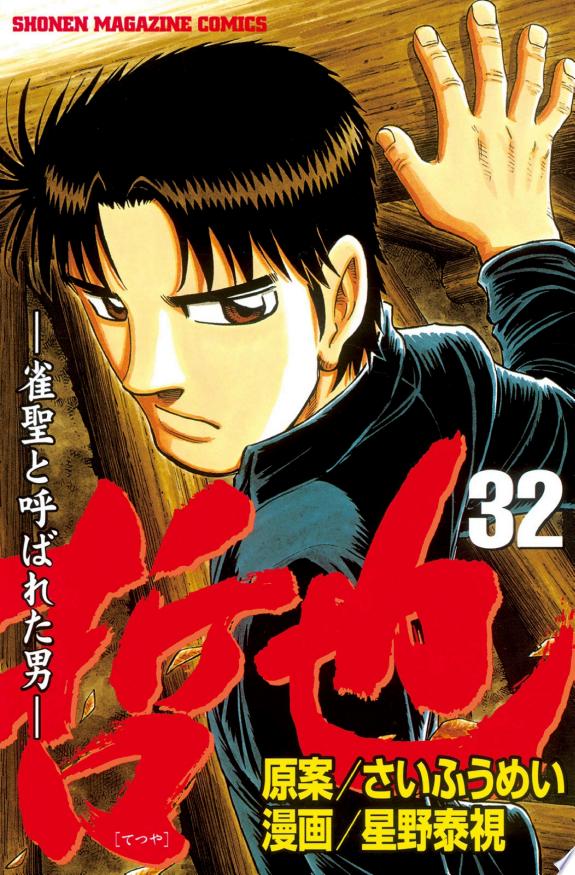
Tetsuya
Tetsuya follows a young man known as Tetsuya who becomes Japan's greatest underground mahjong player in the devastation of postwar Tokyo — using skill, psychological insight, and sometimes outright cheating to survive in a world where the stakes are always real.
Action / Drama
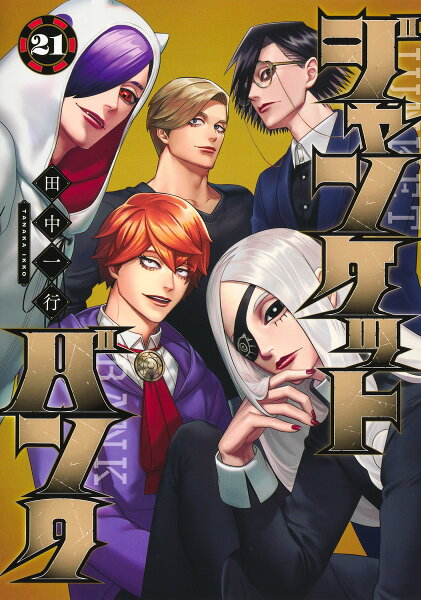
Juncket Bank
Juncket Bank follows Shinonome Ginji, a man who discovers he cannot lose at any game of chance — and a casino operator who wants to harness this ability for something far more dangerous than ordinary gambling.
Action / Drama
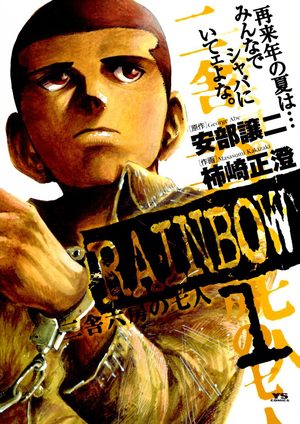
Rainbow: Nisha Rokubō no Shichinin
Yu's review of Rainbow — six juvenile delinquents are sent to a brutal reformatory in 1955 Japan and placed in Cell 6, where they bond with their cellmate Rokurouta Sakuragi, a former boxer who teaches them what it means to survive with dignity.

Action / Drama
Oshi no Ko
Yu's review of Oshi no Ko — a doctor reincarnates as the son of the idol he worshipped, retaining his adult memories; he enters the entertainment industry to find his mother's killer while his twin sister becomes an idol herself.
Action / Crime
Black Lagoon
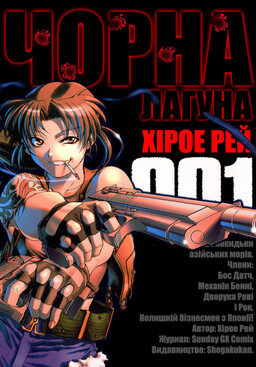
Yu's review of Black Lagoon by Rei Hiroe — Rokuro 'Rock' Okajima, a Tokyo salaryman, is taken hostage by the mercenary crew of the torpedo boat Black Lagoon; when his company writes him off rather than pay ransom, he joins them in the lawless Thai port city of Roanapur.
Action / Drama
Beastars
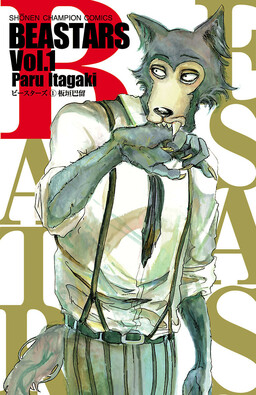
Yu's review of Beastars — In a society of anthropomorphic animals where carnivores and herbivores live side by side, Legoshi is a gray wolf who is afraid of what he is. After a classmate is killed and eaten, he is pulled toward Haru, a tiny dwarf rabbit, and has to decide what kind of animal he wants to become.
Written by
Yu
Manga Enthusiast from Japan
I grew up in Japan and manga literally saved me during a tough time in elementary school. My English isn't perfect, but my love for manga is real — and I want to share it with you.
Disclosure: This post contains affiliate links. As an Amazon Associate, I earn from qualifying purchases at no extra cost to you.