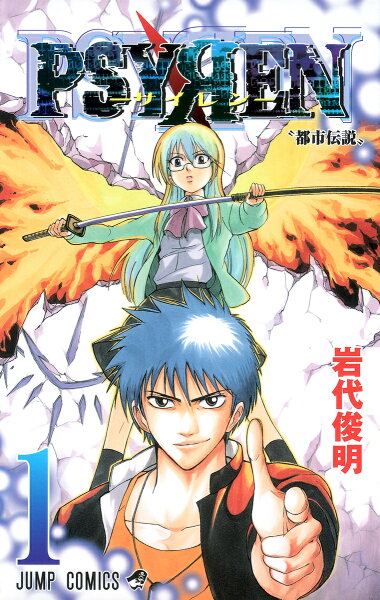
Psyren Review: A Boy Finds a Phone Card That Transports Him to a Ruined Future, and Has to Survive It Before It Becomes Real
by Toshiaki Iwashiro
Read the first volume. If it doesn't hook you, put it down. It'll hook you.
Buy Psyren on Amazon →*Affiliate link — I earn a small commission at no extra cost to you.
Quick Take
- A boy is pulled into a game that transports players to a destroyed future Japan, and he has to develop psychic powers to survive while trying to change what that future becomes
- 16 volumes, complete; one of the more original premises in shonen Jump action manga of its era
- Psyren is frequently cited as the underrated Jump manga that ended before it could reach its potential
Who Is This Manga For?
- Readers who want shonen action with a time-travel and prevention element
- Fans of psychic power systems in action manga
- Anyone who wants completed Jump-era action manga with a distinct premise
- Readers who enjoyed Hunter x Hunter's game-structure arcs
Content Warnings & Age Rating
Age Rating: T (Teen) Content Warnings: Action violence in post-apocalyptic setting; some horror monster designs
Standard T-rated action manga.
Yu's Rating
| Category | Score |
|---|---|
| Story Depth | ★★★★☆ |
| Art Style | ★★★★☆ |
| Character Development | ★★★★☆ |
| Accessibility for Non-Japanese Readers | ★★★★★ |
| Reread Value | ★★★★☆ |
Story Overview
Ageha Yoshina finds a red phone card with the word "Psyren" on it. It turns out to be a game — dialing a phone number transports participants to a ruined future Japan they call the Psyren world. Monsters called Taboo hunt the players. Players who survive multiple trips develop psychic abilities — called PSI.
The game has rules. Players cannot tell anyone outside the game about it. They enter alone or in groups. They have to make it to the exit point.
Ageha enters. He survives. He begins developing PSI. He discovers that the devastated future he is visiting is a specific version of the near future — one that he might be able to prevent.
The 16 volumes follow the game, the power development, and the investigation into who operates Psyren and what the connection is between the game and the coming catastrophe.
Characters
Ageha Yoshina — A delinquent who takes money to find missing people; his specific pragmatism and his genuine capability make him an effective action protagonist.
Amamiya Sakurako — A girl Ageha has known since childhood; her involvement in Psyren before his and her specific PSI development create the series' primary relationship.
Nemesis Q — The game's operator; their nature and motivation is the series' central mystery.
Art Style
Iwashiro's art handles both the contemporary school setting and the devastated Psyren world effectively — the contrast between the normal present and the ruined future is a consistent visual element, and the Taboo designs are genuinely distinctive. PSI ability visualization is clear and inventive.
Cultural Context
The survival game concept — a structure where participants are put in danger under specific rules — is a recurring motif in Japanese manga and reflects cultural fascination with game logic applied to survival situations. Psyren's time-travel element adds a prevention structure that gives the survival game moral stakes beyond immediate survival.
What I Love About It
The prevention element. Most survival game manga are about immediate survival. Psyren adds the knowledge that the world the players are surviving in is a possible future — which means every Psyren trip is also research into what they are trying to prevent. The dual purpose makes every trip matter on two levels simultaneously.
What English-Speaking Fans Say
Western readers consistently describe Psyren as one of the most underrated shonen Jump manga of its generation — the premise is more original than most, the power system is well-developed, and the prevention plot gives it structure that pure tournament manga lacks. The early cancellation (16 volumes) is described as the series' primary tragedy.
Memorable Scene ⚠️ Spoiler Warning
The sequence that reveals what Psyren actually is — what the game's purpose is and who has been operating it and why — is the series' most complete revelation and the one that reframes everything that preceded it.
Similar Manga
- Hunter x Hunter — Game-structure arcs, psychic power system similarities
- Talentless Nana — Psychic powers in a survival context
- The Promised Neverland — Survival under rules, escape and prevention
- Blue Exorcist — Similar Jump action energy
Reading Order / Where to Start
Volume 1 — the phone card and first Psyren trip establish the premise immediately.
Official English Translation Status
VIZ Media published the complete 16-volume series. All volumes available.
Pros & Cons
Pros
- 16 volumes, complete
- Original premise in the shonen action genre
- The prevention plot gives the survival structure moral weight
- PSI power development is inventive
Cons
- The series ended earlier than planned — some threads feel compressed
- Mid-series power escalation is rapid
- Less well-known than it deserves to be
Format Comparison
| Format | Notes |
|---|---|
| Individual Volumes | VIZ Media; standard |
| Digital | Available |
Where to Buy
Read the first volume. If it doesn't hook you, put it down. It'll hook you.
This post contains affiliate links. If you purchase through these links, I may earn a small commission at no extra cost to you. As an Amazon Associate, I earn from qualifying purchases.
*Affiliate link — I earn a small commission at no extra cost to you.
More Manga You Might Like
Action / Sci-Fi
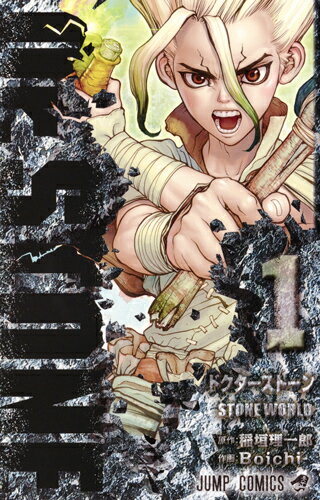
Dr. Stone
Yu's review of Dr. Stone — Senku Ishigami, a scientific genius, wakes from a millennia-long stone petrification to find human civilization erased; he decides to use science to rebuild everything humanity ever created, starting from zero.
Action / Sci-Fi
Black Cat
Yu's review of Black Cat — Train Heartnet, Chronos's Number XIII, abandons the world's most feared assassin organization after a sweeper named Saya teaches him what it means to live freely.
Action / Sci-Fi
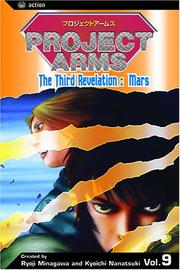
Project ARMS
Yu's review of Project ARMS (ARMS) by Kyoichi Nanatsuki and Ryoji Minagawa — four teenagers carry nanomachine weapons named after Alice in Wonderland grafted into their bodies. Ryo's right arm hides the Jabberwock, an artificial intelligence built from Black Alice's hatred that takes over when he loses control. A 22-volume Weekly Shonen Sunday sci-fi thriller, fully available in English from Viz Media.
Action / Sci-Fi
Cobra
Cobra is the greatest space pirate who ever lived — charming, unstoppable, and armed with the Psychogun fused to his arm — in a galaxy-spanning adventure that turned stylish cool into a manga philosophy.
Action / Sci-Fi
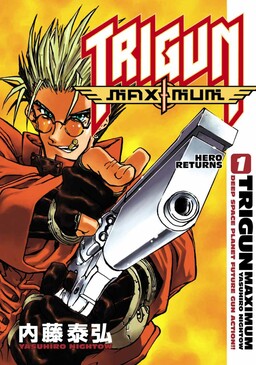
Trigun Maximum
Vash the Stampede walks a desert planet called Gunsmoke. He has a $$60 billion double-dollar bounty on his head, a gun arm hidden under his red coat, and a single rule he has never broken: he does not kill anyone. Yasuhiro Nightow's 14-volume sequel to Trigun is one of the most thematically serious action manga ever serialized.
Action / Adventure
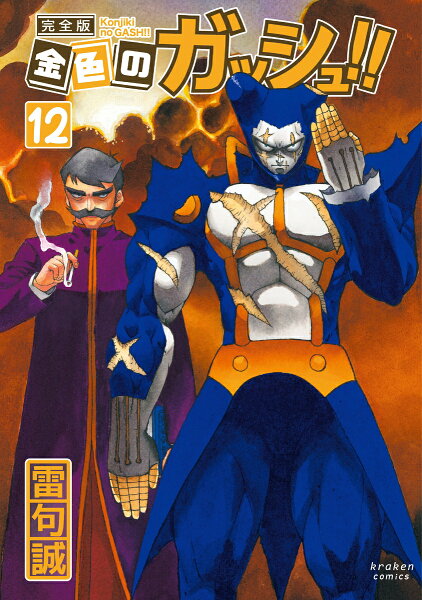
Zatch Bell!
A review of Zatch Bell! — 33 volumes in Weekly Shonen Sunday. Genius middle schooler Kiyo Takamine partners with demon child Zatch Bell in a battle royale of 100 demon/human pairs competing to become King of the Mamodo World; Zatch wants to be a kind king. The manga that made an entire generation cry about a book burning. VIZ Media's English edition is complete.
Written by
Yu
Manga Enthusiast from Japan
I grew up in Japan and manga literally saved me during a tough time in elementary school. My English isn't perfect, but my love for manga is real — and I want to share it with you.
Disclosure: This post contains affiliate links. As an Amazon Associate, I earn from qualifying purchases at no extra cost to you.