+Anima Review: Children Who Can Transform Into Animals Navigate a World That Fears Them
by Natsumi Mukai
Read the first volume. If it doesn't hook you, put it down. It'll hook you.
Buy +Anima on Amazon →*Affiliate link — I earn a small commission at no extra cost to you.
Quick Take
- The animal transformation manga that takes its premise seriously as a vehicle for exploring discrimination, belonging, and what it means to be defined by what you are rather than who you are
- The ensemble of four is carefully differentiated — each +Anima carries their animal traits in personality as well as form
- 10 volumes complete; one of the most affecting adventure manga Tokyopop published during its peak years
Who Is This Manga For?
- Readers who want adventure manga with genuine emotional investment in its characters
- Anyone interested in fantasy settings that use difference as a real social theme
- Fans of ensemble child-protagonist manga with genuine darkness beneath the adventure tone
- Readers who want completed, accessible manga that earns its emotional moments
Content Warnings & Age Rating
Age Rating: T (Teen) Content Warnings: The +Anima are treated as less than human by much of the world they travel through — discrimination is not incidental but central; violence toward children occurs in specific arcs; abandonment and loss are recurring themes
The T rating is accurate. This is warmer than its content warnings suggest but does not shy from difficulty.
Yu's Rating
| Category | Score |
|---|---|
| Story Depth | ★★★★☆ |
| Art Style | ★★★★☆ |
| Character Development | ★★★★★ |
| Accessibility for Non-Japanese Readers | ★★★★★ |
| Reread Value | ★★★★☆ |
Story Overview
In the world of +Anima, some children develop animal transformations: partial shifts that give them the physical characteristics and some behaviors of specific animals. The transformation is triggered by extreme need — a drowning child develops fish gills, a falling child develops crow wings. +Anima are feared, exploited, or put on display.
Cooro is a crow +Anima — cheerful, curious, and fundamentally alone when the story begins. He has traveled for years without attachment. When he meets Husky — a fish +Anima who has been performing as a female mermaid in a traveling show — the two begin traveling together. Senri, a bear +Anima with almost no memory and a quiet severity, and Nana, a bat +Anima who is the most conventionally social and the most frightened, complete the group.
The series follows them through a series of encounters: with humans who use +Anima, with other +Anima who have chosen different paths, and eventually with the question of what caused +Anima to exist and what it would mean for them to understand their own origins.
Characters
Cooro — His specific cheerfulness — maintained despite a past the series gradually reveals — is not naivety but a genuine choice about how to move through the world. His crow nature manifests in his love of shiny things, his aerial perspective, and his ability to leave situations that feel wrong.
Husky — His anger at his past exploitation — being presented as female for others' entertainment — is the series' most direct treatment of identity. His fish nature makes him extraordinary in water and uncomfortable in ordinary social situations.
Senri — His silence and his gentleness are directly related to his bear nature and his traumatic past. The series is careful with him — his history is revealed slowly and his reactions are consistent with what it reveals.
Nana — Her bat nature gives her echolocation and her social instincts make her the group's emotional anchor. She is the most frightened of the group and the most determined to be accepted.
Art Style
Mukai's art is soft and expressive — the character designs convey the animal traits without making the characters visually monstrous. The world is rendered with a European storybook quality that suits the adventure tone. Emotional moments are handled with facial expressiveness rather than elaborate panel construction.
Cultural Context
+Anima ran in Monthly Comic Zero Sum, a shojo-adjacent anthology that published work that didn't fit neatly into either shojo or shonen categories. The series uses the fantastical setting to address real questions about how societies treat those who are born different — a theme that appears across Japanese manga from this period in ways that reflect specific social conversations.
What I Love About It
Husky's arc. His backstory — what happened to him, why he presents male when his +Anima form is associated with female display — is handled with more sensitivity than most manga from 2005 would manage. His anger is legitimate and the series validates it without making it his only characteristic.
What English-Speaking Fans Say
Western readers who find +Anima through older Tokyopop backcatalog consistently describe it as a hidden gem — the emotional investment in the ensemble is cited as the series' greatest strength. The discrimination themes are noted as unusually direct for the adventure format. Readers express frustration that the series isn't more widely known.
Memorable Scene ⚠️ Spoiler Warning
The sequence where Senri's past is fully revealed — what happened to his village, what he survived, why he is so gentle and so capable of sudden violence — is the series' most affecting single arc and demonstrates what the format can do with backstory when it's deployed with patience.
Similar Manga
- Fullmetal Alchemist — Similar ensemble adventure with emotional depth and discrimination themes
- Tegami Bachi — Similar atmospheric adventure with strong emotional investment in characters
- Basara — Adventure with social outcasts finding community
- Kekkaishi — Supernatural beings navigating a world divided about their existence
Reading Order / Where to Start
Volume 1 — Cooro's introduction, Husky's first appearance, and the beginning of the group.
Official English Translation Status
Tokyopop published the complete 10-volume English edition. Available through secondary market.
Pros & Cons
Pros
- The ensemble is individually characterized with genuine care
- The discrimination themes are handled seriously throughout
- Ten volumes of consistent quality
- Complete with emotional resolution for all four characters
Cons
- Tokyopop editions are out of print; secondary market only
- The world-building is thorough but the series resolves some mysteries quickly
- The adventure format can feel episodic before the larger story emerges
Format Comparison
| Format | Notes |
|---|---|
| Individual Volumes | Tokyopop; 10 volumes (out of print, secondary market) |
| Digital | Limited availability |
Where to Buy
Read the first volume. If it doesn't hook you, put it down. It'll hook you.
This post contains affiliate links. If you purchase through these links, I may earn a small commission at no extra cost to you. As an Amazon Associate, I earn from qualifying purchases.
*Affiliate link — I earn a small commission at no extra cost to you.
More Manga You Might Like
Fantasy / Comedy
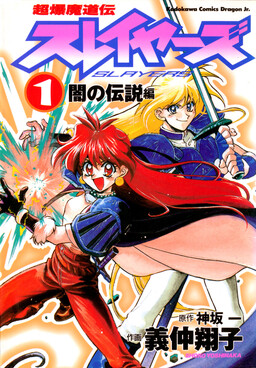
Slayers
Yu's review of Slayers — Lina Inverse is a sorceress who is feared across the countryside for her combination of extreme magical power and extreme appetite; she travels with Gourry Gabriev, a swordsman of great physical ability and famously limited intellect, and leaves a trail of destroyed bandits and damaged architecture wherever she goes.
Action / Adventure
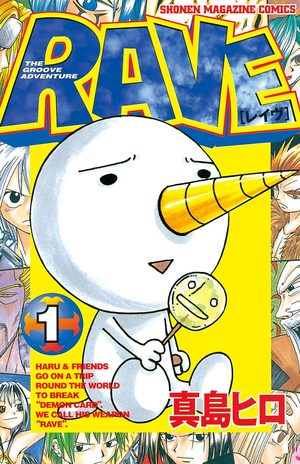
Rave Master (Groove Adventure Rave)
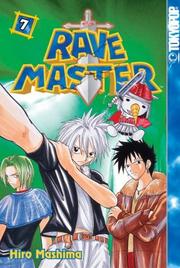
Yu's review of Rave Master — Haru Glory discovers he is the second Rave Master, holder of the legendary Holy Bring sword; with his companions, he travels the world collecting the five Rave stones and destroying the Dark Bring before they can be used to end the world.
Action / Fantasy
Immortal Rain
Yu's review of Immortal Rain — Machika Balfaltin wants to collect the bounty on Methuselah, the most wanted criminal in the world, who cannot die; when she finds him, she discovers he is gentle, melancholy, and exhausted by 600 years of existence; the series explores what immortality costs and what death means to someone who cannot experience it.
Action / Fantasy
Tokyo Underground
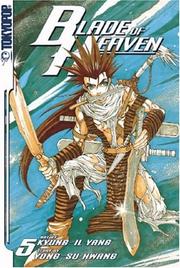
Yu's review of Tokyo Underground — Rumina Asagi and his friend Ginnosuke fall into the Underground — a city beneath Tokyo where the population has elemental ability users called Elemental Users; they encounter Chelsea Rihikawa, an Elemental User who can control fire, and become involved in rescuing her companion Ruri from the powerful organization that controls the Underground.
Action / Fantasy
Elemental Gelade
Yu's review of Elemental Gelade — Coud Van Giruet, a sky pirate, discovers Ren in his ship's cargo — a girl who is actually an Edel Raid, a living weapon who bonds with a human partner called a Pledger; rather than selling her, he promises to take her to Edel Garden, a sanctuary for Edel Raids, and the journey structures the series.
Action / Adventure
Zatch Bell!
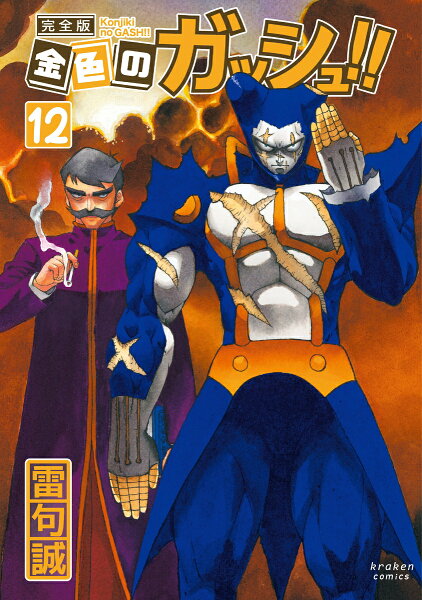
A review of Zatch Bell! — 33 volumes in Weekly Shonen Sunday. Genius middle schooler Kiyo Takamine partners with demon child Zatch Bell in a battle royale of 100 demon/human pairs competing to become King of the Mamodo World; Zatch wants to be a kind king. The manga that made an entire generation cry about a book burning. VIZ Media's English edition is complete.
Written by
Yu
Manga Enthusiast from Japan
I grew up in Japan and manga literally saved me during a tough time in elementary school. My English isn't perfect, but my love for manga is real — and I want to share it with you.
Disclosure: This post contains affiliate links. As an Amazon Associate, I earn from qualifying purchases at no extra cost to you.