
Platinum End Review: A Boy Is Given Angel Powers and Told He Might Become the Next God — He Has to Decide What That Means
by Tsugumi Ohba / Takeshi Obata
Read the first volume. If it doesn't hook you, put it down. It'll hook you.
Buy Platinum End on Amazon →*Affiliate link — I earn a small commission at no extra cost to you.
Quick Take
- The Death Note creative team applies their formula to a competition to become God, with angels as the supernatural enablers and philosophical debates about existence as the stakes
- 14 volumes, complete; more divisive than Death Note but with the same exceptional art
- Recommended for Death Note fans who want more Ohba/Obata, with the expectation that it is a different experience
Who Is This Manga For?
- Fans of Death Note who want more from the same creative team
- Readers who want supernatural action with theological content
- Anyone who wants completed Ohba/Obata manga beyond Death Note
- Readers who enjoy anime adaptation comparison — the anime is also available
Content Warnings & Age Rating
Age Rating: T (Teen) Content Warnings: Suicidal ideation is the series' opening; death competition content; extended philosophical discussions about whether God should exist
The opening is heavy; the series becomes more action-focused as it continues.
Yu's Rating
| Category | Score |
|---|---|
| Story Depth | ★★★☆☆ |
| Art Style | ★★★★★ |
| Character Development | ★★★☆☆ |
| Accessibility for Non-Japanese Readers | ★★★★☆ |
| Reread Value | ★★★☆☆ |
Story Overview
Mirai Kakehashi has been abused by his aunt and uncle since his parents died. He is about to die — by his own choice — when his guardian angel Nasse appears and offers him angel abilities: white wings (flight), white arrows (compel love), and red arrows (compel obedience). She tells him God's term is ending and 13 candidates have been chosen to compete; the last one standing becomes the next God.
Mirai's specific question — whether he wants to become God or wants humanity to simply not have one — is the series' philosophical center.
Characters
Mirai Kakehashi — His specific moral position (he does not want to kill; he questions whether God is a good thing) separates him from standard competition-manga protagonists.
Nasse — His guardian angel, whose cheerful encouragement of any action that helps Mirai win is the series' most consistently interesting dynamic; she is genuinely happy about things that should not be happy.
Saki — A girl whose relationship with Mirai develops across the competition and whose presence grounds Mirai's motivation in personal stakes rather than abstract principle.
Art Style
Obata's art is, as always, exceptional — the angel wing designs, the action sequences, and the character expressions are among his finest work. The visual quality of Platinum End is not in question. The philosophical content debates are drawn with the same panache as the Death Note logic battles, which is to say: better than the debates deserve.
Cultural Context
Japanese engagement with Western theological concepts — the Christian God, angels, the concept of divine succession — filtered through shonen manga sensibility. The series treats the God competition as a legitimately philosophical question while also delivering angel-powered action sequences.
What I Love About It
Nasse. Her specific ethics — she is an angel who encourages Mirai to do anything that maximizes his happiness, including things that are obviously wrong — is the series' most interesting character construction. She is not evil; she is genuinely trying to help by a metric that does not include conventional morality. Her interactions with Mirai's more principled positions generate the series' best dialogue.
What English-Speaking Fans Say
Western readers compare Platinum End unfavorably to Death Note consistently — the philosophical content is less precise, the competition structure is less elegant, the protagonist's passivity is frustrating compared to Light Yagami's agency. However, readers who approach it as a different kind of Ohba/Obata work rather than as Death Note's successor find more to appreciate. Obata's art is universally praised.
Memorable Scene ⚠️ Spoiler Warning
The competition's climax — the final philosophical debate about whether the next God should exist or whether God should simply end — is the series' most ambitious sequence and the one where Ohba's theological interests are most fully expressed, for better or worse.
Similar Manga
- Death Note — Same creators; better; read this first
- Bakuman — Same creators; different genre, consistently praised
- Noragami — God and angel relationships in a Japanese context
- Blue Exorcist — Supernatural action with theological stakes
Reading Order / Where to Start
Volume 1 — the angel competition setup establishes quickly.
Official English Translation Status
VIZ Media published the complete 14-volume series. All volumes available.
Pros & Cons
Pros
- 14 volumes, complete
- Obata's art is exceptional throughout
- Nasse is the series' finest character
- The philosophical content, while imperfect, is genuinely ambitious
Cons
- Significantly less well-constructed than Death Note
- Mirai's passivity frustrates many readers
- The final arc's resolution is divisive
- The theological debates are more ambitious than they are rigorous
Format Comparison
| Format | Notes |
|---|---|
| Individual Volumes | VIZ Media; standard |
| Digital | Available |
Where to Buy
Read the first volume. If it doesn't hook you, put it down. It'll hook you.
This post contains affiliate links. If you purchase through these links, I may earn a small commission at no extra cost to you. As an Amazon Associate, I earn from qualifying purchases.
*Affiliate link — I earn a small commission at no extra cost to you.
More Manga You Might Like
Action / Supernatural
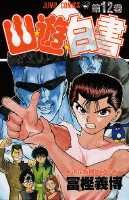
Yu Yu Hakusho
A review of Yu Yu Hakusho — 19 volumes in Weekly Shonen Jump. Yusuke Urameshi dies heroically saving a child, is recruited as a Spirit Detective to investigate supernatural cases, and grows from a delinquent who doesn't care about anything into someone with people worth protecting. The series Togashi made before Hunter x Hunter. VIZ Media's English edition is complete.
Action / Supernatural
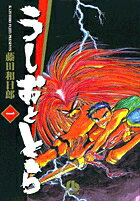
Ushio and Tora
Yu's review of Ushio and Tora — Ushio finds an ancient beast-spirit called Tora pinned under the temple floor; he releases Tora to fight other spirits threatening his town; Tora intends to eat Ushio eventually; they travel Japan fighting supernatural threats.
Action / Supernatural
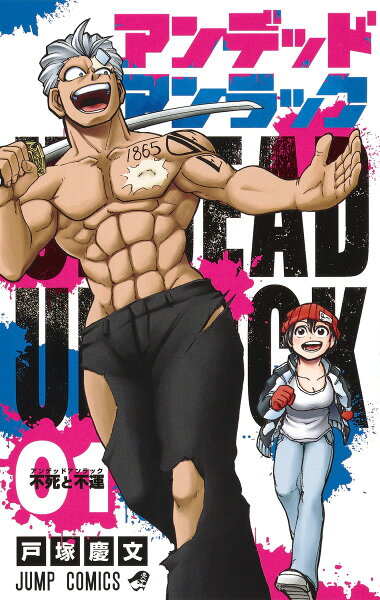
Undead Unluck
Yu's review of Undead Unluck — Fuuko, a girl whose touch causes catastrophic misfortune to anyone around her, meets Andy, an immortal who wants to die; together they join a secret organization that fights supernatural rules governing reality.
Action / Supernatural
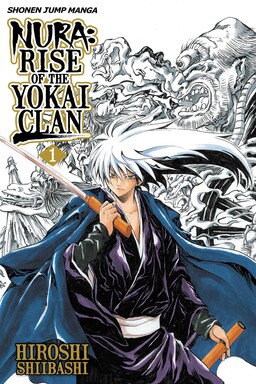
Nura: Rise of the Yokai Clan
Yu's review of Nura: Rise of the Yokai Clan — Rikuo Nana is one-quarter yokai and grandson of Nurarihyon, the Supreme Commander of all yokai; during the day he lives as an ordinary middle schooler who wants nothing to do with the supernatural; at night his yokai blood awakens and he becomes something else entirely; as rival yokai clans threaten his grandfather's domain, Rikuo must decide whether to embrace his heritage.

Action / Fantasy
Nabari no Ou
Yu's review of Nabari no Ou — apathetic middle schooler Rokujou Miharu hosts within him the Shinrabanshou — the ultimate power of the ninja world — that every faction of the hidden world wants to control; Rokujou doesn't care about any of this, which makes him the most dangerous person in every room.

Action / Comedy
The Law of Ueki
Yu's review of The Law of Ueki — Kousuke Ueki is given the power to turn trash into trees by his homeroom teacher, a god candidate competing in a divine tournament; if his teacher wins, he becomes the next ruler of the Heavenly World; if Ueki fights on his behalf and wins, he gets a blank talent.
Written by
Yu
Manga Enthusiast from Japan
I grew up in Japan and manga literally saved me during a tough time in elementary school. My English isn't perfect, but my love for manga is real — and I want to share it with you.
Disclosure: This post contains affiliate links. As an Amazon Associate, I earn from qualifying purchases at no extra cost to you.